



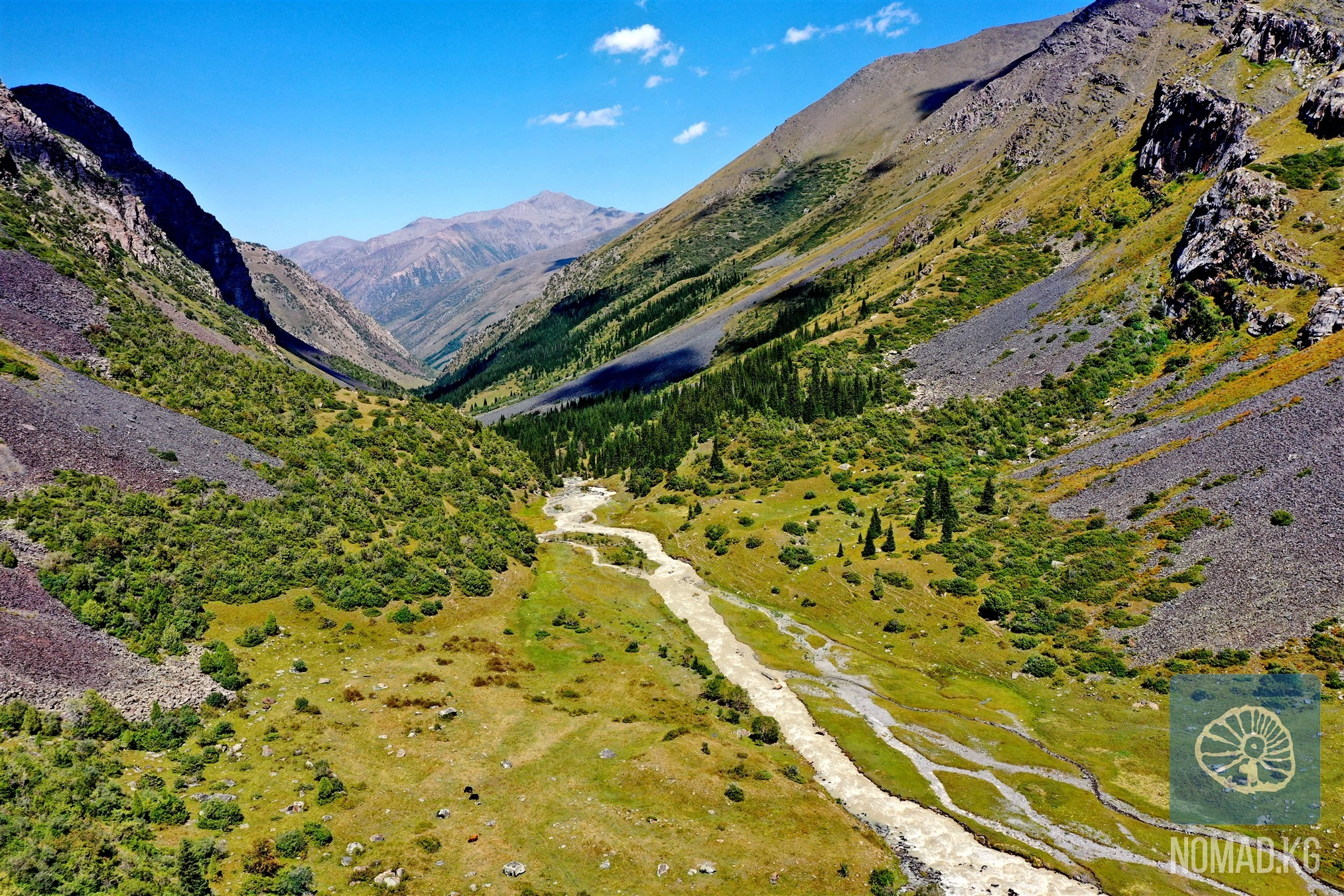

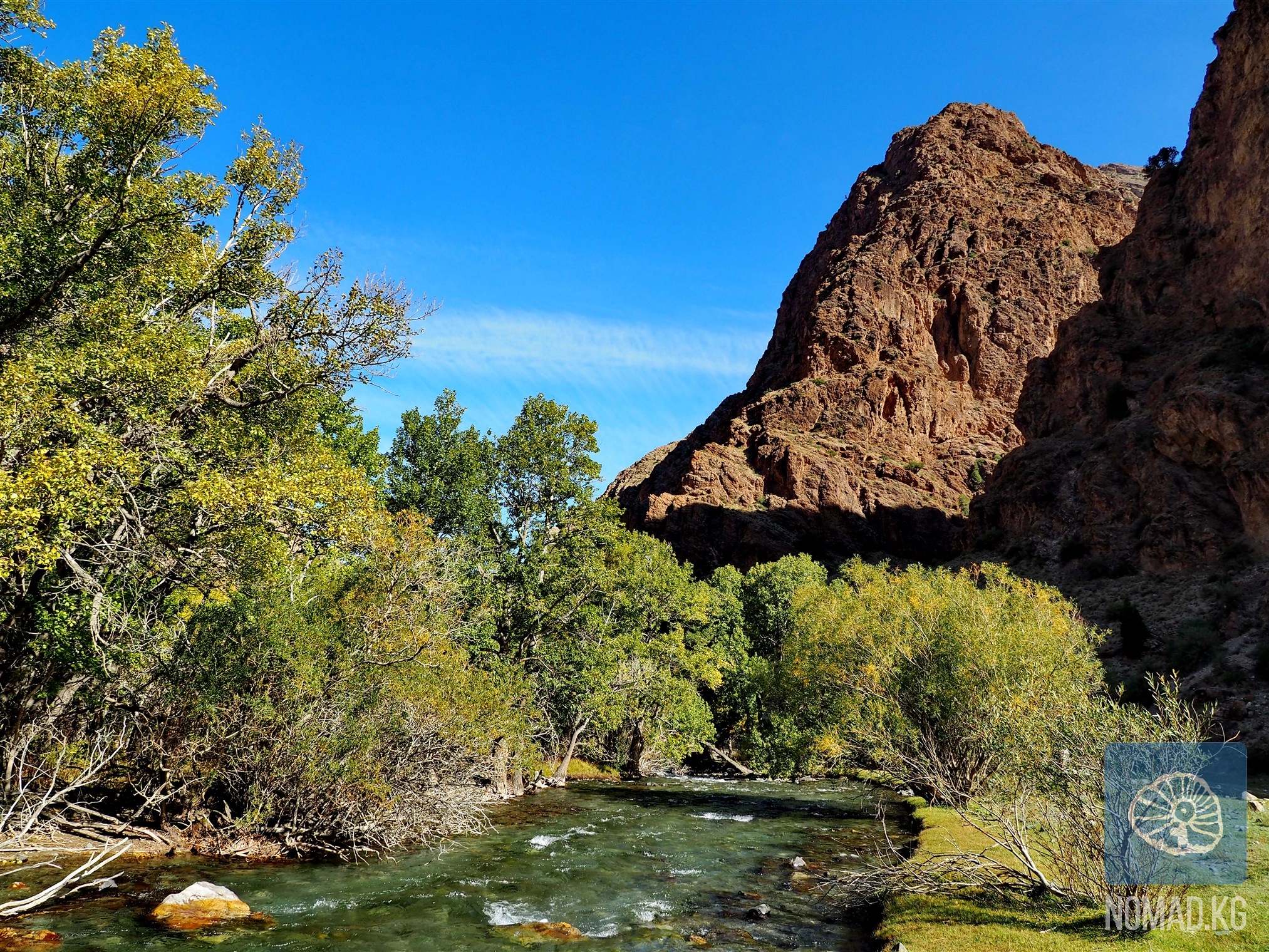

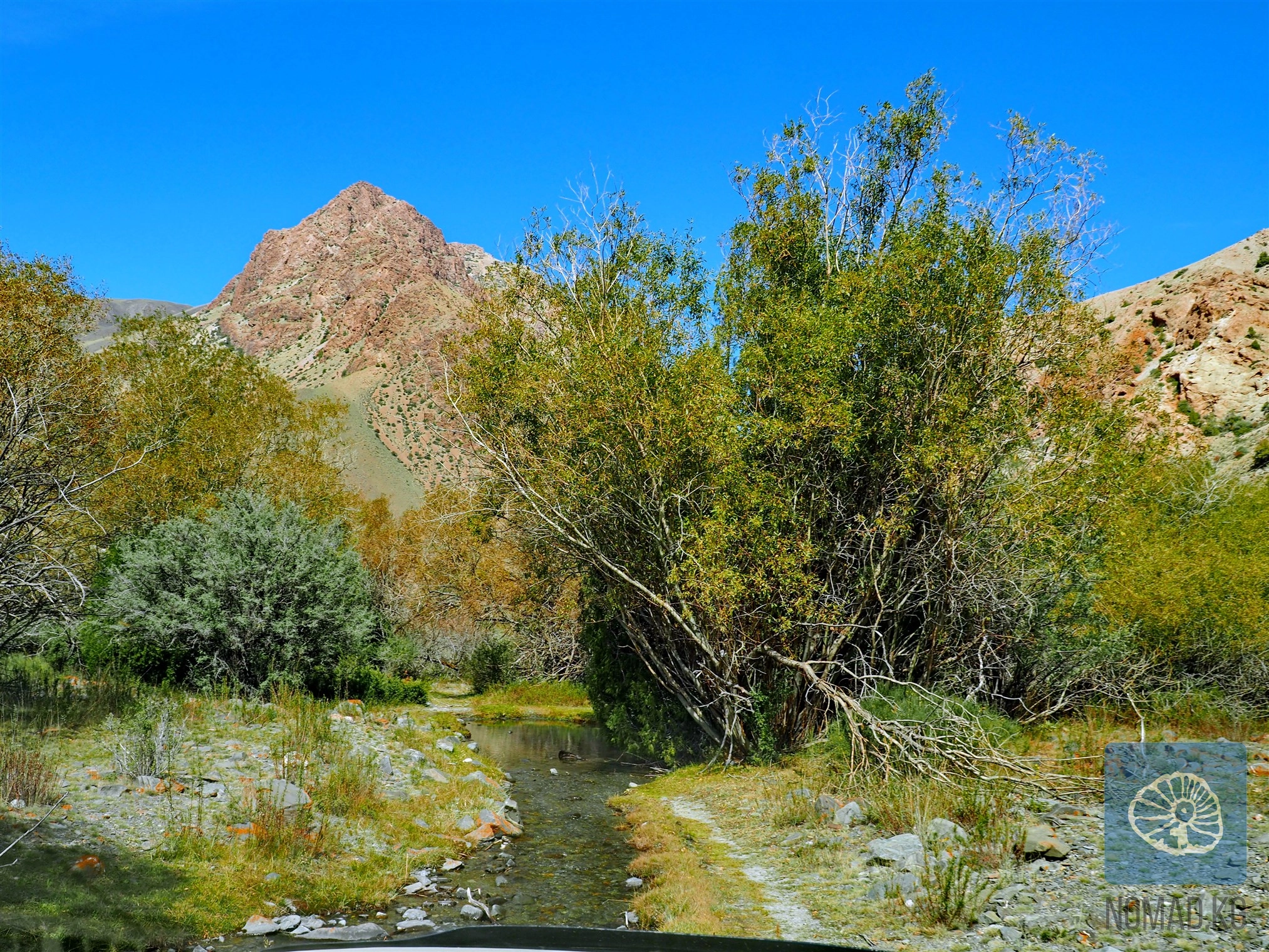
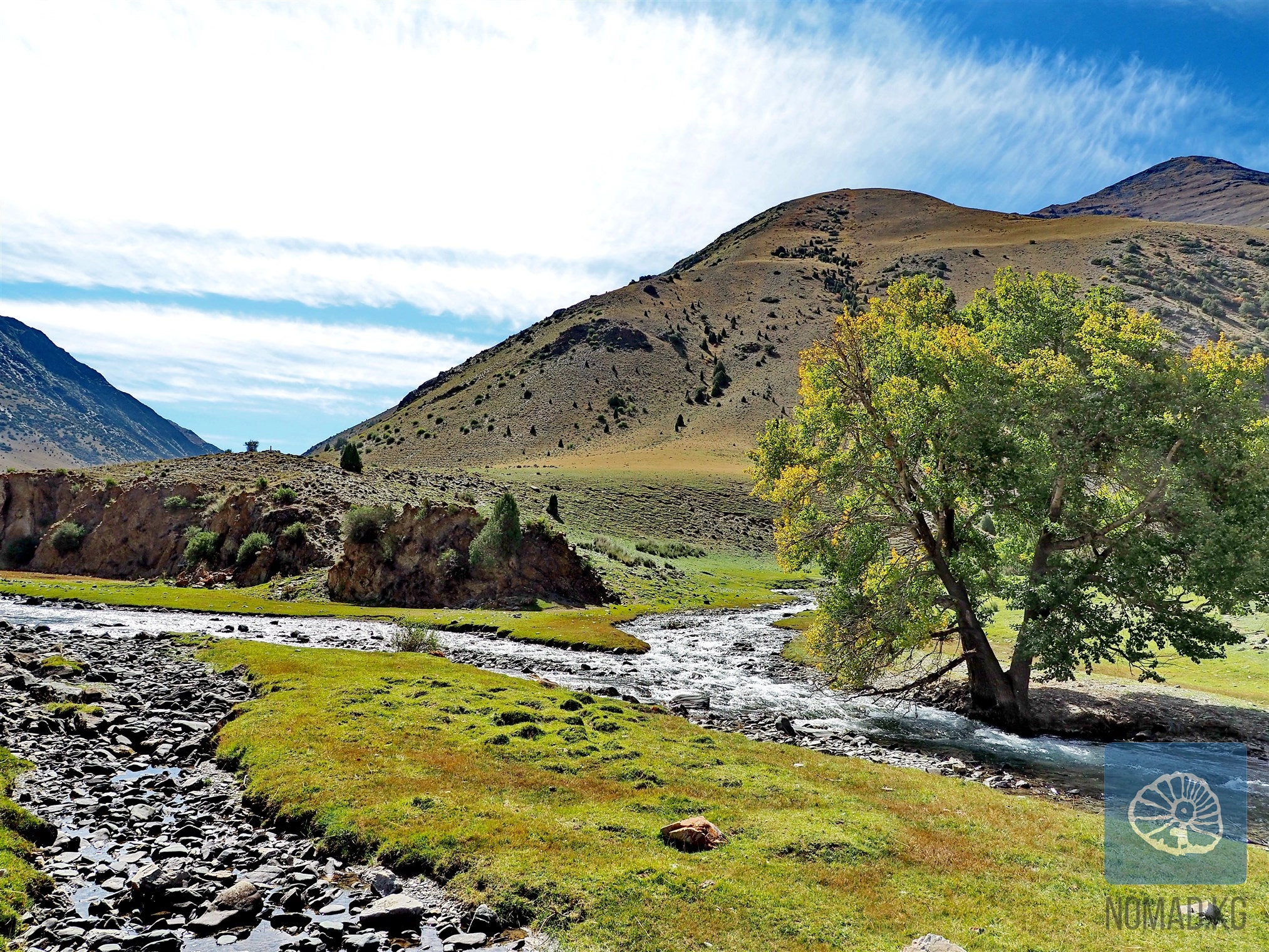
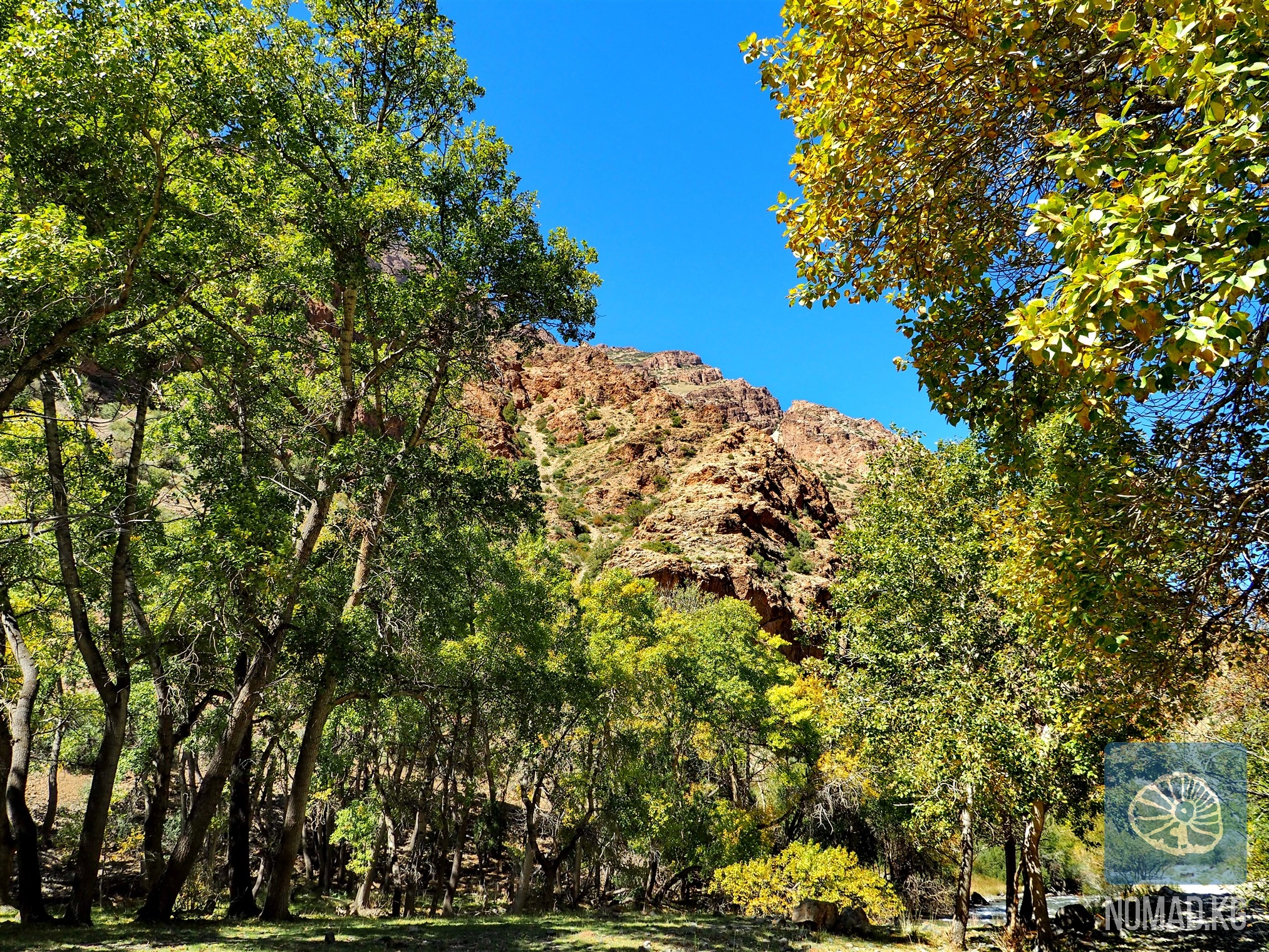
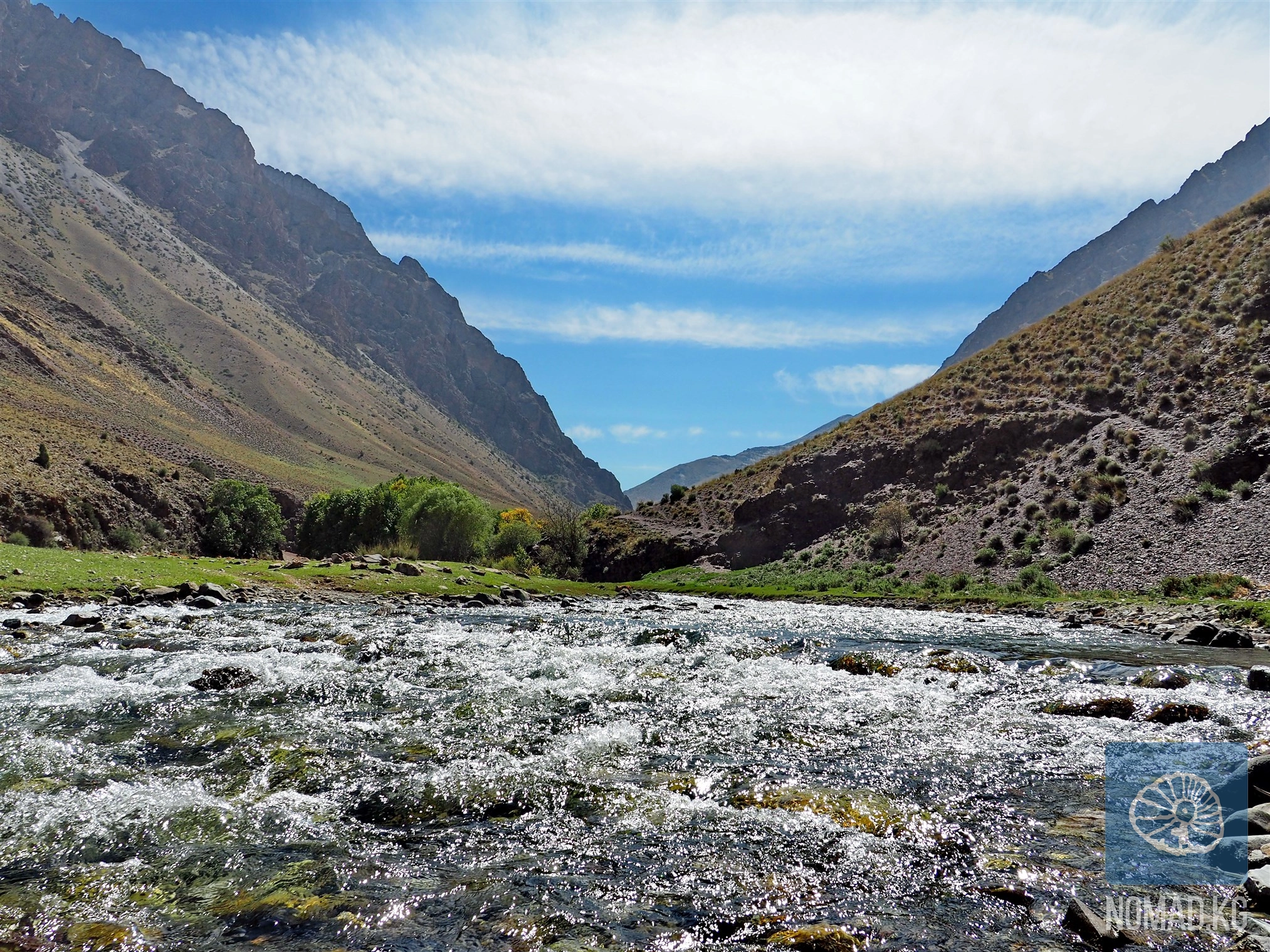
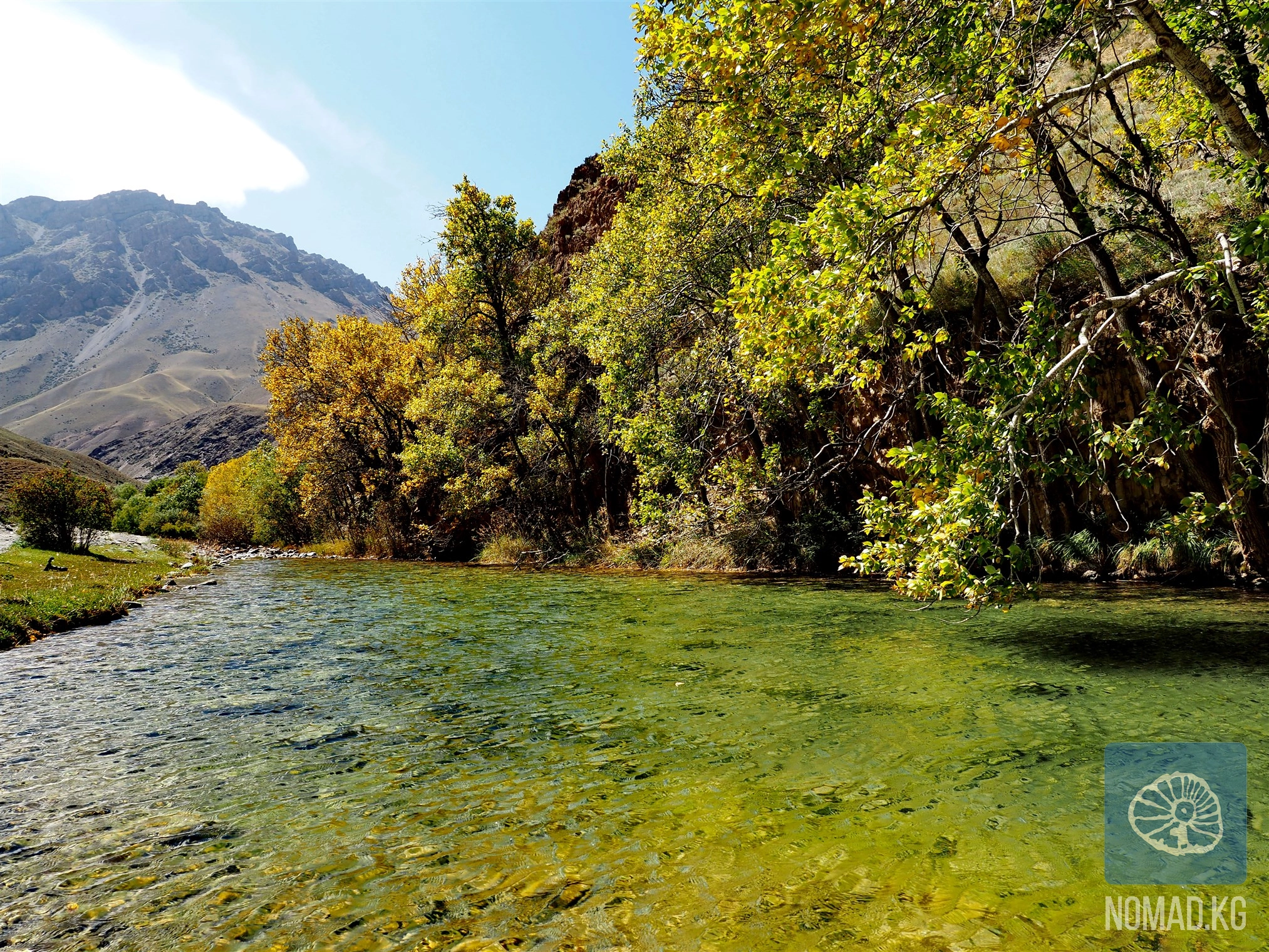
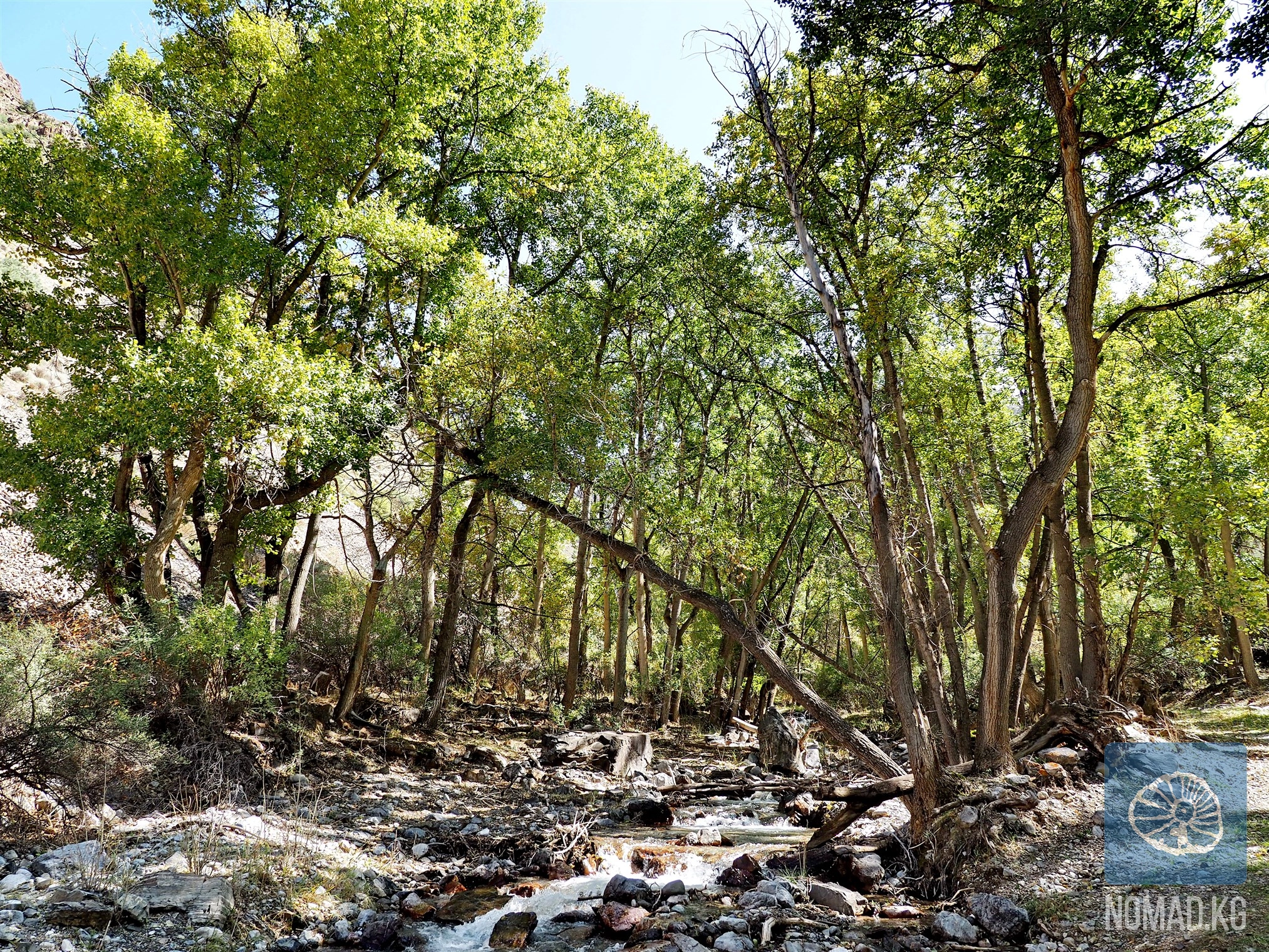
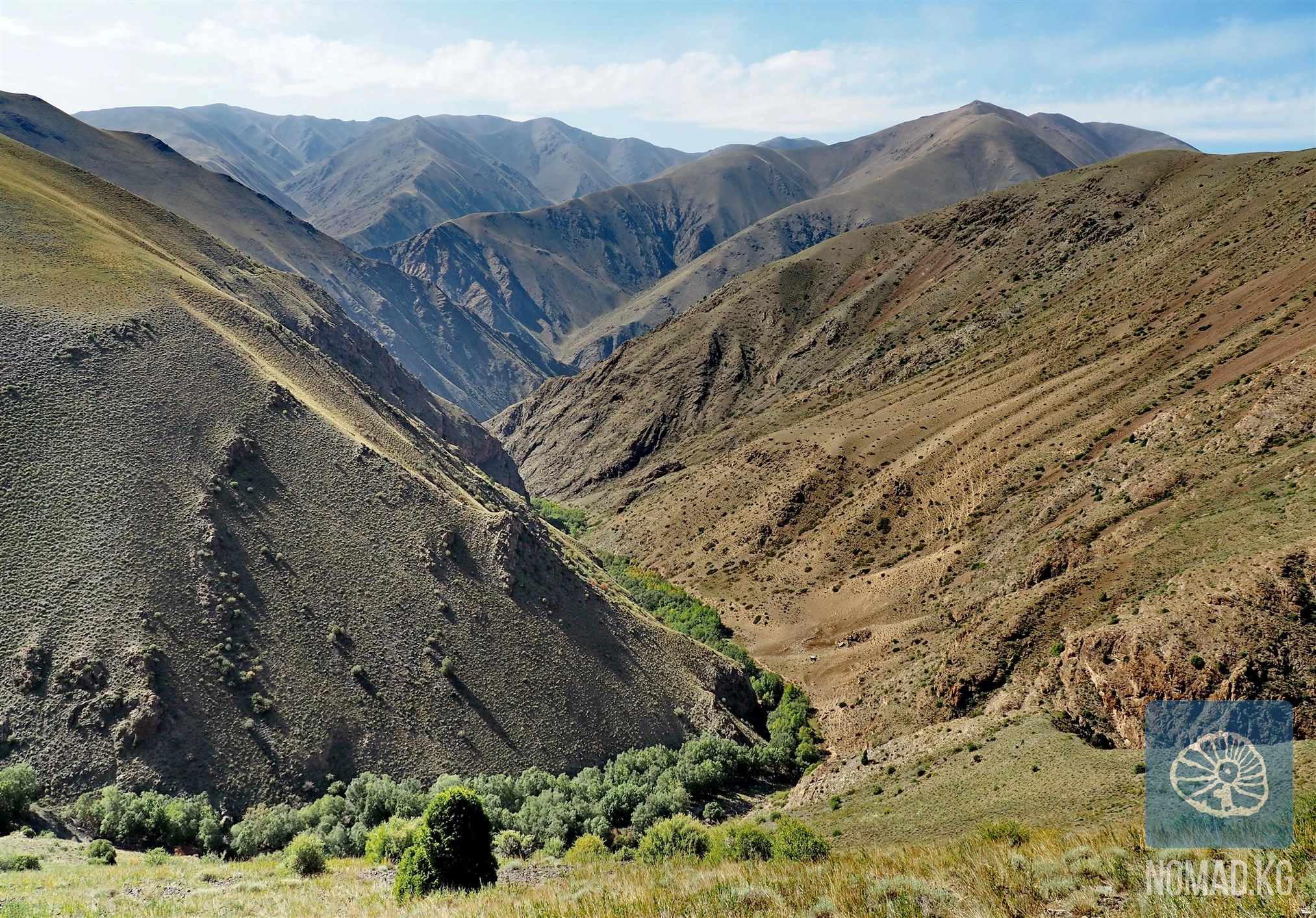
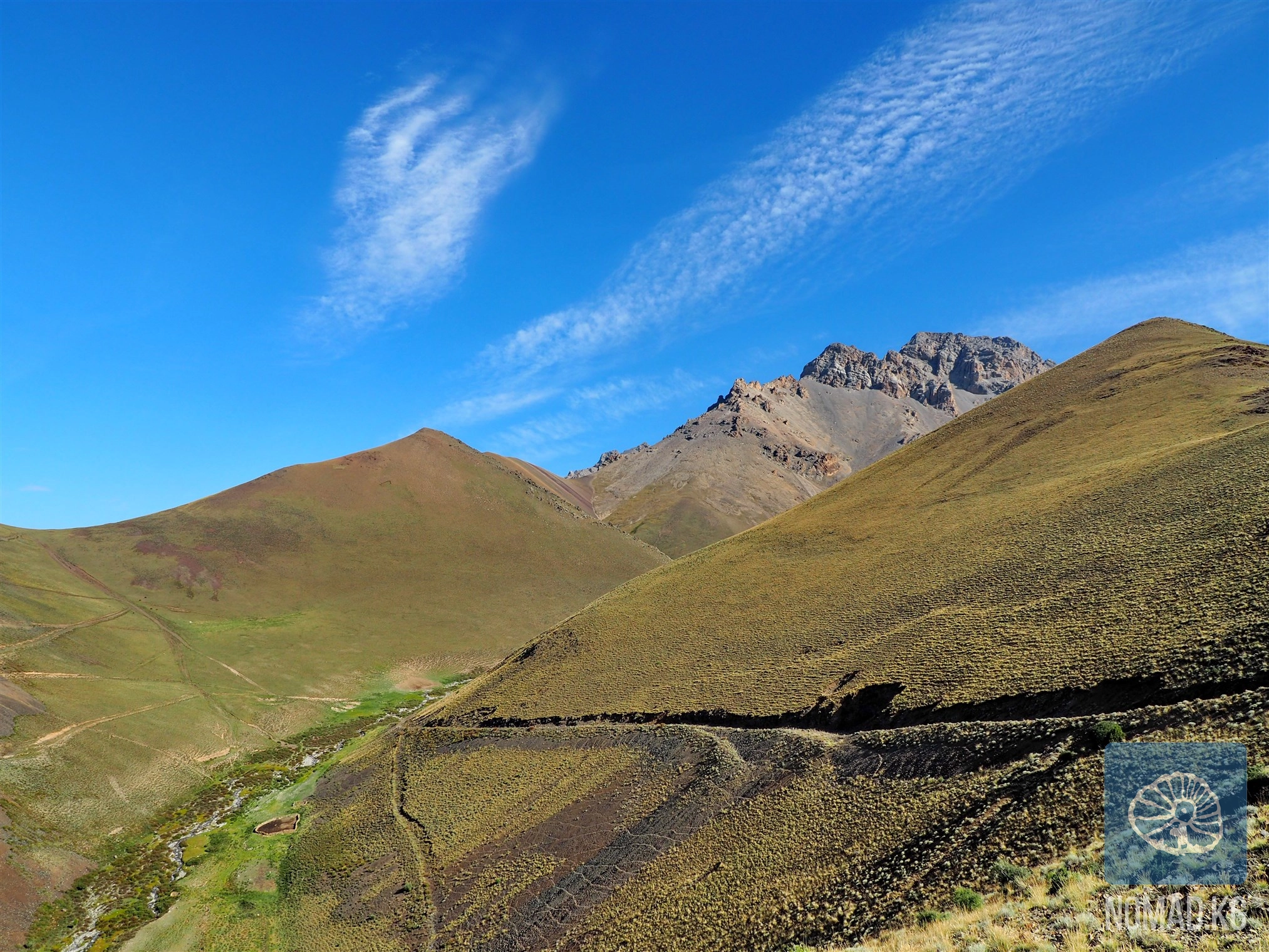
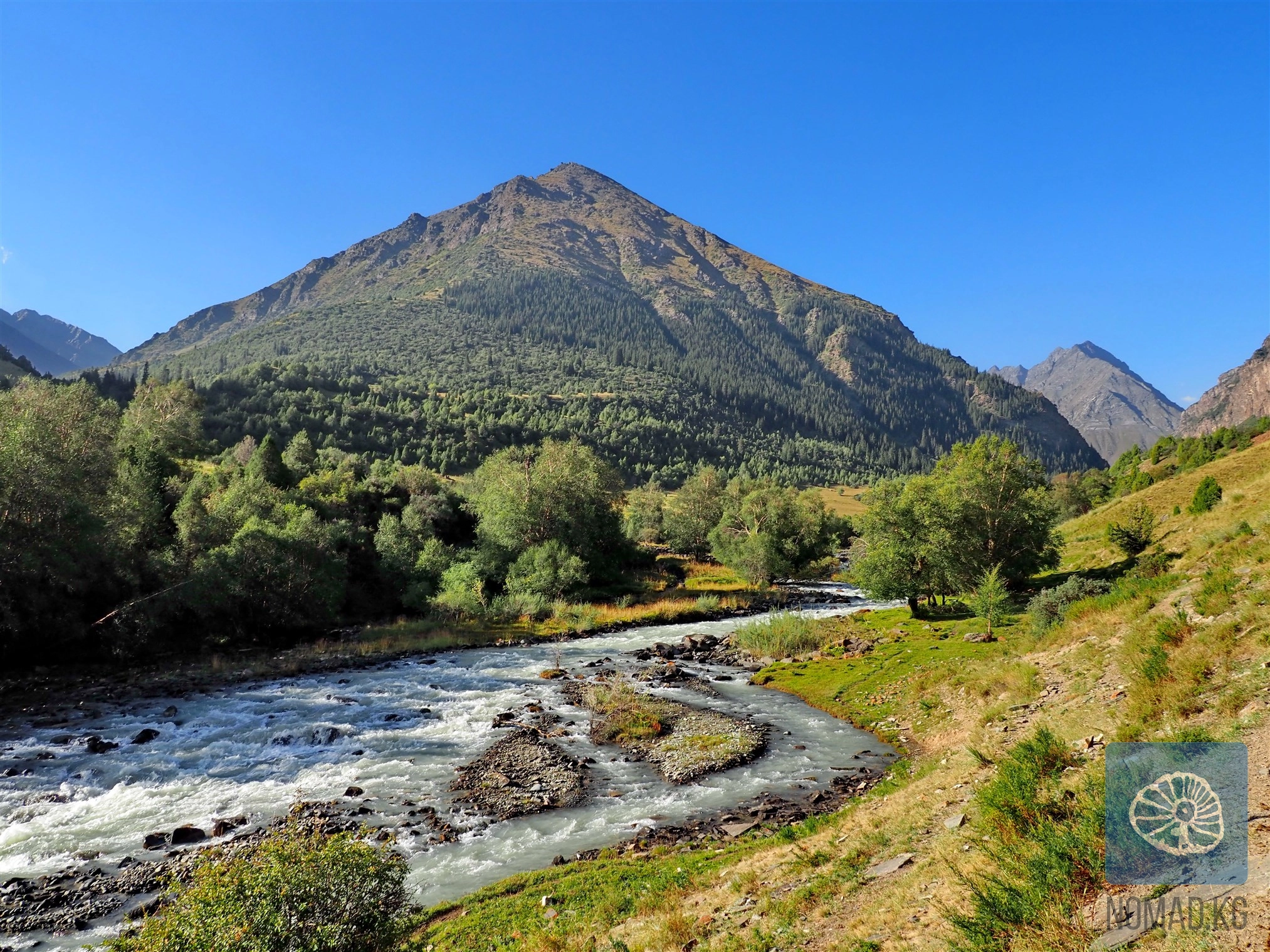
Kumushtak is both a river and a homonymous area in the Bakai-Ata district of the Talas region. The river originates high in the Western Tian Shan system, in glaciers at the Kurama-Tör and Bostun-Bulak passes. The upper boundary of these places runs along the Talas ridge, where the borders of the Talas and Jalal-Abad regions converge, near the Chatkal district.
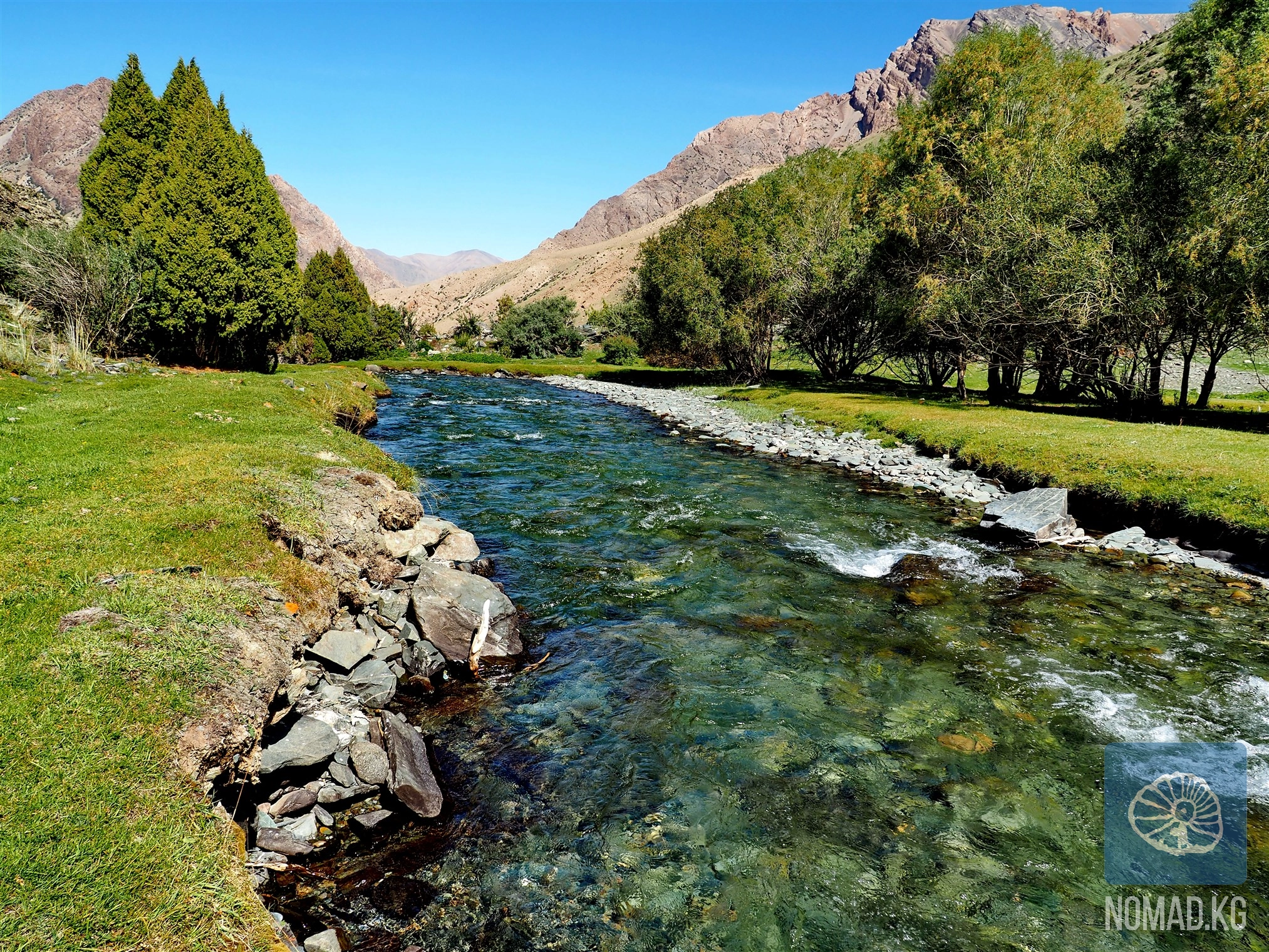
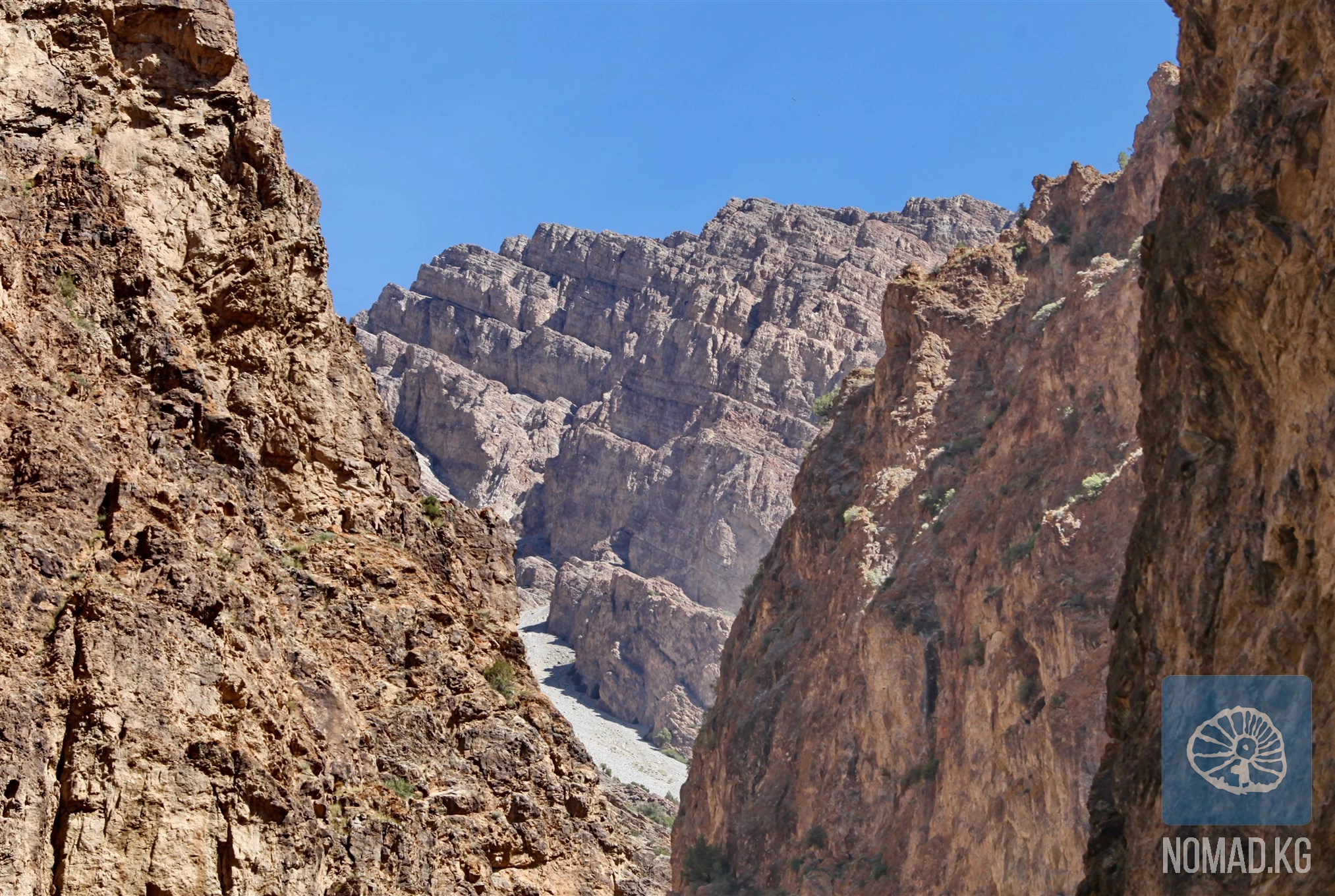
The geography here is special: Kumushtak flows parallel to the rivers Ur-Maaral and Kara-Buura, as if squeezed between two mountain corridors, while remaining one of the largest tributaries of the Talas River. Its gorge is long and diverse: at times narrow, almost canyon-like, and at other times spacious, sunlit, with wide terraces and green floodplains.
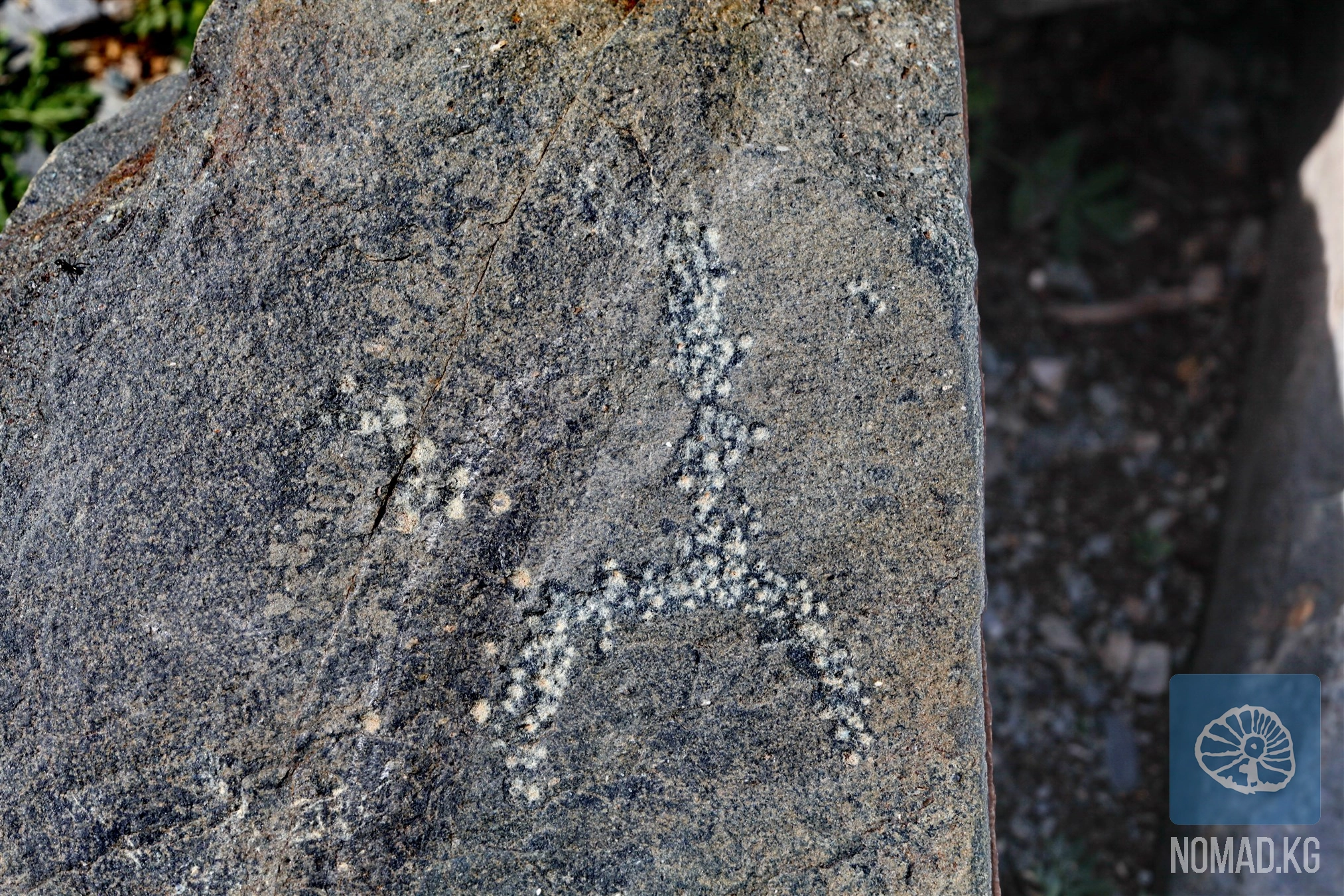
But the main thing is the name, which says a lot. Kumushtak translates to "silver trace" or "silver mountain." And this is not a poetic metaphor. As early as the 5th-6th centuries, and possibly earlier, silver ore was mined here. Traces of ancient workings are still visible in the relief - like elongated scars of history on the body of the mountains.
Archaeologist specialists believe that it was from here that ore with a high silver content was delivered to the city of Shelldzhi - the legendary "silver capital" of Central Asia. Today, this city lies beneath the waters of the Kirov Reservoir, but the mountains remember where its journey began.
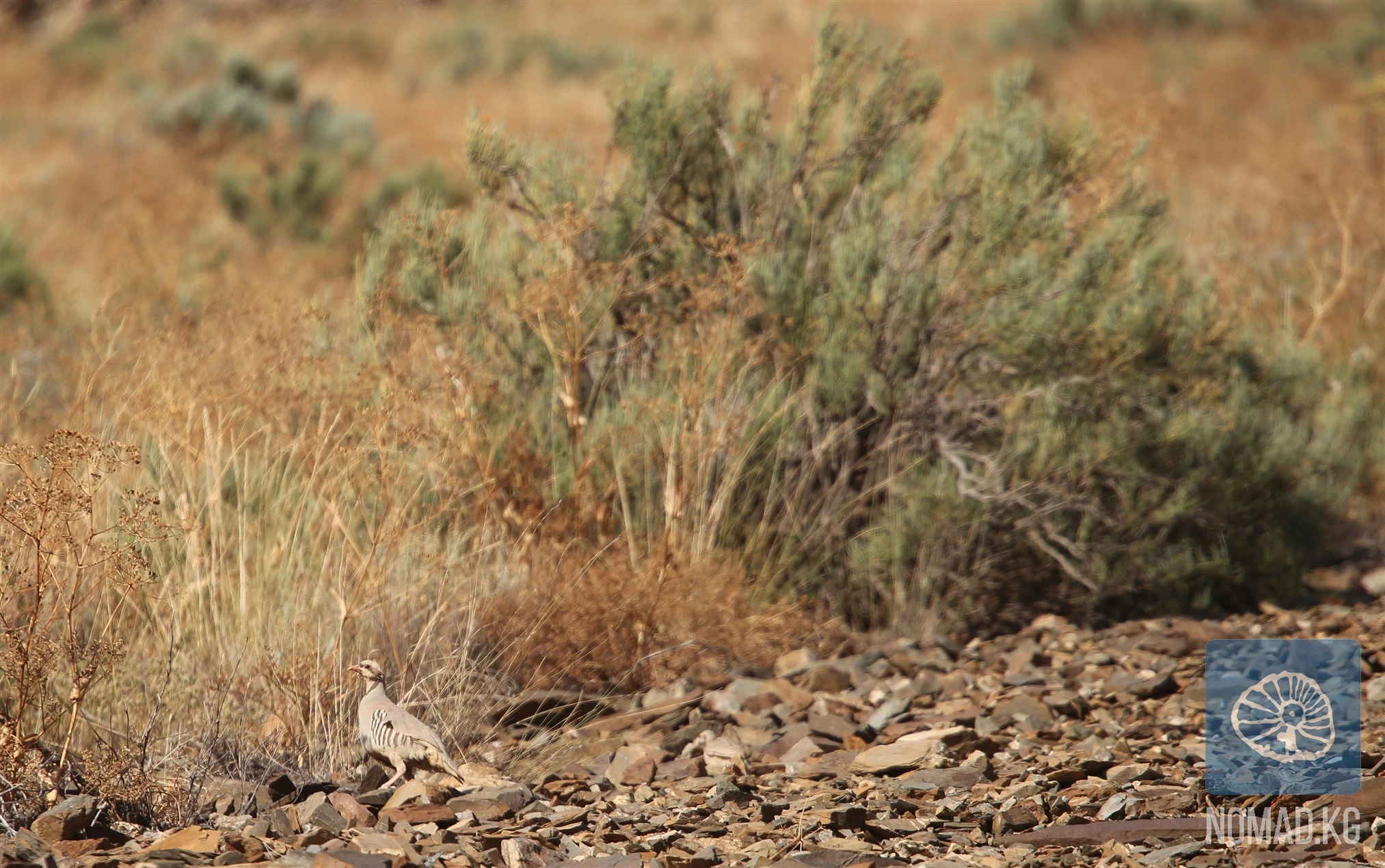
Yet Kumushtak is not just about the depths. It is primarily about the vibrant, powerful, rich nature. In Talas, there are almost no places left where herds of argali - mountain sheep - still roam. But here they exist. Small, rare, cautious - but they have survived. That is why hunting in the area is prohibited: a zoological reserve is planned to be established here in the near future.
In summer, Kumushtak greets travelers with slopes covered in flowers. Eremurus bloom here - tall, candle-like, almost extraterrestrial plants that turn the valleys into a natural botanical garden. Between them are carpets of grass, the scent of wormwood, the movement of insects, and the feeling that you have entered a place where nature still does not know the word "decoration."
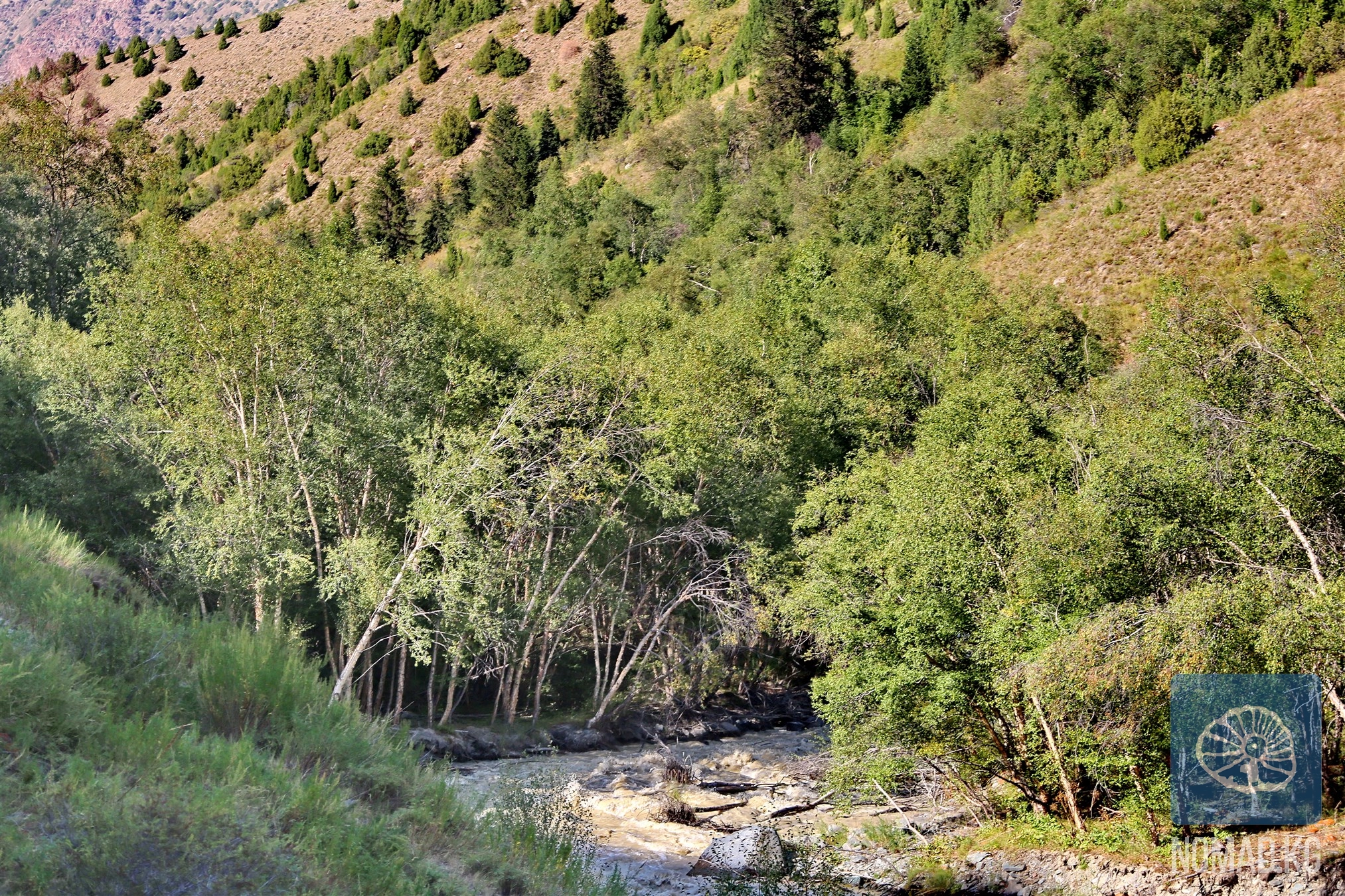
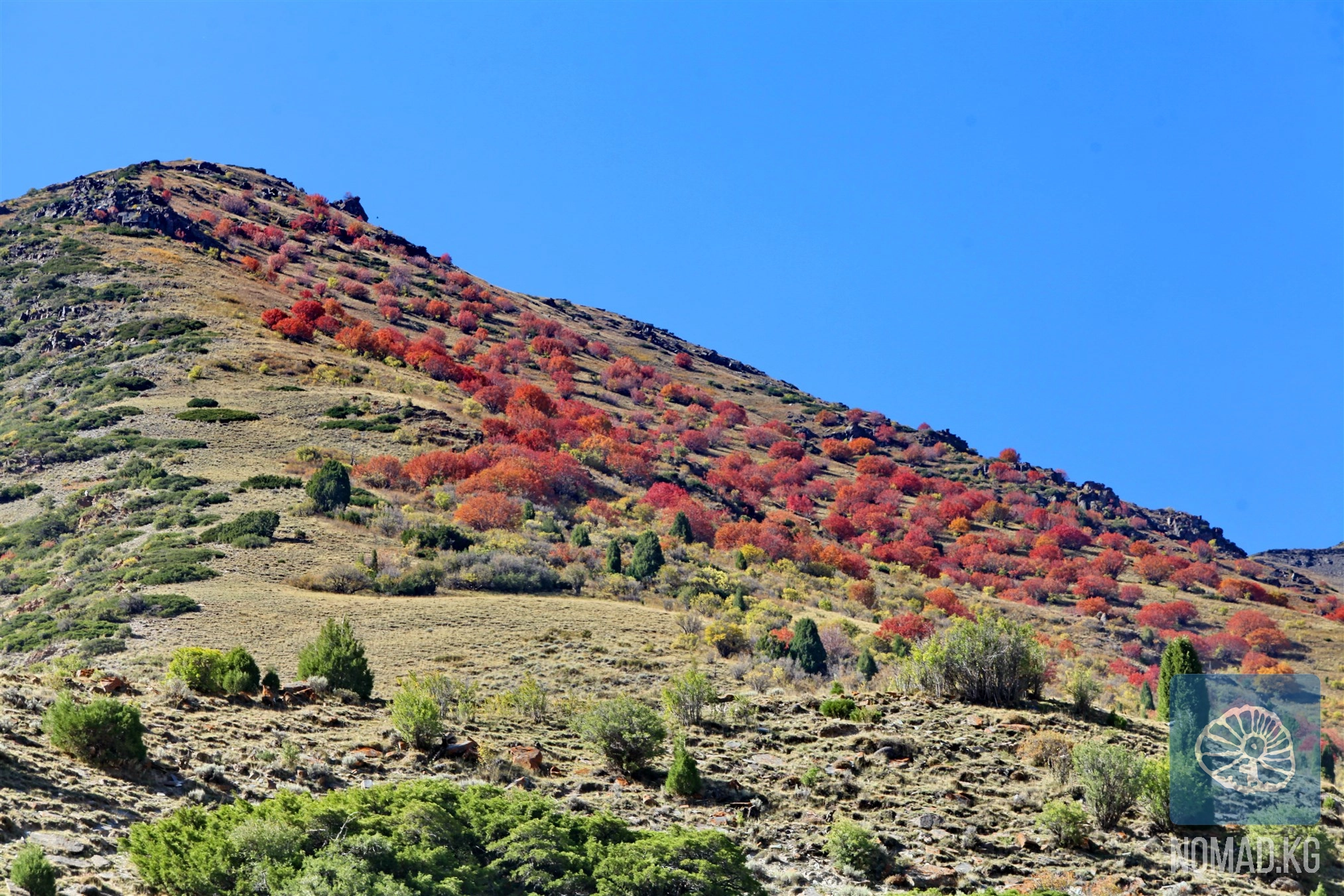
Along the river stretch floodplain forests - a rare treasure for the Tian Shan. Endemic birch and Talas poplar grow here. The forest is not dense and dark, but light, transparent, with soft shadows and the constant sound of water nearby. In the riverbed of Kumushtak are perhaps the largest plantations of wild barberry in the region. In autumn, these places turn red and gold. They are complemented by huge thickets of sea buckthorn and rose hips - a true vitamin paradise that is both beautiful and generous.
One of the main hidden gems of the gorge is the Shyralzhin spring. This is a spring with a high content of silver ions. The water here is truly "silver" - not by legend, but by chemical analysis. It is cold, crystal clear, and has an almost imperceptible, fresh taste. From these mountains flows a stream of the same name, which merges with Kumushtak, adding another line of life to it.
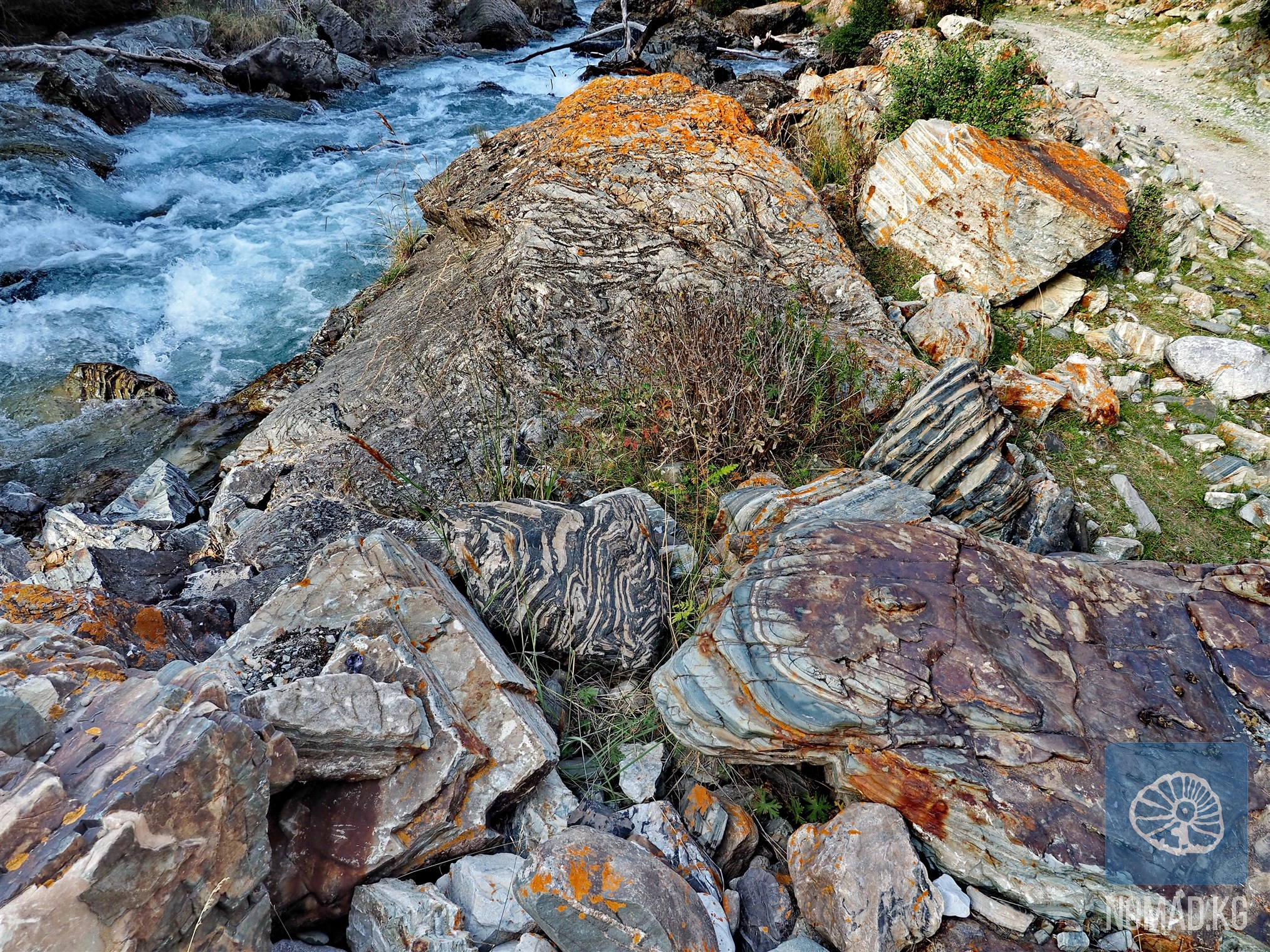
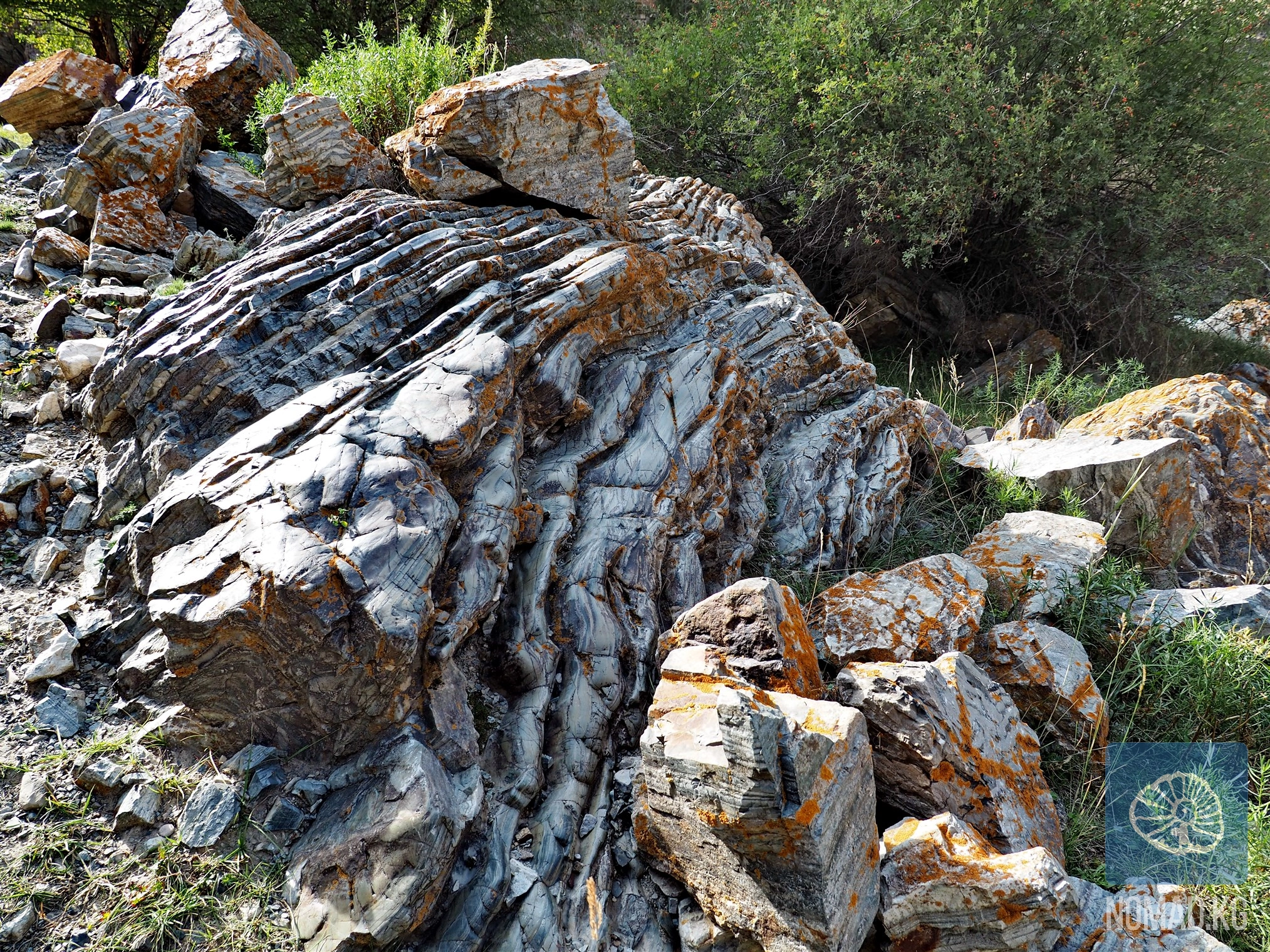
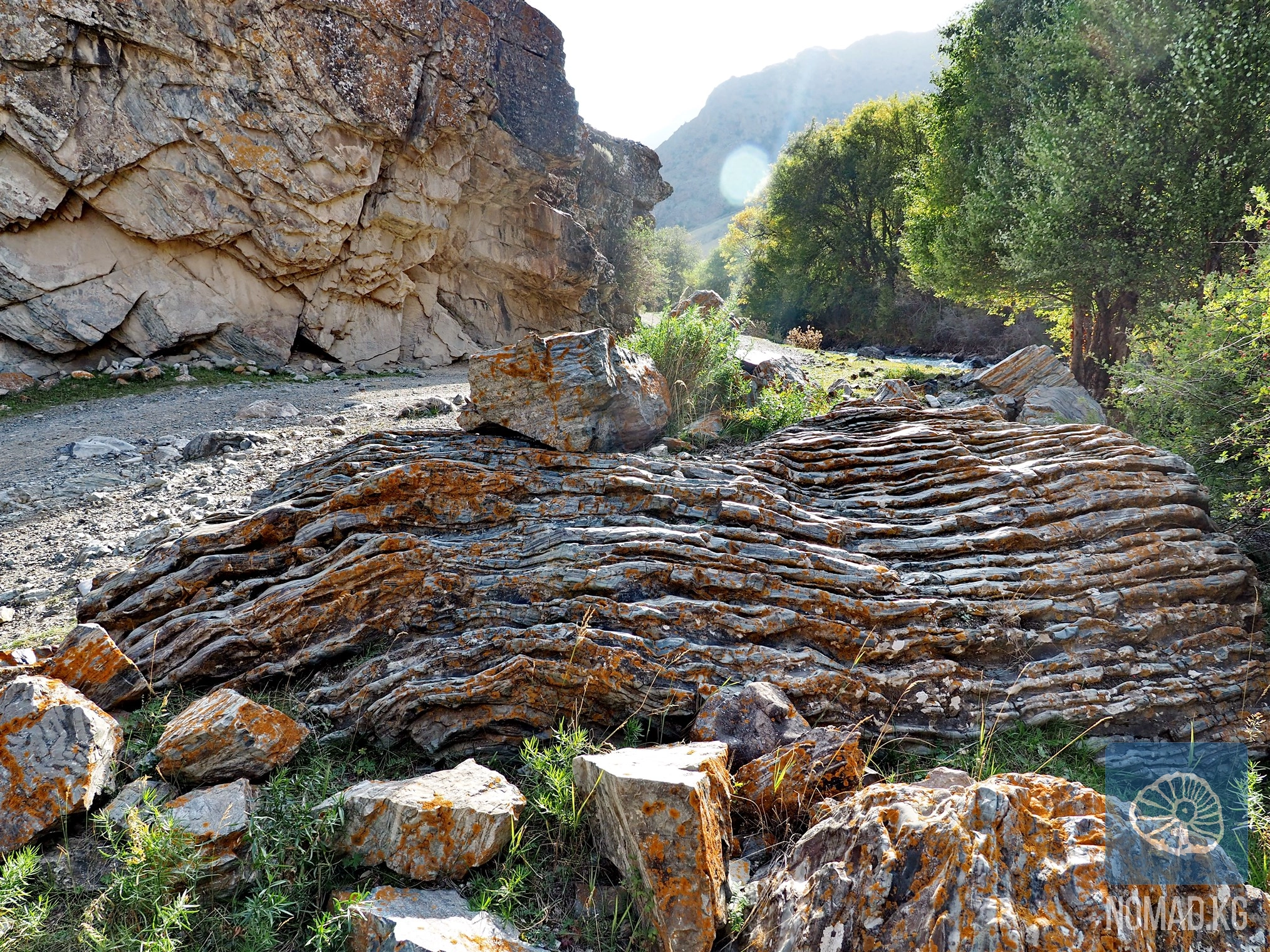
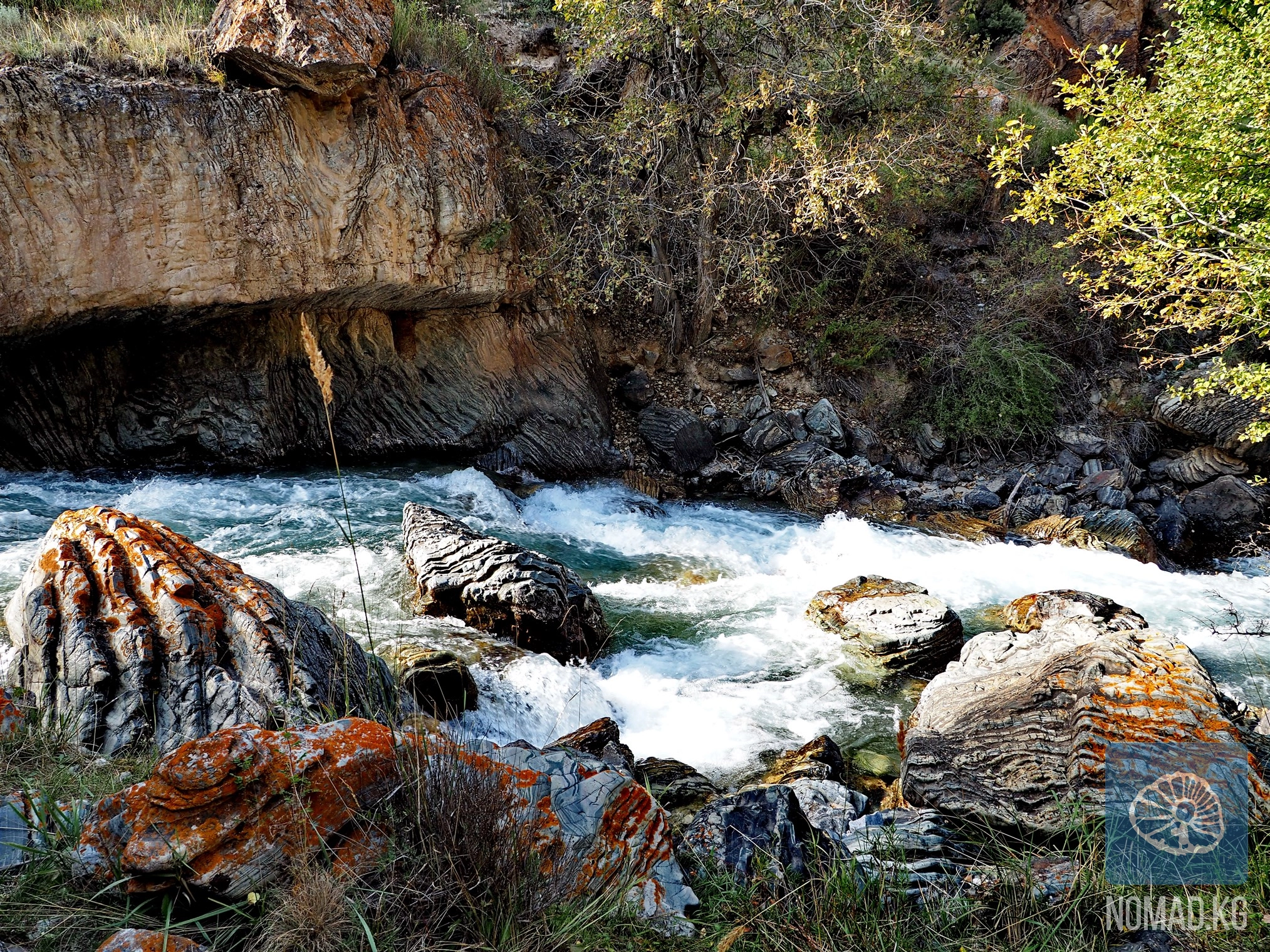
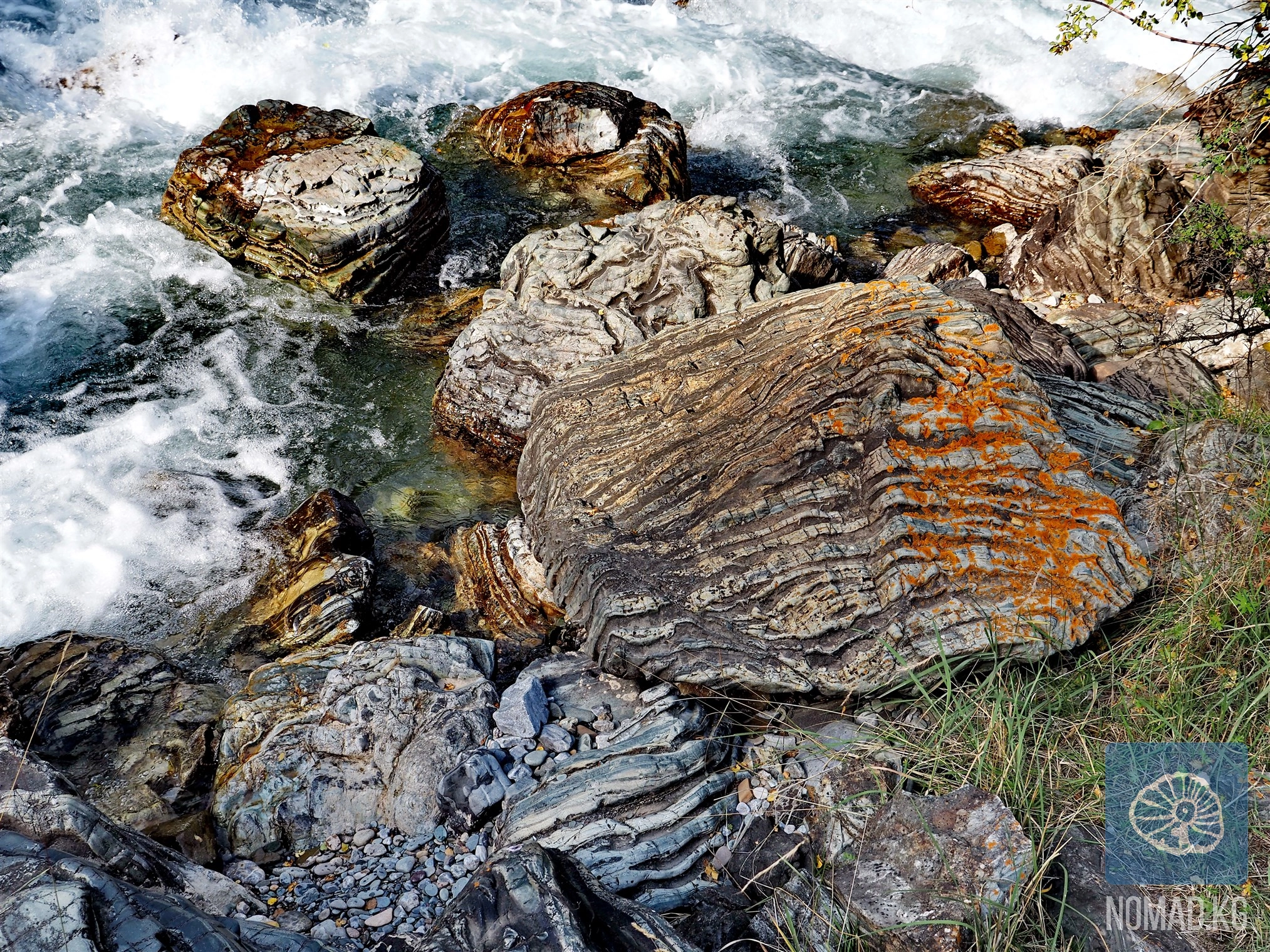
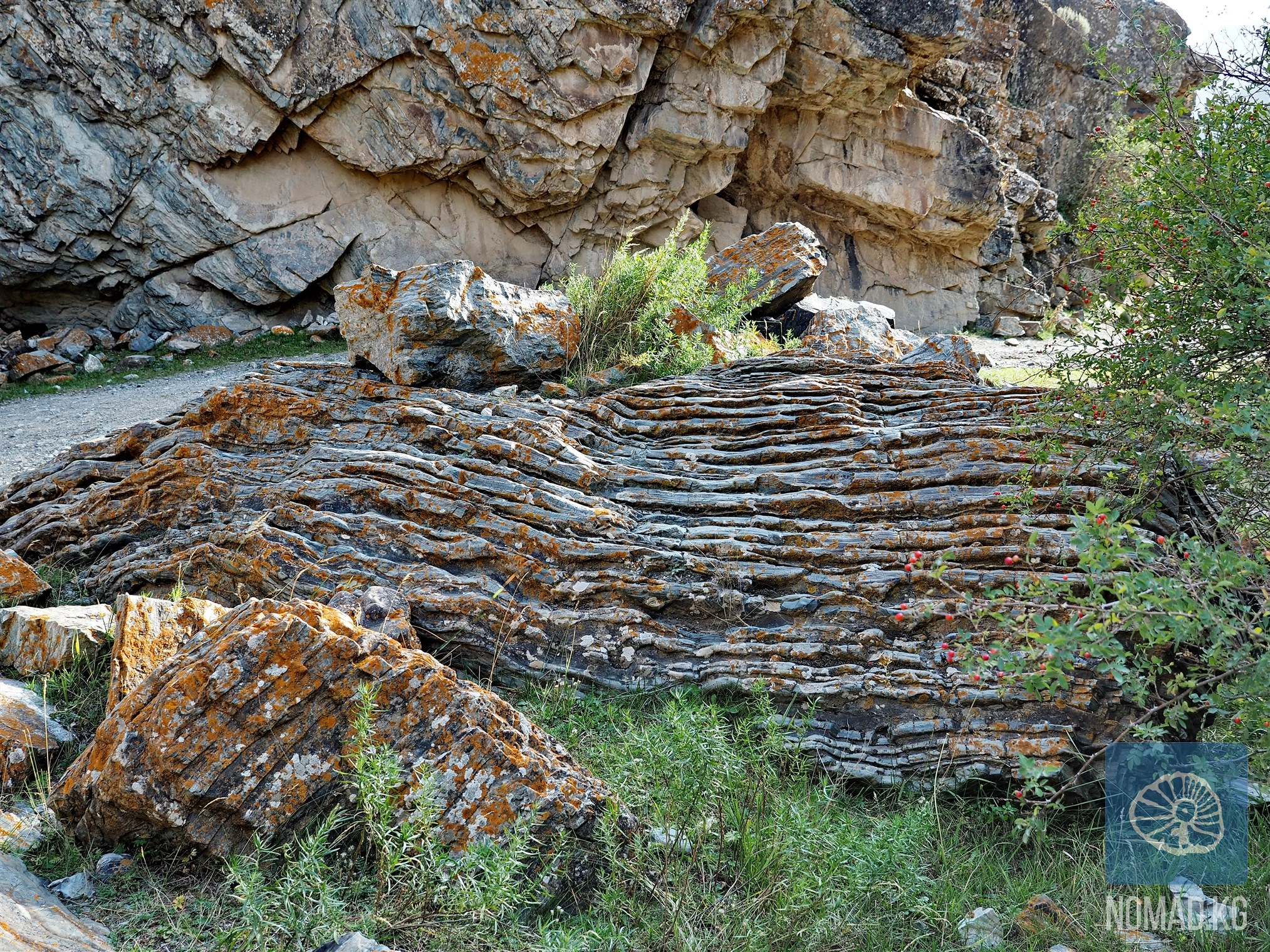
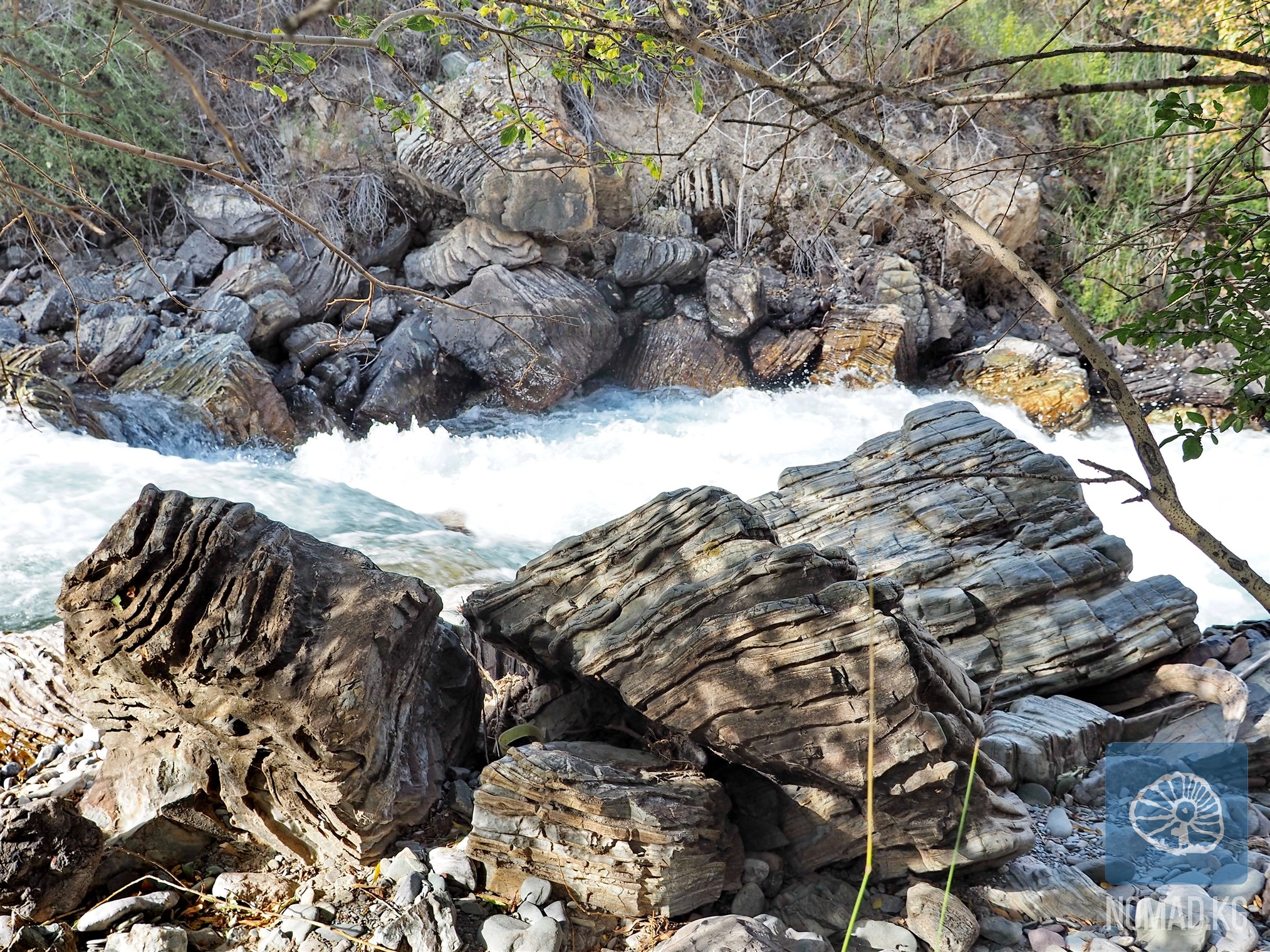
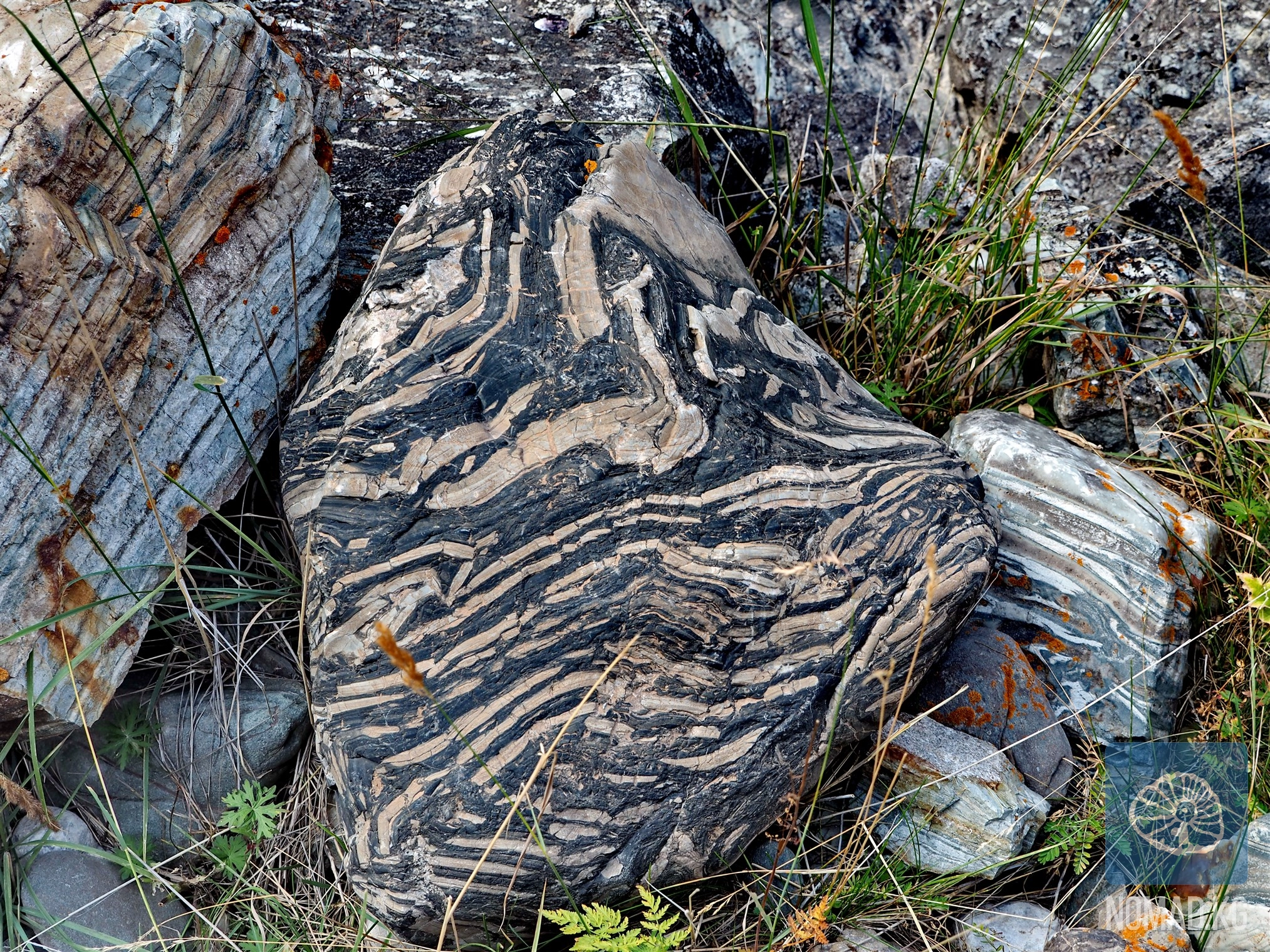
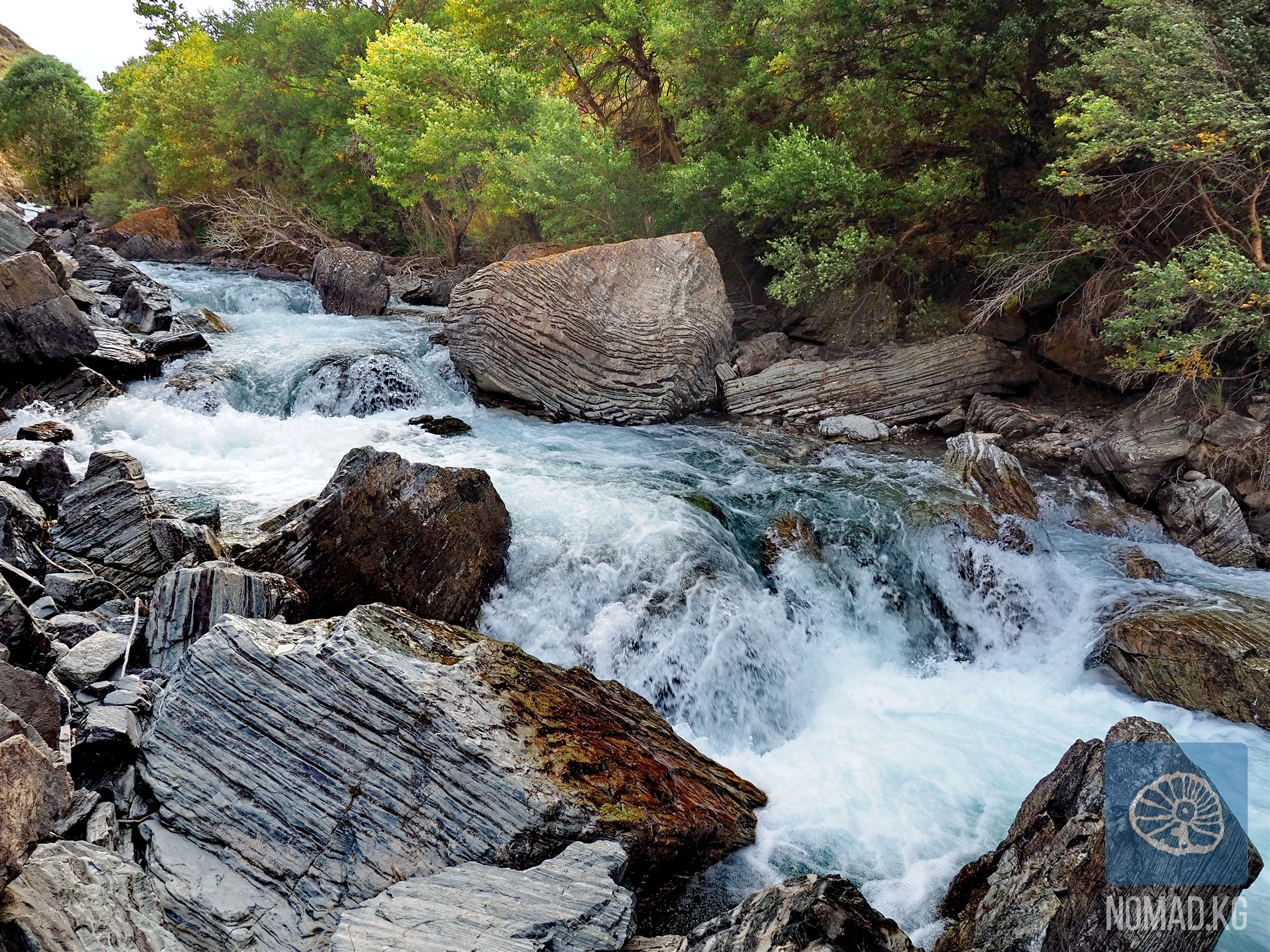
Upstream is a place with the beautiful name Taigak-Tash (Slippery Stone). This is a cascade of river rapids and shallows, where the water carves its way among layered stones with whimsical patterns. The stones here look as if they were deliberately laid out by artists: waves, stripes, curves, textures. This is an ideal photo location and one of those places where you can linger for an hour, simply watching the water flow.
How to get there: by car, you can drive quite high up the Kumushtak gorge. Beyond that, there are hiking and horseback routes - these open up the most beautiful and wild sections.
Best time: from late June to early September. During this time, the passes are open, the slopes are blooming, and the river is most photogenic.
Level of difficulty: routes of varying levels - from easy walks along the river to serious treks in the upper reaches. But these are still mountains - good footwear and basic physical fitness are required.
Water: be sure to collect water from the Shyralzhin spring, but treat the place with respect - do not turn it into a "picnic spot."
Weather: even in summer, sharp drops in temperature and rain are possible. Bring a warm jacket and a raincoat.
Ecology: this is a future reserve and already a refuge for rare animals. Do not leave trash, do not make noise, do not stray from paths in sensitive areas.
Kumushtak is not just a gorge and not just a river. It is a long, complex, multi-layered world, where narrow canyons suddenly open into wide valleys, where blooming slopes give way to floodplain forests, and around every bend in the road, it seems you have traveled even further - not just into the mountains, but also through time. This is a place for a true journey: with a road, with silence, with tired legs and clarity in your head. If you are looking for not just a point on the map, but a space where mountains, history, and water come together into one great feeling of the journey - this is the place for you. Along the silver trace of the Talas mountains.
At dawn in the upper reaches of Үйүр-Марал, the silence rings louder than the wind. It lies on the grass, on cold stones, on the slow breath of the mountains - and it seems that the world here has just been created and has not yet managed to invent
The Karakoyun area is located at an altitude of about 1600 meters, at the junction of the Talas and Bakai-Ata districts, in the very heart of the Talas Ala-Too mountain range of the Western Tien Shan. Dominating the valley is the Dym-Bol massif,
The glacial lakes of Agynay-Köl are located in the upper reaches of the Tabylgyty gorge, on the northern slopes of the Talas Ridge - one of the longest and most underrated mountain ranges in Kyrgyzstan. Over 200 kilometers of the ridge is a world of
Standing by the Talas River early in the morning, when the fog still lingers over the water, it is easy to imagine how caravans passed through here, how cavalry units moved along these very shores, how language, faith, and power changed - while the
If there is a place in the Talas region that amazes from the very first step, it is the Talas Birch Grove - the largest man-made birch forest in all of Central Asia and one of those places where humans and nature have created a true oasis of
Peak Manas is the highest point of the Talas Ala-Too ridge, with an elevation of about 4485-4488 meters above sea level, and this figure alone sets the tone: here, the familiar routes end, and the territory of true mountains begins. The
Today's Ak-Dobo was previously called Orlovka, and even earlier -the settlement Orlóv (Ger. Orloff) . The village was founded by German settlers from Poland, and this multilayeredness of names is still felt in its rhythm. Here, it is easy to
The high mountain passes of Suusamyr do not tolerate haste. Its meadows, rivers, and slopes exist at their own pace. The grass grows slowly here, trees take years to settle in, and any human intervention leaves a lasting mark. When you stand at this
Kyrgyzstan is a country where the memory of ancestors, sacred space, and natural power merge into a single cultural landscape. For centuries, Kyrgyz people have placed special importance on burial monuments and holy sites—mazars. Even today,
The Kumushtak Gorge in the Bakai-Ata district of the Talas region does not reveal itself immediately. The mountains here do not press down with height but seem to retreat, leaving space for breath. The stones lie as if they were intentionally
From the Talas Ala-Tuu ridge, the steppe suddenly ceases to be chaotic. In its body, even, almost stubborn strokes emerge. Stone by stone. Line by line. Bakayyr does not reveal itself immediately: it waits for you to step out of the scale of a human
Among the picturesque mountains of the Bakai-Ata district, not far from the village of Urmaral, lies one of the most mysterious and revered places in the Talas region - the Kara-Koyun cave. This is not just a dark niche in the rocky mass, but a
The Talas Valley is one of those places where Central Asia speaks to the traveler through the language of wind and silent stones. Here, between hills and gorges, traces of ancient civilizations have been preserved, whose names have long dissolved in
The Talas region is one of the corners of Kyrgyzstan where history is felt not in museum showcases or academic works, but in the wind, in the scent of dry wormwood, in the lines of mountains frozen around the valley like an ancient choir. Here, the
If you have already seen Lake Besh-Tash and think that the national park has revealed all its secrets to you, then you simply haven't yet ascended the Itagar Pass. This is the route after which photos remain in your phone's memory that you
In the very heart of the blessed Talas Valley, where the silvery Talas River leisurely carves its path between two majestic mountain ranges - the Talas and Kyrgyz ranges - lies a unique natural oasis. The Talas Forest is not just a green stripe on
In the Talas Valley, there is a place where legends come alive at every step, and the silence of the mountains speaks louder than any storyteller. This is the Besh-Tash Gorge - one of the most picturesque and symbolic natural spaces in Kyrgyzstan.
In the Talas Valley, among the hills and green valleys, lies one of the most revered sacred places in the region - the mazar of Boo-Terek. Its name translates from Kyrgyz as "a bundle of poplars" or "many poplars," and this is no
The Ötmäk Pass (3326 m above sea level) is one of the most impressive places in the Talas region and an essential mountain artery connecting the closed Talas Basin with the expansive Suusamyr Valley and the strategic Bishkek-Osh highway. This is the
The Besh-Tash Nature Park covers over 30,000 hectares, stretching nearly 30 kilometers upstream along the river of the same name - from the gentle foothills at an altitude of 1,100 meters to the harsh, cold glaciers rising to 3,500 meters. The park
The mountains of the Talas Ridge conceal many secrets, but one of the most astonishing is the complex of rock carvings at Bakayir-Kara-Kuush, located in an easily accessible gorge where human footsteps are lost among the stones, and ancient
Where once small rural streets stretched along the river valley, where people lived a measured steppe life, today lies a vast expanse of water - the Kirov Reservoir, one of the most significant hydraulic structures in Kyrgyzstan and an impressive
In the center of the village of Kyzyl-Adyr, which many travelers remember by its old name Kirovka, there is a local history museum named after Mikhail Fyodorovich Tura in the secondary school named after Orozbekov Meilibek. At first glance, it seems
The Besh-Tash National Park, which translates to "Five Stones," stretches in a narrow chain along the Talas Ala-Too mountain range. On a good gravel serpentine road up the Besh-Tash river gorge, it feels like the car is about to hit the