

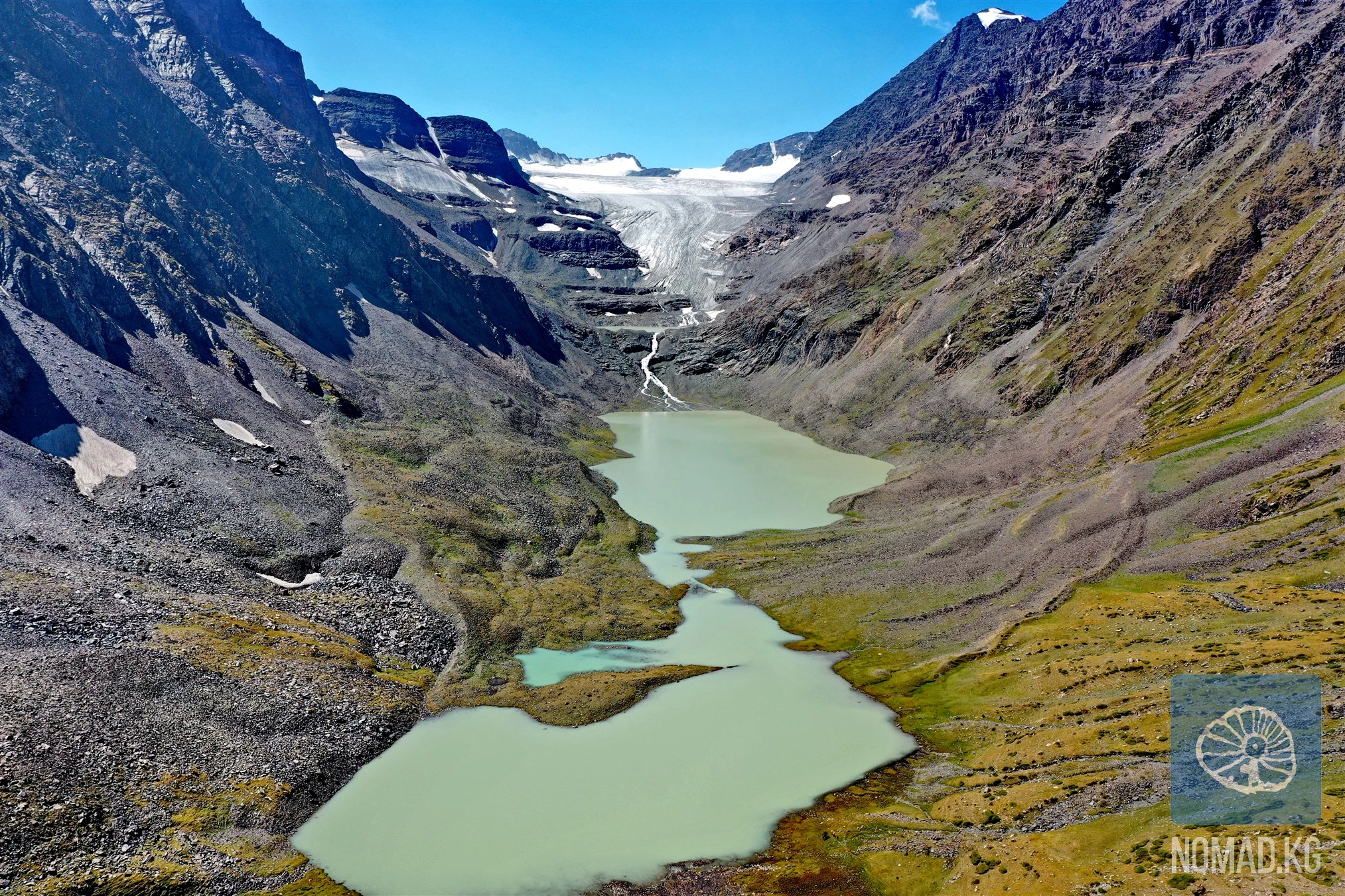
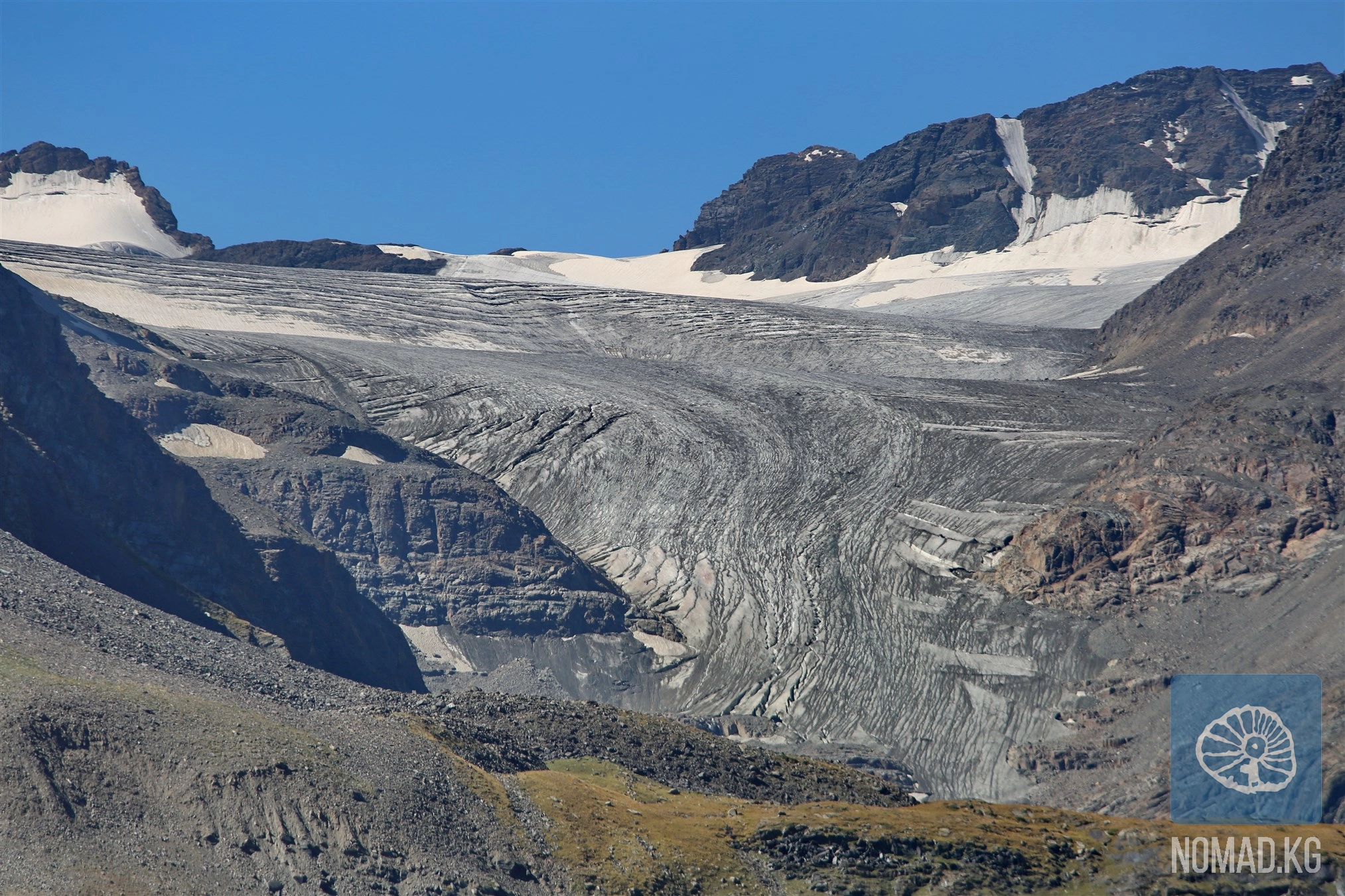
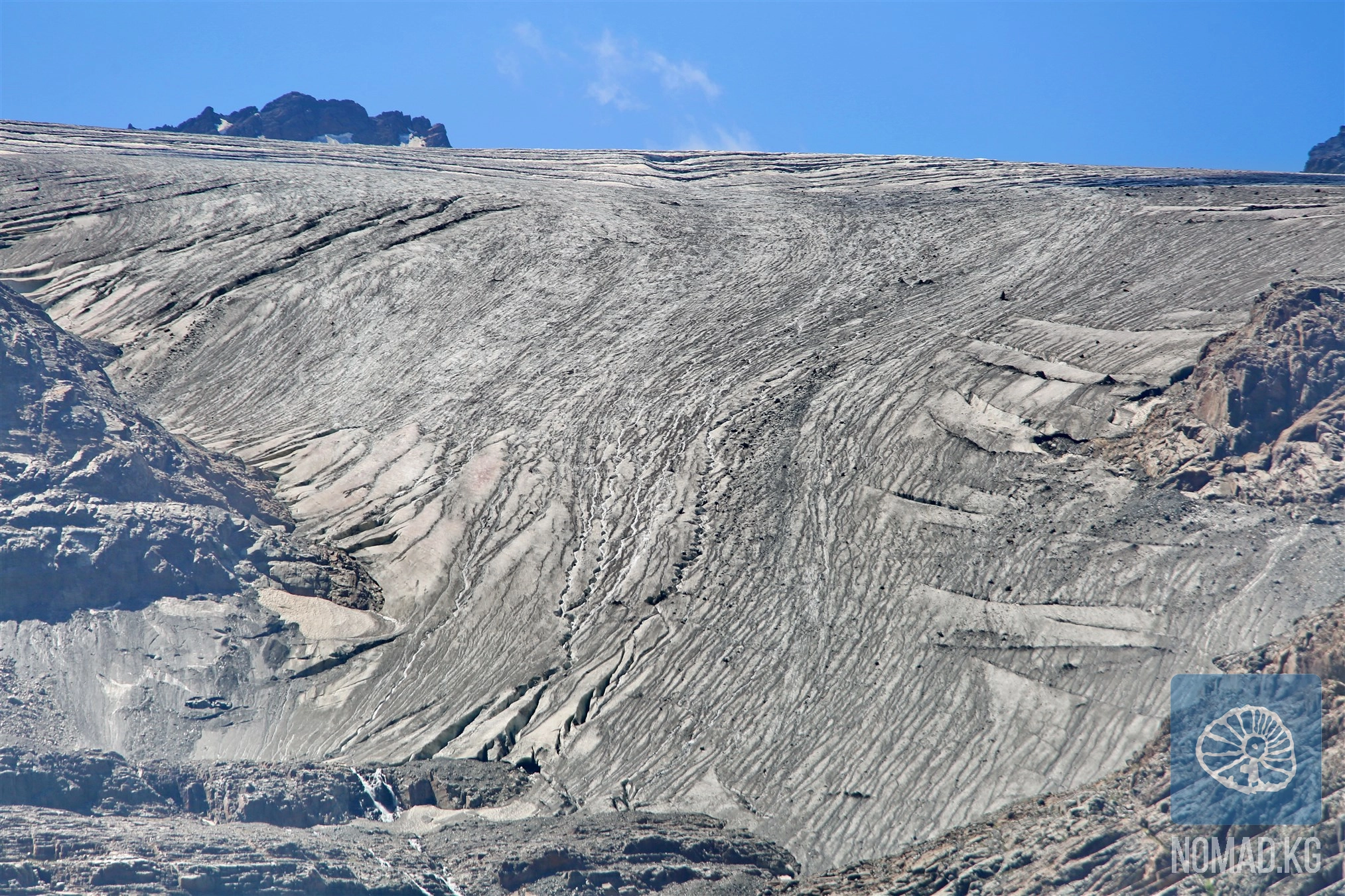
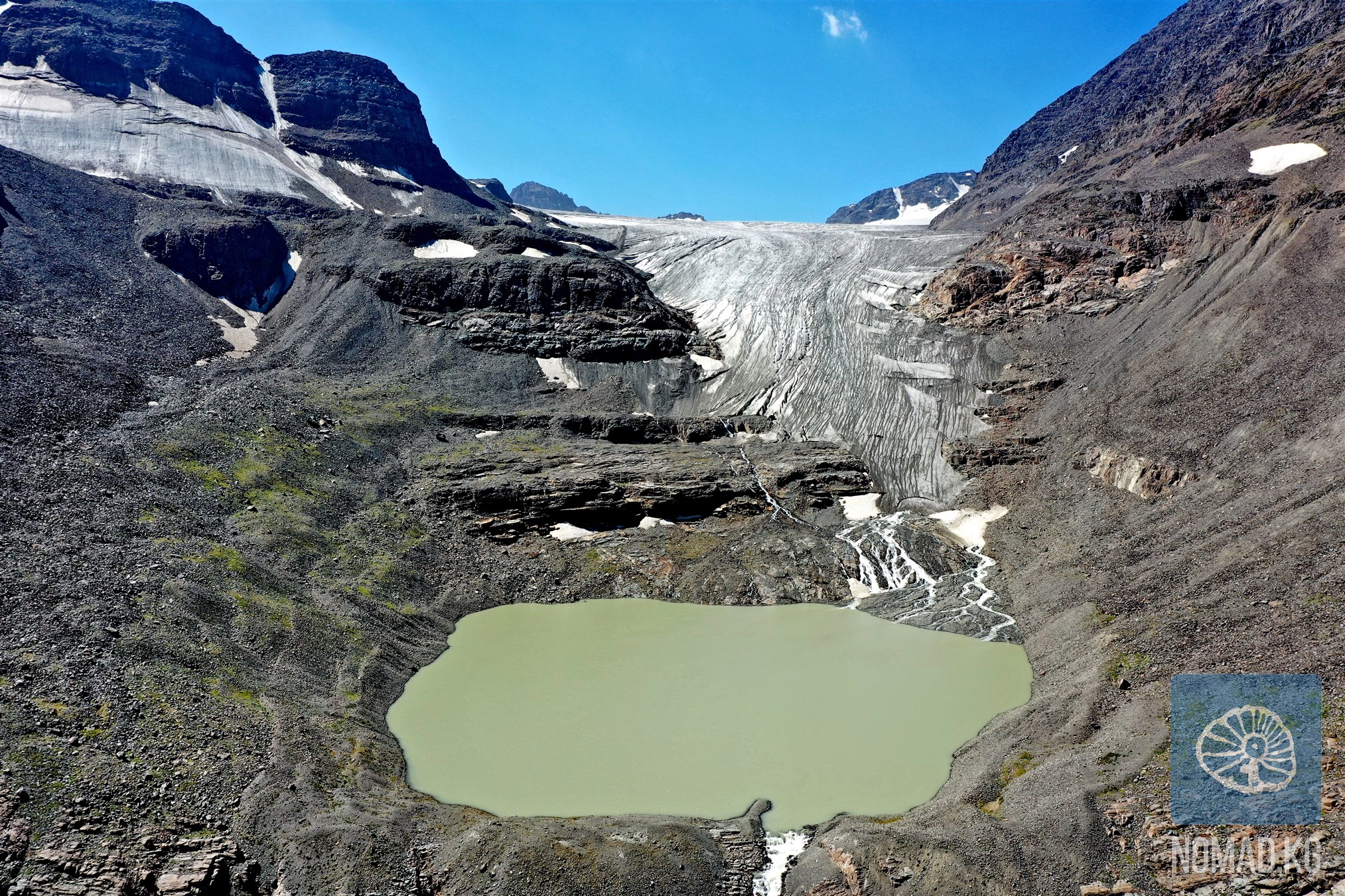
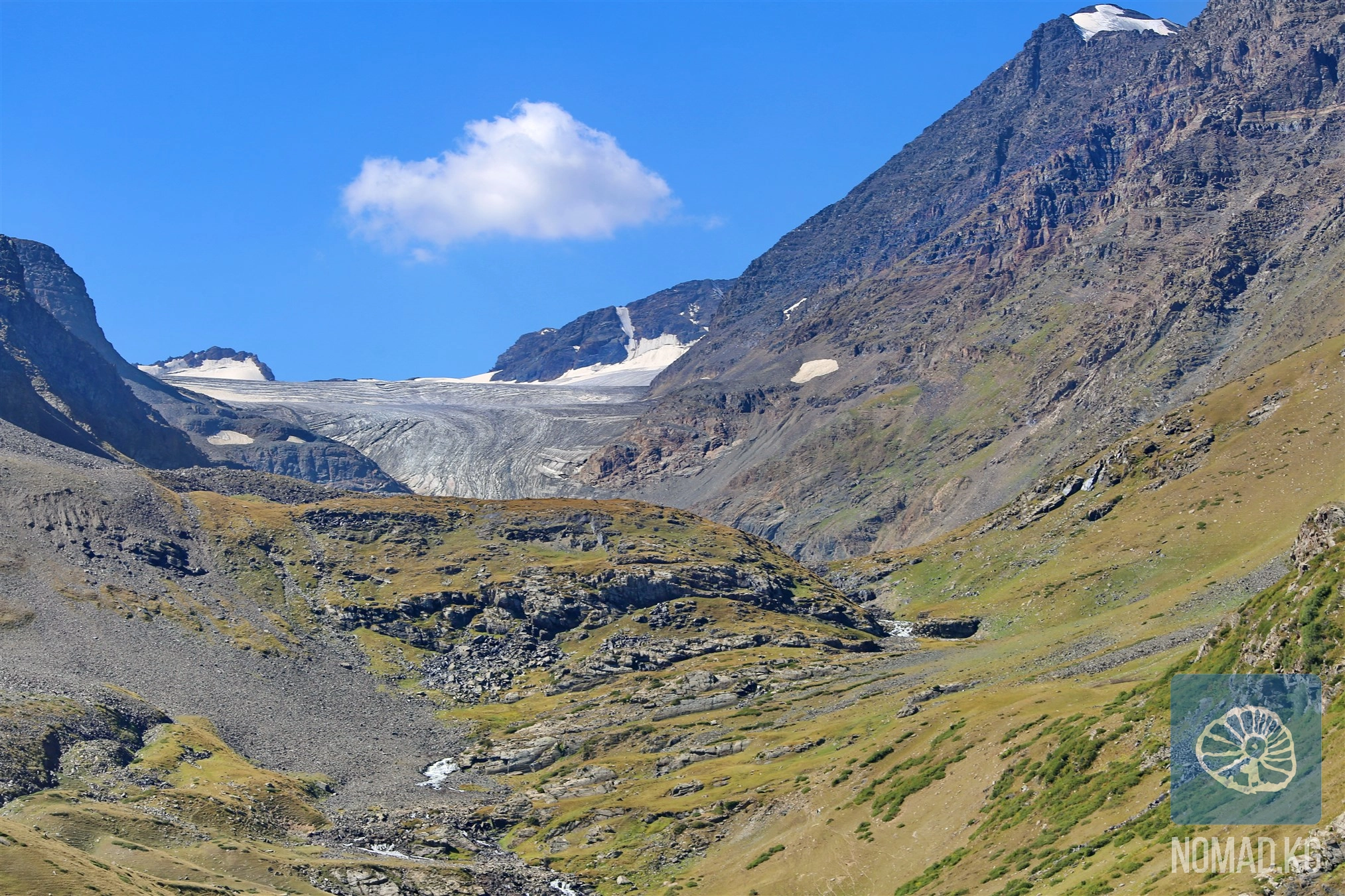
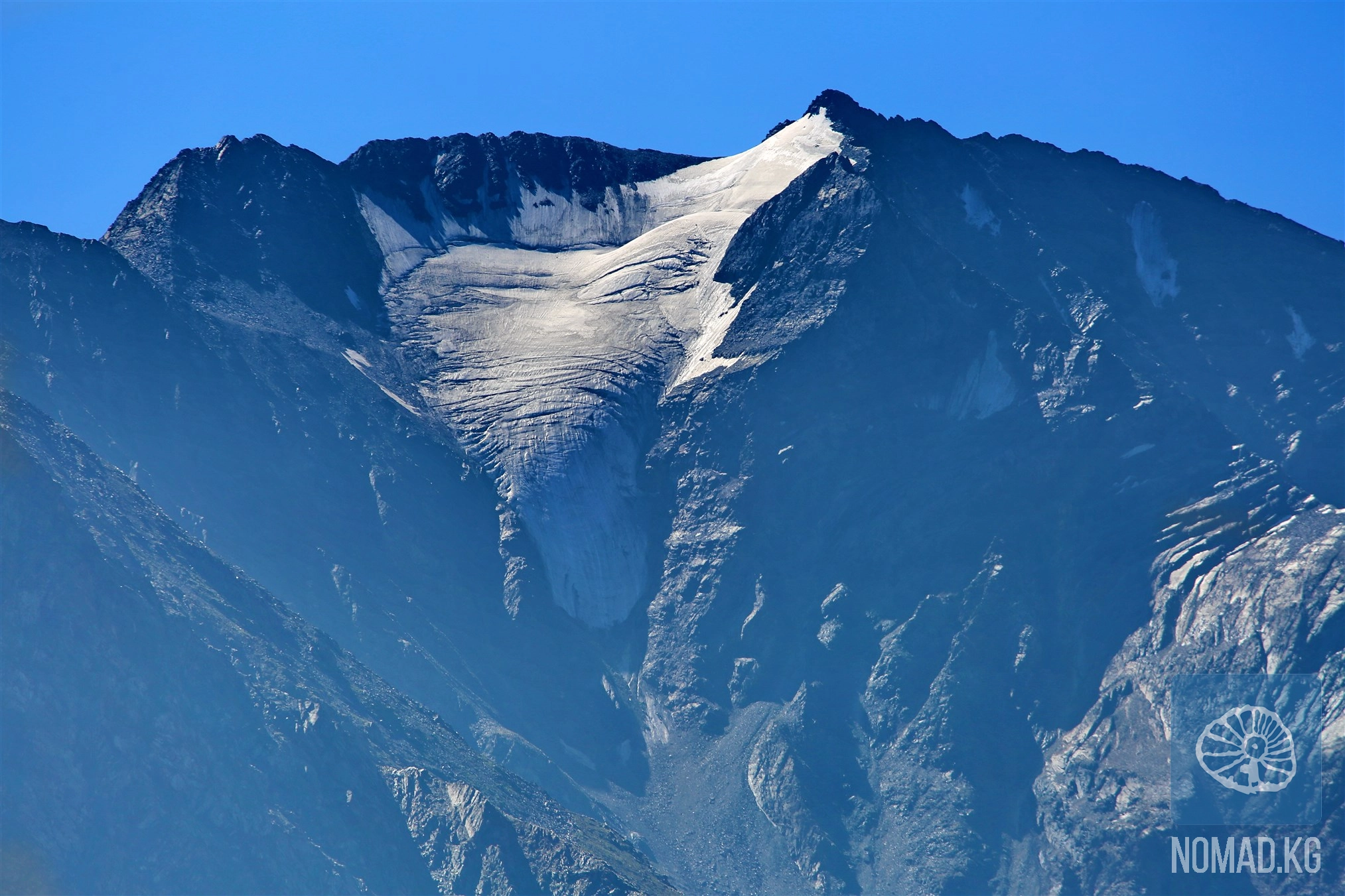
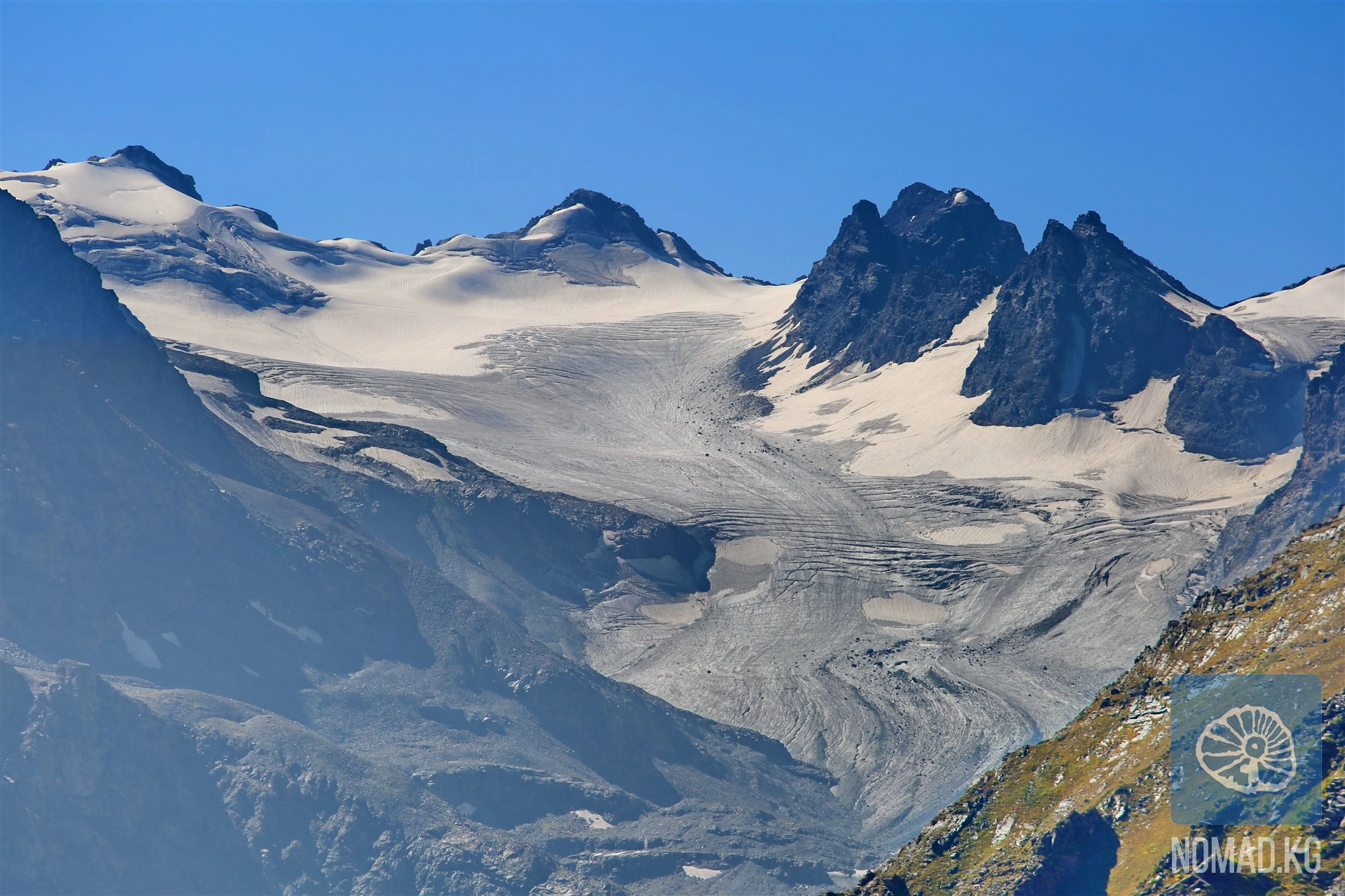
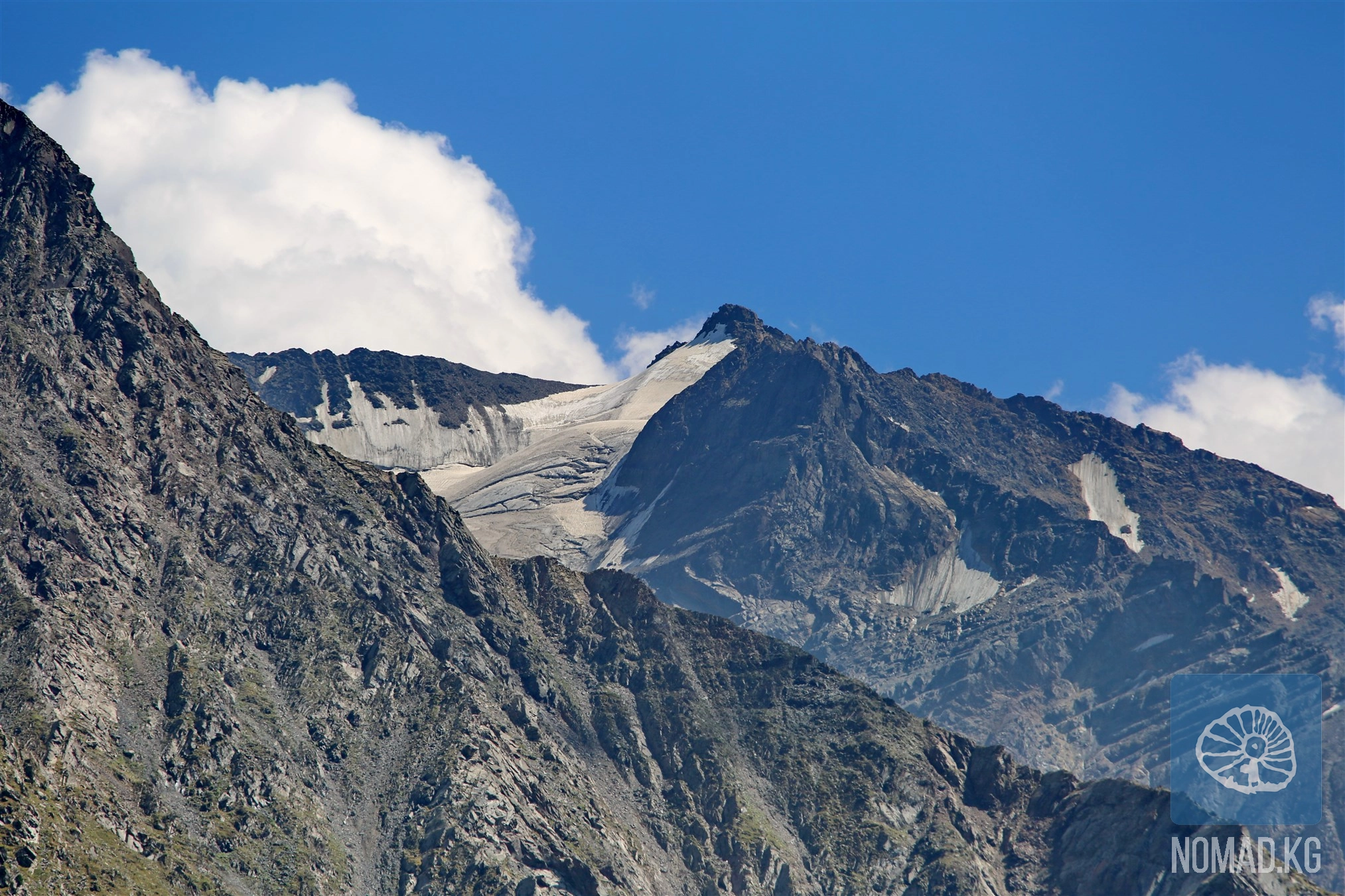
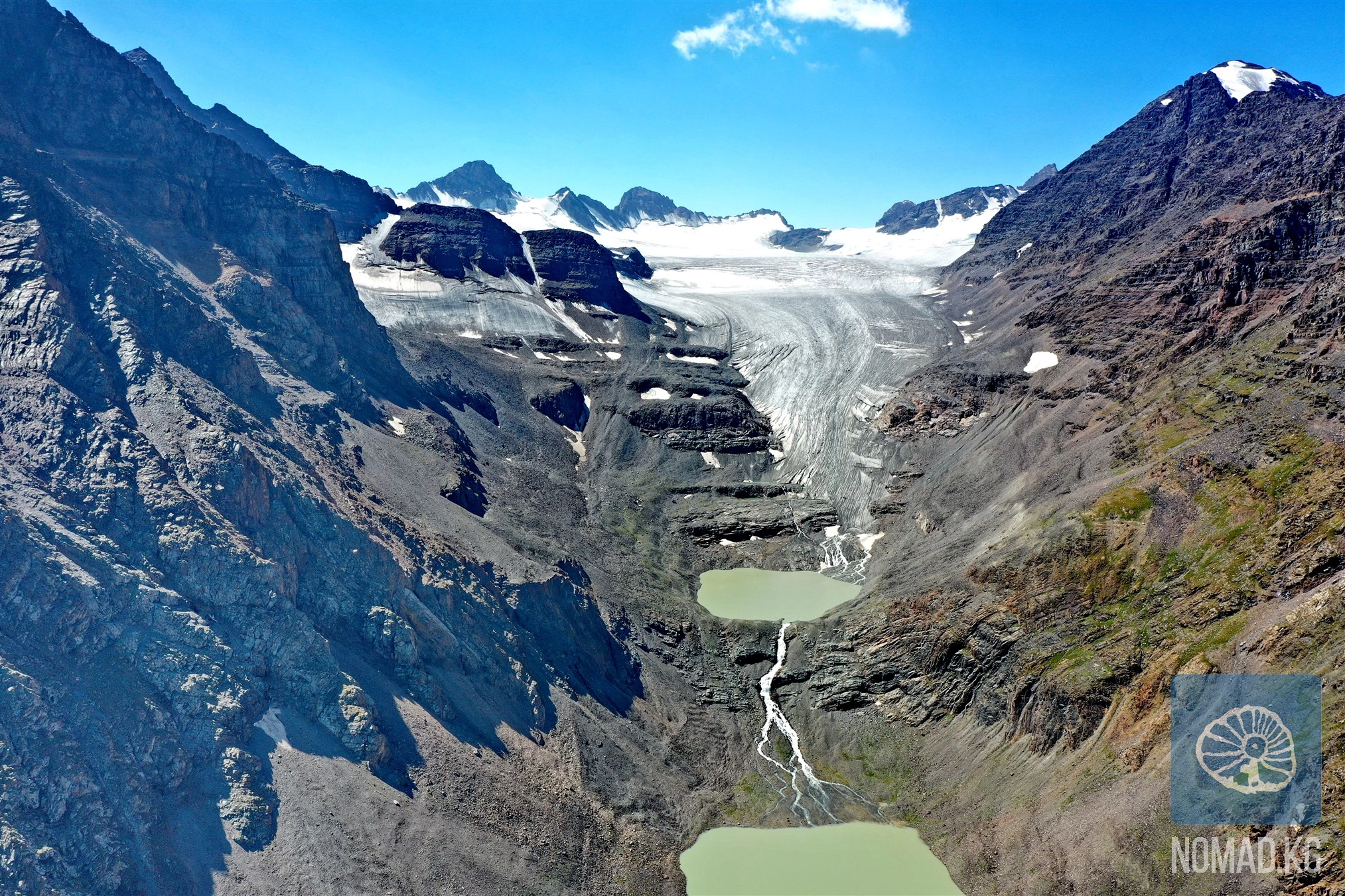
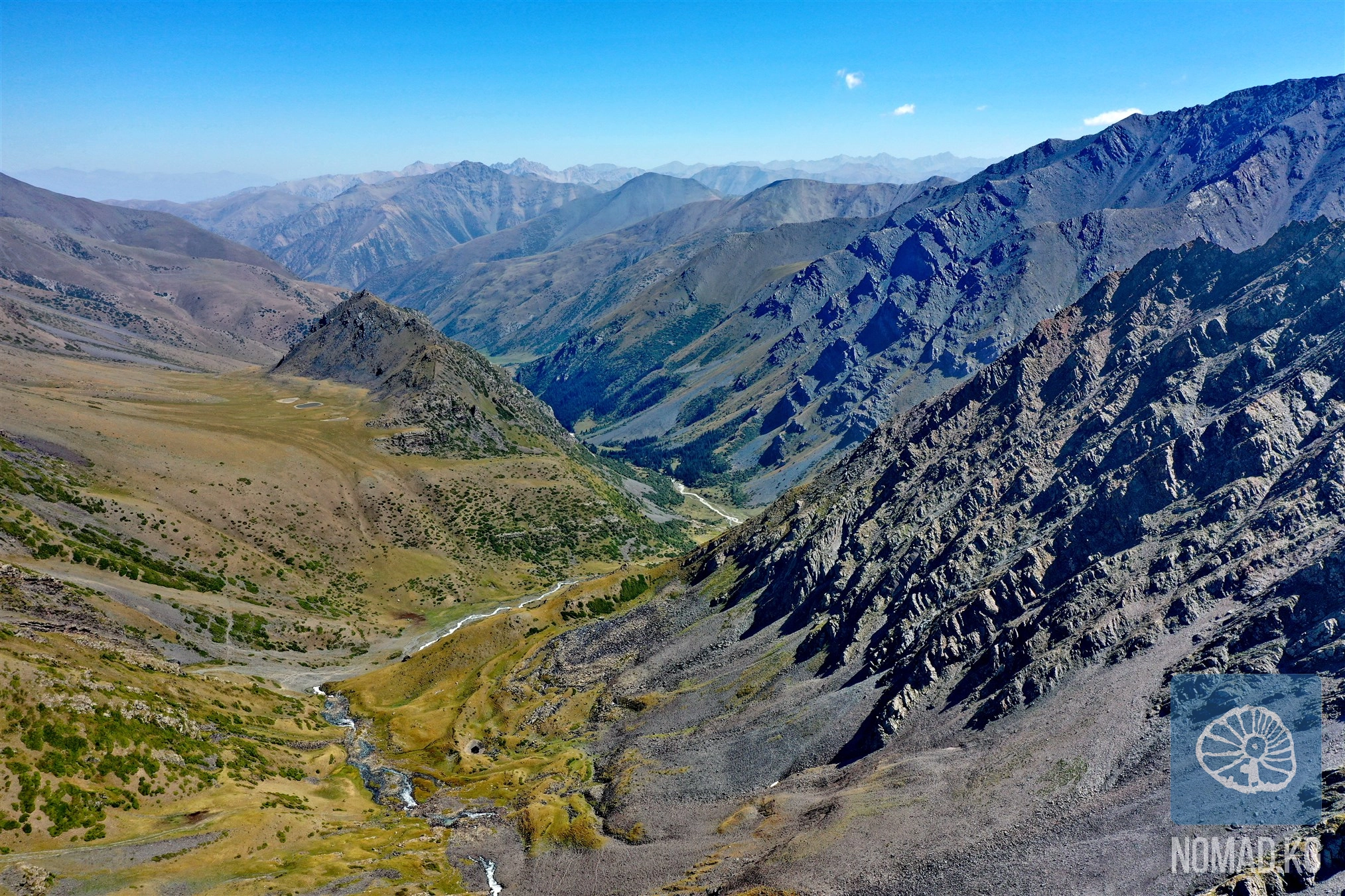
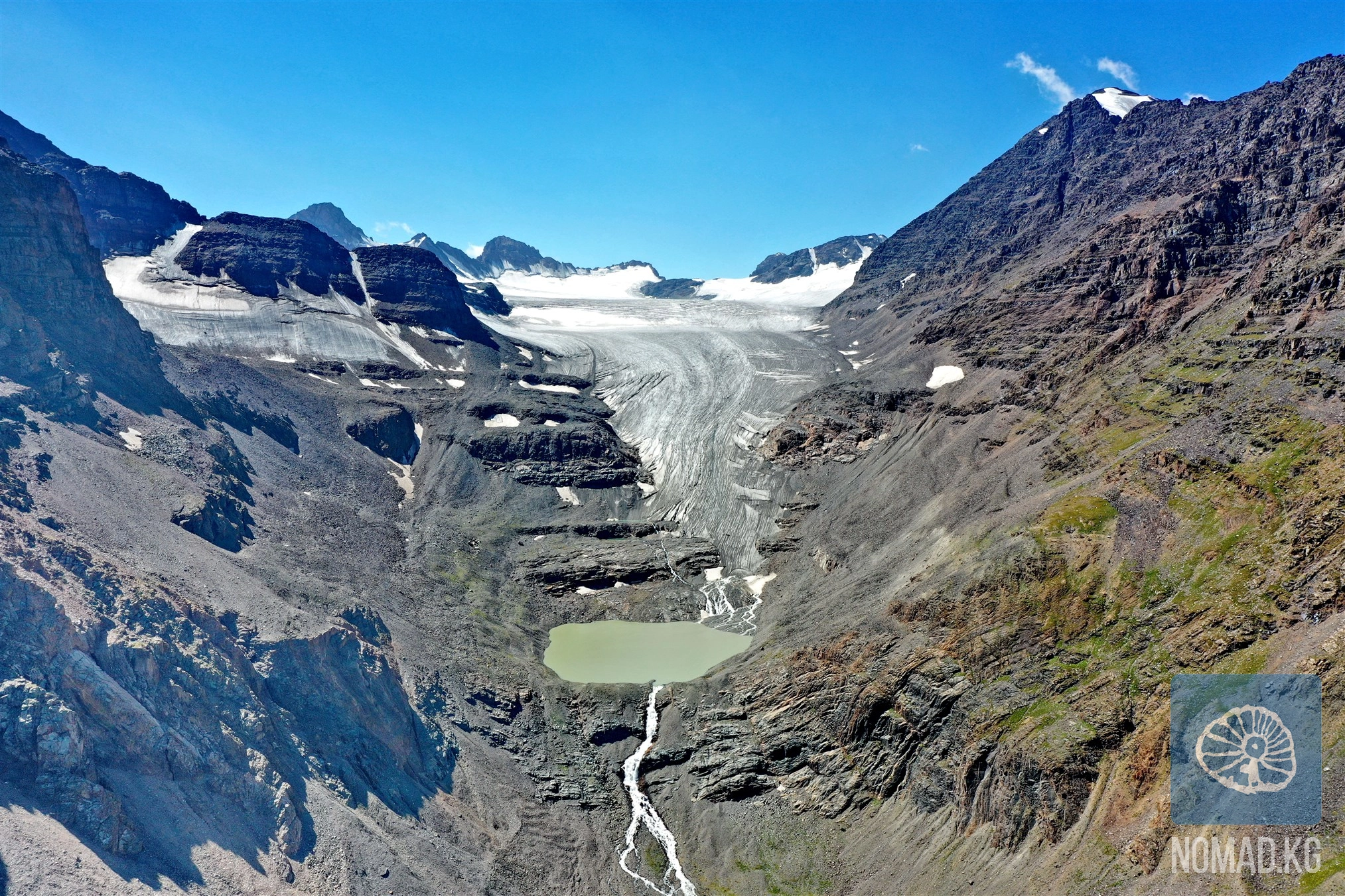
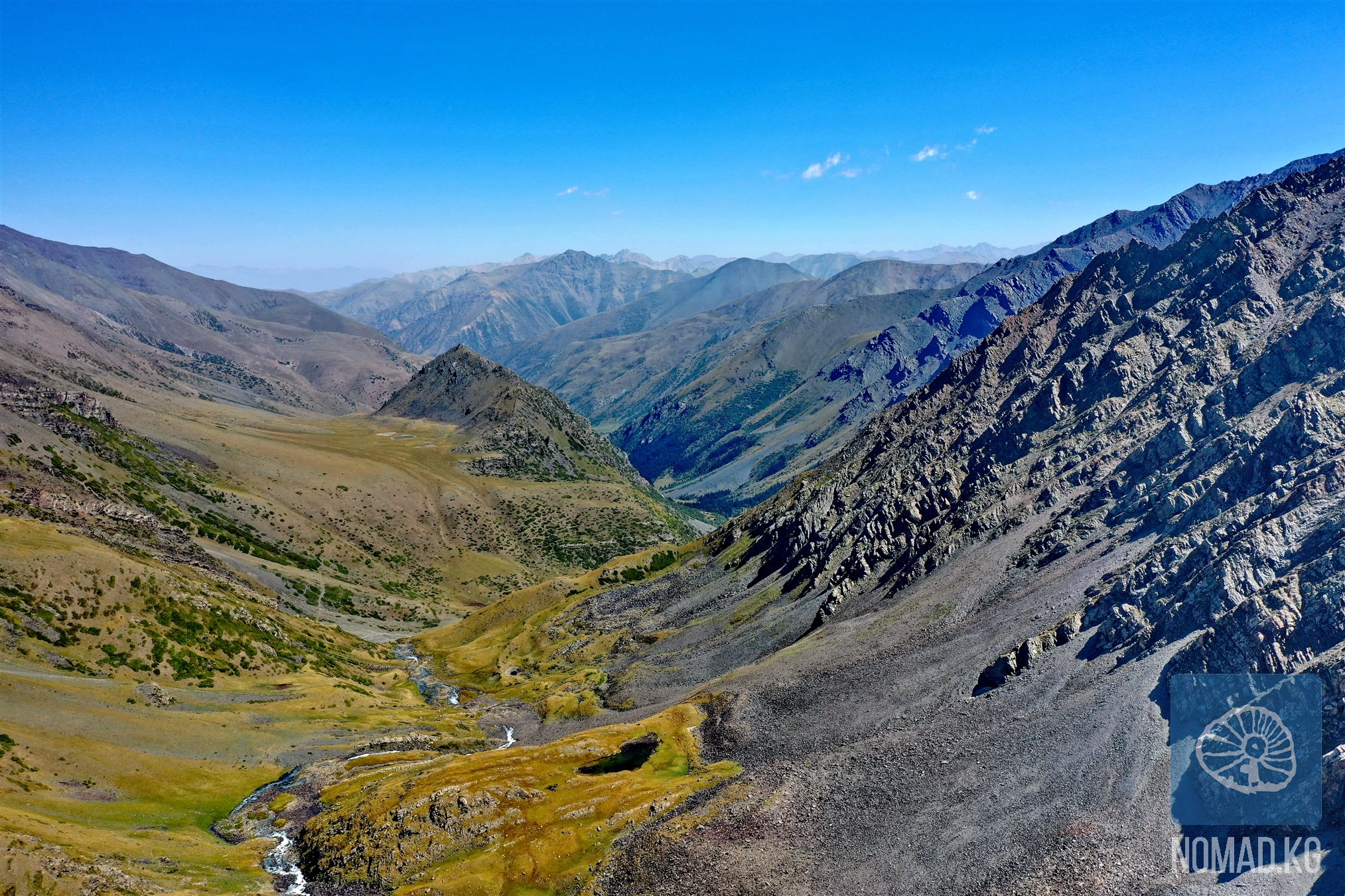
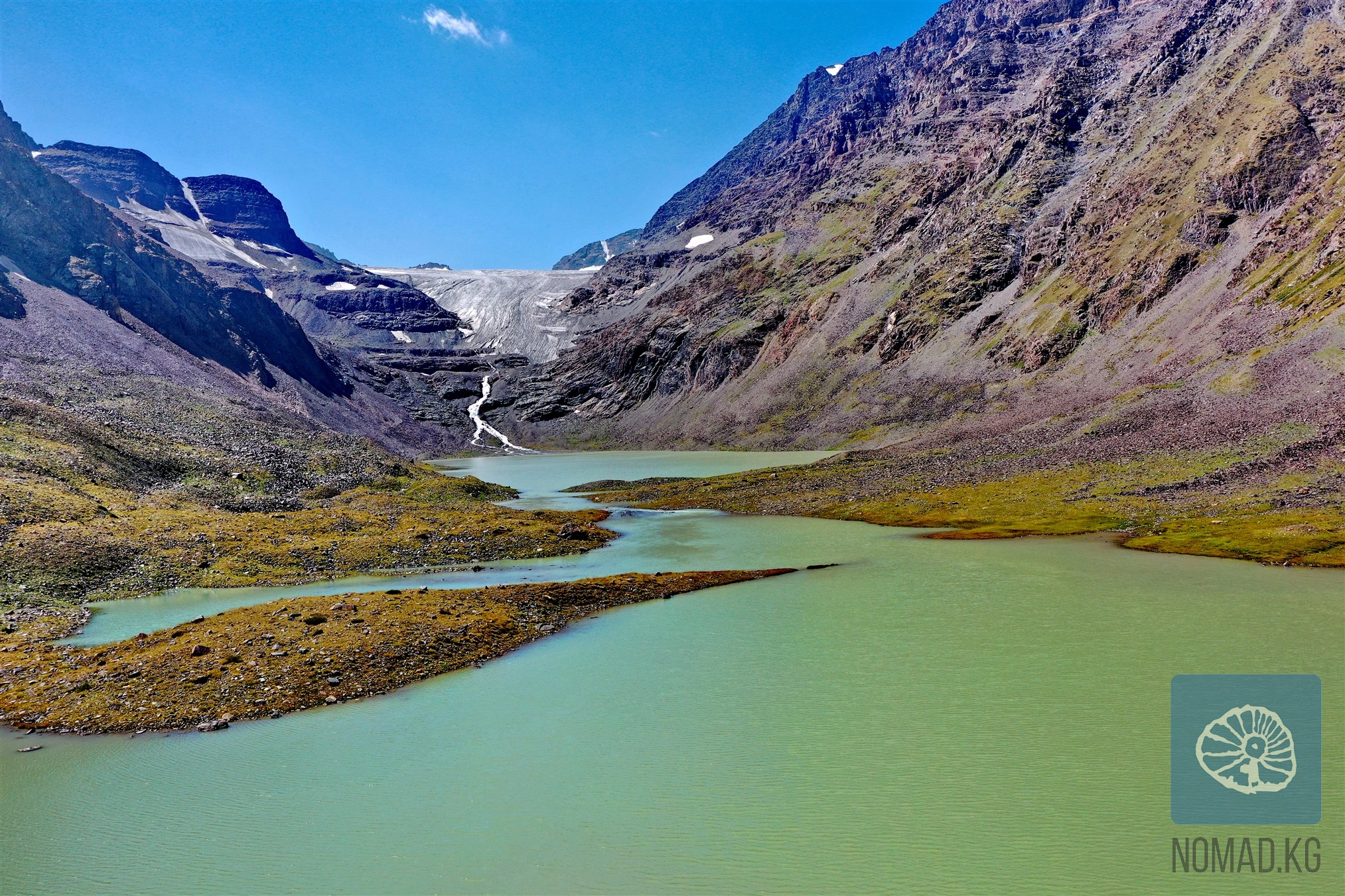
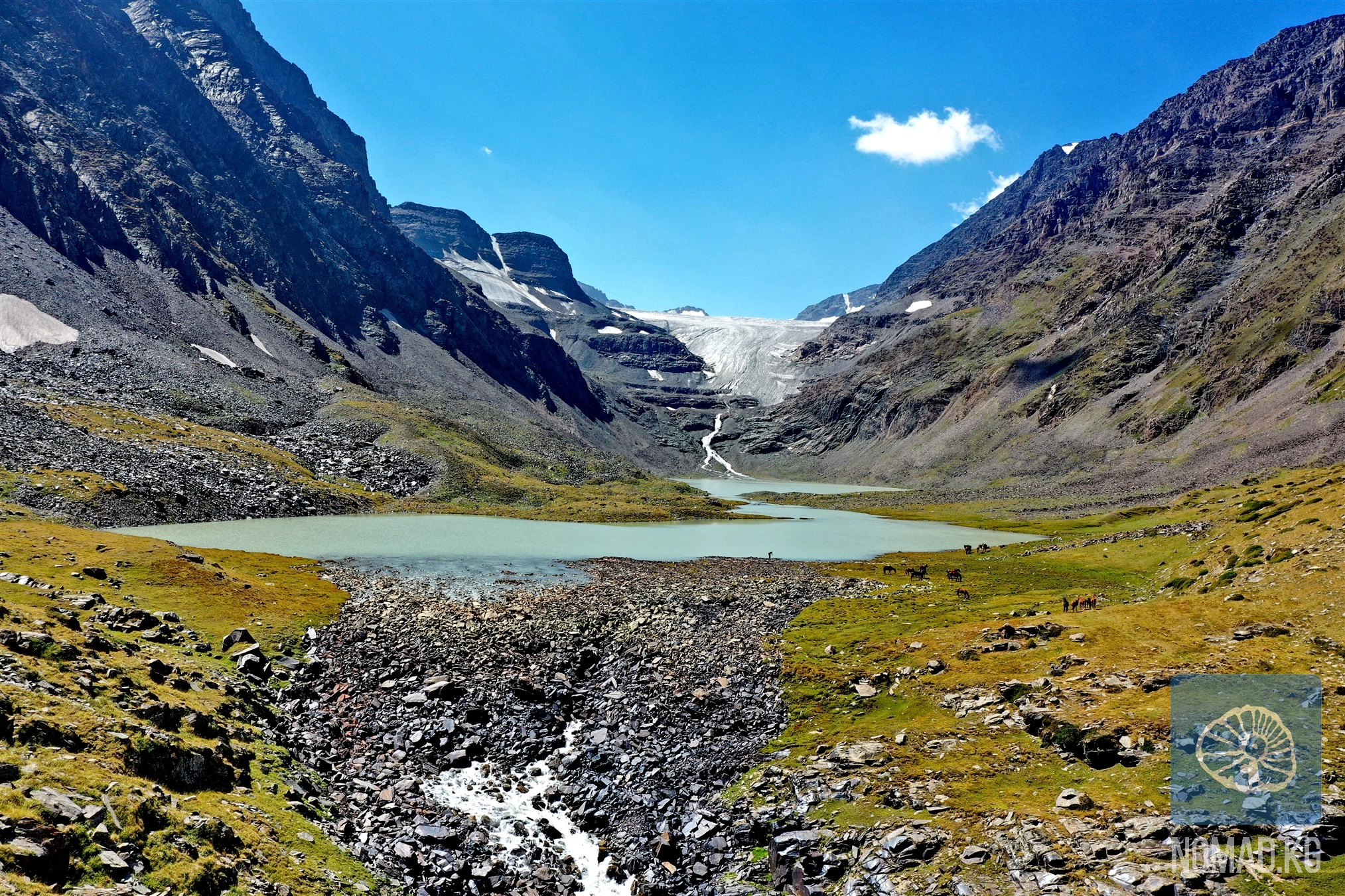
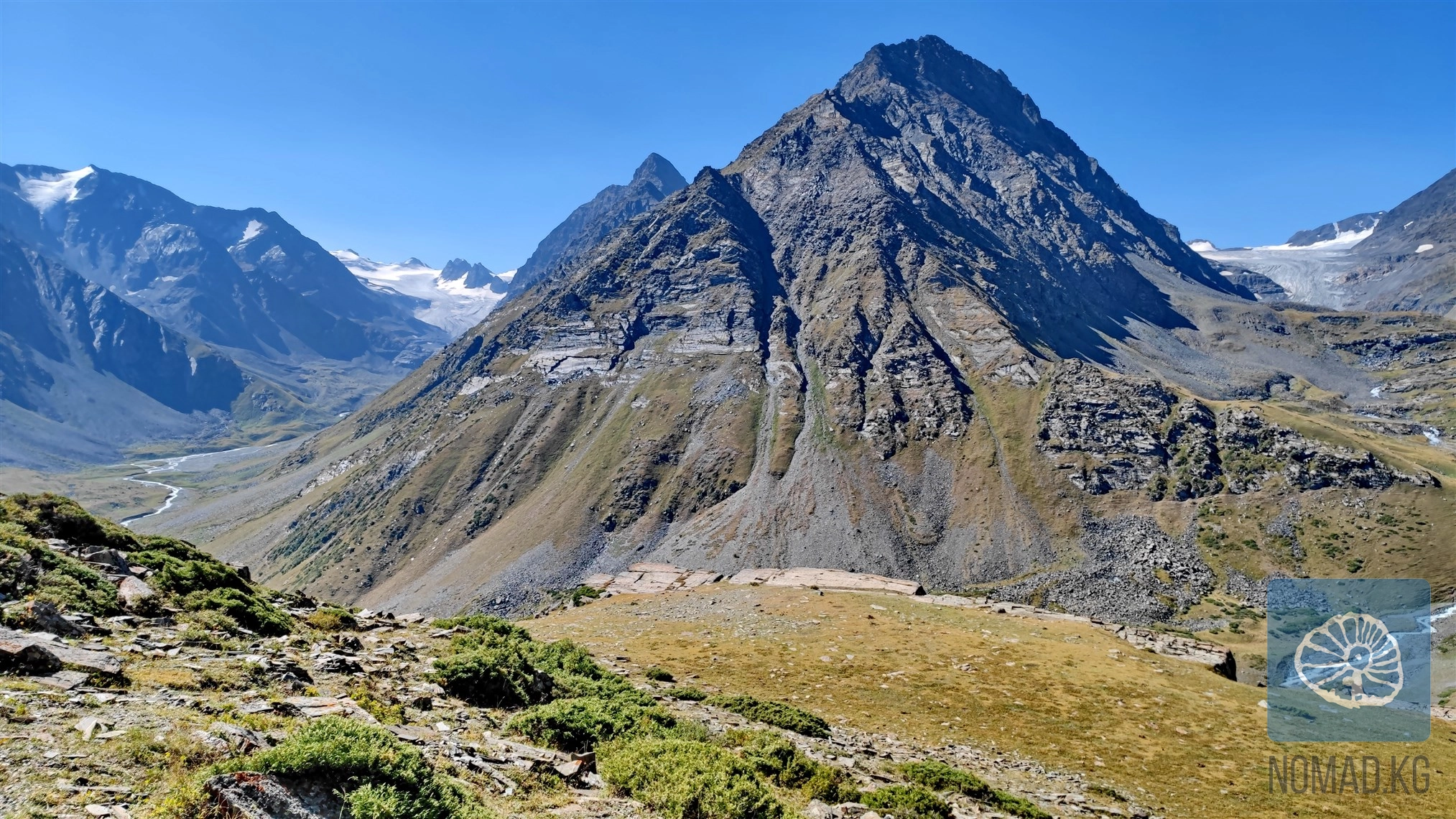
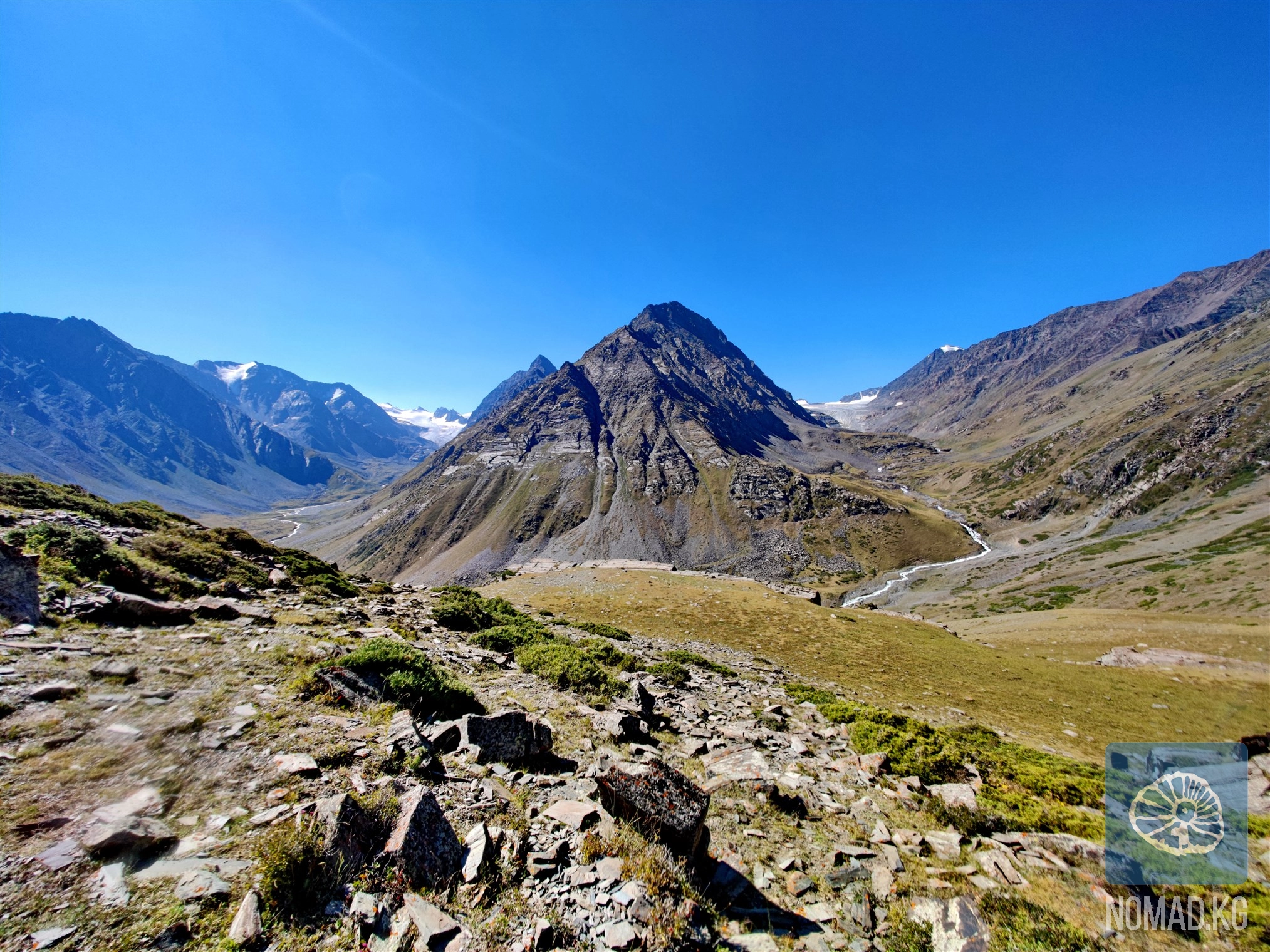
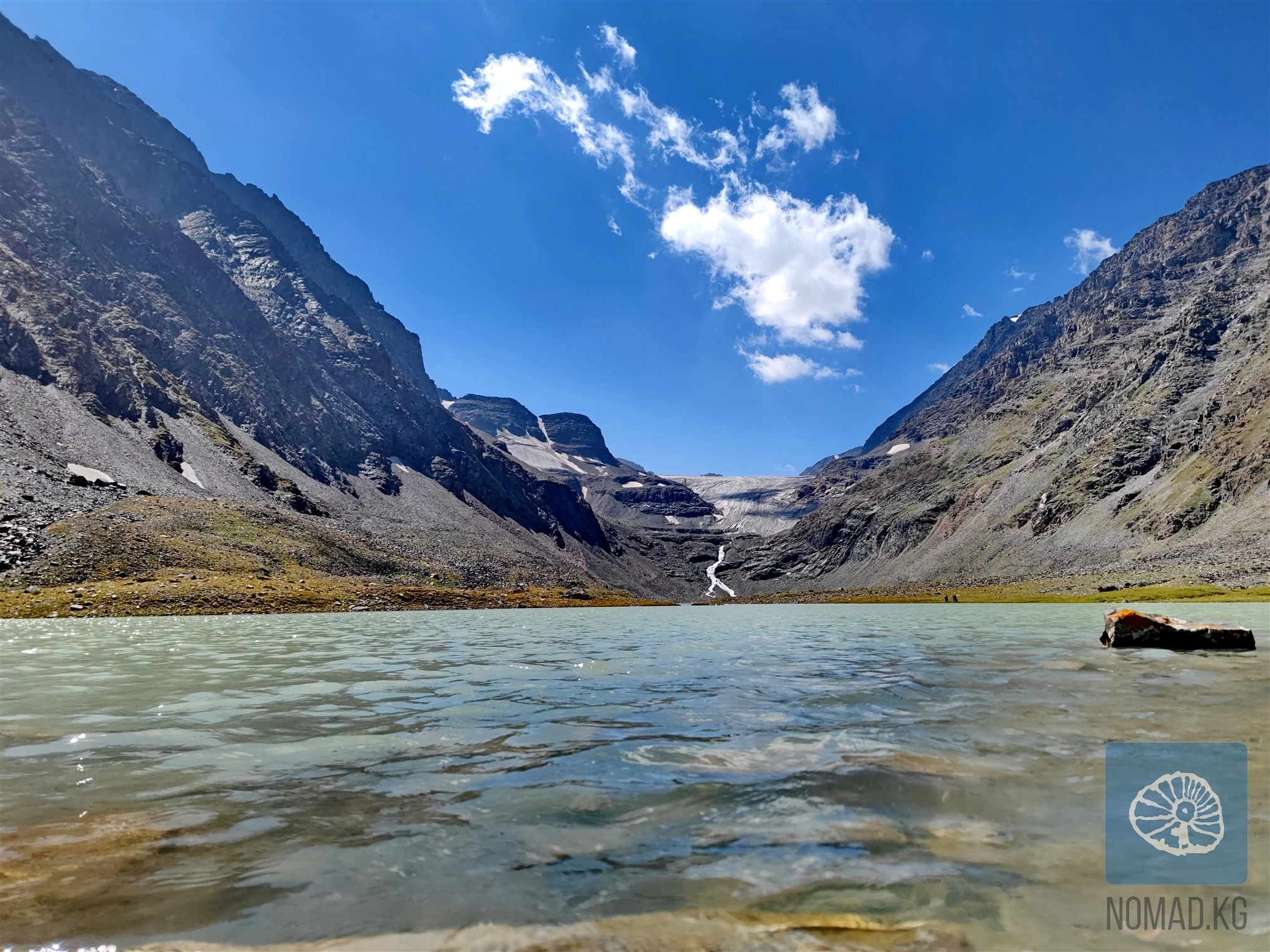
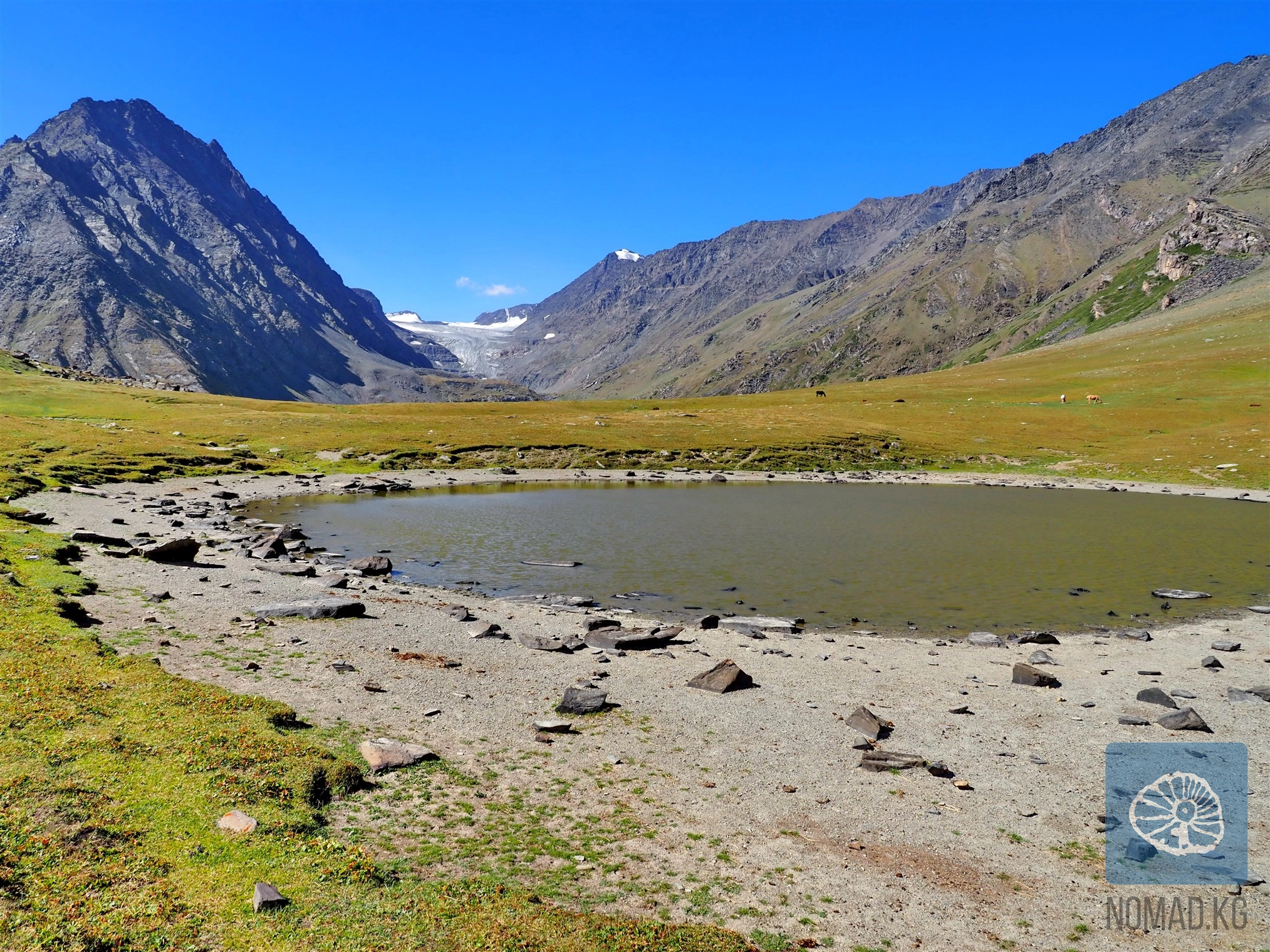
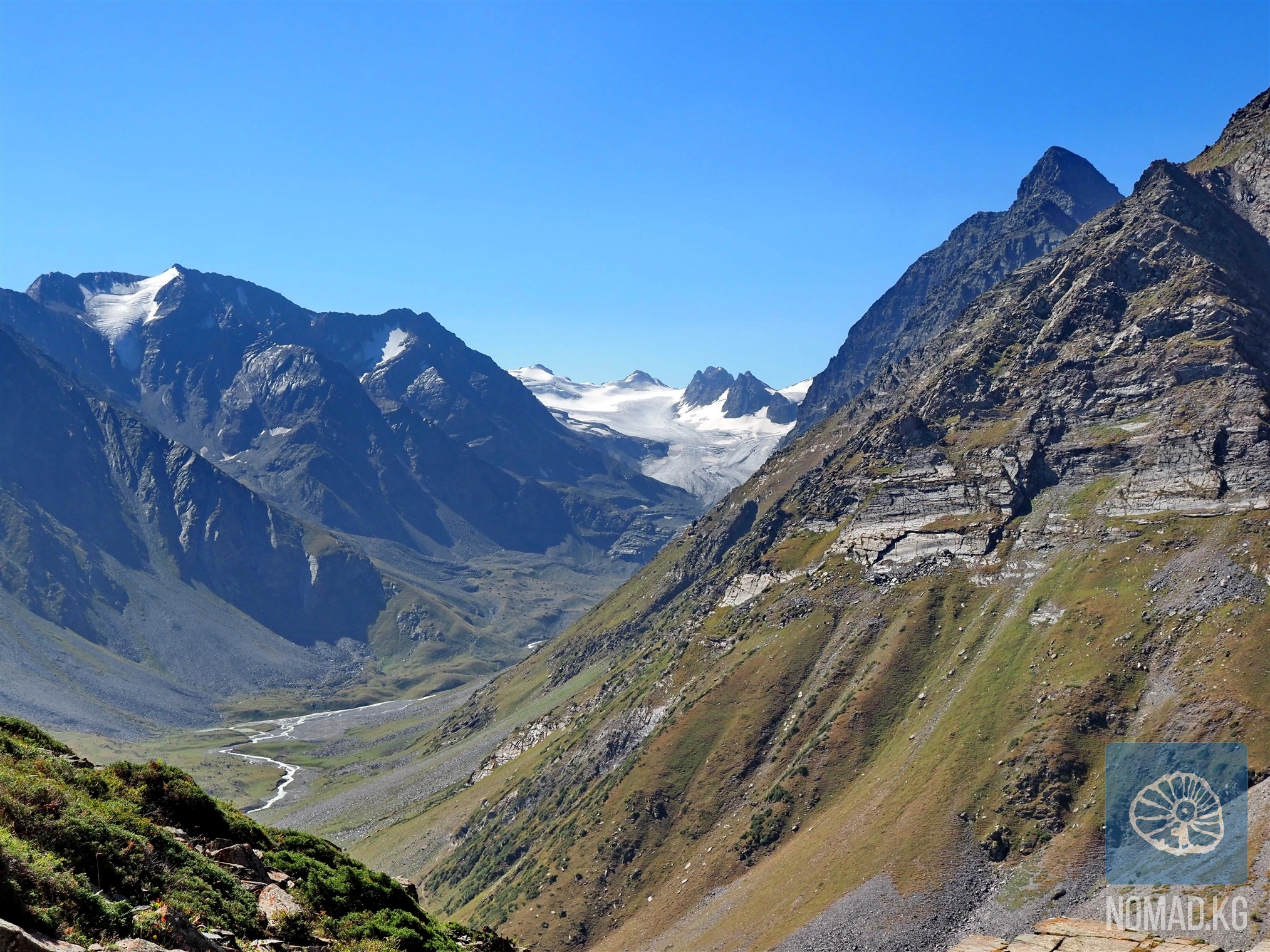
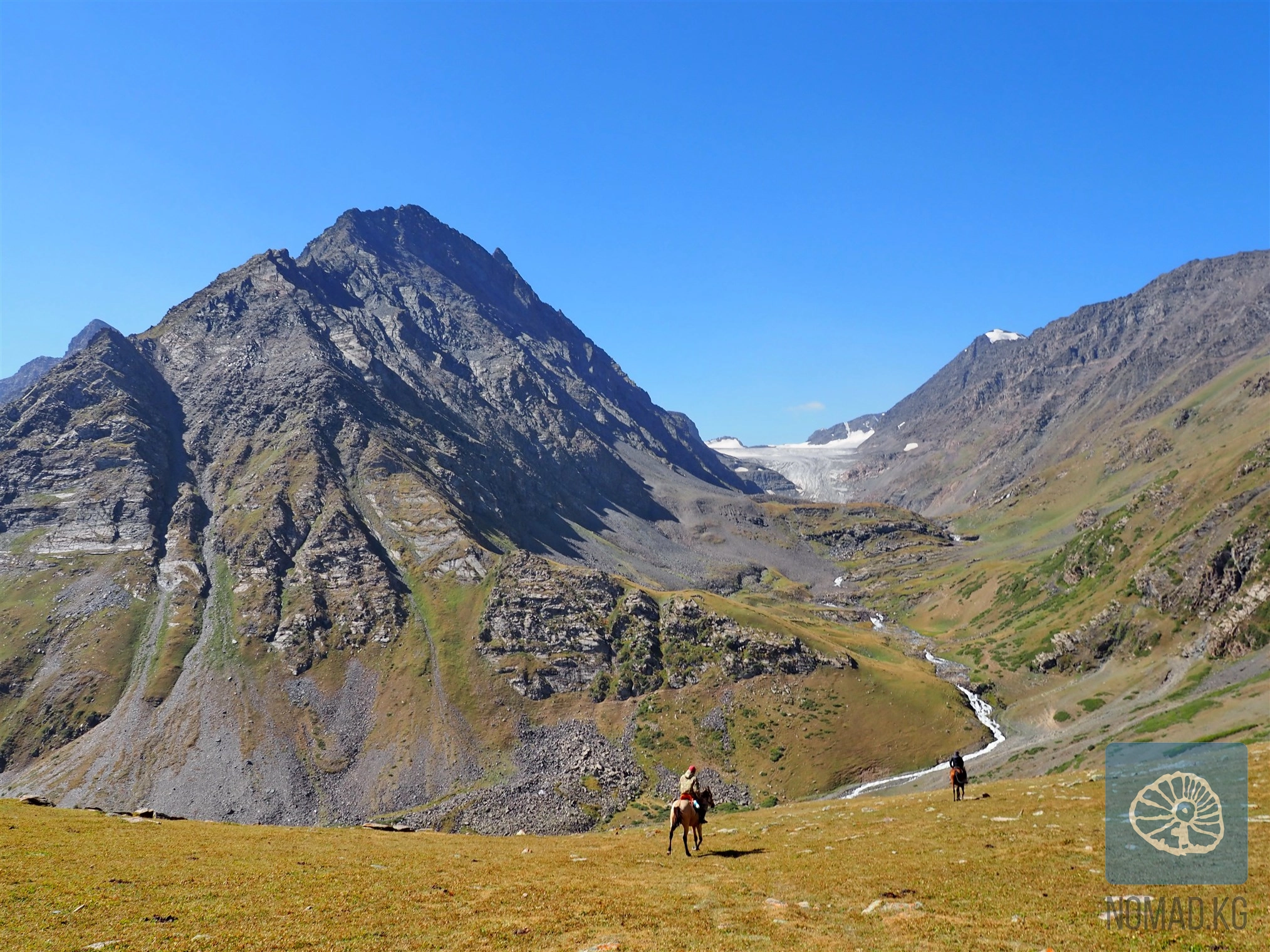
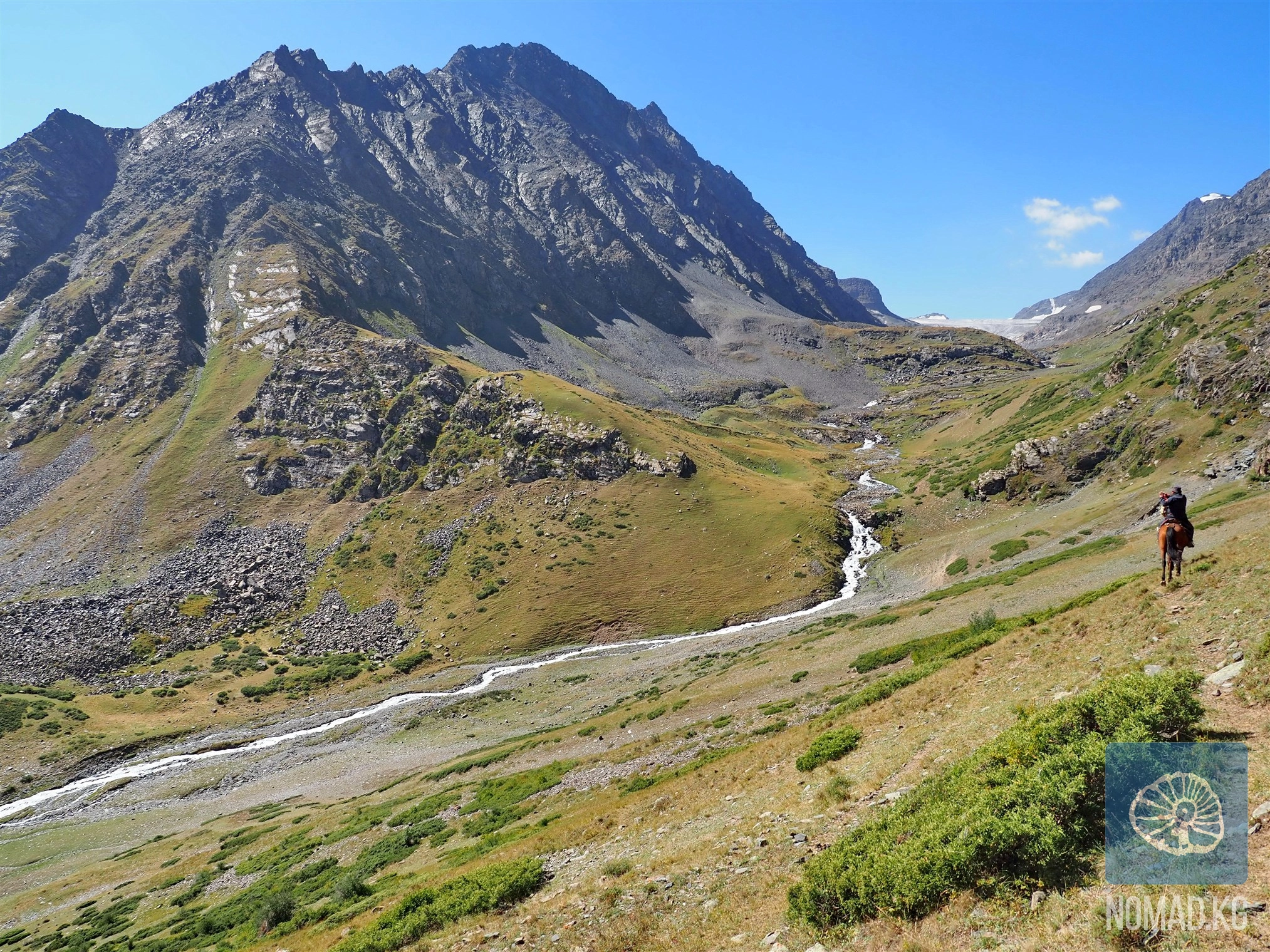
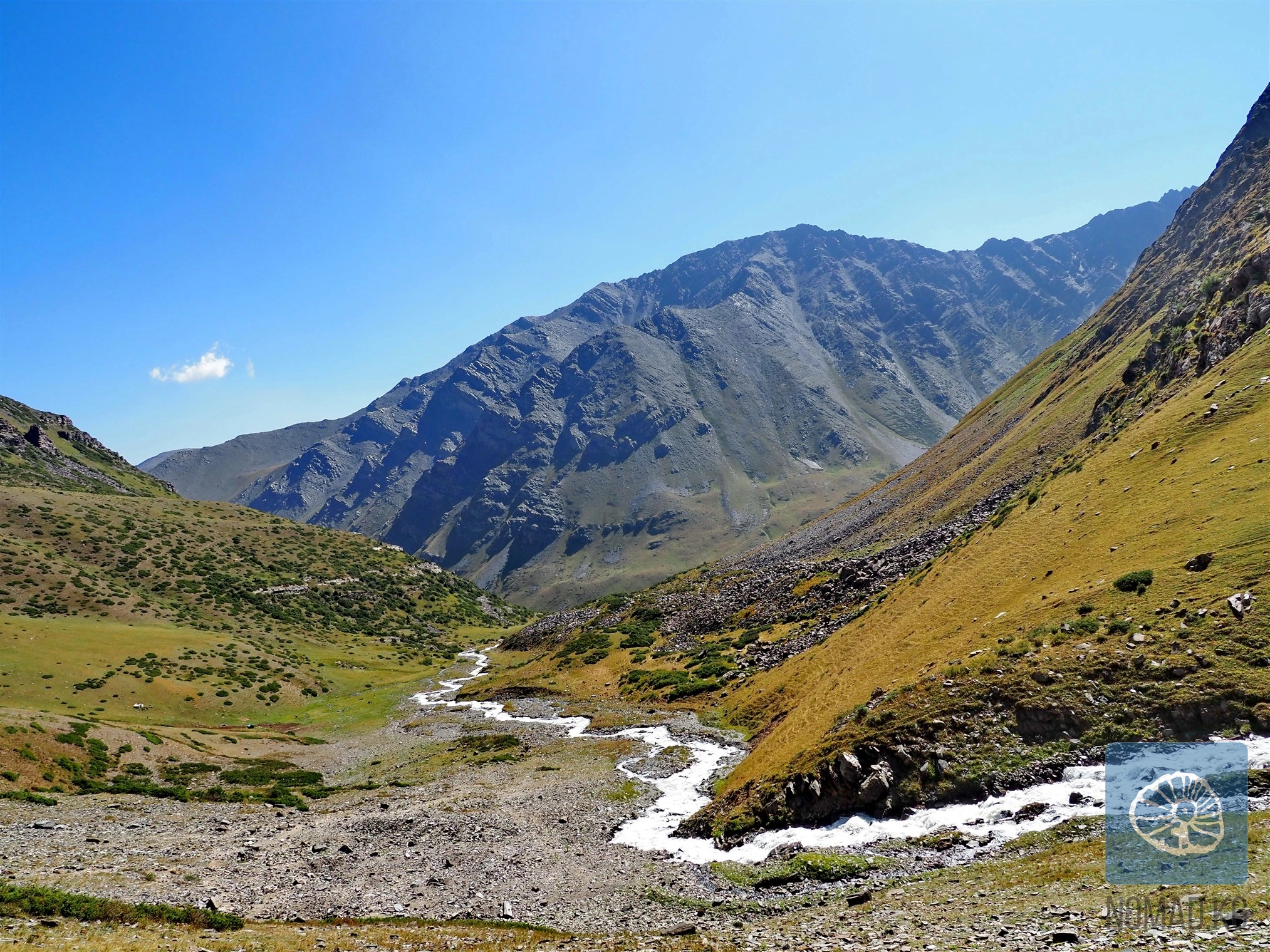
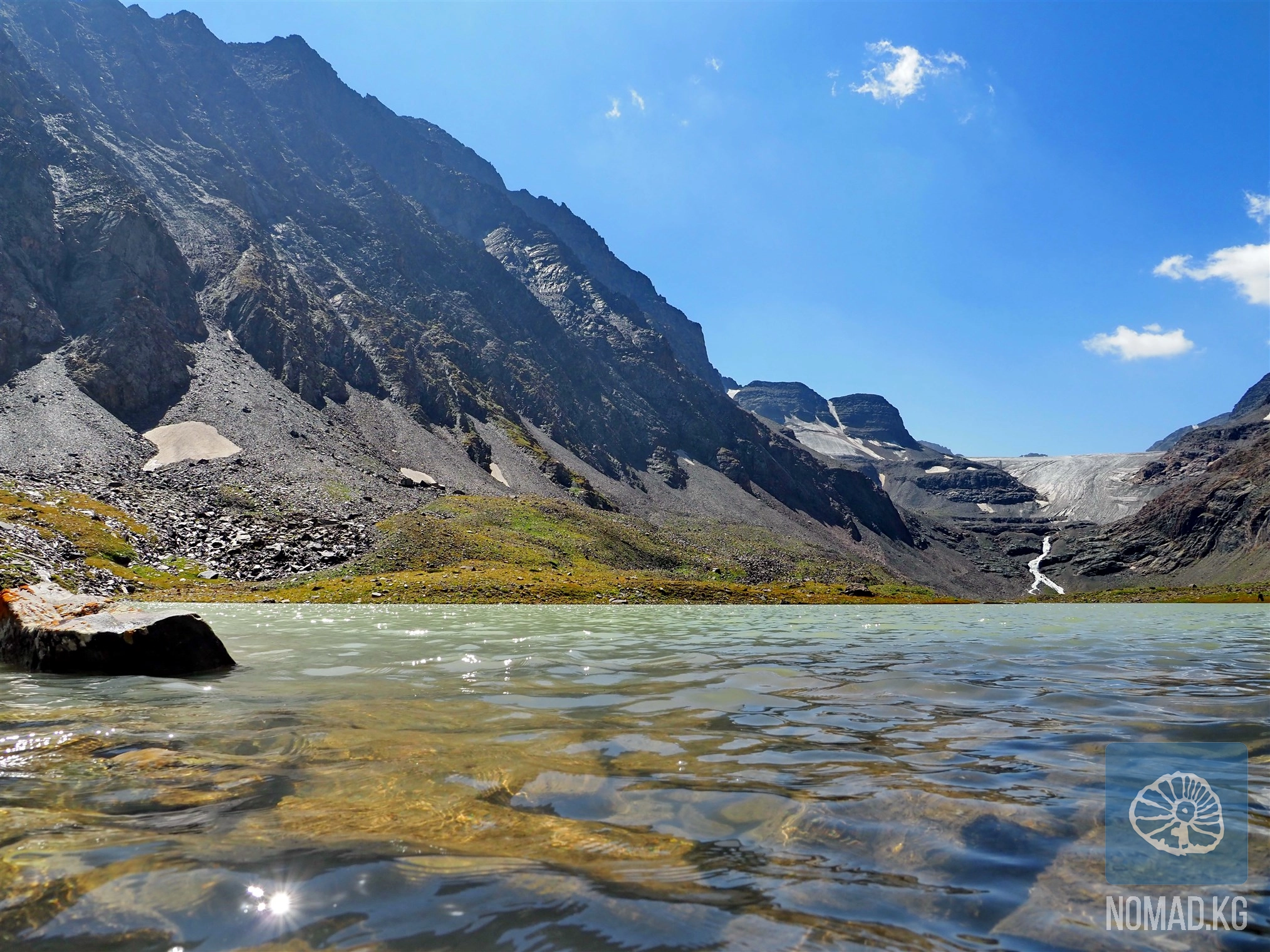
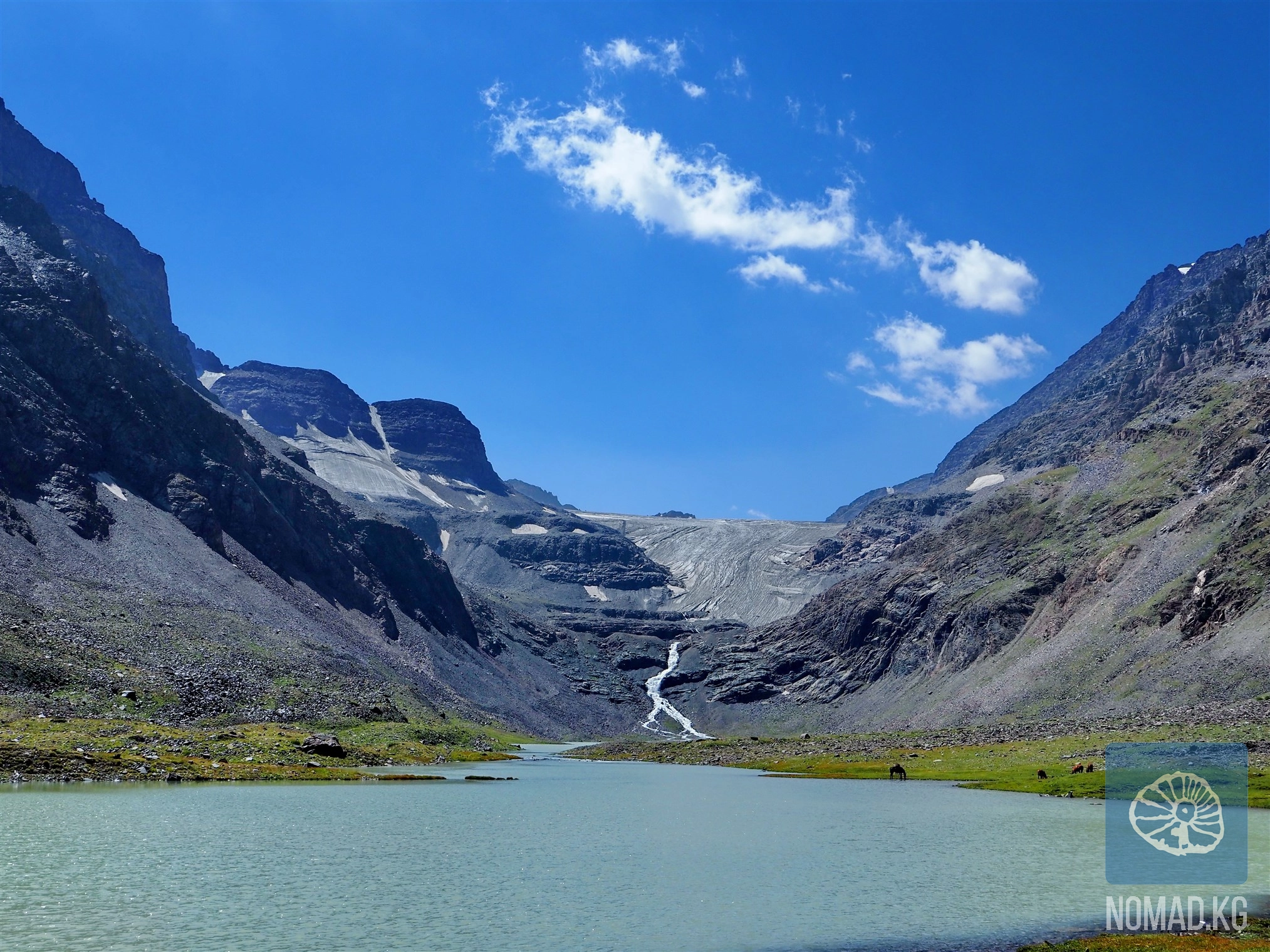
The glacial lakes of Agynay-Köl are located in the upper reaches of the Tabylgyty gorge, on the northern slopes of the Talas Ridge - one of the longest and most underrated mountain ranges in Kyrgyzstan. Over 200 kilometers of the ridge is a world of glaciers, alpine meadows, steep gorges, and hard-to-reach valleys, where there are no paved roads and mass tourism does not reach.
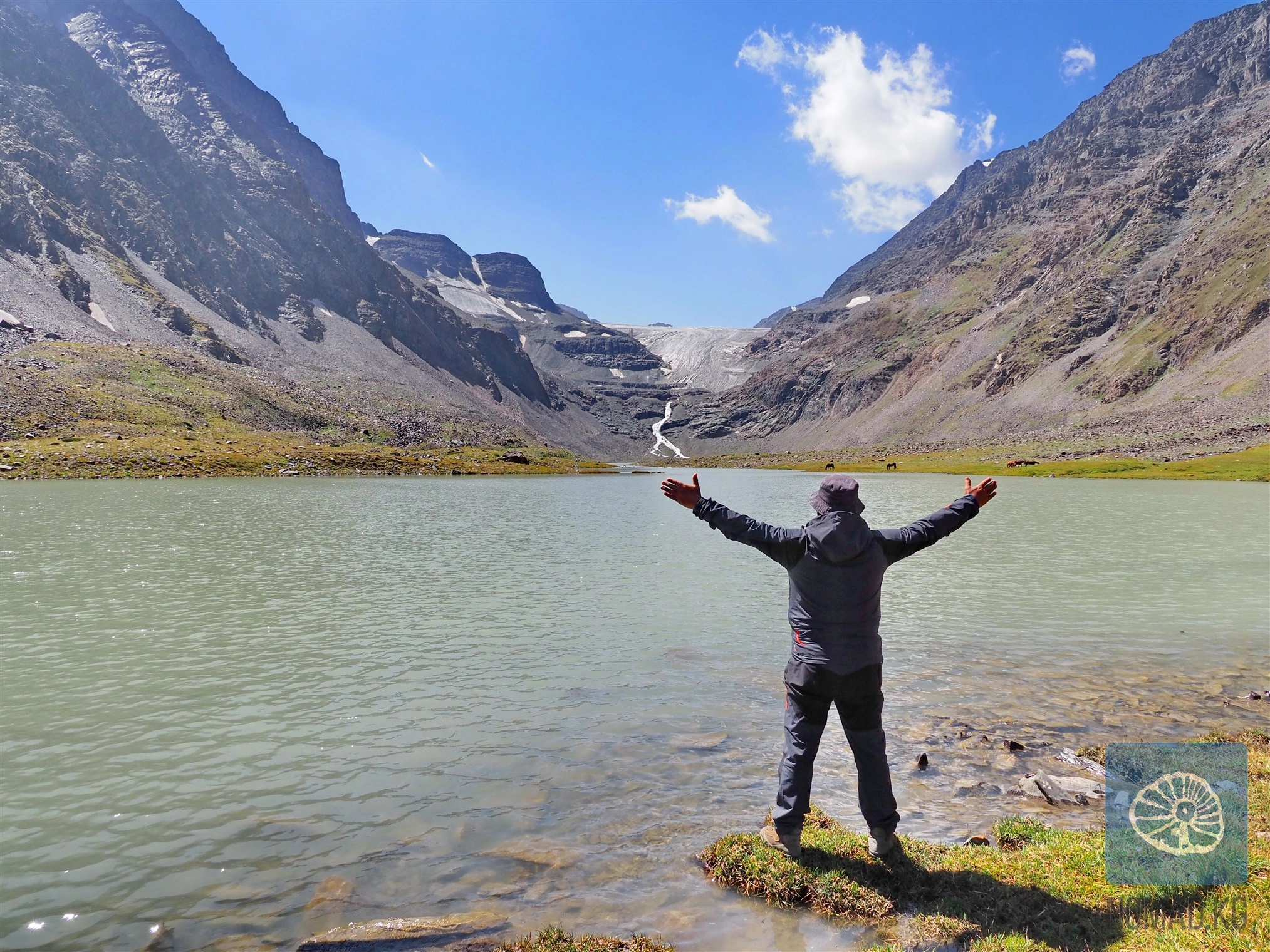
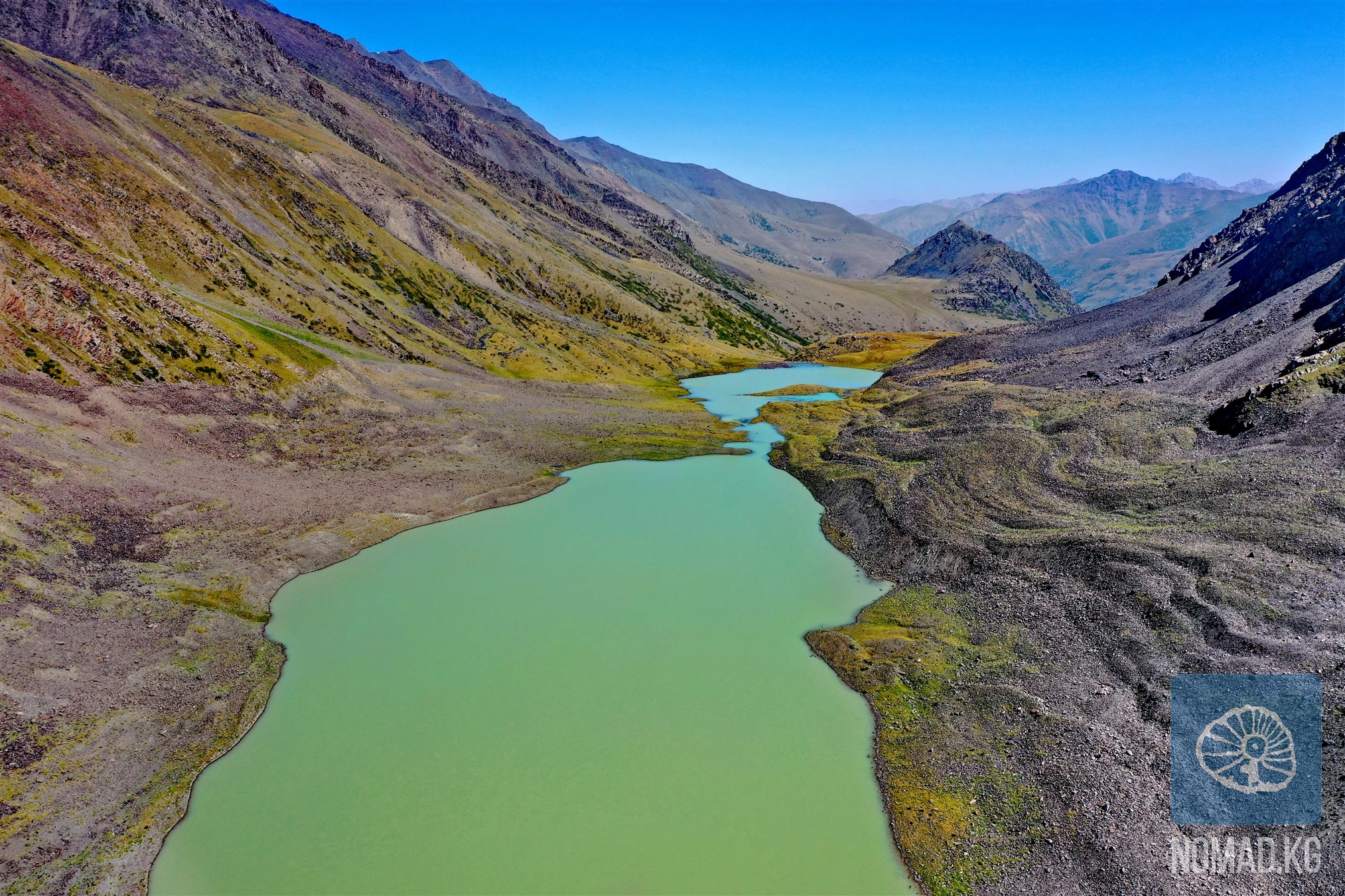
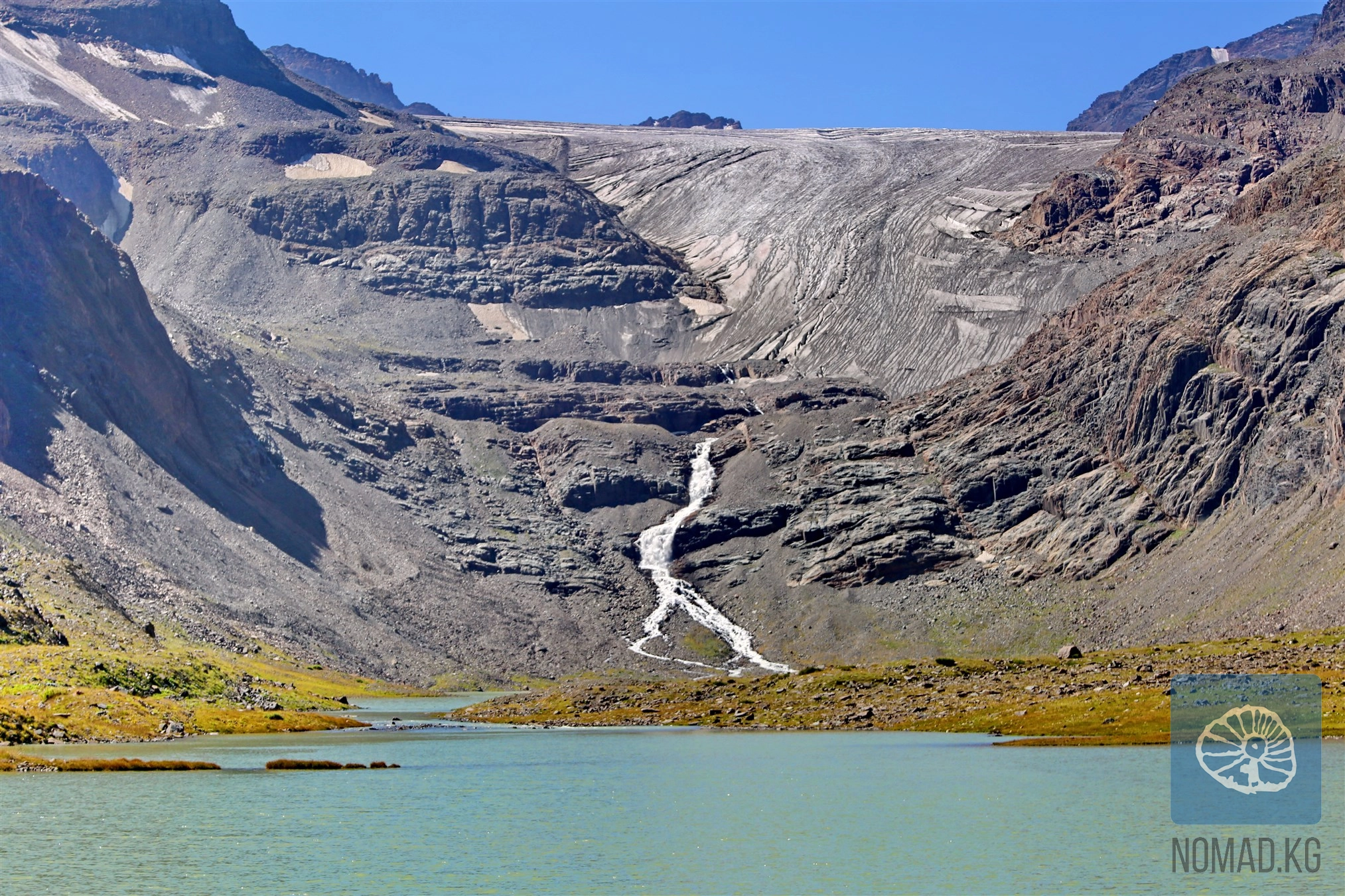
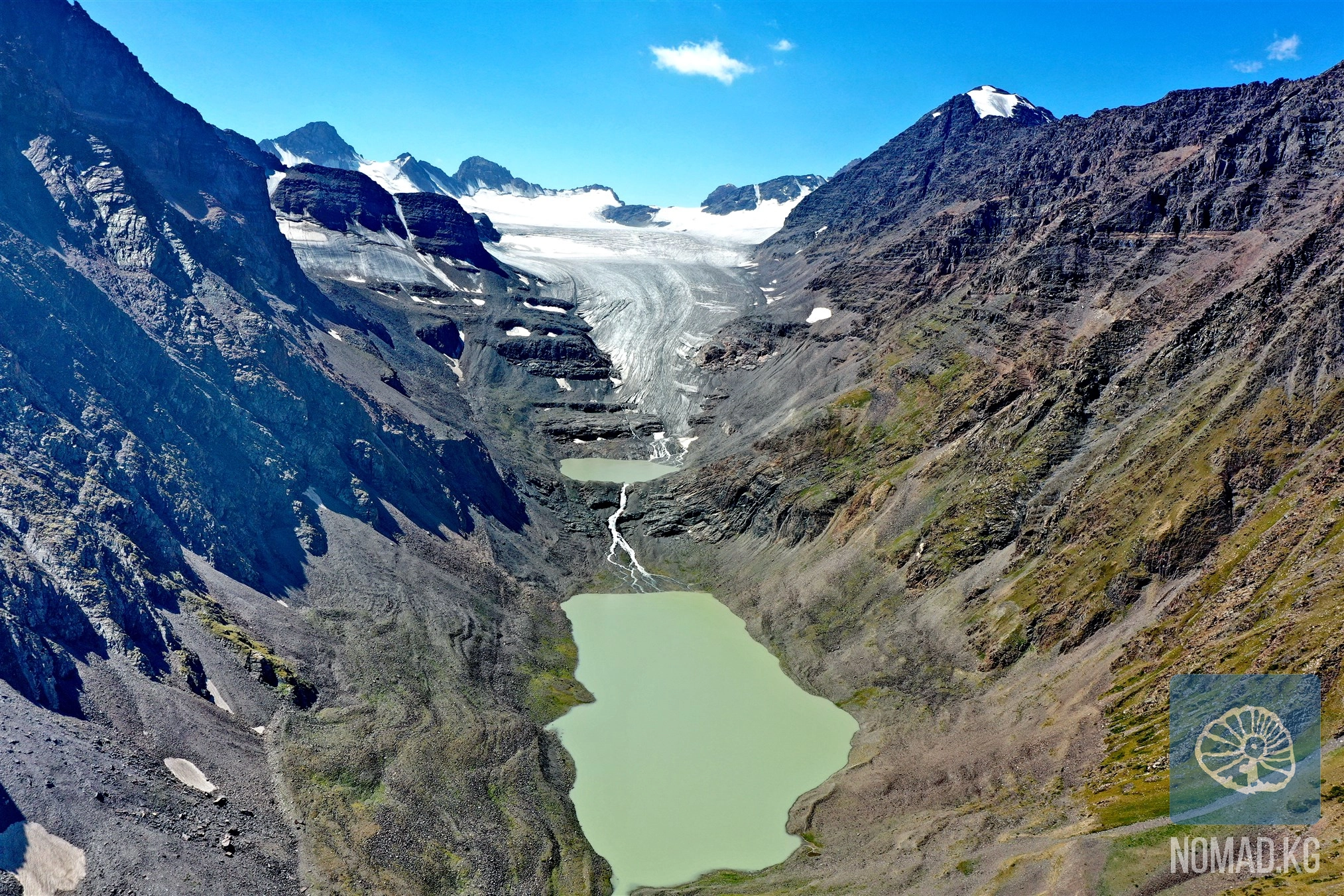
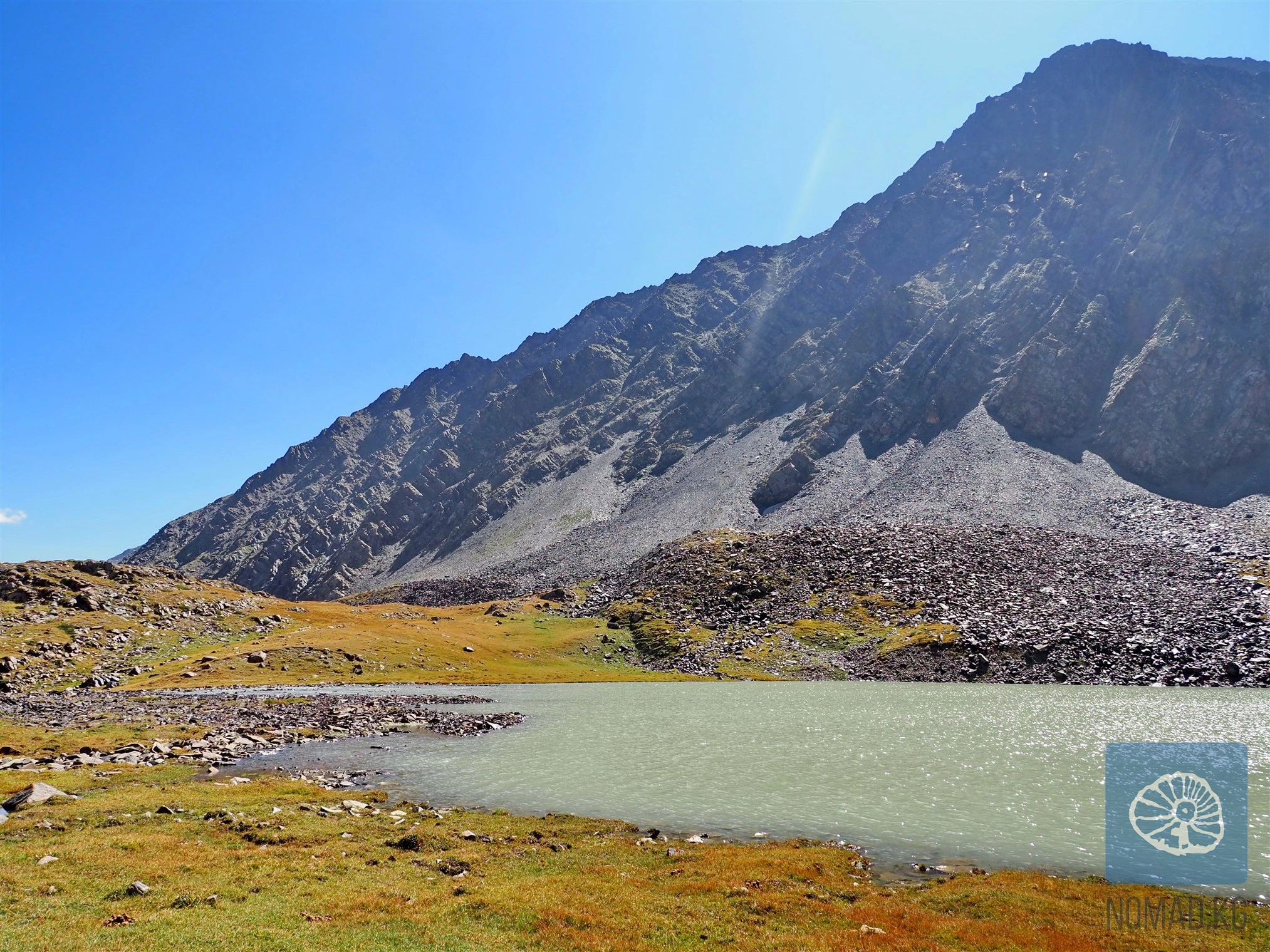
Agynay-Köl is one of those places that may appear as a modest dot on maps, but in reality, it turns out to be a whole universe. Two high-altitude glacial lakes lie in a cirque basin at an altitude of approximately 3500–3800 meters. They are fed by the meltwater of the glacier, so even on the warmest day, the water here remains icy - jade-colored, heavy, and almost metallic in appearance.
In these places, there is no "infrastructure" in the usual sense. There are no noisy tourist camps, no guest yurts, no signs. There are only trails - sometimes clear, sometimes guessed - and the feeling that you have entered a space where the world is not in a hurry. This is what makes the lakes of Agynay-Köl special: here, one does not consume the landscape; one lives in it - even if just for a few days.
The Talas Ridge has always been part of the nomadic geography - not a border, but a space of movement. In the summer, people would ascend here to the jailoo, drive cattle, and set up yurts. And today, as you ascend to the lakes, you are not just following a tourist route, but traversing the same valleys where life has unfolded for centuries - leisurely, difficult, and remarkably harmonious.
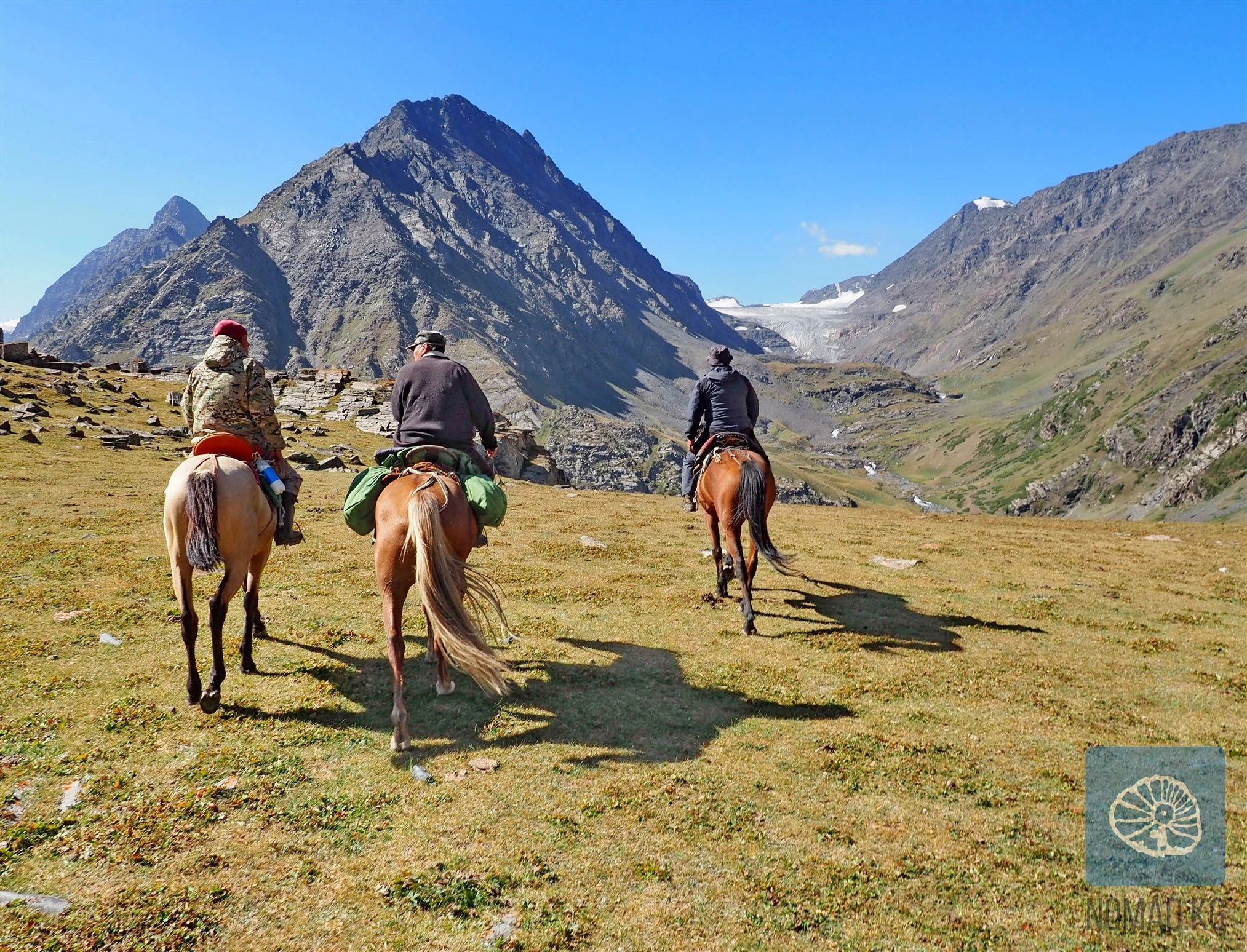
The route to the Agynay-Köl lakes is not a "drive up and get out" experience. Depending on the chosen path, the hiking or horseback trek takes from one to two days (approximately 10–20 kilometers). The trail leads through river floodplains, past moraines, small unnamed lakes, and glacial tongues. The landscape changes gradually, like good music - without abrupt transitions, but with an increasing sense of height and space.
At dawn in the upper reaches of the Tabylgyty gorge, the silence becomes almost tangible. It lies between the stones, spreads across the grass, reflects in the cold surface of the water - and it seems that if you take a step too loudly, you might disturb not just the morning, but the very logic of this place. The wind here smells of ice and sun at the same time, and the sky is so close that you want to scoop it up with your hands.
Agynay-Köl does not appear immediately. First, there is a long gorge, then an ascent to the moraines, followed by increasingly harsh, bare slopes, and only then two mirrors in a stone basin, as if someone has hidden pieces of rare stone here. These are not lakes that you "drive to." These are lakes that you reach. And that is why the encounter with them is remembered for a long time - as a reward for the journey, not as a program point.
The Agynay-Köl lakes are like two twin brothers, similar yet different at the same time. In clear weather, they appear almost completely as jade bowls with glacial edges, while in cloudy weather, they look steel and harsh. The shores are a mix of stone, moraine, and rare, tenacious grass. The surroundings of the lakes are a geography textbook written not in words, but in forms. Piles of stones, polished slopes, grooves on the rocks - everything speaks of the slow but relentless movement of ice. Even if you are not a geologist, you can intuitively feel the scale of time here: mountains do not live at a human rhythm.
Just below is a completely different world: blooming alpine meadows, edelweiss, small, stubborn flowers clinging to life in a harsh climate. Here you can see marmots, mountain goats, and birds of prey soaring in air currents. This is not a zoo and not a safari - it is a rare privilege to be a guest in someone’s real home. If you have the time and energy, from the camp by the lakes, you can make radial trips to the glacier and the passes. From there, panoramas open up where the Talas Ridge looks no longer like a collection of peaks, but like a single, powerful stone ocean.
The best time for hiking is July and August. During this time, the snow mostly melts, the trails become passable, and the alpine meadows bloom. In June and September, sharp temperature fluctuations, snowfalls, and prolonged rains are possible. Do not go without experience or a guide. The area is sparsely visited, landmarks are not always obvious, and the weather changes quickly. Local guides or horseback tours from residents are not a luxury, but a sensible safety measure. Overnight stays are only in tents. Bring a good sleeping bag (it can be cold even in summer at high altitudes), windproof clothing, and an extra day in case of bad weather. The water in the lake is not for swimming. The temperature even in summer is +3…+7 °C, and hypothermia here is no joke. It is better to just sit by the shore and let your eyes drink in this deep jade color. Leave behind less than what was there before you. Do not leave trash, do not destroy stone ridges, do not disturb the animals. This place relies on a fragile balance. If you want to simplify logistics, contact local communities and tour organizations in Talas or Bishkek, or specialists from Nomad.kg; they will help with transport, horses, and routes.
The glacial lakes of Agynay-Köl are not a postcard or a "top attraction." This is a place for those who seek solitude, true mountain silence, and a sense that the world is still larger than our plans. If you are looking for not just a point on a map, but a real journey - this is where you need to be. Where the road is more important than the destination, and silence is the main storyteller.
At dawn in the upper reaches of Үйүр-Марал, the silence rings louder than the wind. It lies on the grass, on cold stones, on the slow breath of the mountains - and it seems that the world here has just been created and has not yet managed to invent
If there is a place in the Talas region that amazes from the very first step, it is the Talas Birch Grove - the largest man-made birch forest in all of Central Asia and one of those places where humans and nature have created a true oasis of
Peak Manas is the highest point of the Talas Ala-Too ridge, with an elevation of about 4485-4488 meters above sea level, and this figure alone sets the tone: here, the familiar routes end, and the territory of true mountains begins. The
Standing by the Talas River early in the morning, when the fog still lingers over the water, it is easy to imagine how caravans passed through here, how cavalry units moved along these very shores, how language, faith, and power changed - while the
The high mountain passes of Suusamyr do not tolerate haste. Its meadows, rivers, and slopes exist at their own pace. The grass grows slowly here, trees take years to settle in, and any human intervention leaves a lasting mark. When you stand at this
From the Talas Ala-Tuu ridge, the steppe suddenly ceases to be chaotic. In its body, even, almost stubborn strokes emerge. Stone by stone. Line by line. Bakayyr does not reveal itself immediately: it waits for you to step out of the scale of a human
Among the picturesque mountains of the Bakai-Ata district, not far from the village of Urmaral, lies one of the most mysterious and revered places in the Talas region - the Kara-Koyun cave. This is not just a dark niche in the rocky mass, but a
If you have already seen Lake Besh-Tash and think that the national park has revealed all its secrets to you, then you simply haven't yet ascended the Itagar Pass. This is the route after which photos remain in your phone's memory that you
Today's Ak-Dobo was previously called Orlovka, and even earlier -the settlement Orlóv (Ger. Orloff) . The village was founded by German settlers from Poland, and this multilayeredness of names is still felt in its rhythm. Here, it is easy to
The Kumushtak Gorge in the Bakai-Ata district of the Talas region does not reveal itself immediately. The mountains here do not press down with height but seem to retreat, leaving space for breath. The stones lie as if they were intentionally
The Talas Valley is one of those places where Central Asia speaks to the traveler through the language of wind and silent stones. Here, between hills and gorges, traces of ancient civilizations have been preserved, whose names have long dissolved in
Kyrgyzstan is a country where the memory of ancestors, sacred space, and natural power merge into a single cultural landscape. For centuries, Kyrgyz people have placed special importance on burial monuments and holy sites—mazars. Even today,
The Besh-Tash National Park, which translates to "Five Stones," stretches in a narrow chain along the Talas Ala-Too mountain range. On a good gravel serpentine road up the Besh-Tash river gorge, it feels like the car is about to hit the
The Talas region is one of the corners of Kyrgyzstan where history is felt not in museum showcases or academic works, but in the wind, in the scent of dry wormwood, in the lines of mountains frozen around the valley like an ancient choir. Here, the
The Besh-Tash Nature Park covers over 30,000 hectares, stretching nearly 30 kilometers upstream along the river of the same name - from the gentle foothills at an altitude of 1,100 meters to the harsh, cold glaciers rising to 3,500 meters. The park
In the Talas Valley, there is a place where legends come alive at every step, and the silence of the mountains speaks louder than any storyteller. This is the Besh-Tash Gorge - one of the most picturesque and symbolic natural spaces in Kyrgyzstan.
The Ötmäk Pass (3326 m above sea level) is one of the most impressive places in the Talas region and an essential mountain artery connecting the closed Talas Basin with the expansive Suusamyr Valley and the strategic Bishkek-Osh highway. This is the
High in the Kaman-Suu gorge, at an altitude of about 2500 meters above sea level, lies one of the most expressive and multilayered monuments of rock art in Kyrgyzstan - Jaltyrak-Tash, which translates to "shining stone." This is not just a
The Talas region is not only a land of ancient settlements and legends but also of remarkable natural abundance. Here, surrounded by the stunning mountain gorges of Besh-Tash, Kolba, Kumush-Tag, and Urmaral, one of the most heartfelt gastronomic
In the very heart of the blessed Talas Valley, where the silvery Talas River leisurely carves its path between two majestic mountain ranges - the Talas and Kyrgyz ranges - lies a unique natural oasis. The Talas Forest is not just a green stripe on
In the Talas Valley, among the hills and green valleys, lies one of the most revered sacred places in the region - the mazar of Boo-Terek. Its name translates from Kyrgyz as "a bundle of poplars" or "many poplars," and this is no
The mountains of the Talas Ridge conceal many secrets, but one of the most astonishing is the complex of rock carvings at Bakayir-Kara-Kuush, located in an easily accessible gorge where human footsteps are lost among the stones, and ancient
Where once small rural streets stretched along the river valley, where people lived a measured steppe life, today lies a vast expanse of water - the Kirov Reservoir, one of the most significant hydraulic structures in Kyrgyzstan and an impressive
The Talas Geopark "Echkilі-Tuu" is located in the mountain range of the same name, Echkilі-Tuu, which is part of the Kyrgyz Ala-Too ridge, in the Sary-Kuurai gorge, one of the most impressive natural attractions of Kyrgyzstan. This geopark