

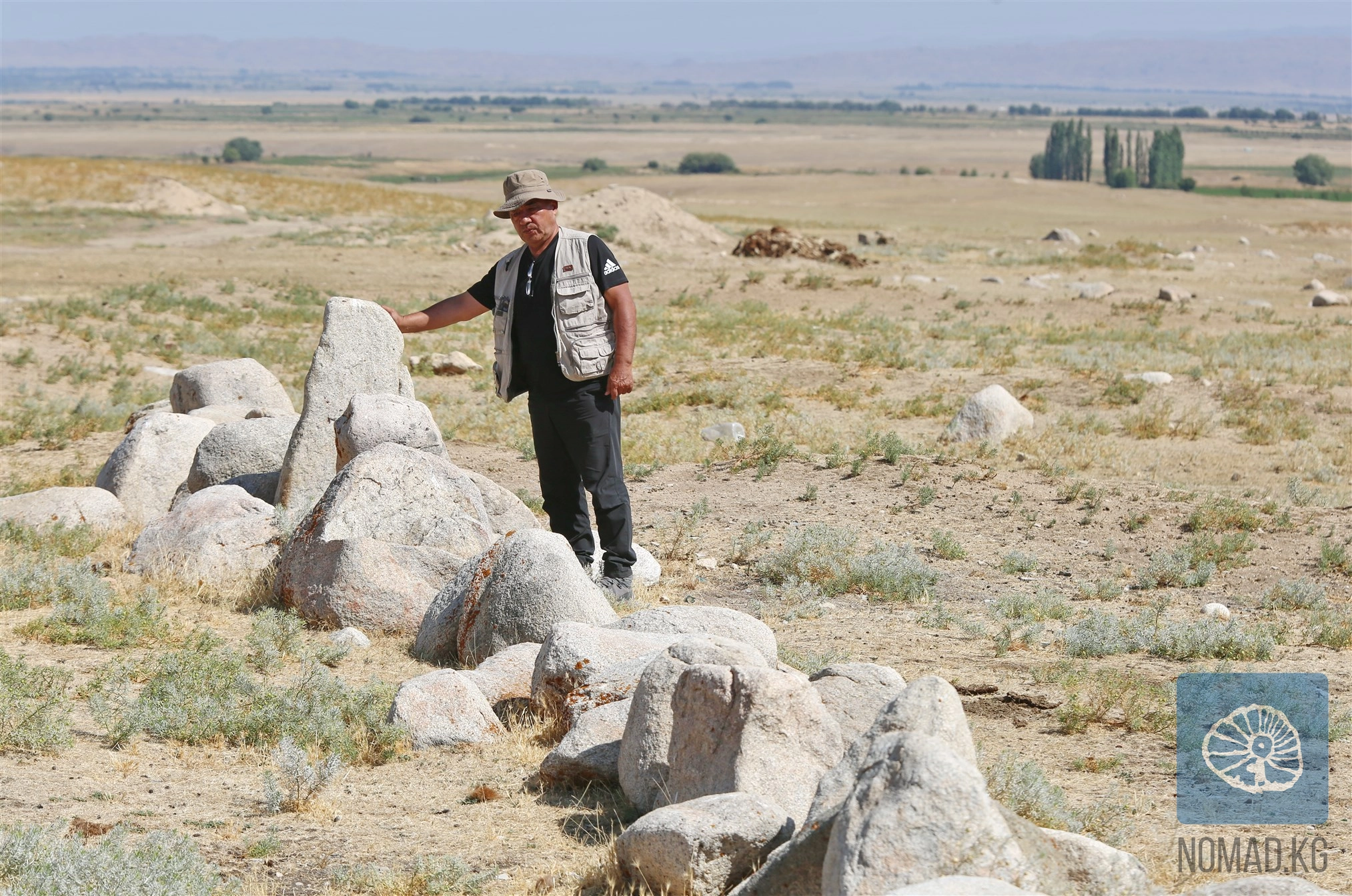
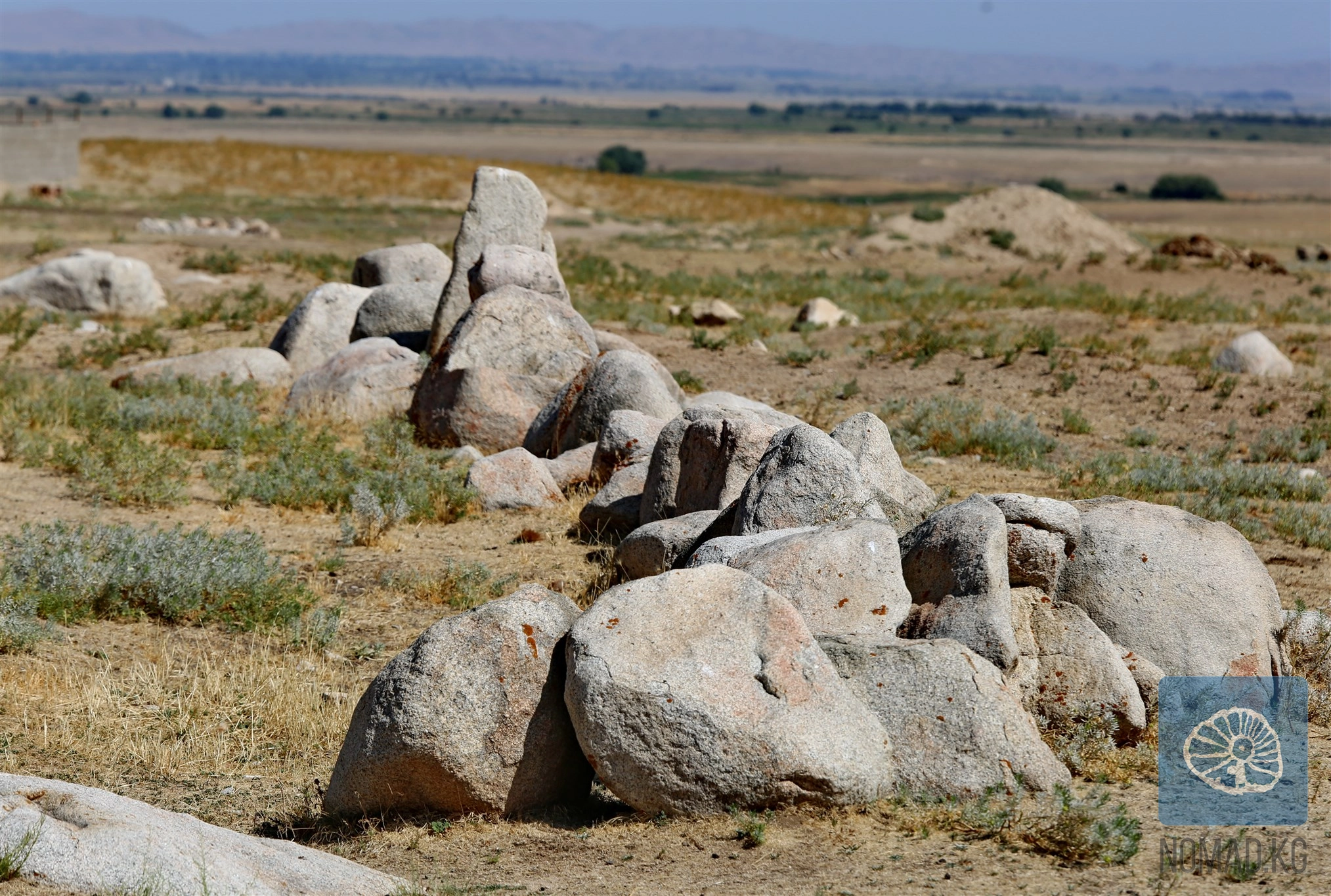
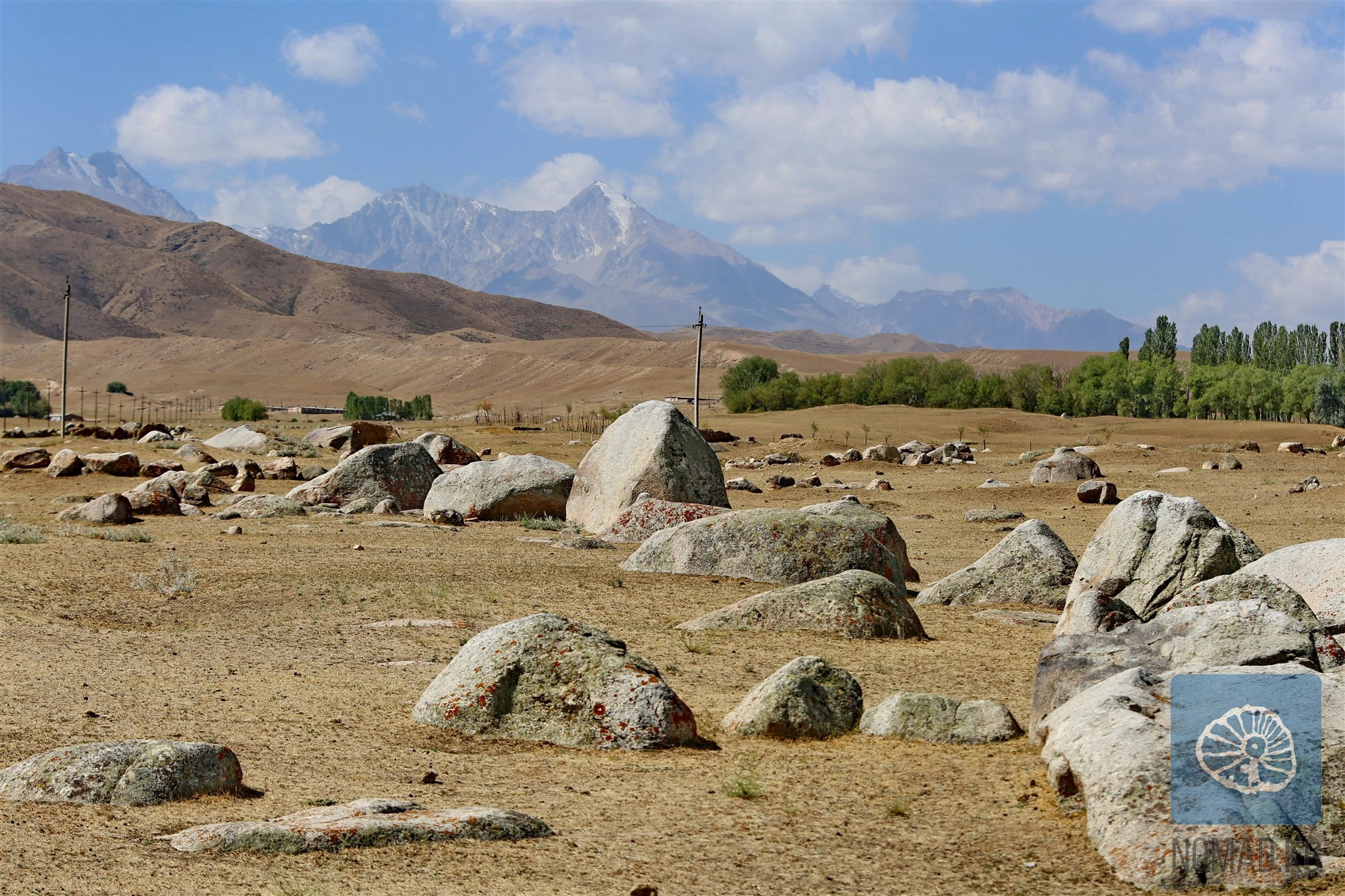
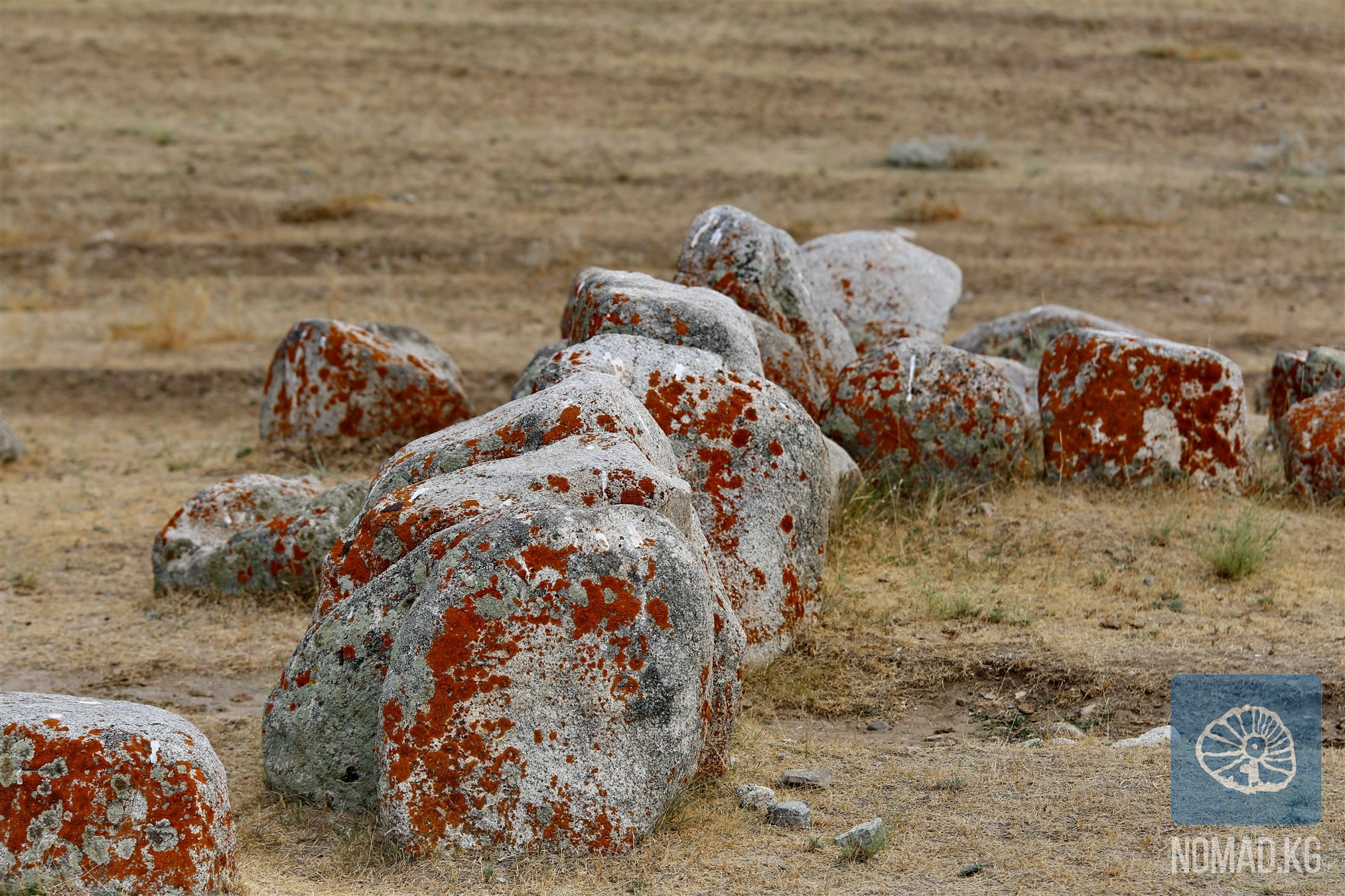
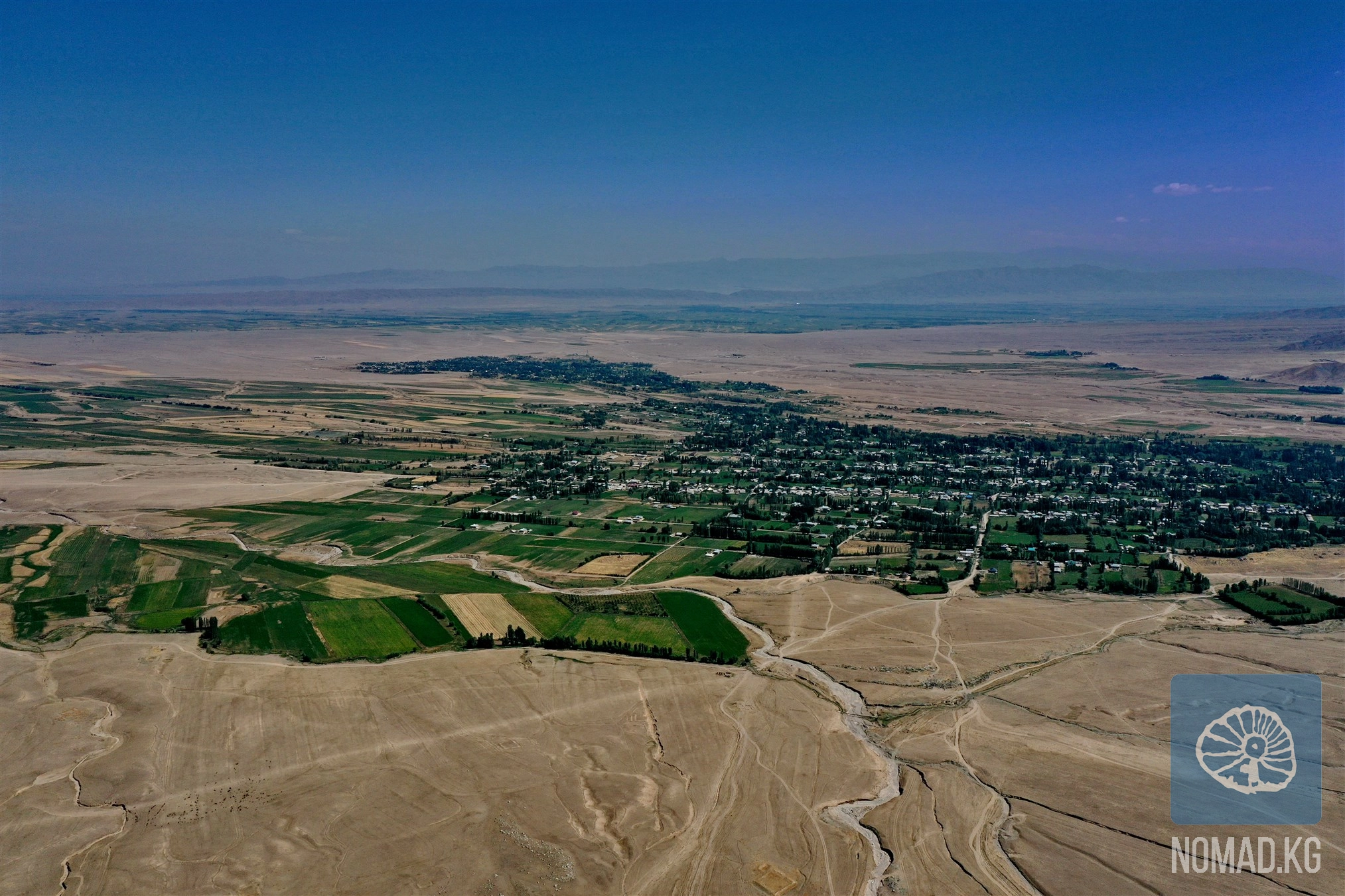
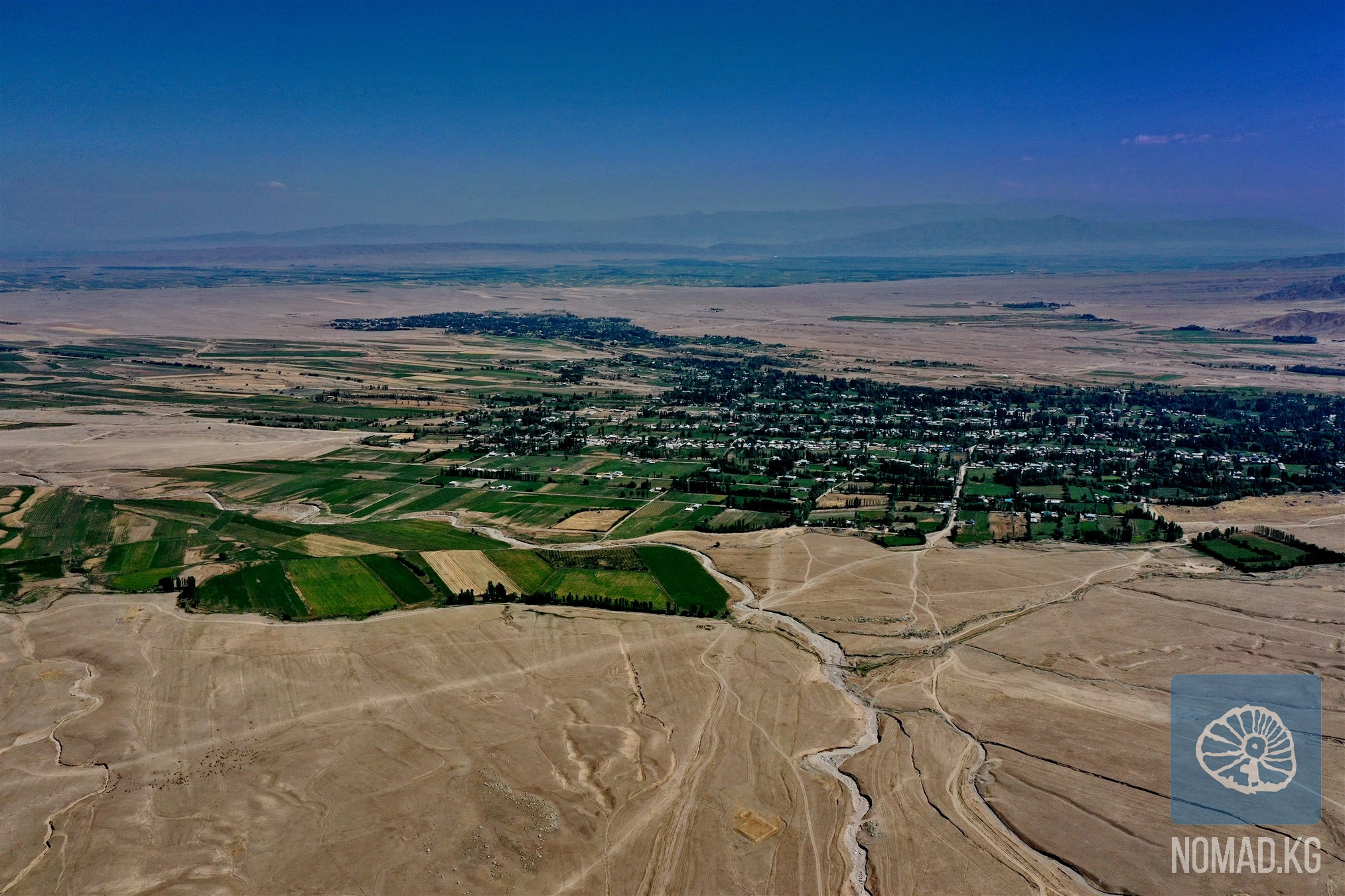
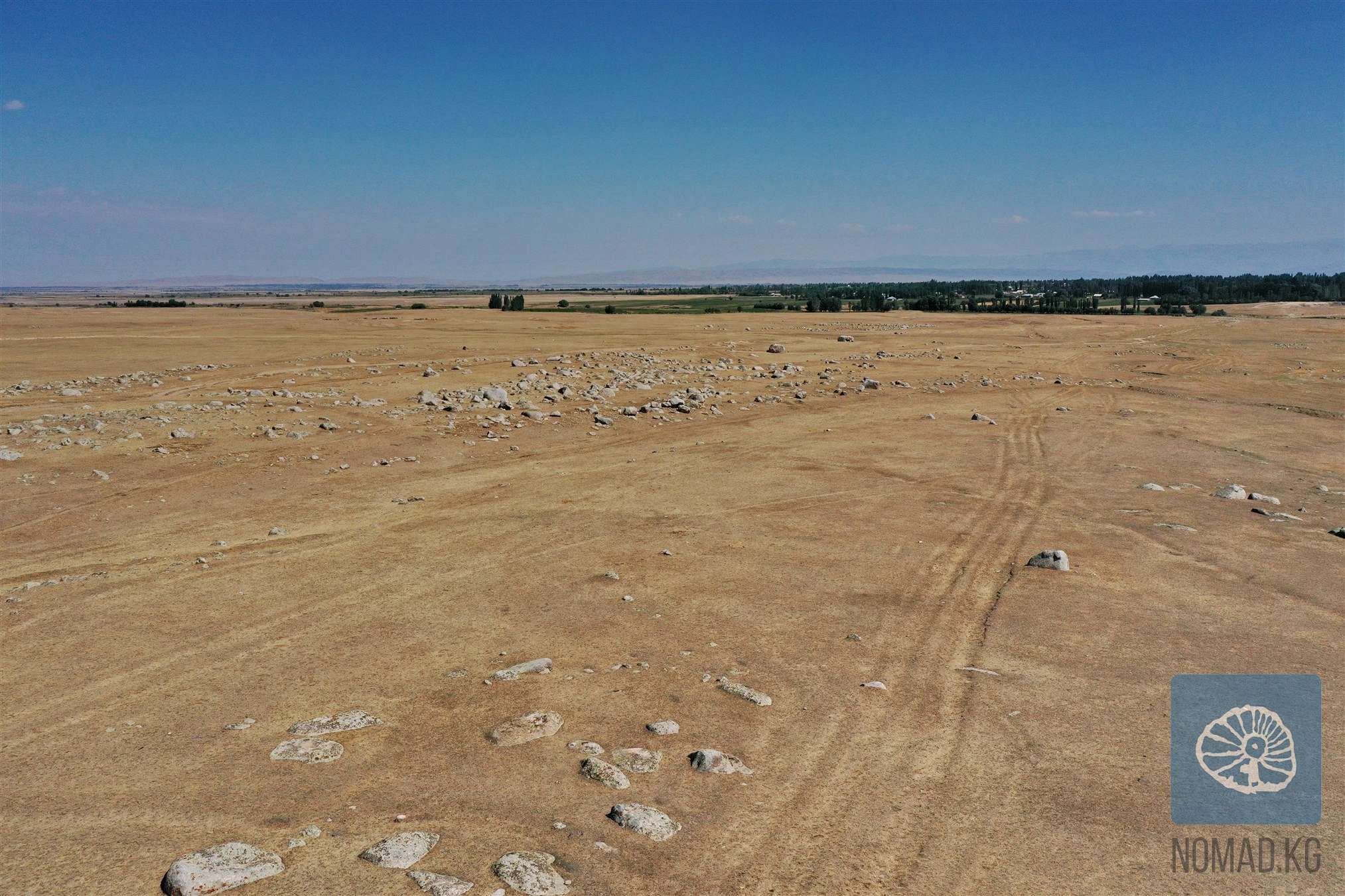
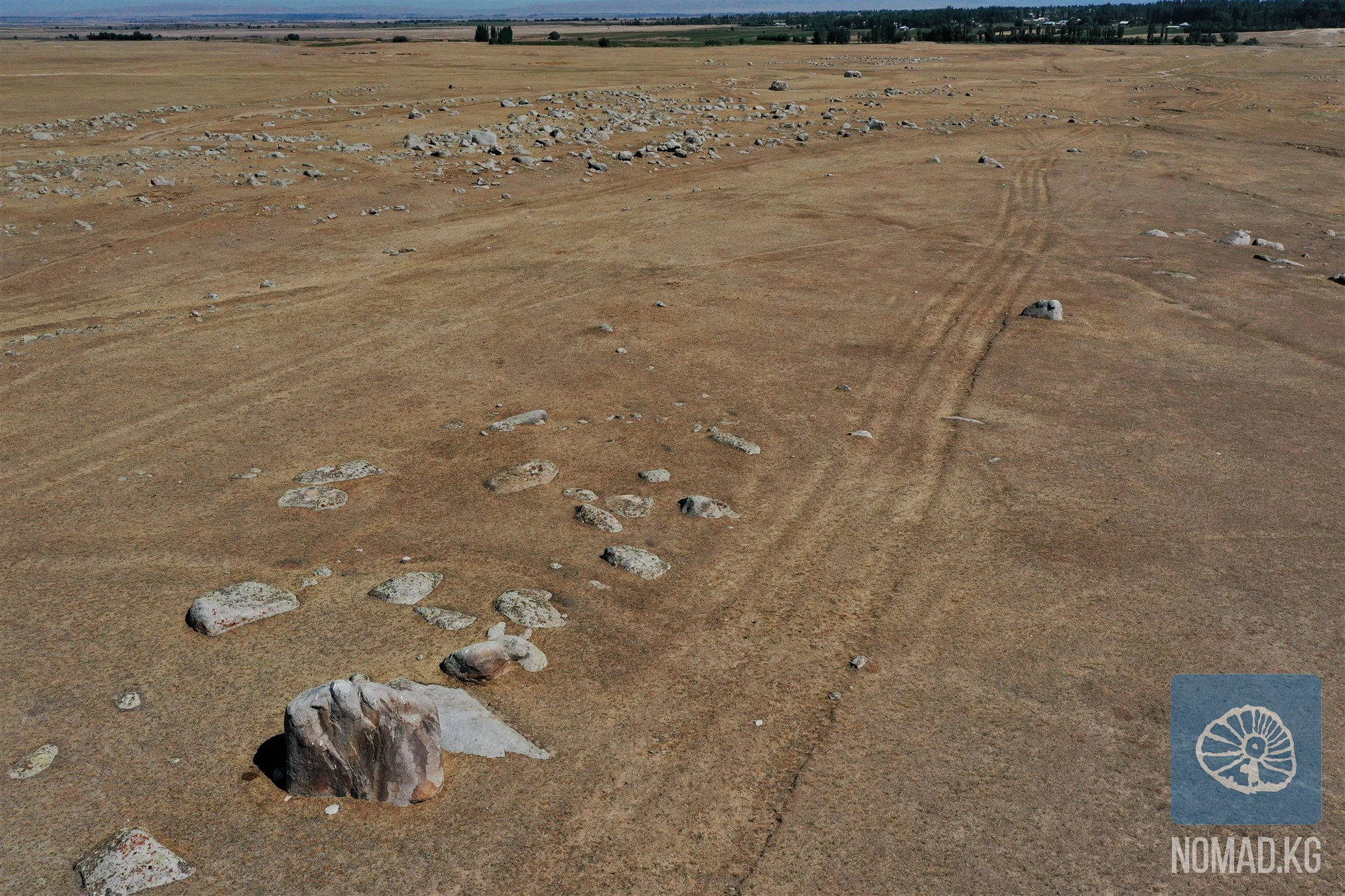
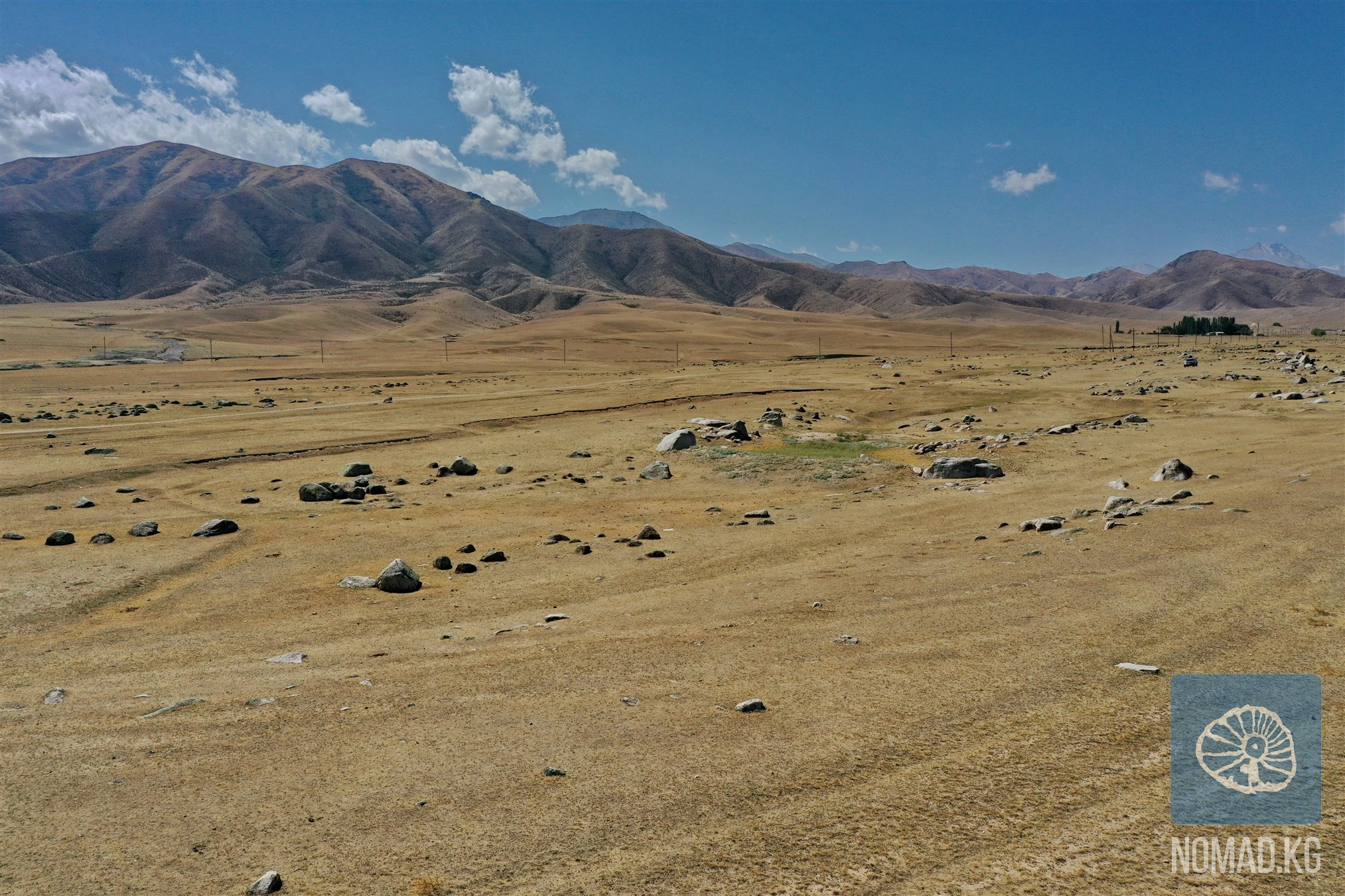
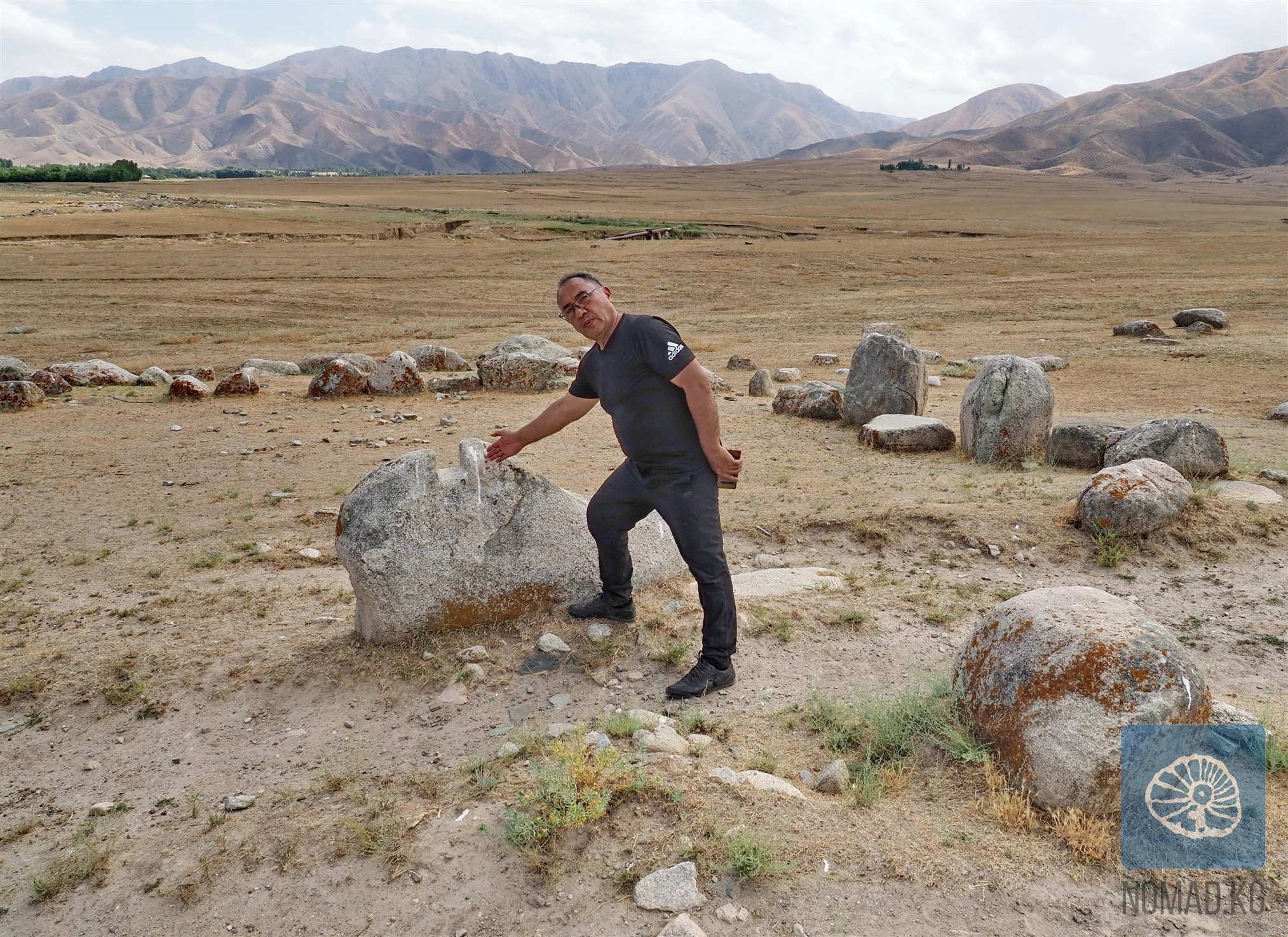
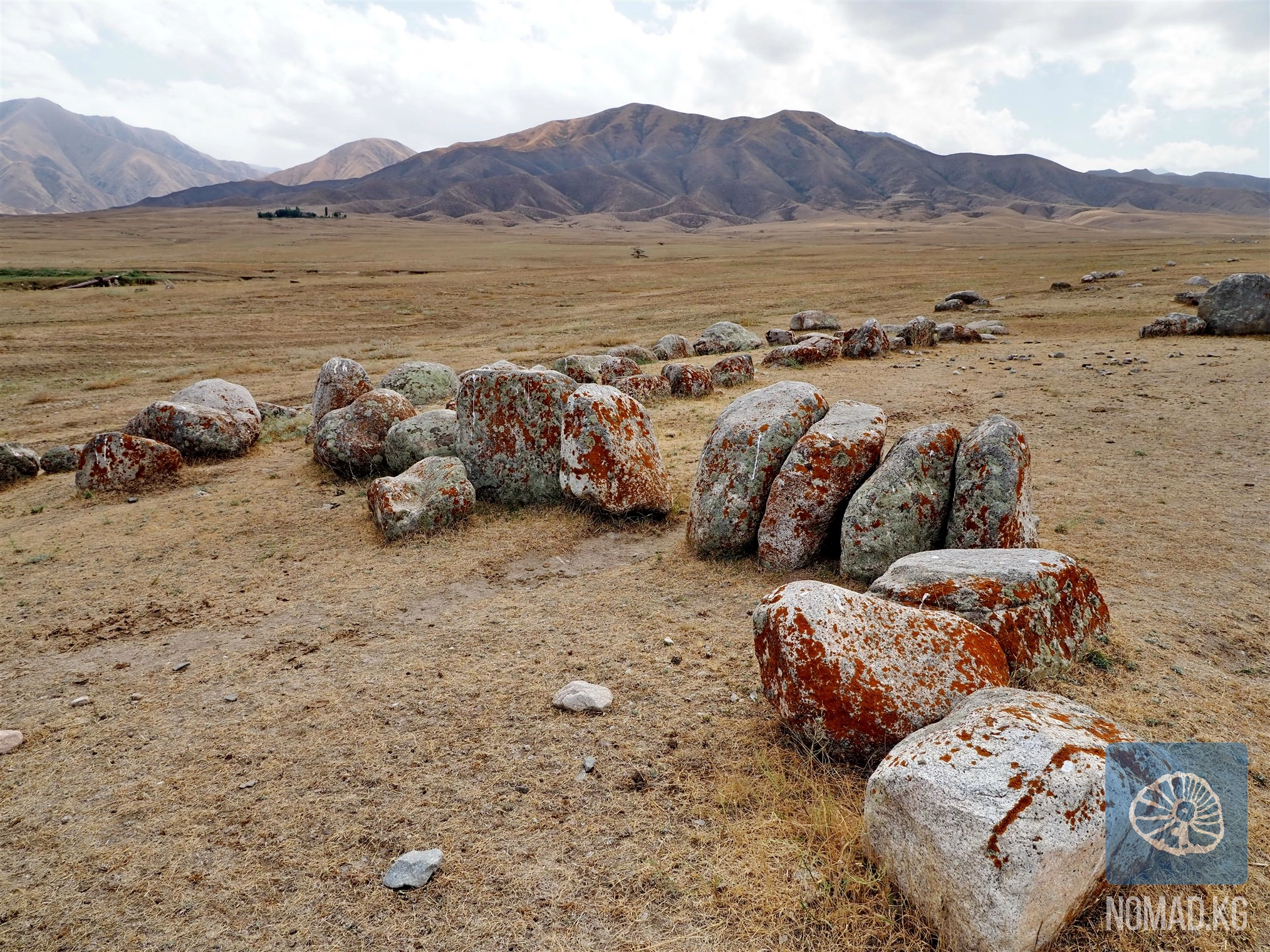
From the Talas Ala-Tuu ridge, the steppe suddenly ceases to be chaotic. In its body, even, almost stubborn strokes emerge. Stone by stone. Line by line. Bakayyr does not reveal itself immediately: it waits for you to step out of the scale of a human and approach the scale of nomadism, time, memory. In the oral tradition of these places, it is said: the earth remembers those who knew how to speak to it. Here, the conversation was not conducted with words or writing - it was laid out in granite.
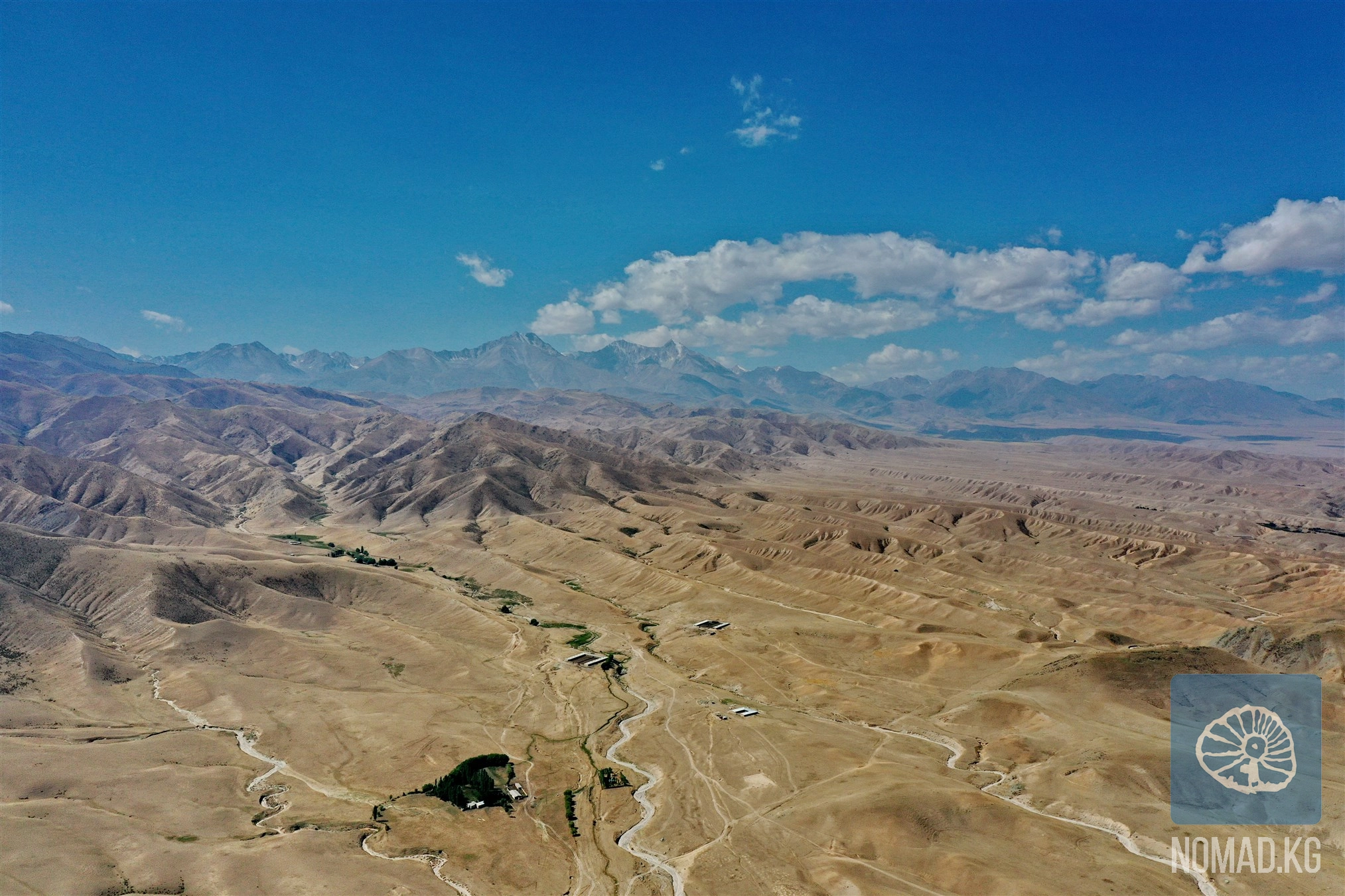
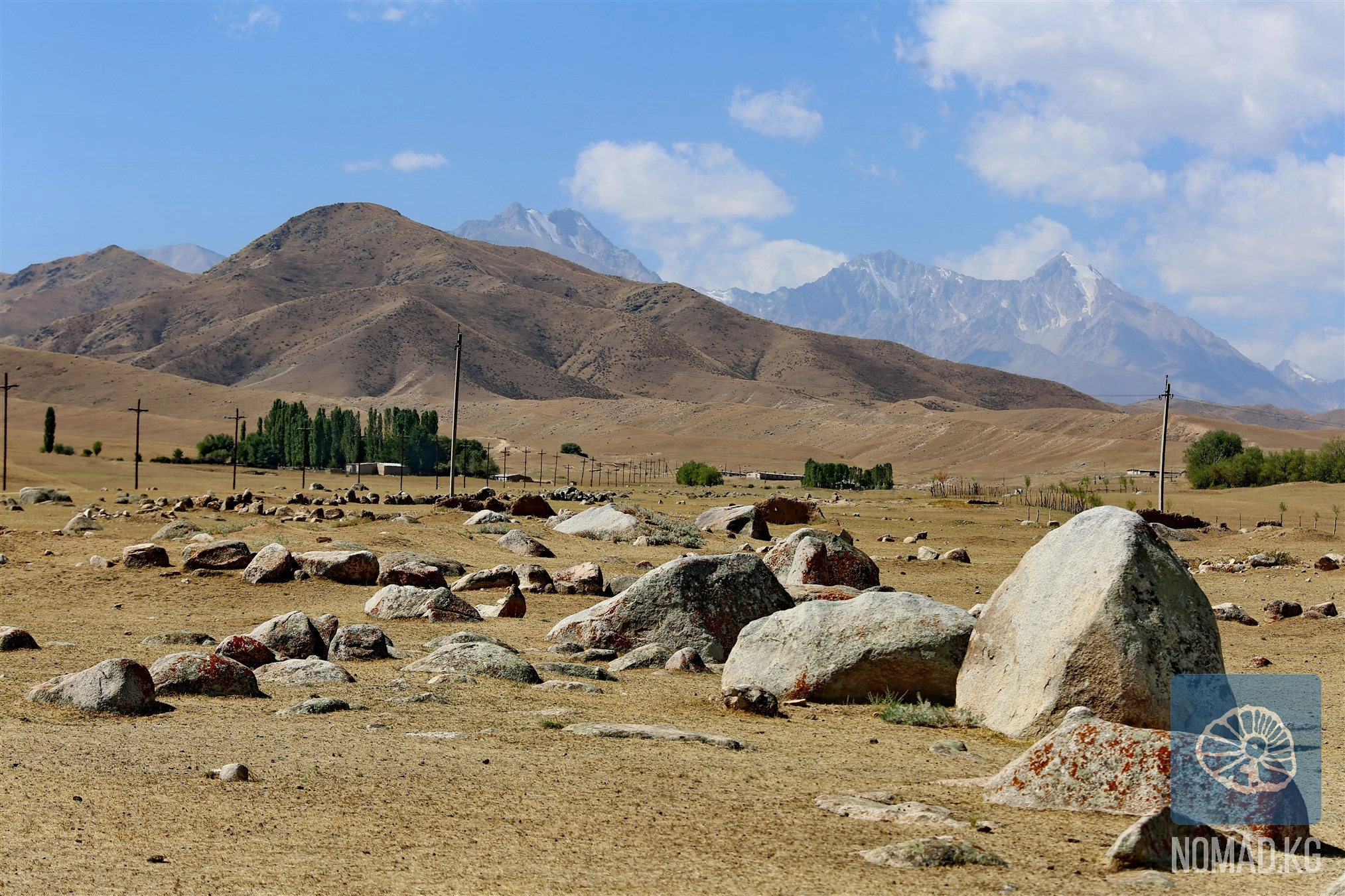
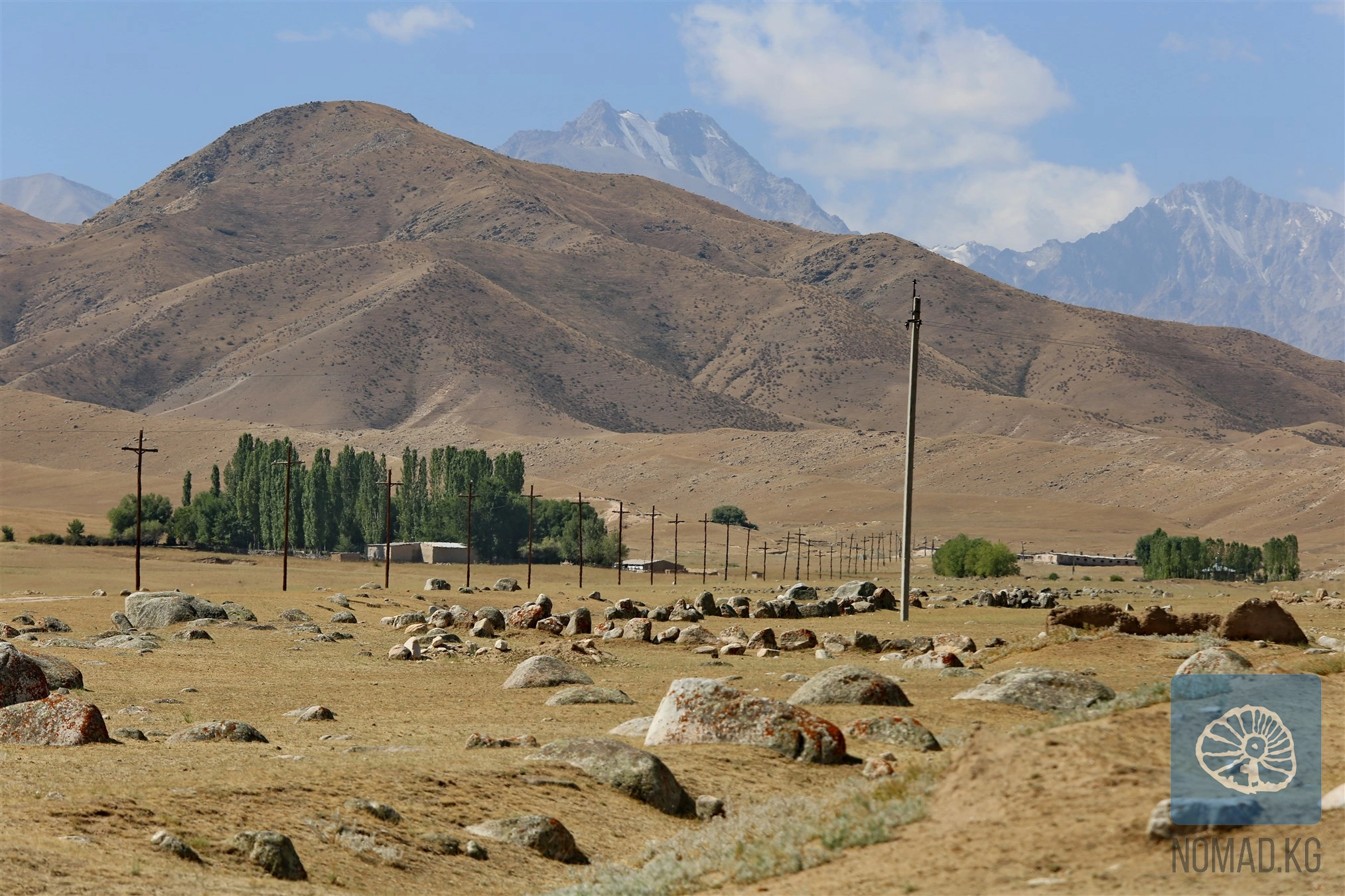
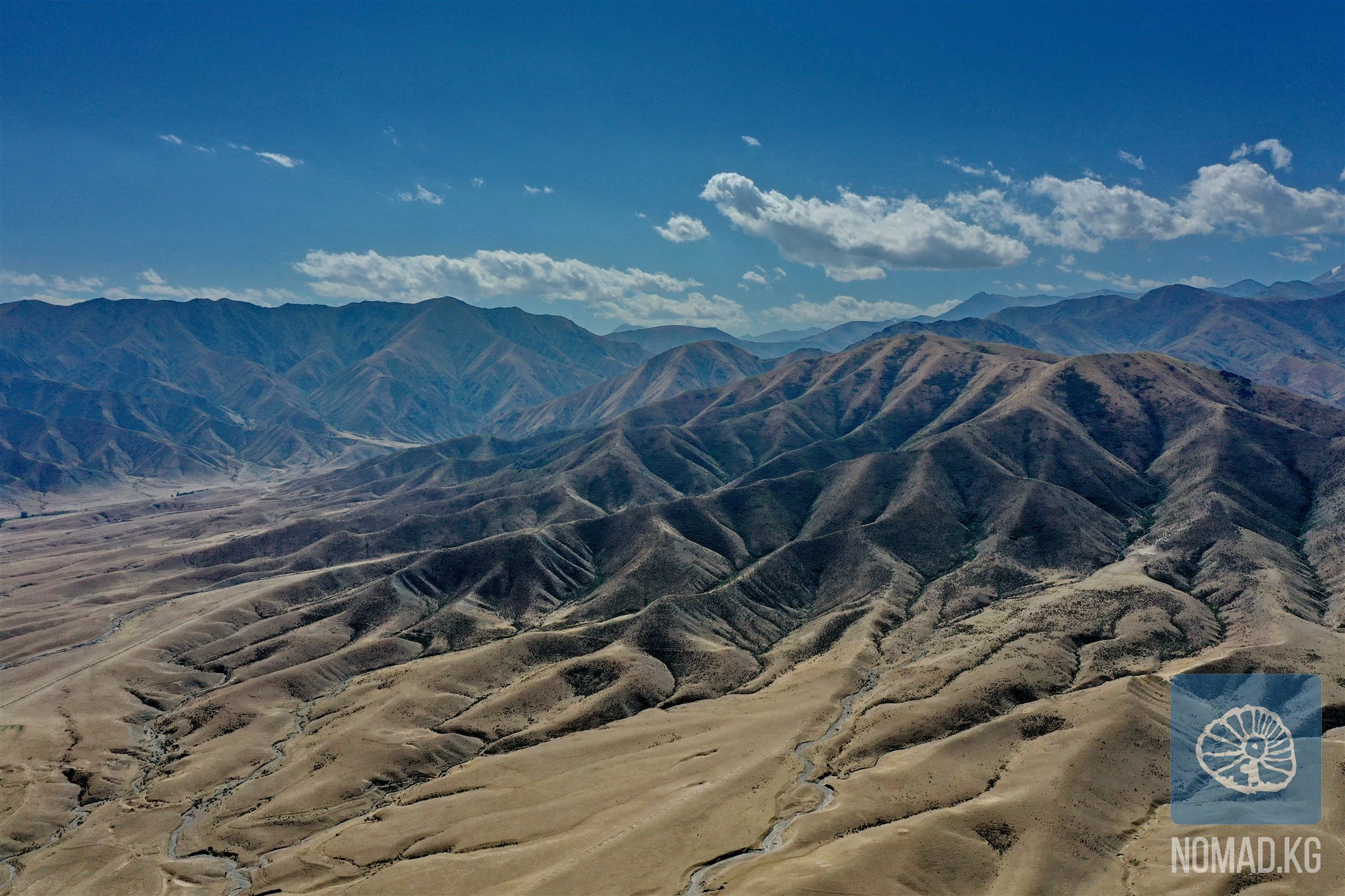
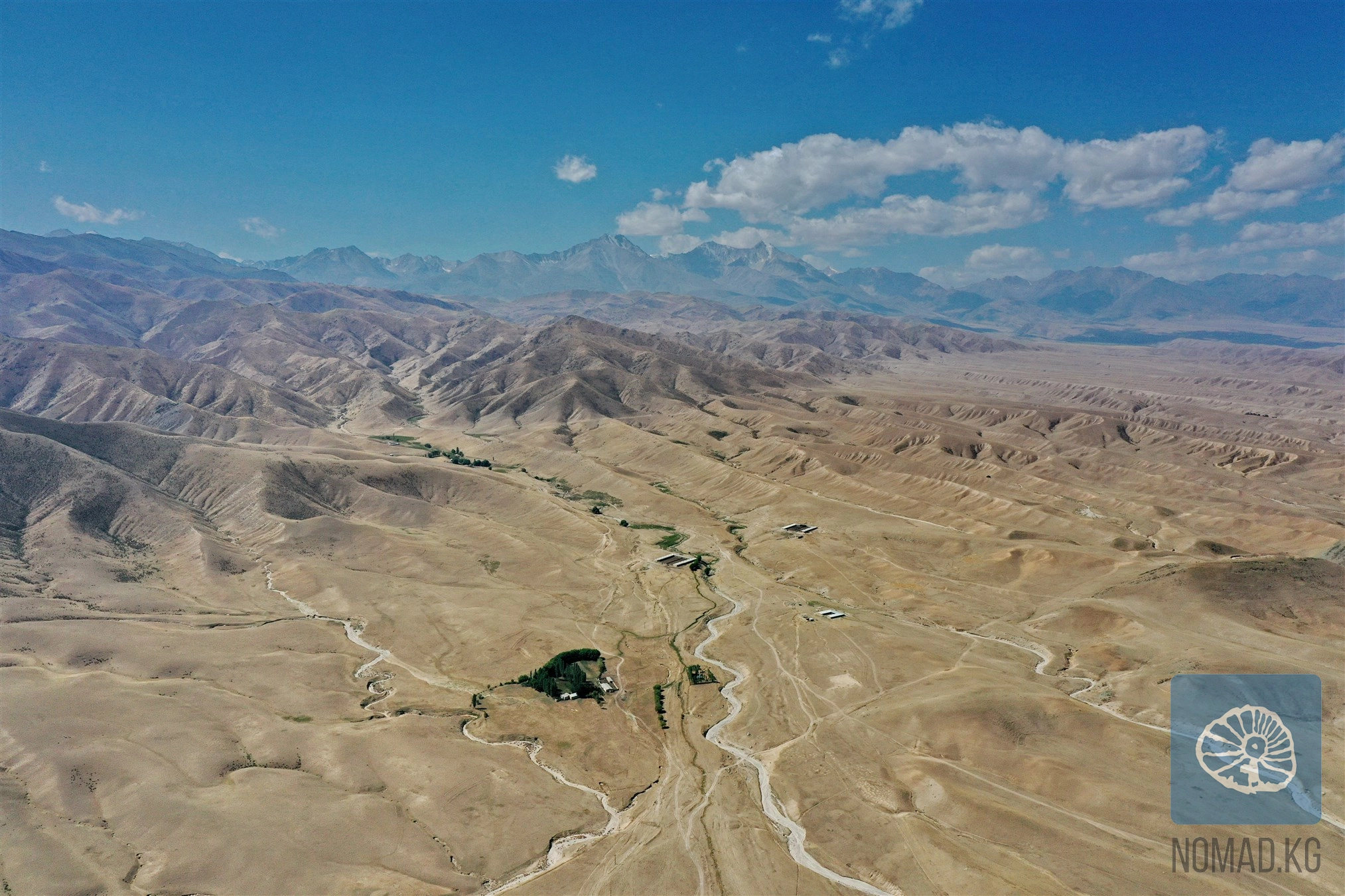
Bakayyr is located in the foothills of the Talas Ala-Tuu - in an area where the mountains have not yet closed into gorges, and the steppe has already begun to rise. This is a transitional space: between the plain and the height, between summer pastures and winter encampments. The heights here are moderate, the climate is harsh, with strong winds and sharp temperature fluctuations. In spring, the grass bursts into green, in summer it burns to ochre, and in autumn the steppe becomes almost metallic.
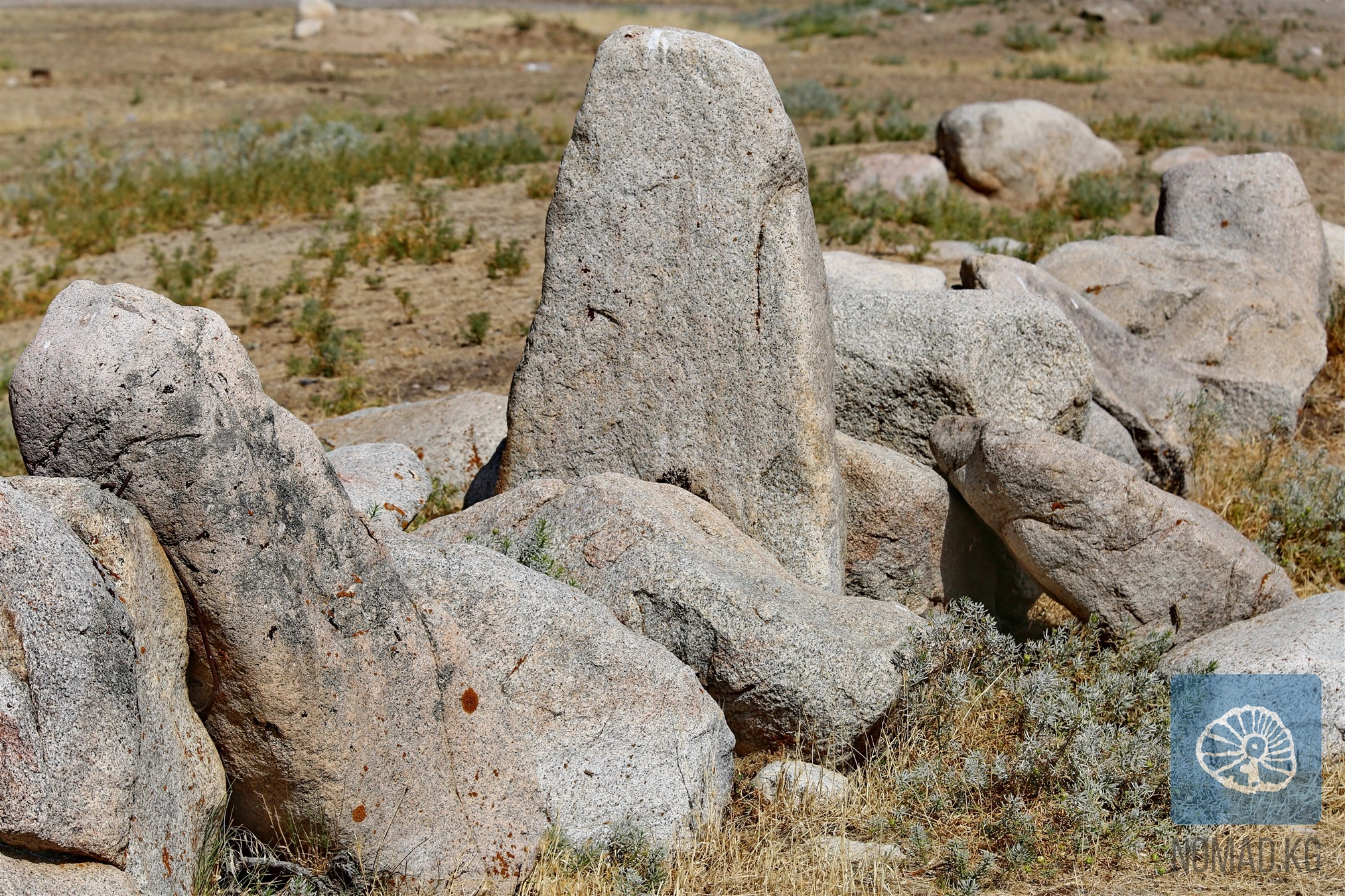
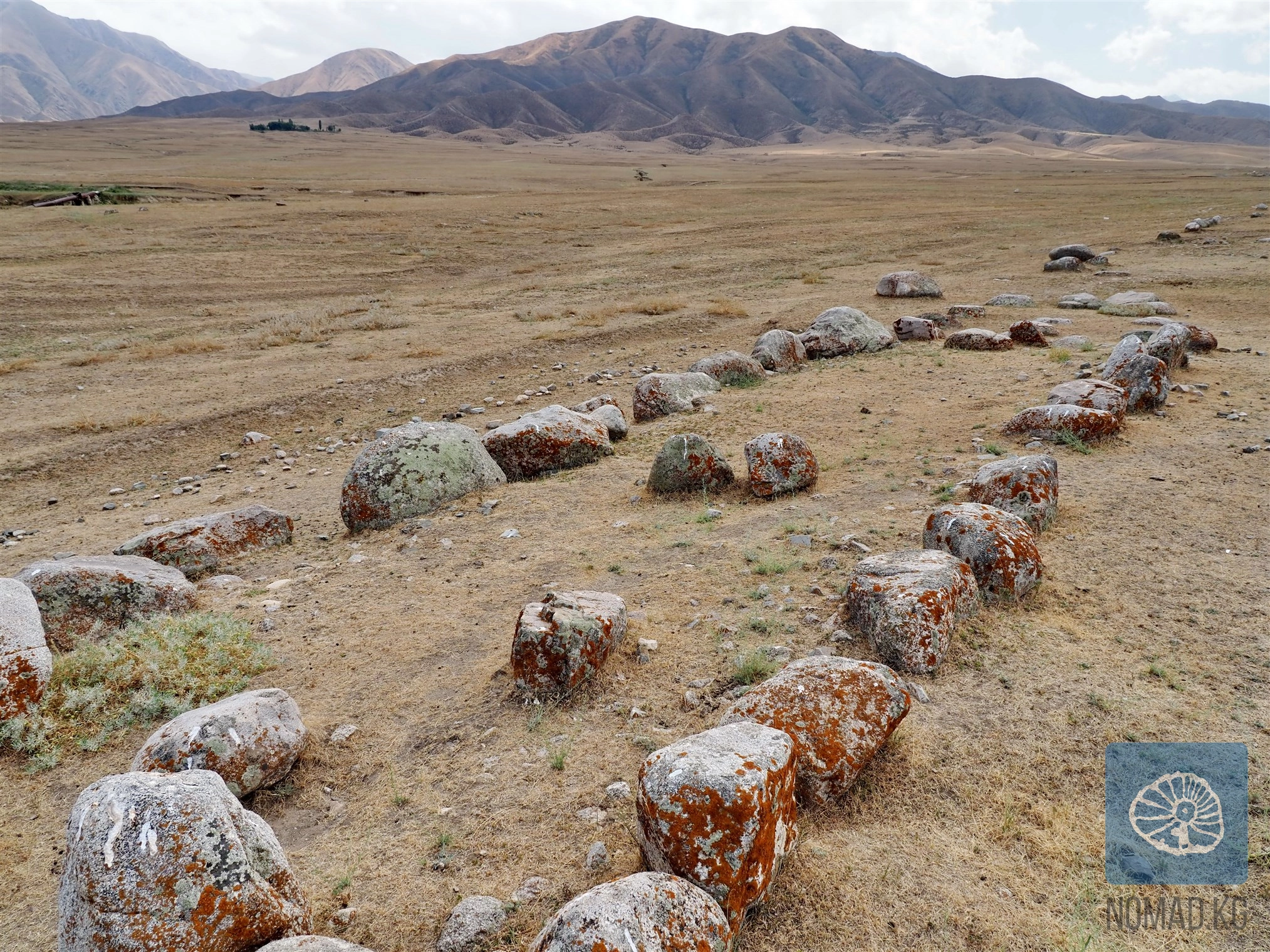
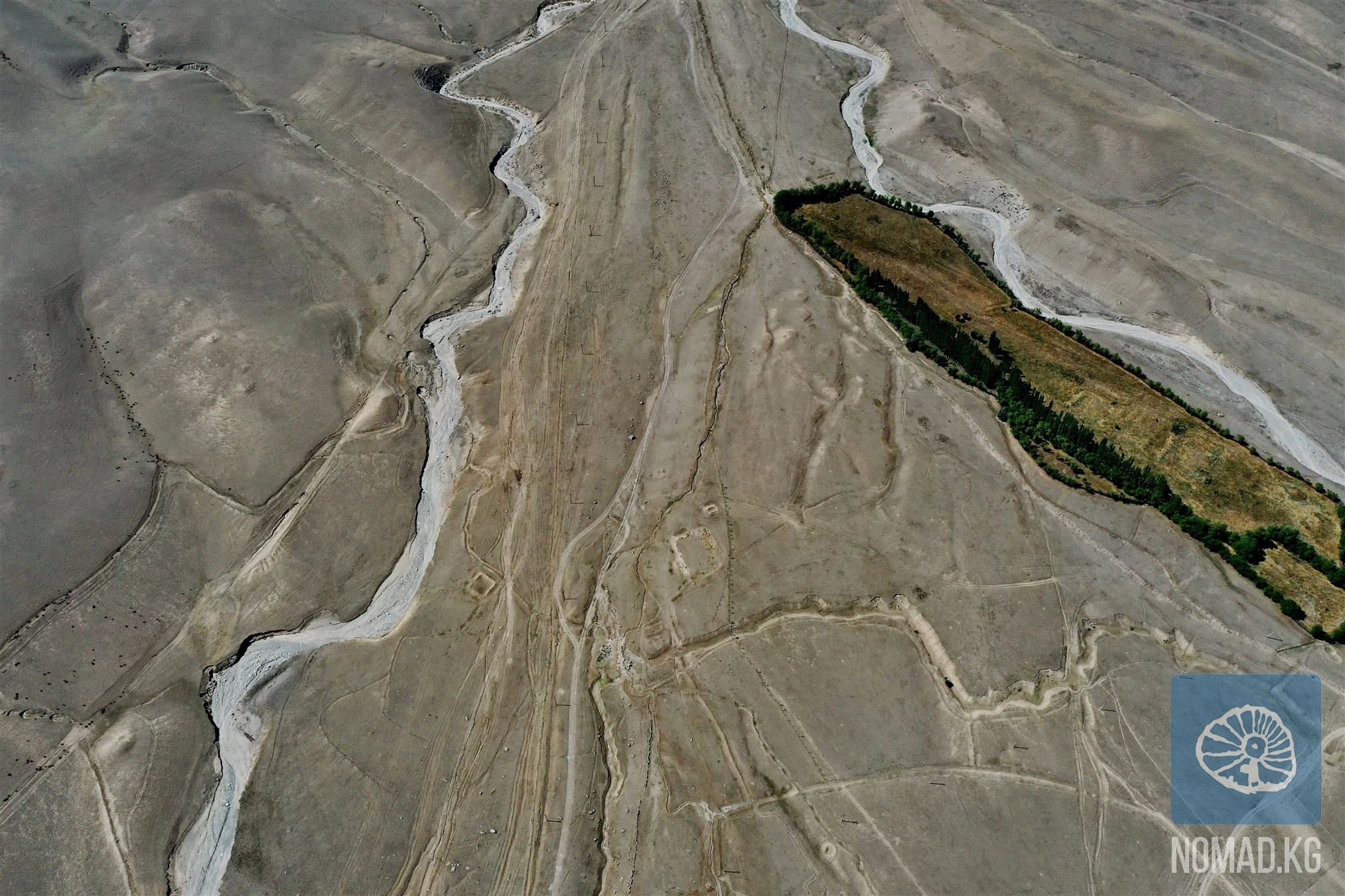
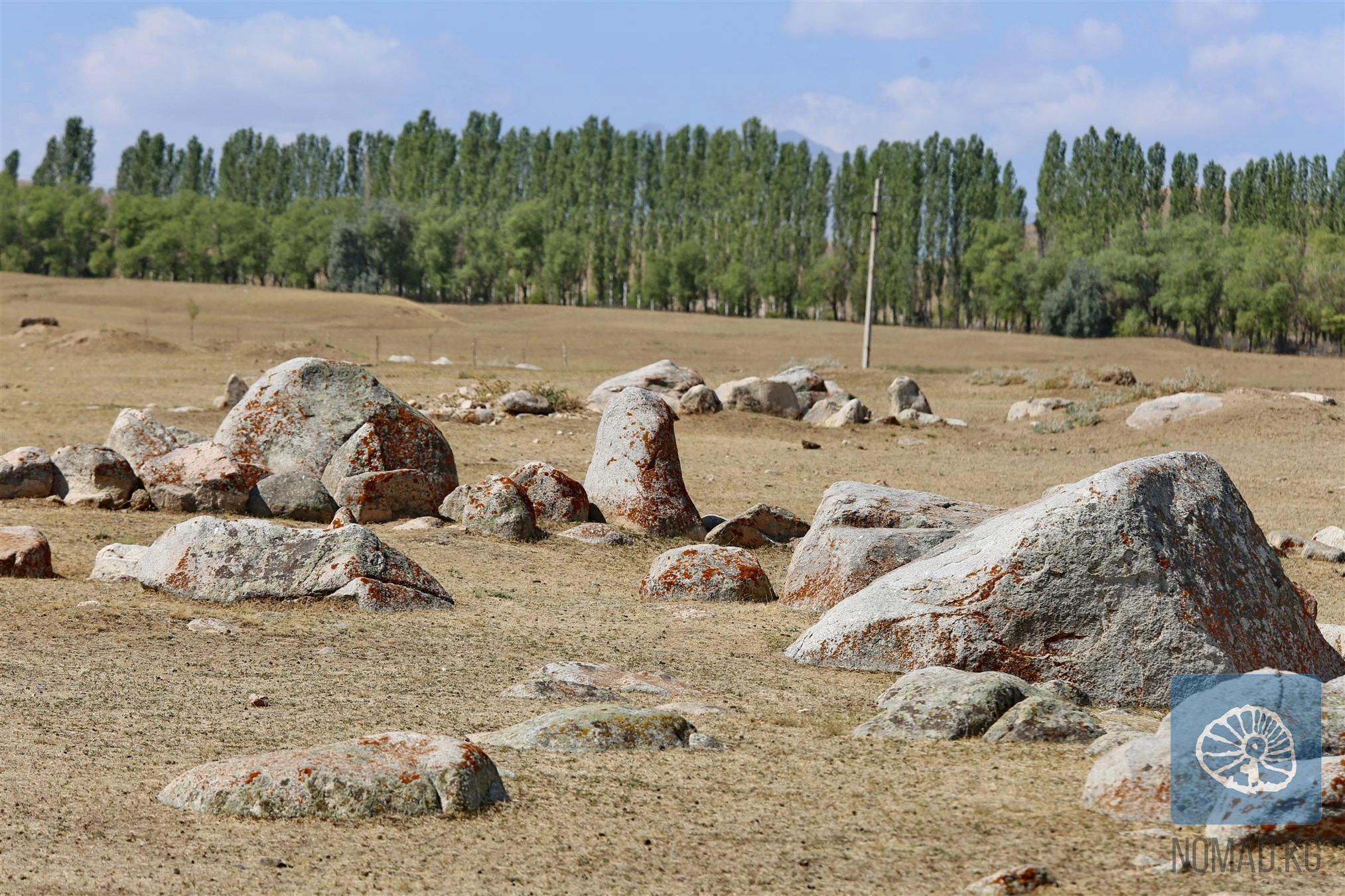
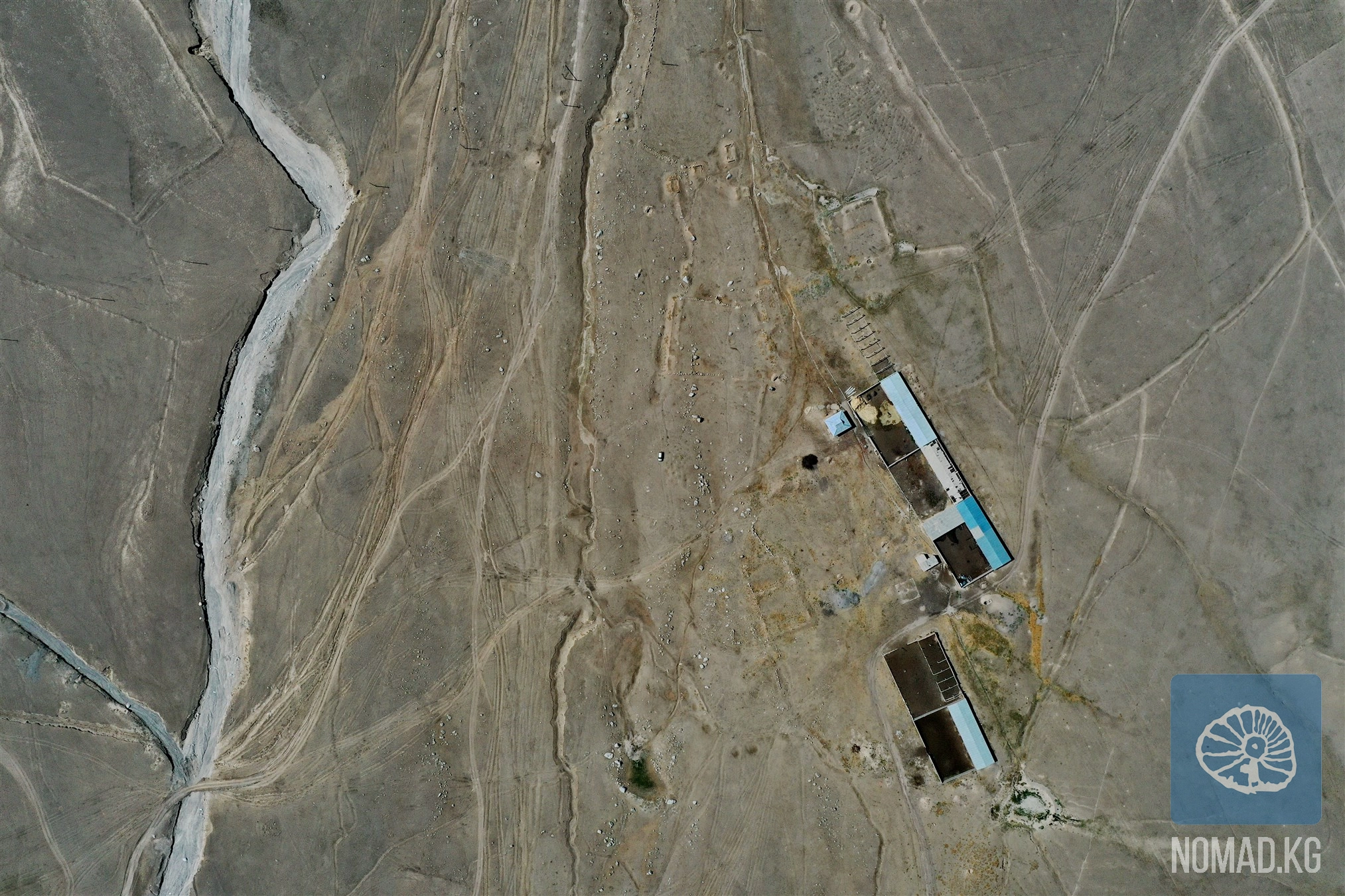
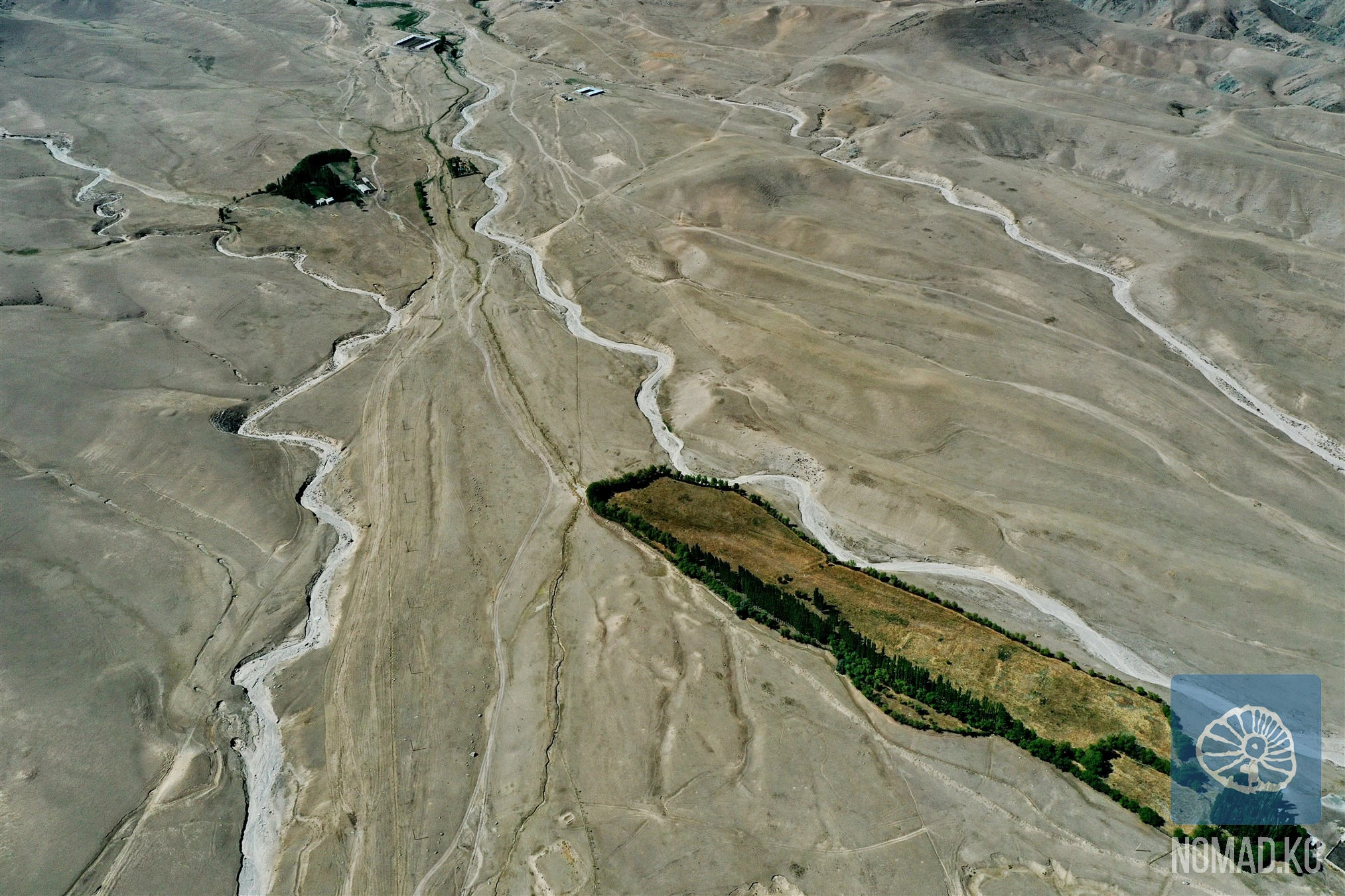
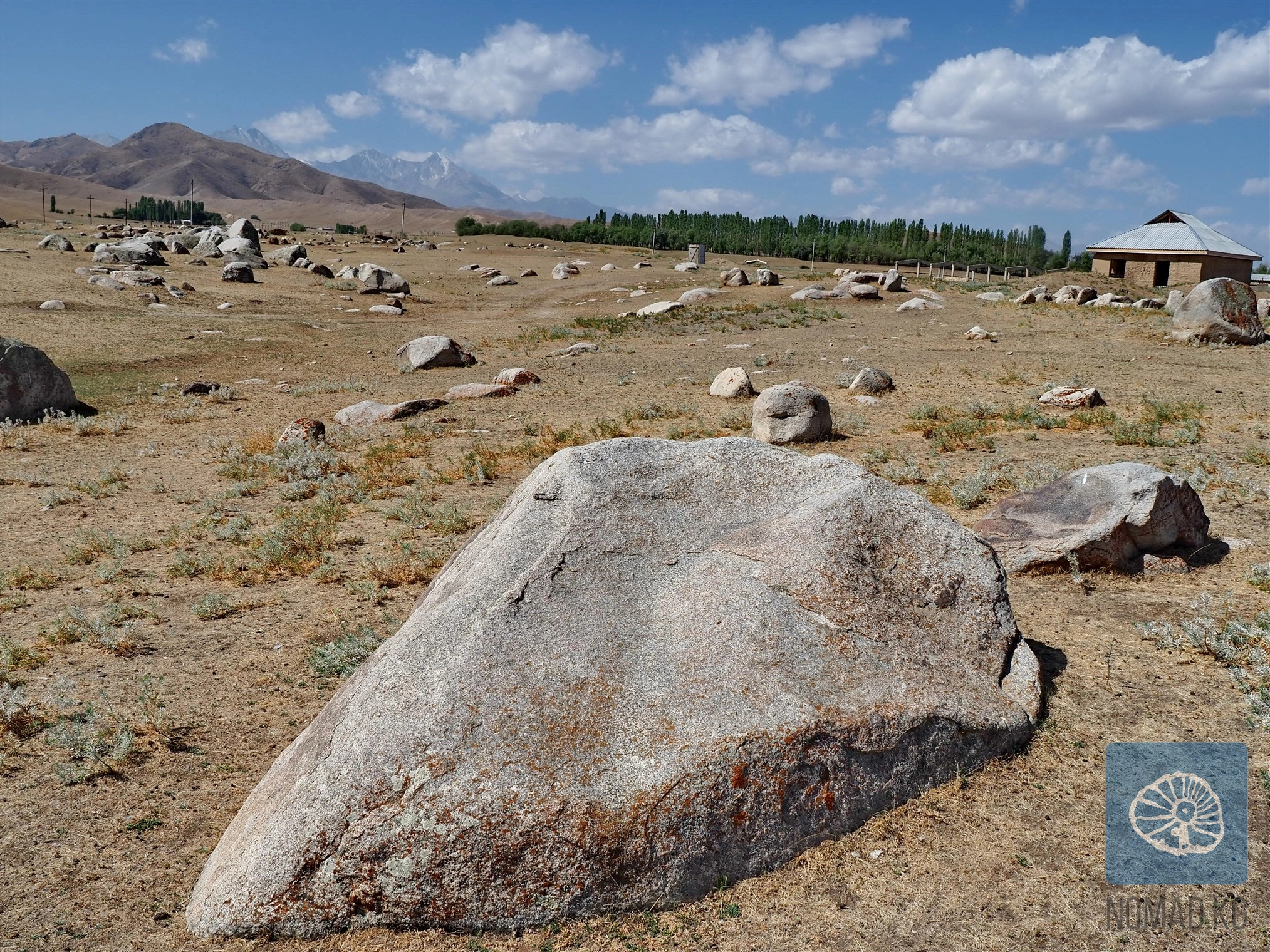
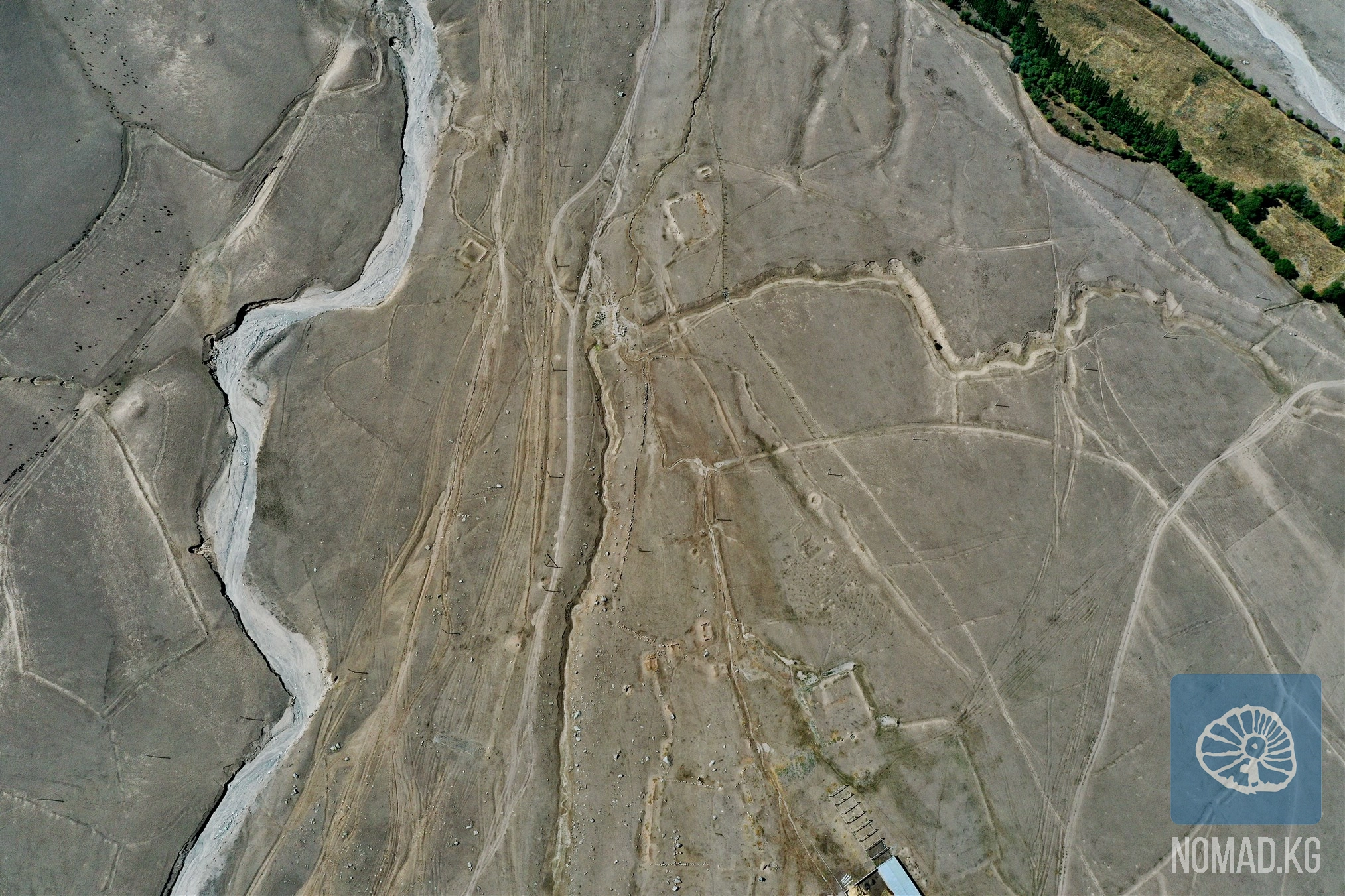
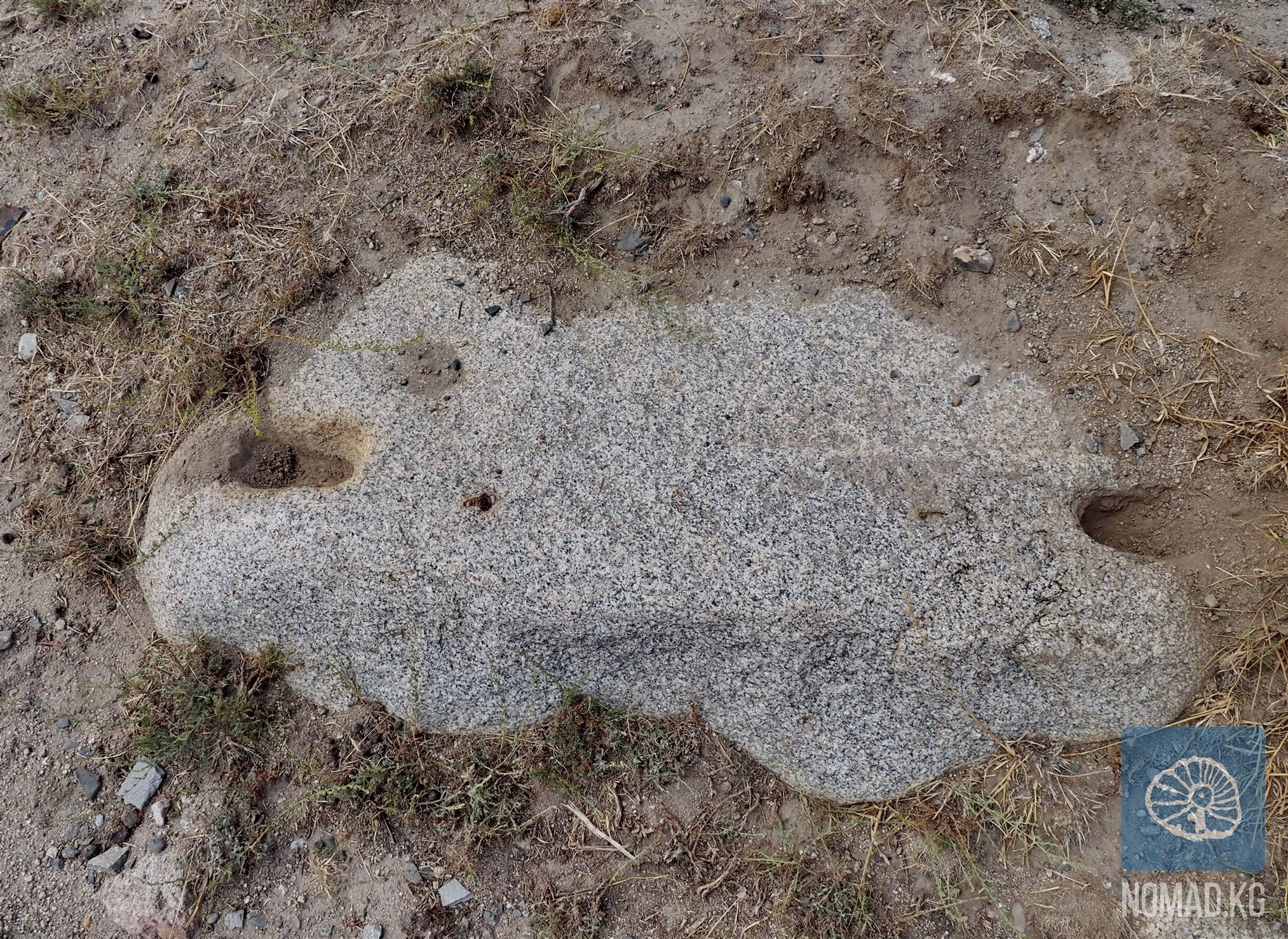
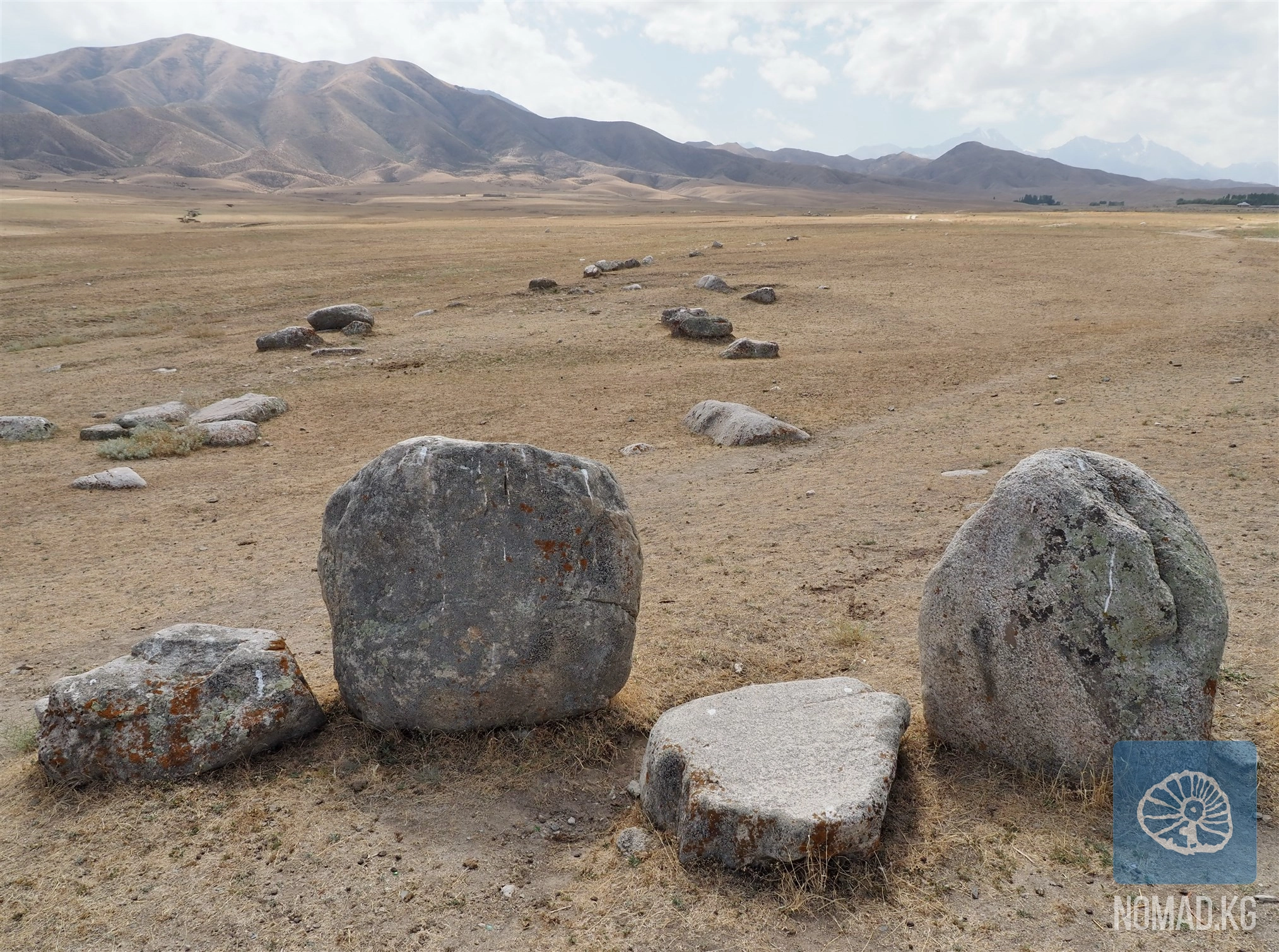
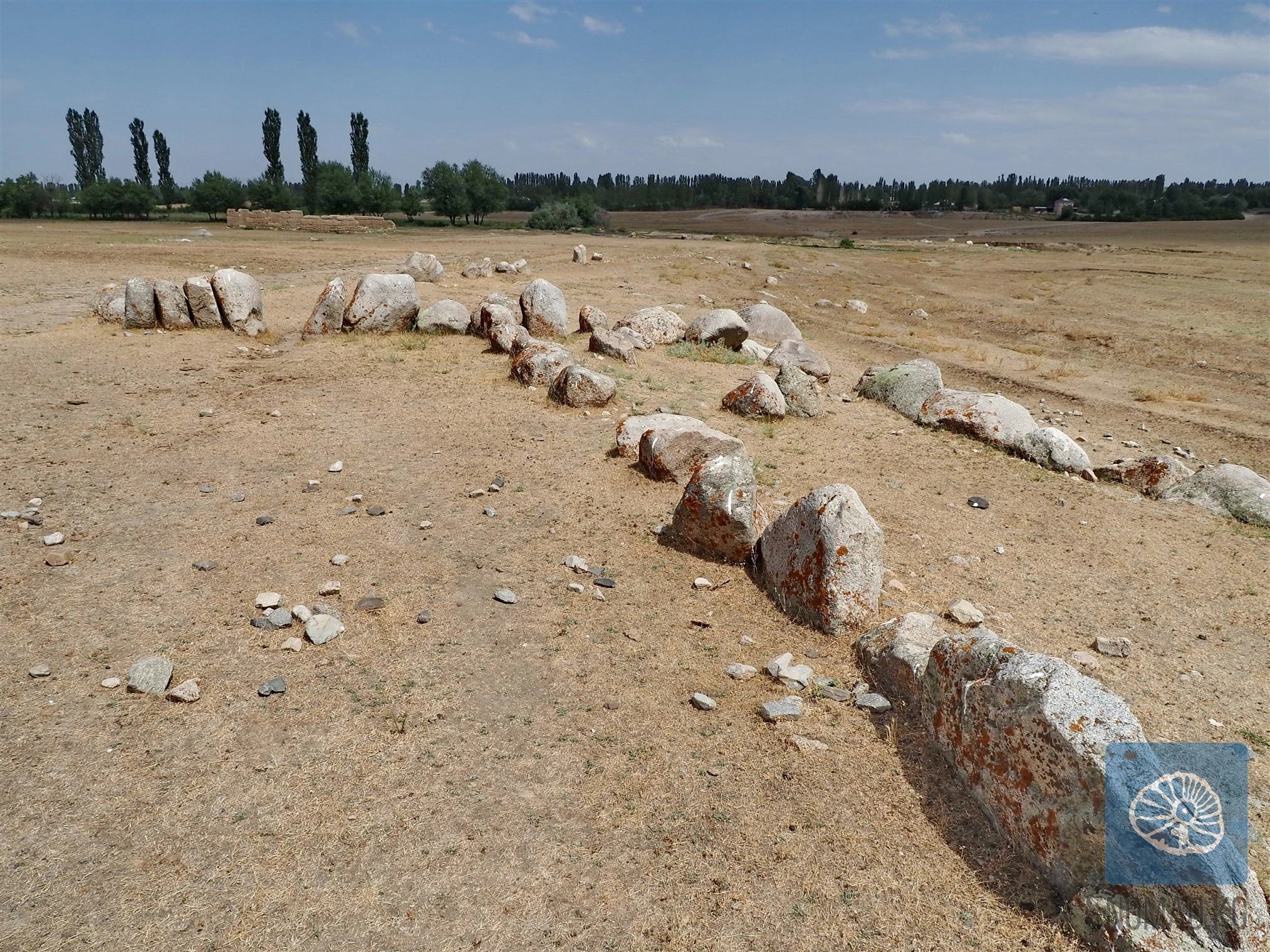
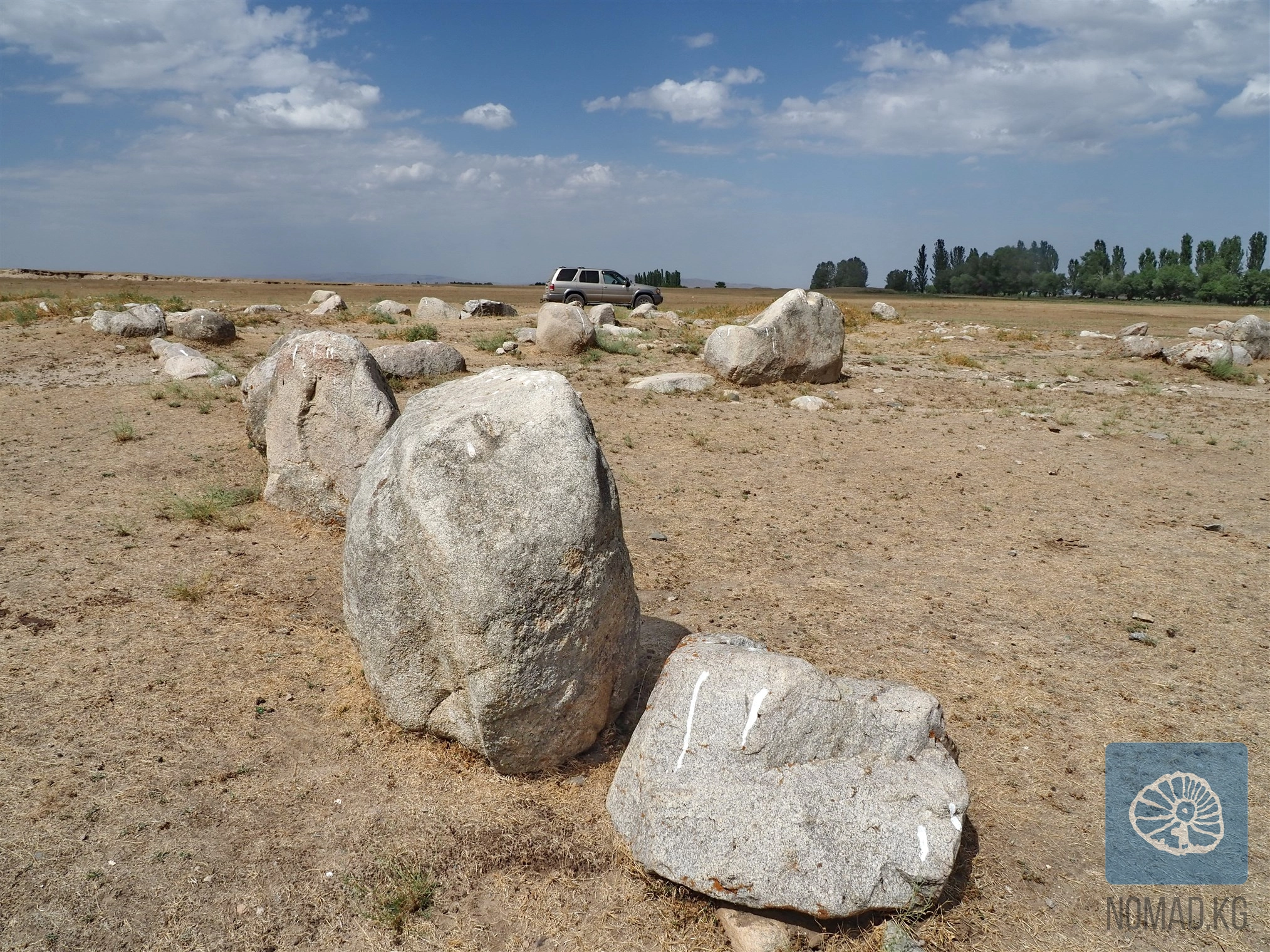
The stone chains of Bakayyr consist of large granite blocks. Some of them weigh several tons. They are laid out in elongated lines - straight or slightly broken, sometimes running parallel, sometimes diverging. These lines do not repeat natural stone scatterings and do not fully obey the logic of slopes. They cross watersheds, emerge onto open plateaus, disappear, and reappear.
From the ground, these structures can easily be mistaken for traces of erosion or old agricultural work. But from above - from the ridge, from a drone, from a mental "bird's eye view" - it becomes clear: nature rarely arranges stone so consistently.
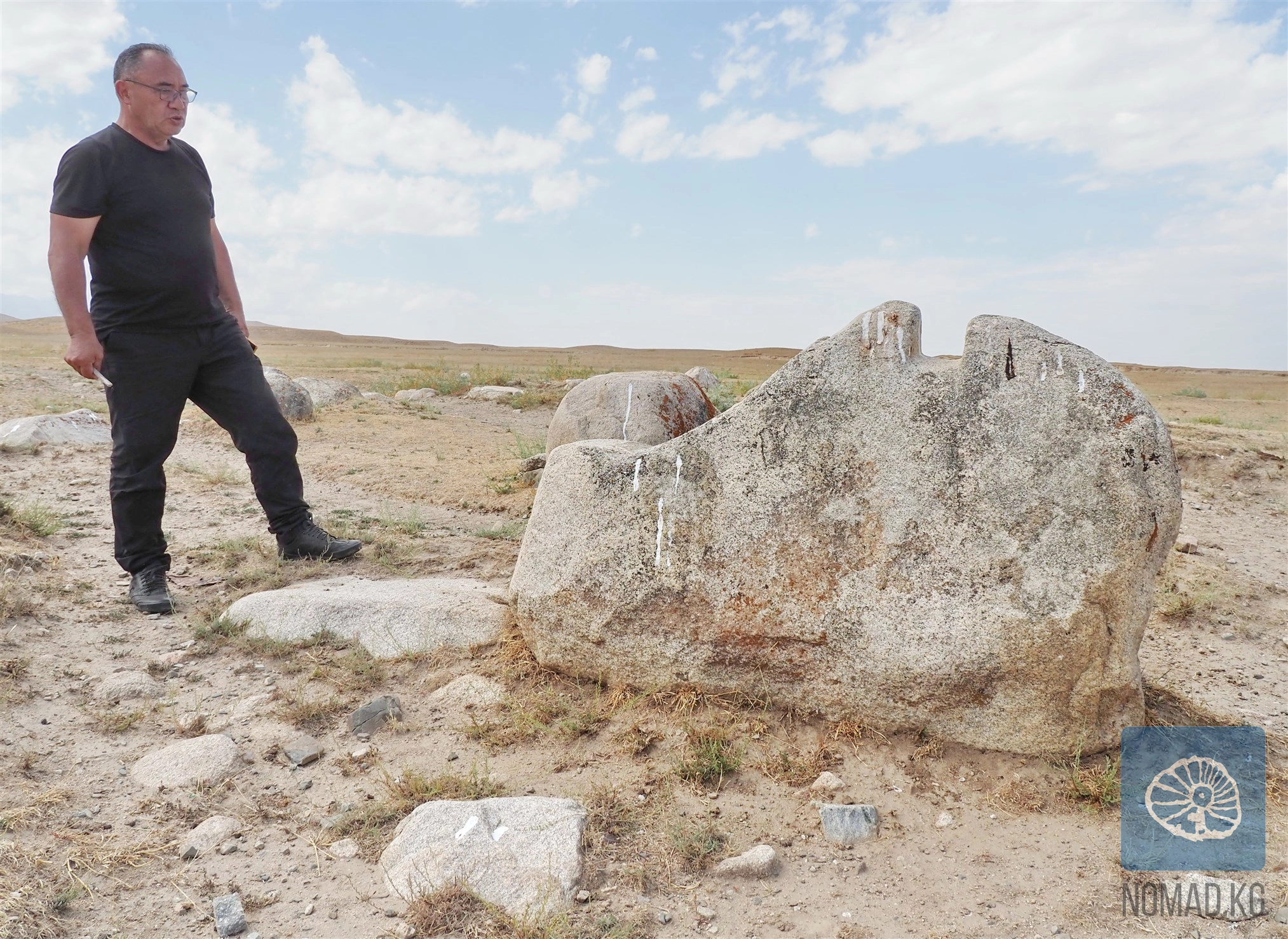
Bakayyr is almost not represented in scientific publications. Systematic archaeological excavations have not been conducted here, and there are no precise datings. It exists in an intermediate state - between archaeology, local history, and oral memory. Local residents know about the stone lines but perceive them as part of the familiar landscape, not distinguishing them from everyday life. Yet the scale, choice of material, and labor-intensive laying elevate these chains beyond the ordinary enclosures for livestock or pasture boundaries. Moving such blocks required collective effort and time - resources that are rarely expended without meaning.
In the context of Central Asia, megalithic structures are often associated with sacred practices, spatial orientation, and transition rituals. They could mark paths, boundaries, zones of power, or seasonal routes. In nomadic culture, the line is often more important than the point: it sets movement, direction, path. Bakayyr invites us to view the foothills of Talas as an archive where history is recorded not by objects, but by the landscape itself.
Here, it is important to go slowly. Walking along the stone chains allows you to feel the scale: the line is not read immediately; it is composed of fragments. The best time for observations is in the morning or during the pre-sunset hours when shadows emphasize the relief and the stone begins to "draw." Climbing to the nearest elevations, one can see how individual chains form a system. These are some of the best points for photography and contemplation, especially in side light.
The contact with local shepherds is also interesting. Their stories rarely provide direct answers but often suggest the right question. For some, these lines are just stones; for others, they are millennia-old traces of humanity. There are no rituals for tourists here, but there is a domestic sacredness: respectful silence, the inappropriateness of loud conversations, a sense that the place observes in response.
The easiest way to reach Bakayyr is by car from Talas, heading towards the foothills of the Talas Ala-Tuu. Part of the road is on dirt paths; after rains, they can be difficult to traverse. Public transport only goes to the nearest villages - from there, it’s on foot or by hitchhiking.
The best time to visit is from May to September. In spring and early summer, the steppe is most expressive; in autumn, it is harsher but visually clean. Access is difficult in winter due to snow and winds. Be sure to take water, sun and wind protection, and warm clothing even in summer. Connectivity is unstable or absent. Navigation is via offline maps and terrain landmarks.
Overnight stays are possible in tents or in nearby settlements. Yurts are found seasonally, with minimal but authentic comfort.
It is important to remember the principles of sustainable tourism: do not dismantle stones, do not leave traces, do not disrupt the integrity of the lines. Bakayyr is vulnerable not because of fragility, but because of invisibility.
One of the shepherds once said: "If a stone lies flat, it means it was placed there for a reason." In this phrase lies the entire philosophy of Bakayyr. Here, one feels the nomadic worldview acutely: the road is more important than the destination, the trace is more important than ownership, memory is more important than explanation.
Bakayyr is important not as a solved riddle or as a checkbox on an itinerary. It is important as an experience of proportion. Here, you understand that the past may not be behind you, but all around. Sometimes, to see history, you just need to rise higher - above the familiar scale, above the desire for immediate answers. And then it becomes clear: humanity knew how to speak to the earth not with words. The millennia-old history here is laid out in stone, and it is still waiting for its explorers.
Standing by the Talas River early in the morning, when the fog still lingers over the water, it is easy to imagine how caravans passed through here, how cavalry units moved along these very shores, how language, faith, and power changed - while the
Peak Manas is the highest point of the Talas Ala-Too ridge, with an elevation of about 4485-4488 meters above sea level, and this figure alone sets the tone: here, the familiar routes end, and the territory of true mountains begins. The
If there is a place in the Talas region that amazes from the very first step, it is the Talas Birch Grove - the largest man-made birch forest in all of Central Asia and one of those places where humans and nature have created a true oasis of
Kyrgyzstan is a country where the memory of ancestors, sacred space, and natural power merge into a single cultural landscape. For centuries, Kyrgyz people have placed special importance on burial monuments and holy sites—mazars. Even today,
Among the picturesque mountains of the Bakai-Ata district, not far from the village of Urmaral, lies one of the most mysterious and revered places in the Talas region - the Kara-Koyun cave. This is not just a dark niche in the rocky mass, but a
If you have already seen Lake Besh-Tash and think that the national park has revealed all its secrets to you, then you simply haven't yet ascended the Itagar Pass. This is the route after which photos remain in your phone's memory that you
The high mountain passes of Suusamyr do not tolerate haste. Its meadows, rivers, and slopes exist at their own pace. The grass grows slowly here, trees take years to settle in, and any human intervention leaves a lasting mark. When you stand at this
In the Talas Valley, among the hills and green valleys, lies one of the most revered sacred places in the region - the mazar of Boo-Terek. Its name translates from Kyrgyz as "a bundle of poplars" or "many poplars," and this is no
In the very heart of the blessed Talas Valley, where the silvery Talas River leisurely carves its path between two majestic mountain ranges - the Talas and Kyrgyz ranges - lies a unique natural oasis. The Talas Forest is not just a green stripe on
The Besh-Tash Nature Park covers over 30,000 hectares, stretching nearly 30 kilometers upstream along the river of the same name - from the gentle foothills at an altitude of 1,100 meters to the harsh, cold glaciers rising to 3,500 meters. The park
The mountains of the Talas Ridge conceal many secrets, but one of the most astonishing is the complex of rock carvings at Bakayir-Kara-Kuush, located in an easily accessible gorge where human footsteps are lost among the stones, and ancient
The Talas Geopark "Echkilі-Tuu" is located in the mountain range of the same name, Echkilі-Tuu, which is part of the Kyrgyz Ala-Too ridge, in the Sary-Kuurai gorge, one of the most impressive natural attractions of Kyrgyzstan. This geopark
The Talas region is one of the corners of Kyrgyzstan where history is felt not in museum showcases or academic works, but in the wind, in the scent of dry wormwood, in the lines of mountains frozen around the valley like an ancient choir. Here, the
The Ötmäk Pass (3326 m above sea level) is one of the most impressive places in the Talas region and an essential mountain artery connecting the closed Talas Basin with the expansive Suusamyr Valley and the strategic Bishkek-Osh highway. This is the
In the very heart of the picturesque Talas region, amidst the rugged gorges of the Bakai-Ata district, lies one of the most unusual natural wonders of Kyrgyzstan - the "Kara-Kishi" geopark. This place seems to exist outside of time: the
The Besh-Tash National Park, which translates to "Five Stones," stretches in a narrow chain along the Talas Ala-Too mountain range. On a good gravel serpentine road up the Besh-Tash river gorge, it feels like the car is about to hit the
In the Talas Valley, there is a place where legends come alive at every step, and the silence of the mountains speaks louder than any storyteller. This is the Besh-Tash Gorge - one of the most picturesque and symbolic natural spaces in Kyrgyzstan.
The Talas Valley is one of those places where Central Asia speaks to the traveler through the language of wind and silent stones. Here, between hills and gorges, traces of ancient civilizations have been preserved, whose names have long dissolved in
The Talas region is not only a land of ancient settlements and legends but also of remarkable natural abundance. Here, surrounded by the stunning mountain gorges of Besh-Tash, Kolba, Kumush-Tag, and Urmaral, one of the most heartfelt gastronomic
Where once small rural streets stretched along the river valley, where people lived a measured steppe life, today lies a vast expanse of water - the Kirov Reservoir, one of the most significant hydraulic structures in Kyrgyzstan and an impressive
High in the Kaman-Suu gorge, at an altitude of about 2500 meters above sea level, lies one of the most expressive and multilayered monuments of rock art in Kyrgyzstan - Jaltyrak-Tash, which translates to "shining stone." This is not just a
Usually, the discovery of archaeological sites is associated with hard-to-reach mountains, abandoned trails, or deep gorges that are accessible only to researchers. But the Talas region surprises once again: not far from a busy road, just a few
Just thirty minutes by car and ten minutes on foot from Talas lies an amazing place - the Kulaan-Sai mine, one of the most accessible old workings for lead ore extraction in the region. At first glance, an ordinary mountain gorge, Kulaan-Sai
In the center of the village of Kyzyl-Adyr, which many travelers remember by its old name Kirovka, there is a local history museum named after Mikhail Fyodorovich Tura in the secondary school named after Orozbekov Meilibek. At first glance, it seems