

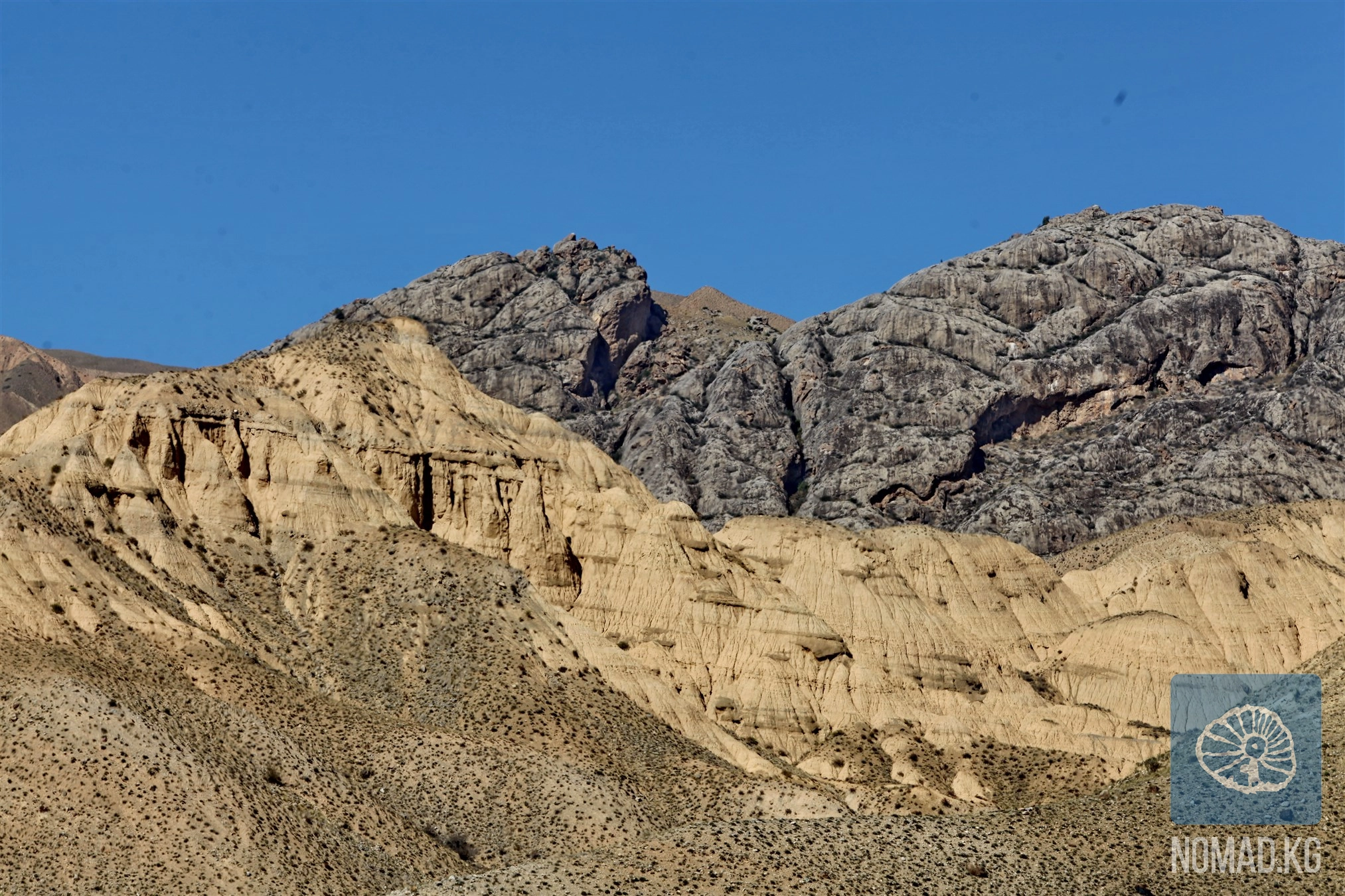
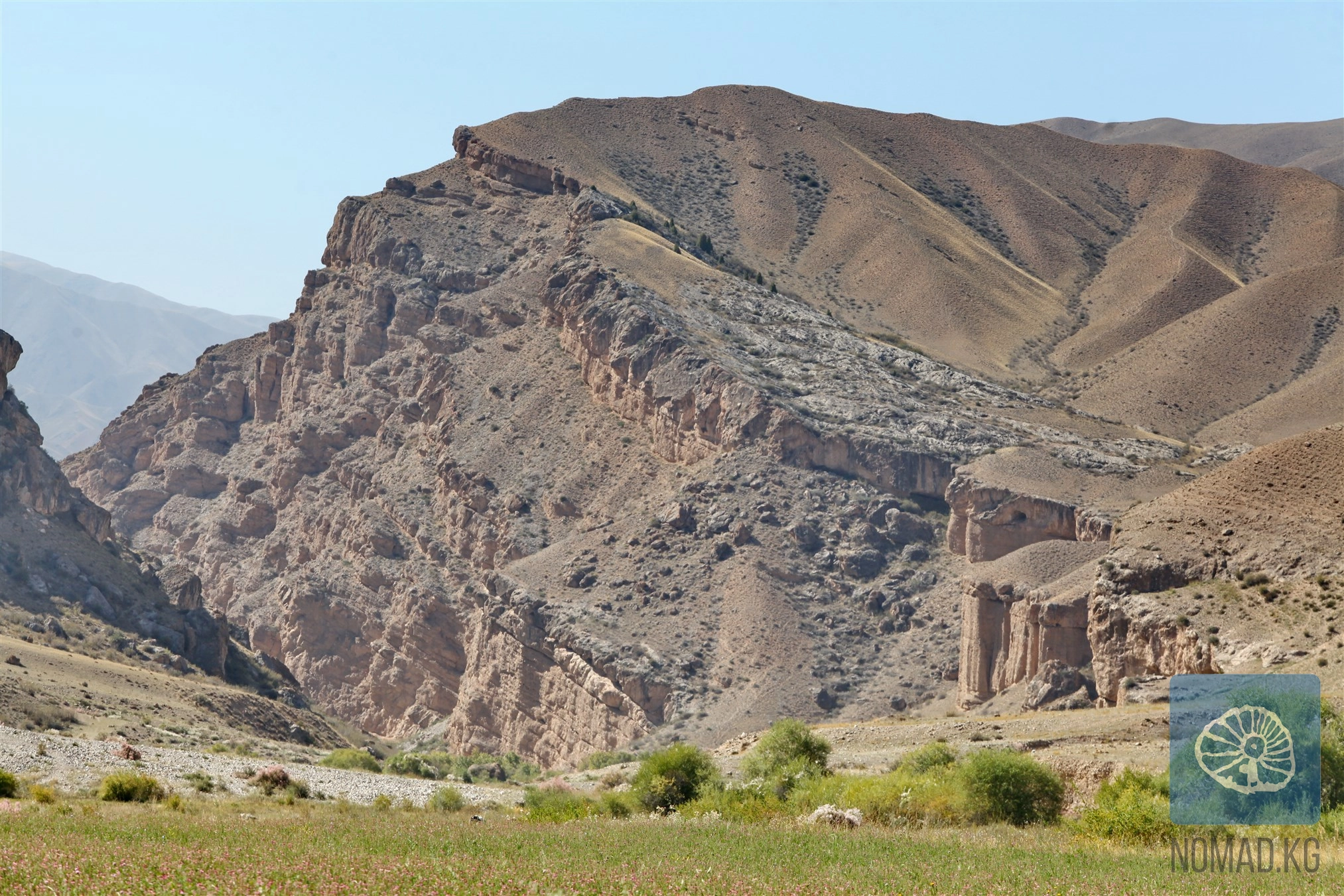
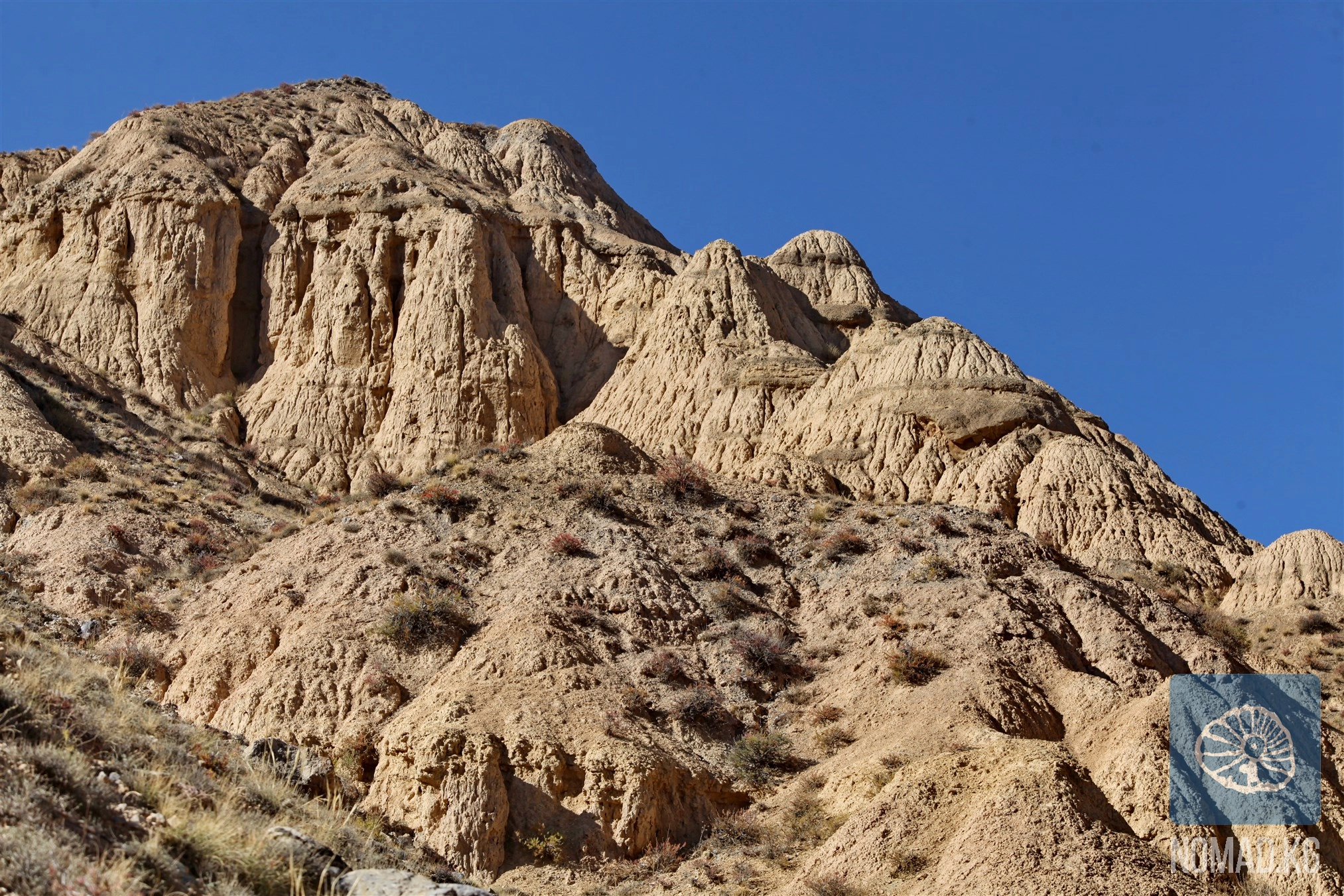
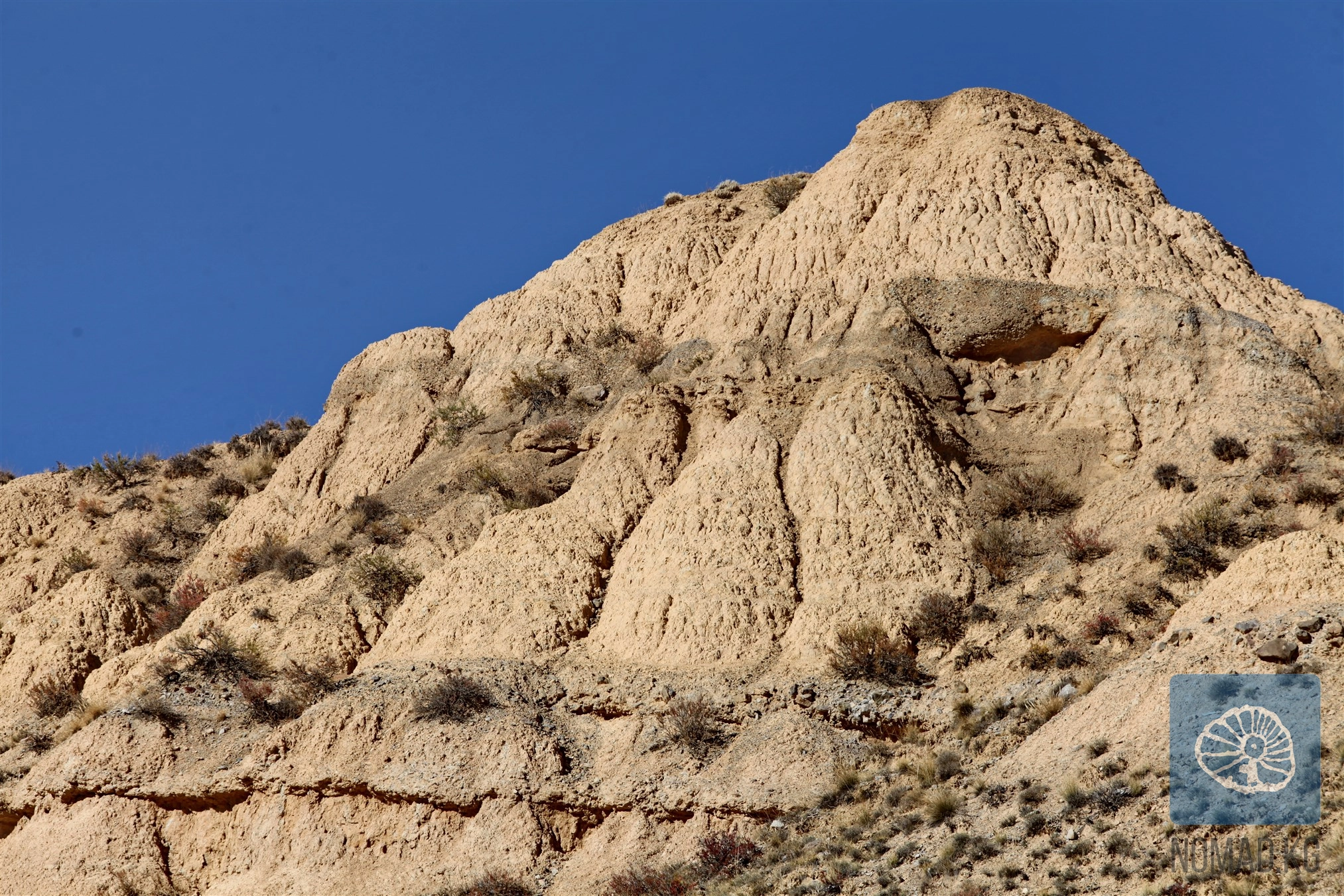
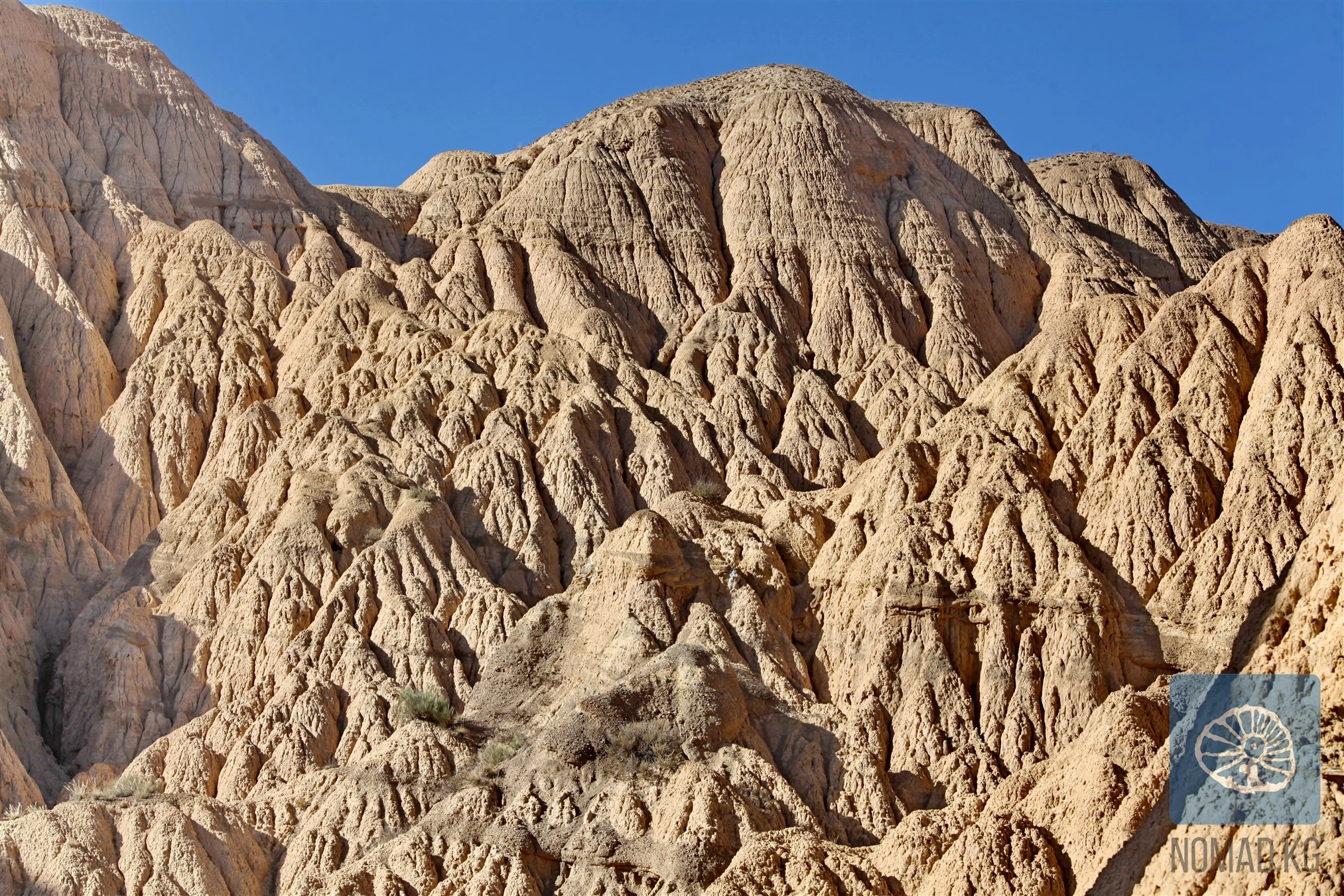
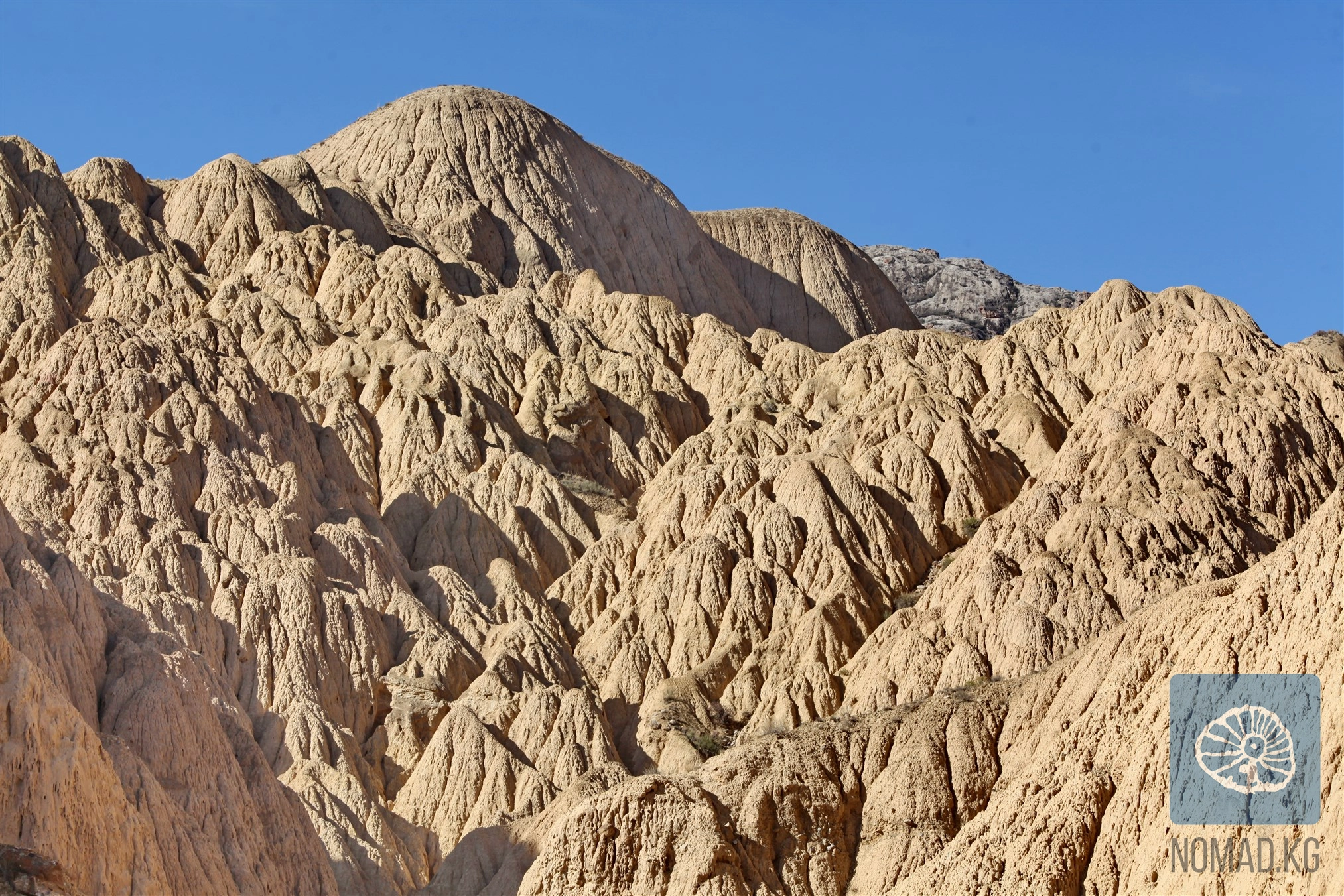
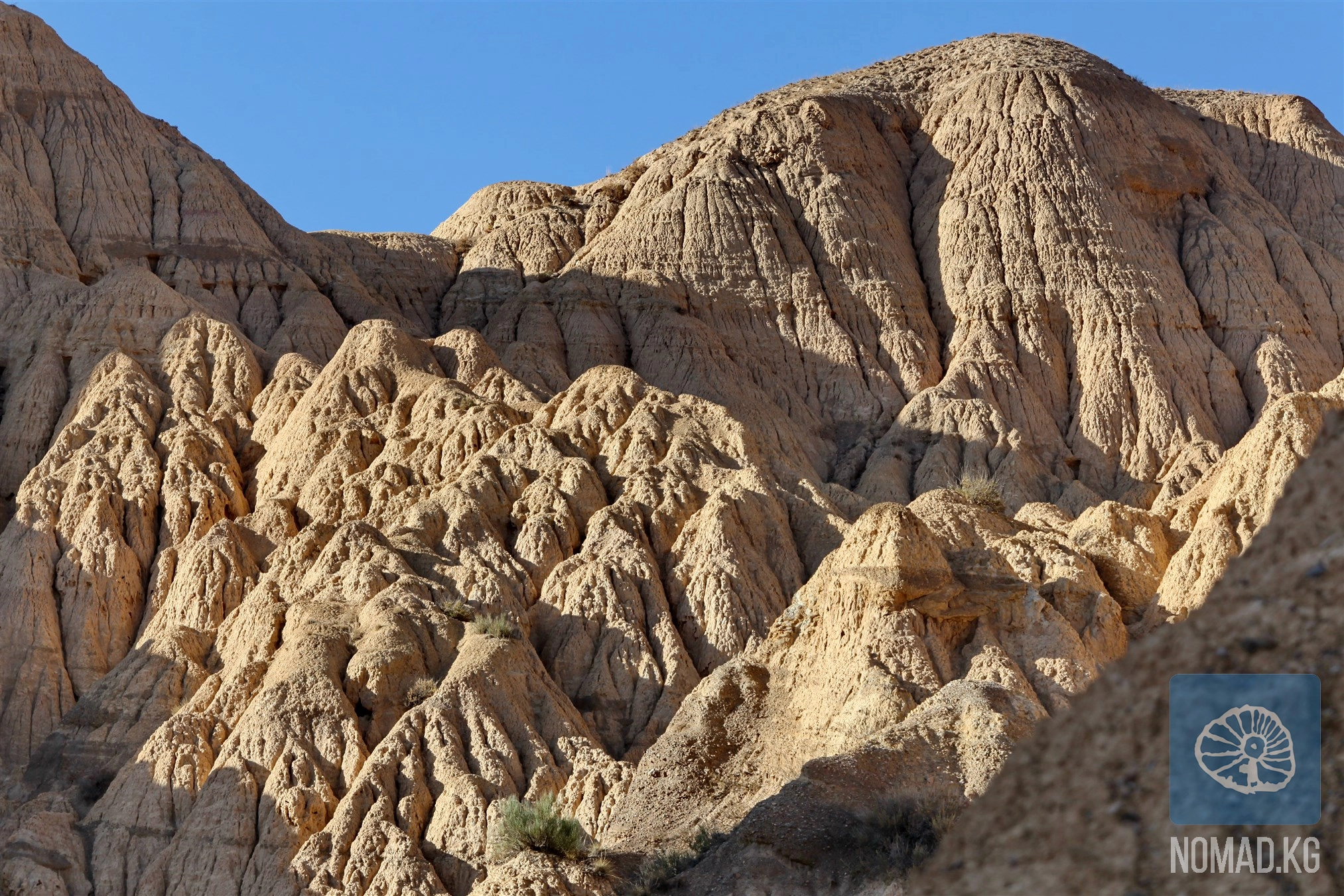
In the very heart of the picturesque Talas region, amidst the rugged gorges of the Bakai-Ata district, lies one of the most unusual natural wonders of Kyrgyzstan - the "Kara-Kishi" geopark. This place seems to exist outside of time: the landscapes, which are hard to believe at first, astonish with their fantastical nature and impress with their scale. A traveler who finds themselves here for the first time often holds their breath - this land looks so unexpected and magical.
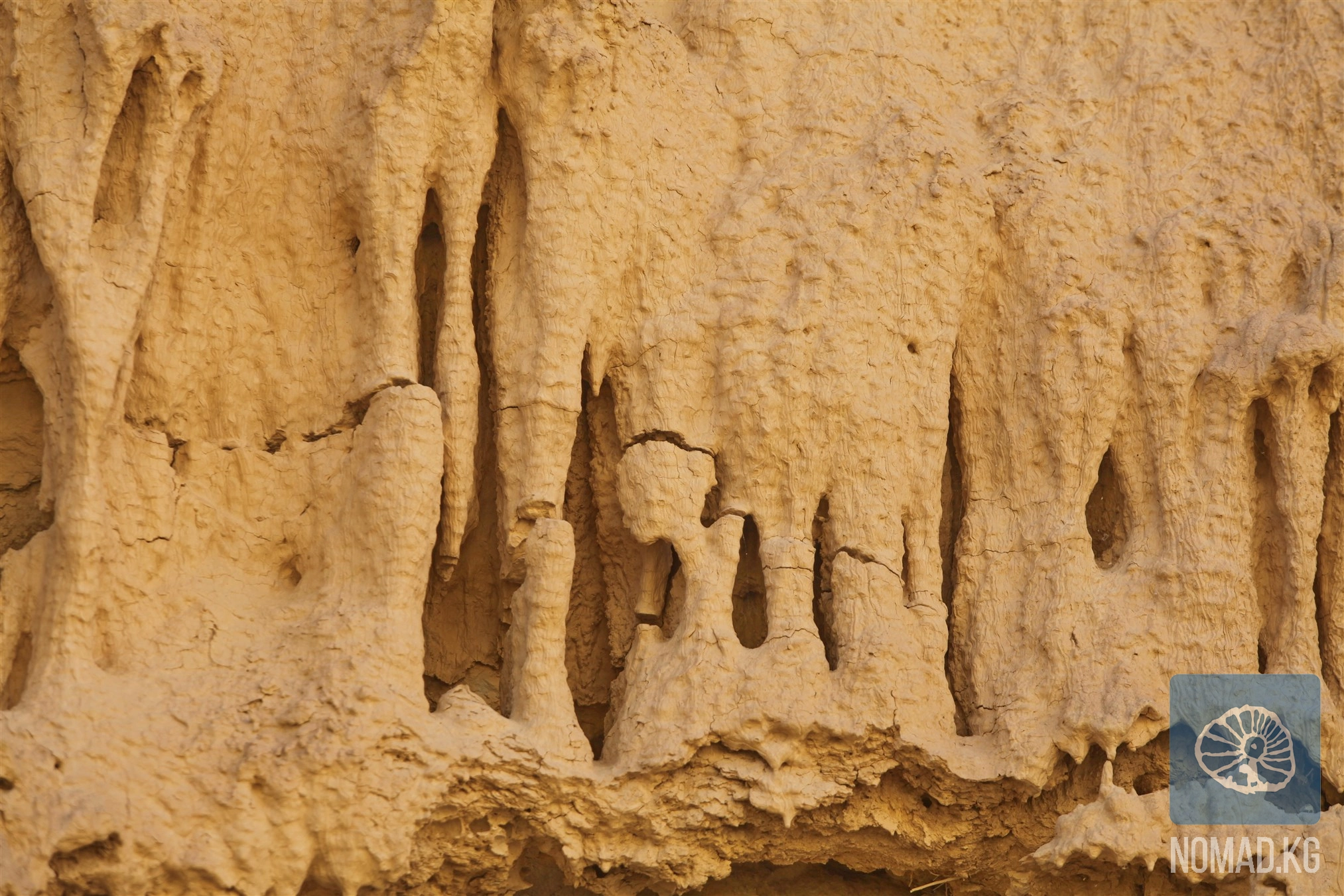
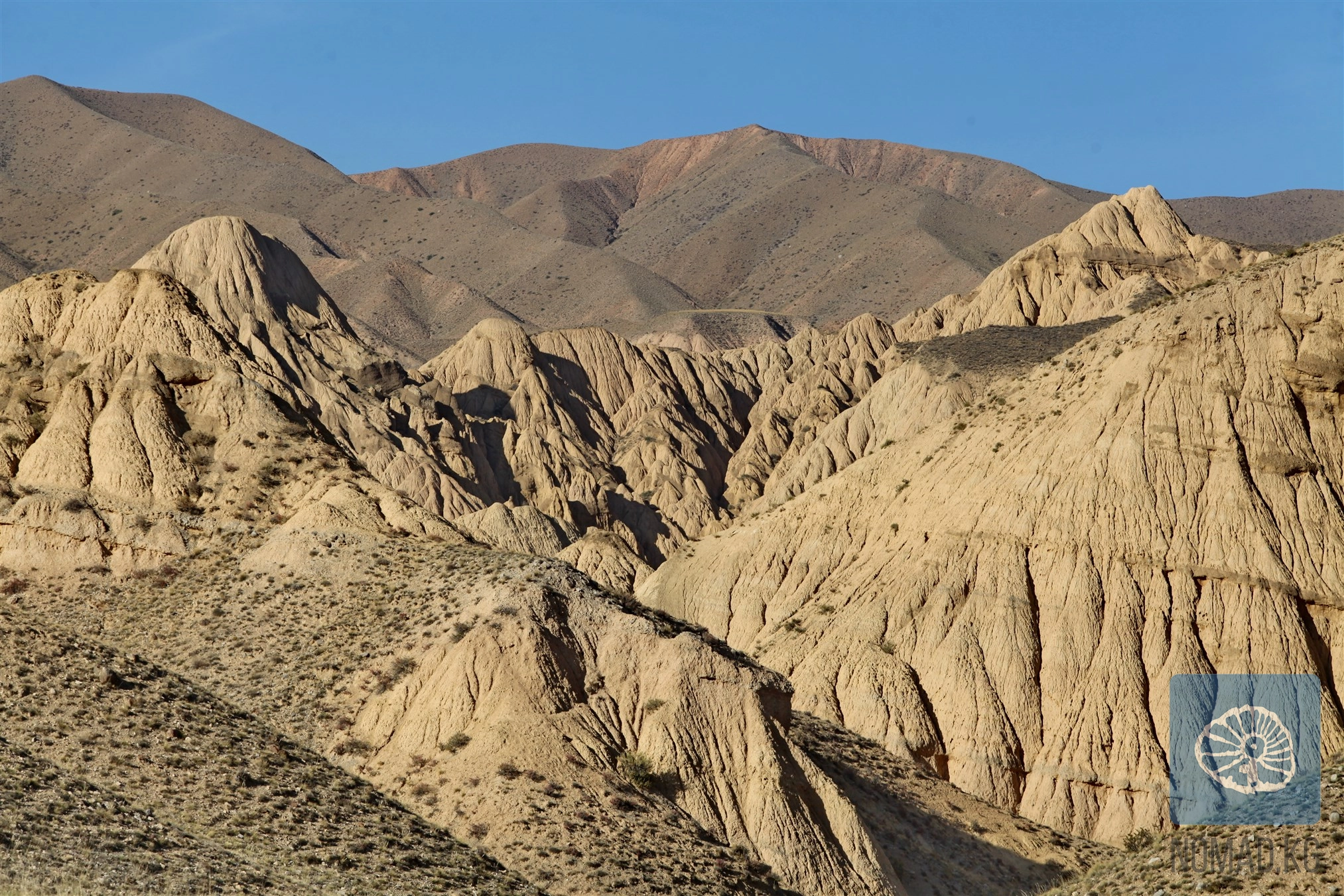
The foundation of the geopark consists of sandstone-clay canyons, known to the locals as "clay mountains" or even "moon canyon." The layered rocks are tinted in a light, almost whitish hue - a result of mineral oxidation, centuries-old weathering, and erosion processes. For thousands of years, wind and water - two elements, persistently and patiently - have shaped this relief. That is why the locals often refer to Kara-Kishi as "Aeolian castles," recalling the ancient Greek Aeolus, the lord of the winds.
Entering the canyon, a traveler feels as if they are stepping into a forgotten city of an ancient civilization. The rocks here resemble the ruins of fortresses and towers, pyramid-like columns, time-worn temples, and fantastic figures created by nature itself. Every landslide, every crack, every outcrop is the result of slow yet inevitable erosive forces that have carved an entire architectural world from the soft clay.
One of the central natural features of the geopark is the famous "yurt rock." This powerful rock formation with a flat top, standing about 150 meters tall, majestically rises above the surroundings. Jagged tower-like shapes stretch along its edges, resembling ancient watchtower fortifications. It seems that these stone "warriors" guard the tranquility of the silent valley.
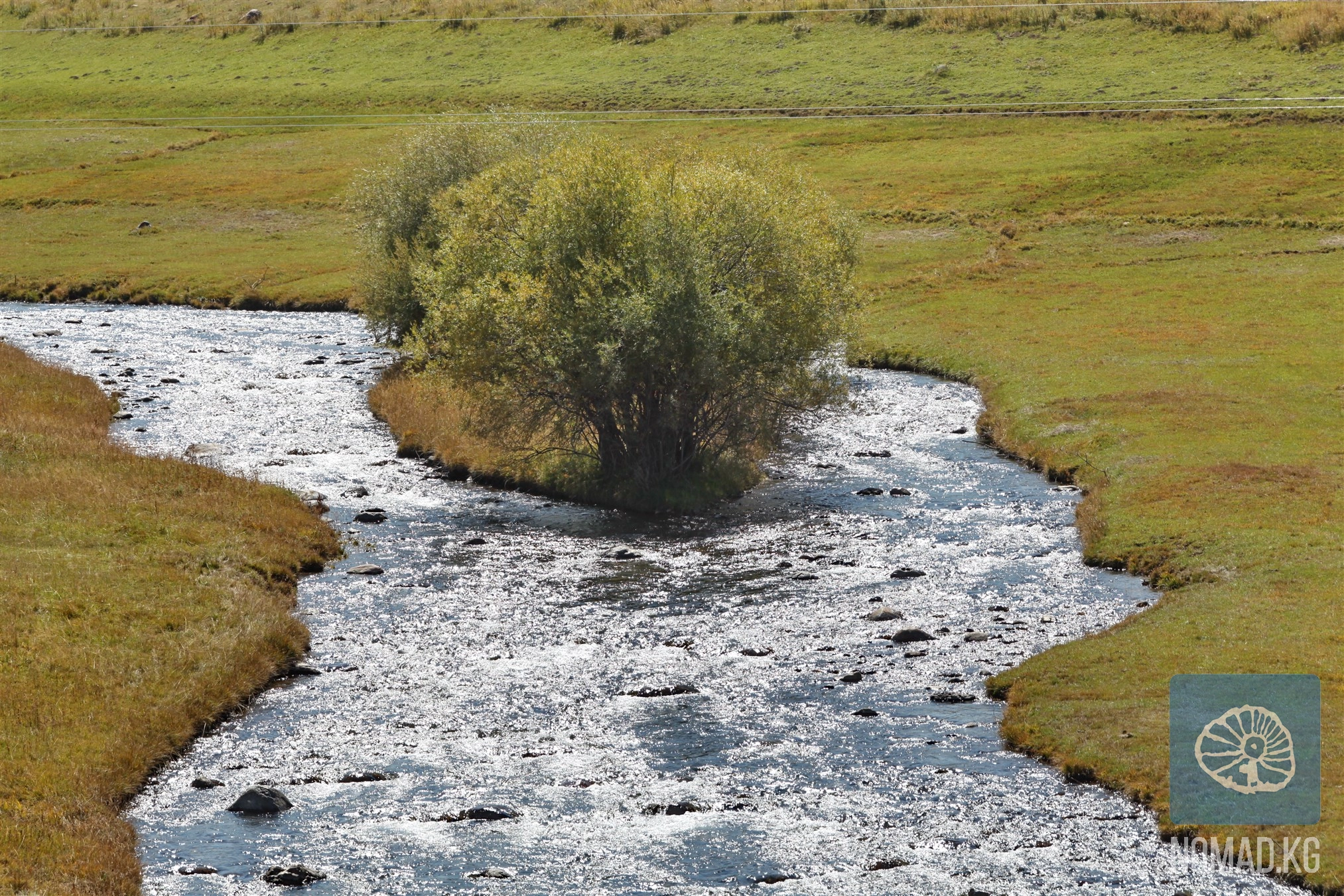
Not far from this "stone city," the Kara-Koyun River flows. It seems to slice the canyon in two, winding through a narrow mountain gorge. The whitish water, filled with mineral particles, creates a stunning contrast with the golden ochre slopes. The surrounding hills, crisscrossed by a dense network of furrows and ravines, resemble a gigantic natural labyrinth. This was formed by rainwater that has seeped into the soil for centuries, washing away the soft sandy-clay masses.
As you progress through the canyon, you gradually emerge into the wide Kara-Koyun valley. From here, one of the most impressive views of Talas opens up: the majestic "Aeolian castles" of Kara-Kishi stretch under the clear sky, creating a landscape that seems both extraterrestrial and utterly alive. This place is perfect for photographers, artists, and anyone seeking inspiration in natural forms.
The landscape of Kara-Kishi is a true open-air museum. Here you will see: sharp vertical "ribs" of loose rock; dome-shaped peaks of clay hills; deep canyon-like fractures; lifeless yet astonishingly expressive plateaus; minimal vegetation, making every green bush seem like a treasure; and a crystal-clear sky that emphasizes the Martian character of the landscape.
These landforms are the result of millennia of erosion of loess and clay rocks. A journey through Kara-Kishi resembles a walk through a natural geology textbook: each slope tells a story of winds, rains, and time that created this world.
Kara-Kishi attracts those who love not only to look but also to explore. Here you can: wander through natural "labyrinths"; observe how the color of the landscape changes at different times of the day; study the structure of clay rocks; enjoy the absolute silence, broken only by the wind; and feel like a pioneer - the flow of tourists here is still small.
The geopark is located just a few kilometers from the road, making it accessible even for a short day trip. At the same time, just beyond the horizon, other landscapes begin: dense coniferous forests, crystal-clear mountain rivers, and green valleys. The contrast between the "moon" canyon and the invigorating mountain gorges makes the route particularly rich and diverse.
Among the picturesque mountains of the Bakai-Ata district, not far from the village of Urmaral, lies one of the most mysterious and revered places in the Talas region - the Kara-Koyun cave. This is not just a dark niche in the rocky mass, but a
If there is a place in the Talas region that amazes from the very first step, it is the Talas Birch Grove - the largest man-made birch forest in all of Central Asia and one of those places where humans and nature have created a true oasis of
In the Talas Valley, there is a place where legends come alive at every step, and the silence of the mountains speaks louder than any storyteller. This is the Besh-Tash Gorge - one of the most picturesque and symbolic natural spaces in Kyrgyzstan.
The Talas Geopark "Echkilі-Tuu" is located in the mountain range of the same name, Echkilі-Tuu, which is part of the Kyrgyz Ala-Too ridge, in the Sary-Kuurai gorge, one of the most impressive natural attractions of Kyrgyzstan. This geopark
The Besh-Tash National Park, which translates to "Five Stones," stretches in a narrow chain along the Talas Ala-Too mountain range. On a good gravel serpentine road up the Besh-Tash river gorge, it feels like the car is about to hit the
In the Talas Valley, among the hills and green valleys, lies one of the most revered sacred places in the region - the mazar of Boo-Terek. Its name translates from Kyrgyz as "a bundle of poplars" or "many poplars," and this is no
If you have already seen Lake Besh-Tash and think that the national park has revealed all its secrets to you, then you simply haven't yet ascended the Itagar Pass. This is the route after which photos remain in your phone's memory that you
The Besh-Tash Nature Park covers over 30,000 hectares, stretching nearly 30 kilometers upstream along the river of the same name - from the gentle foothills at an altitude of 1,100 meters to the harsh, cold glaciers rising to 3,500 meters. The park
In the very heart of the blessed Talas Valley, where the silvery Talas River leisurely carves its path between two majestic mountain ranges - the Talas and Kyrgyz ranges - lies a unique natural oasis. The Talas Forest is not just a green stripe on
The Ötmäk Pass (3326 m above sea level) is one of the most impressive places in the Talas region and an essential mountain artery connecting the closed Talas Basin with the expansive Suusamyr Valley and the strategic Bishkek-Osh highway. This is the
On the strategic route from Bishkek to Osh, at the turning point towards the road leading to the Otmak Pass (3332 m) and further into the Talas region, lies one of the most recognizable places along the entire route - the so-called "Gates of
Just thirty minutes by car and ten minutes on foot from Talas lies an amazing place - the Kulaan-Sai mine, one of the most accessible old workings for lead ore extraction in the region. At first glance, an ordinary mountain gorge, Kulaan-Sai