

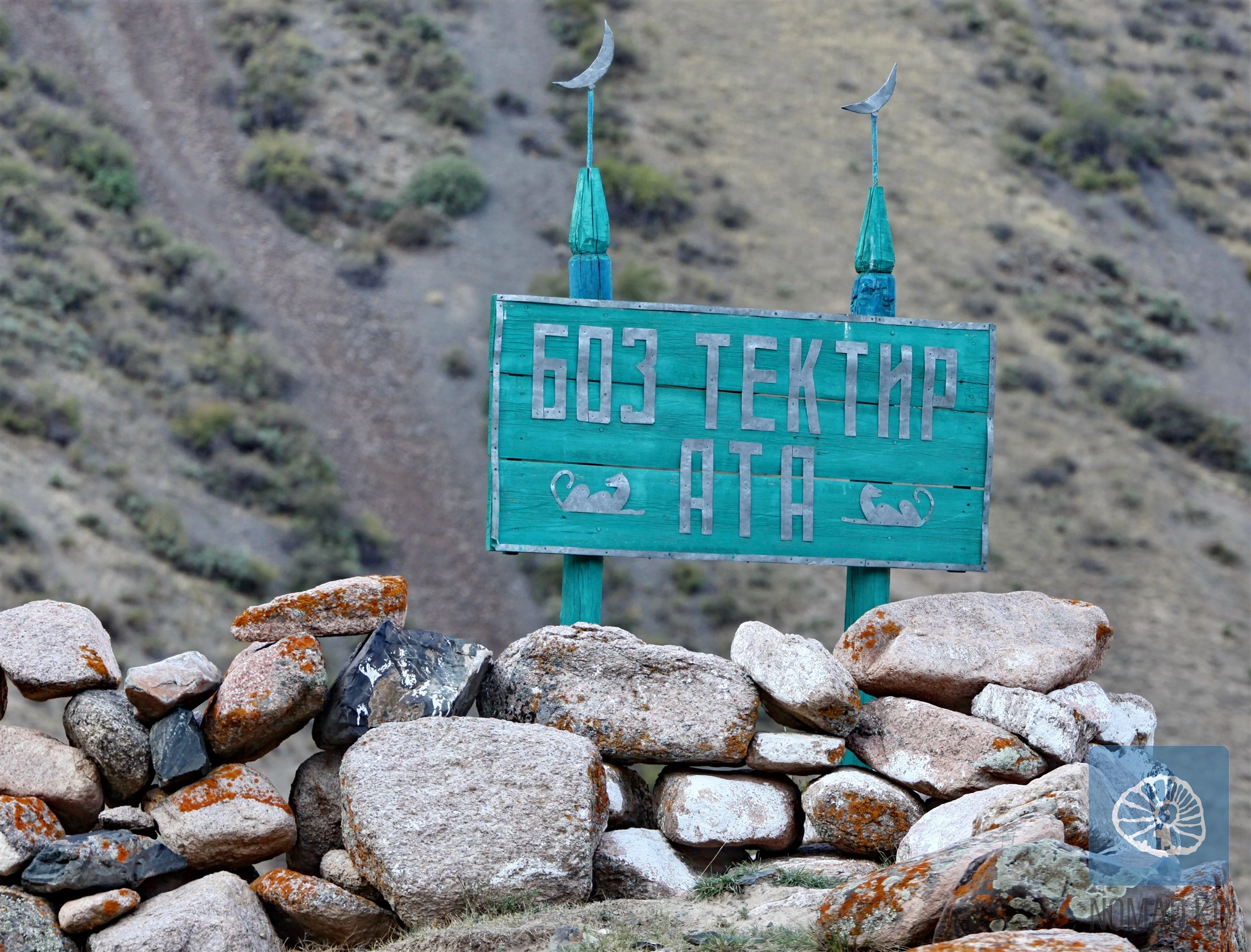
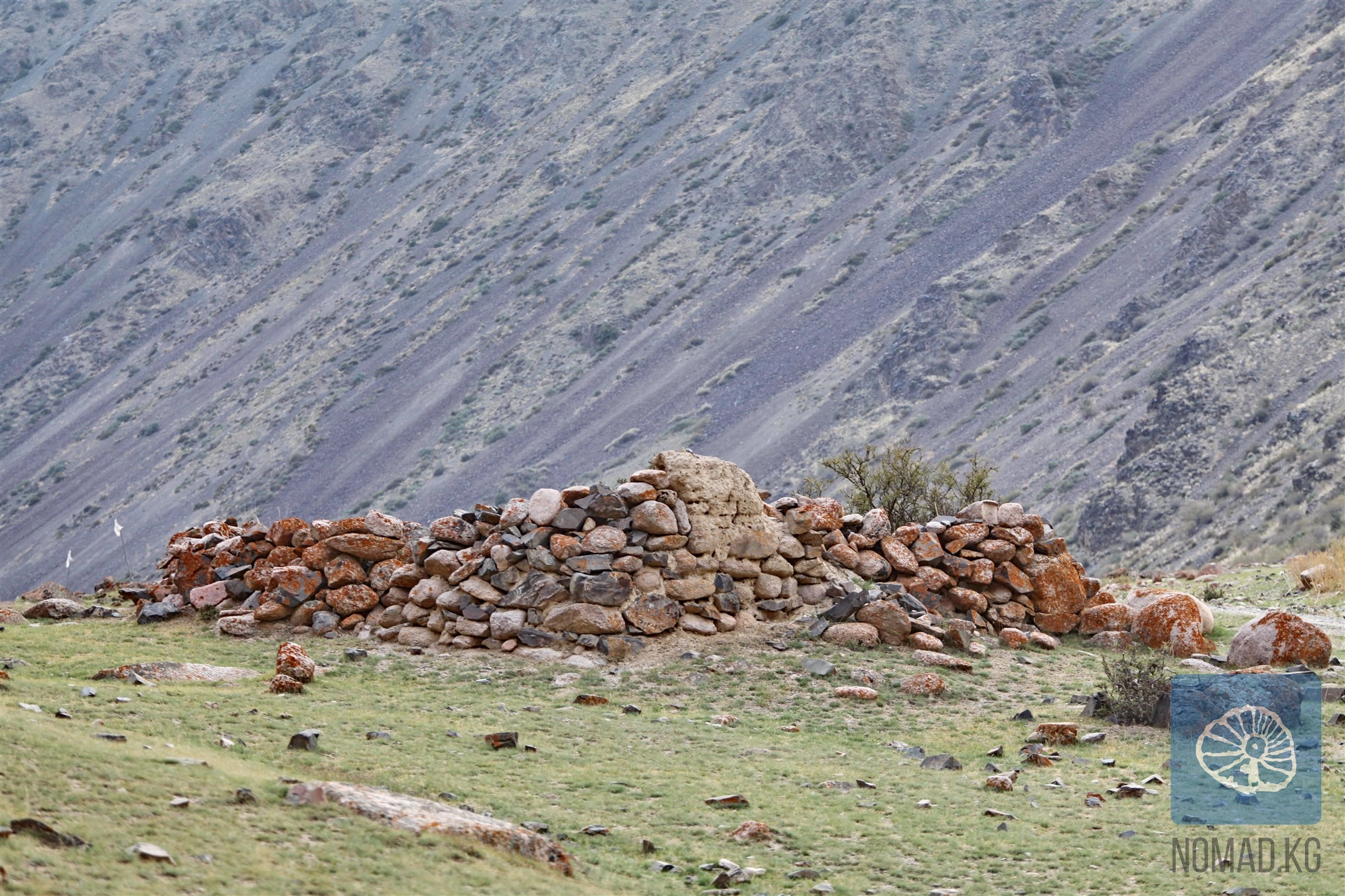
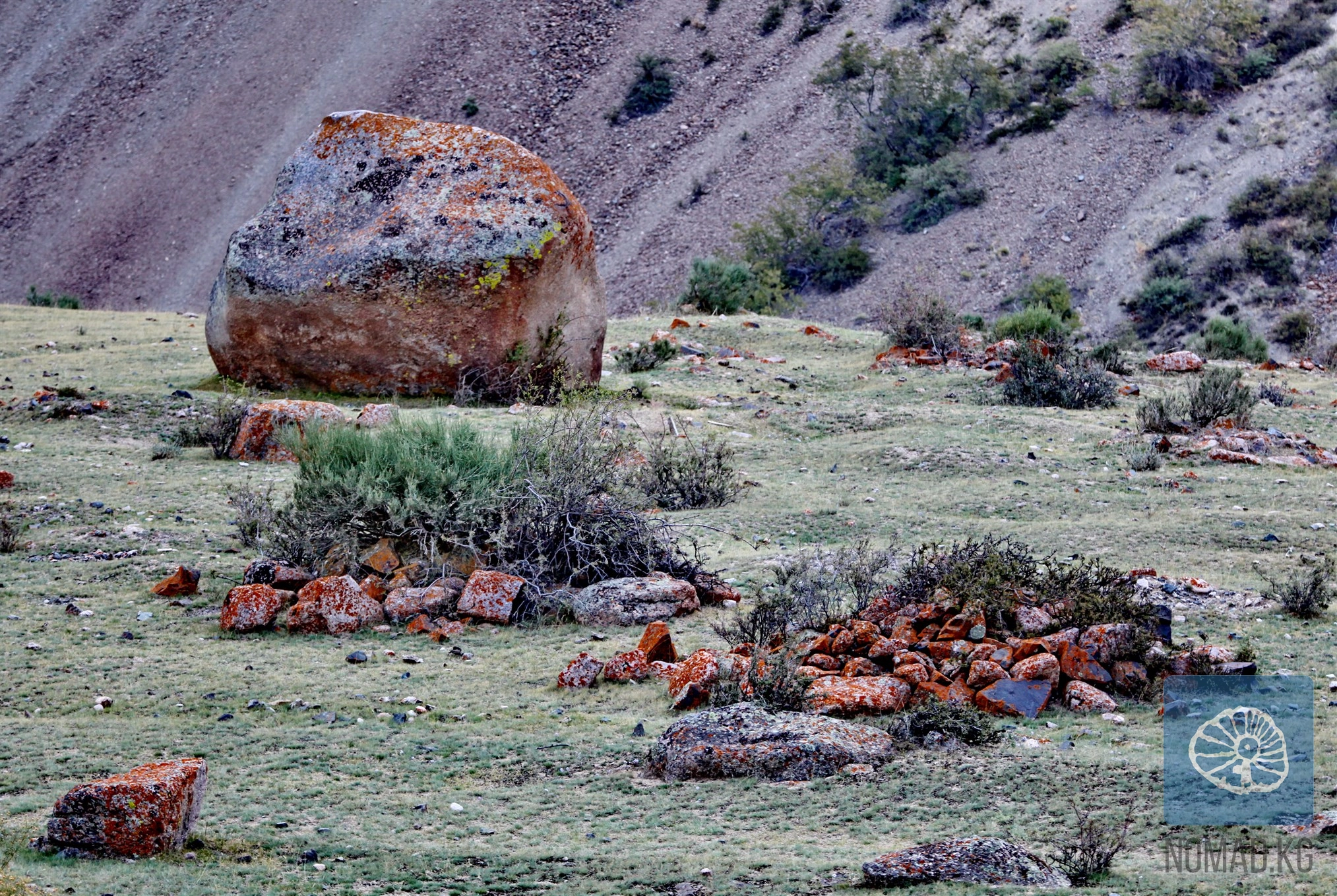
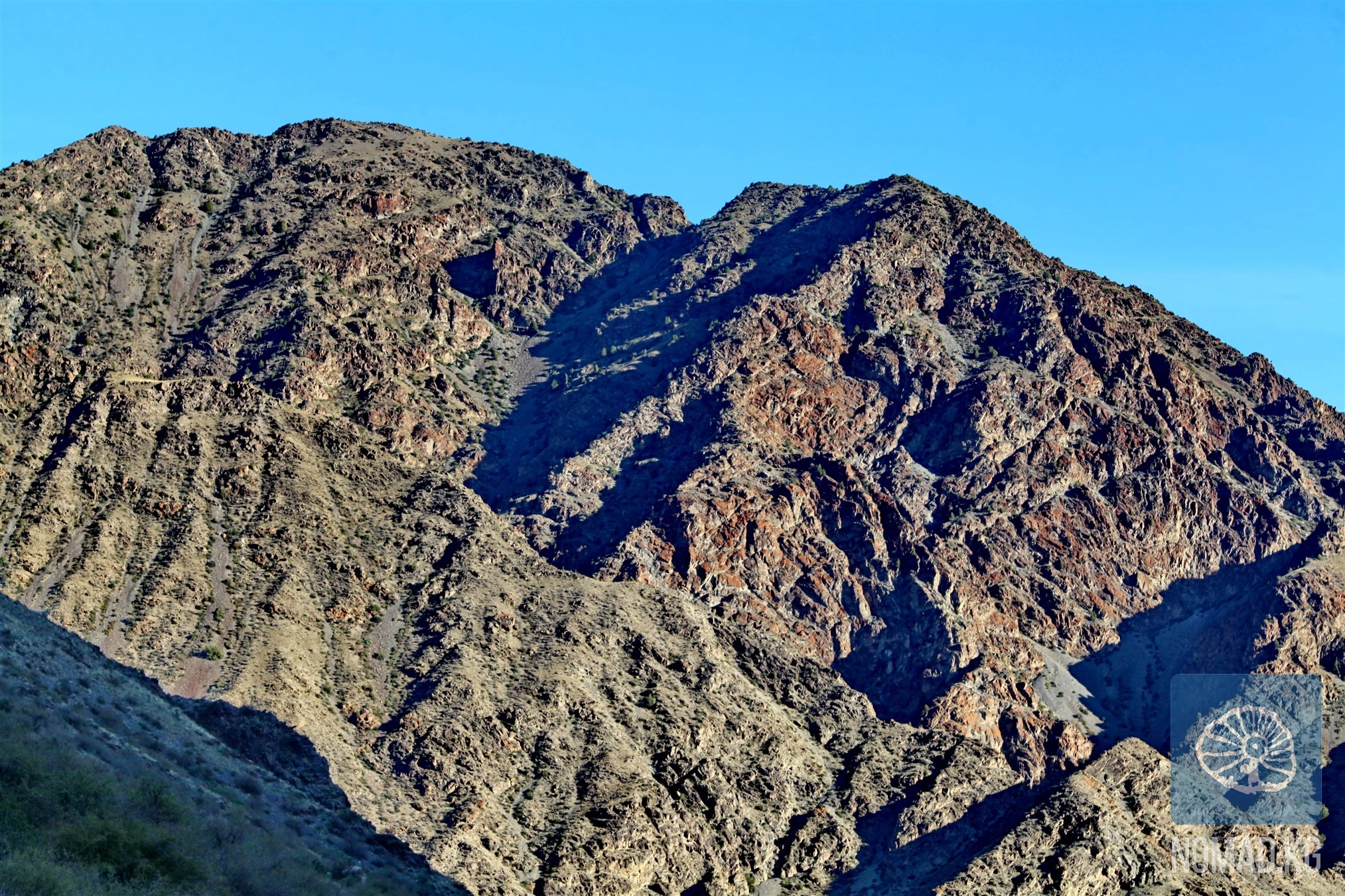
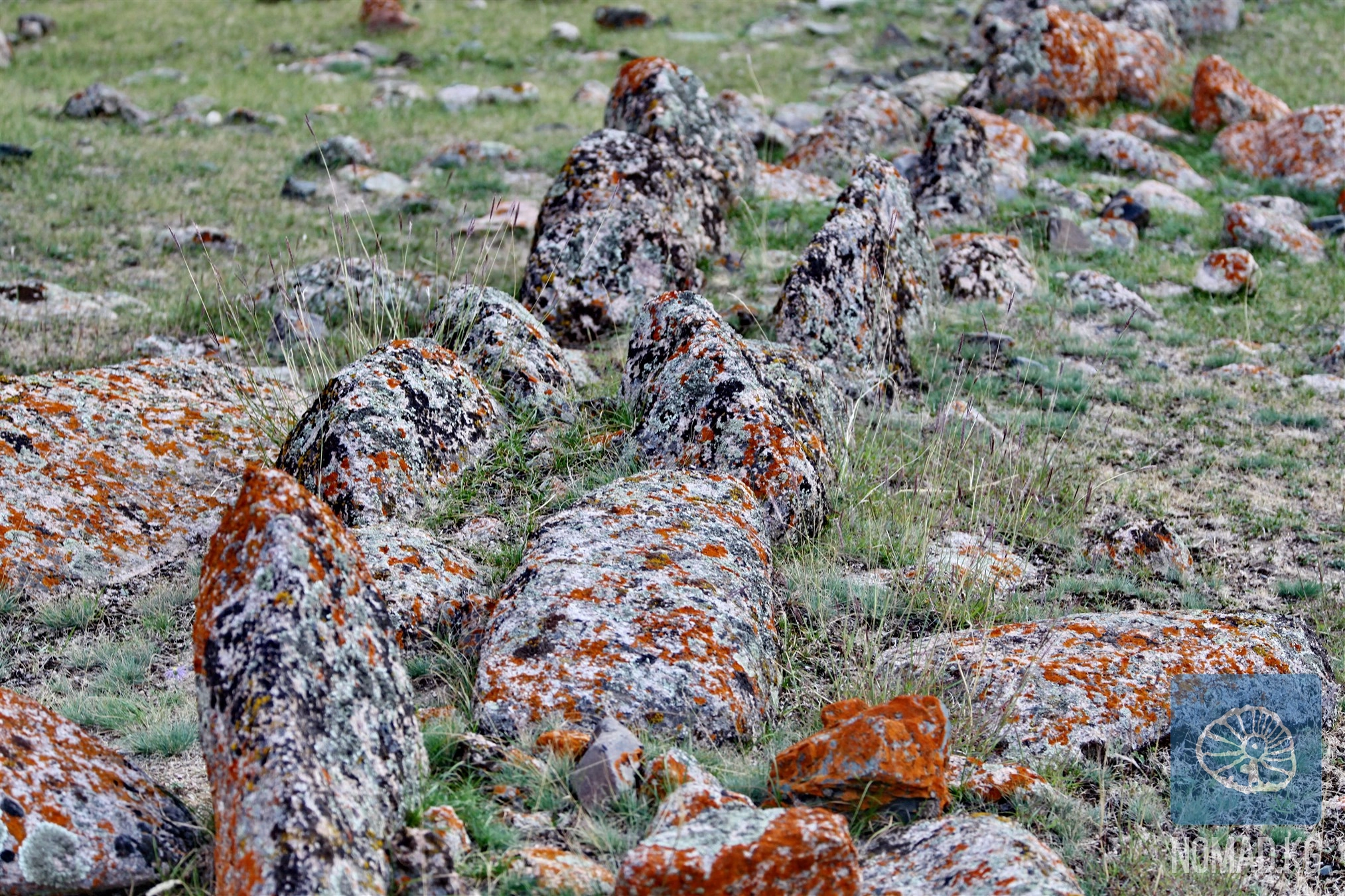
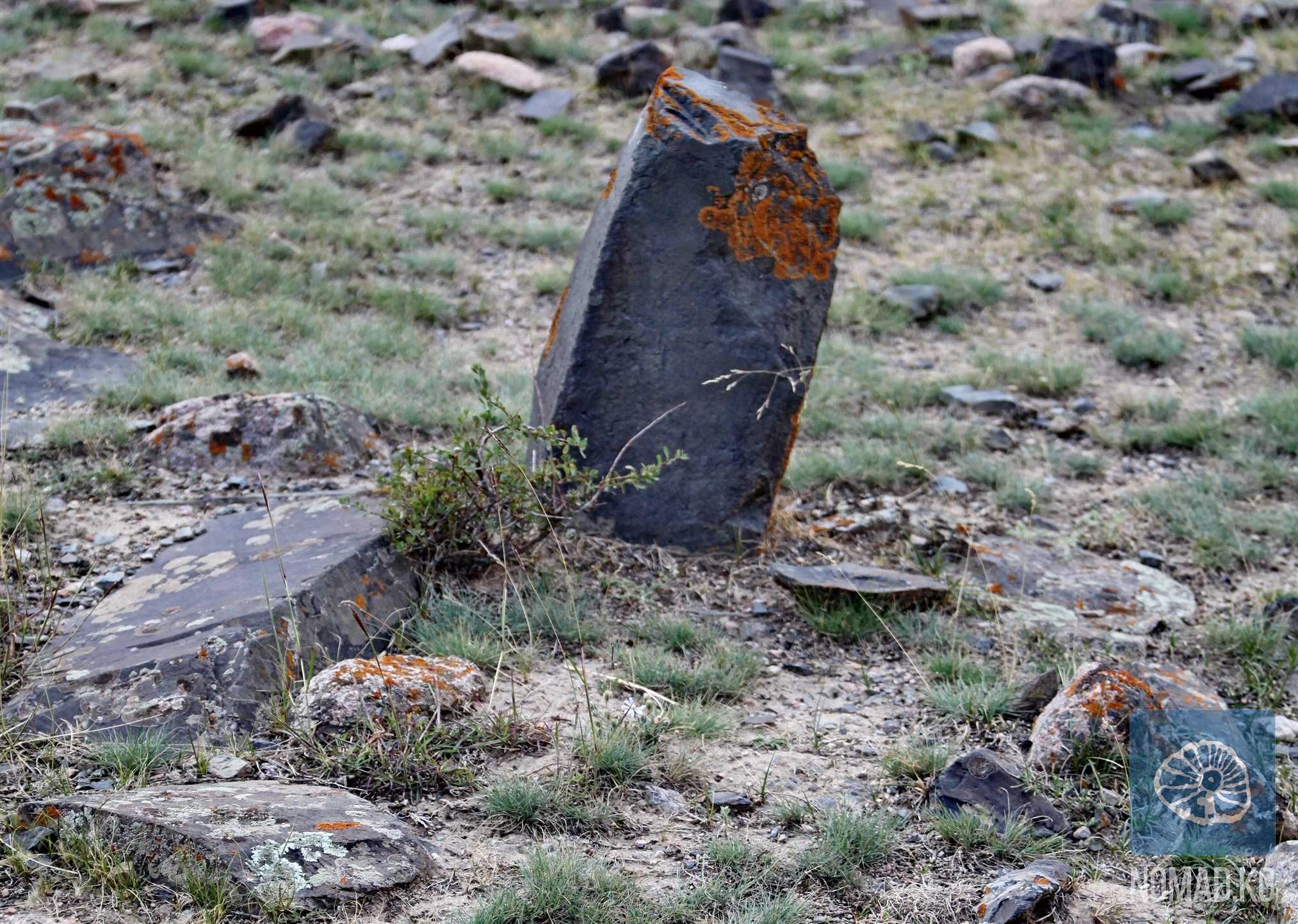
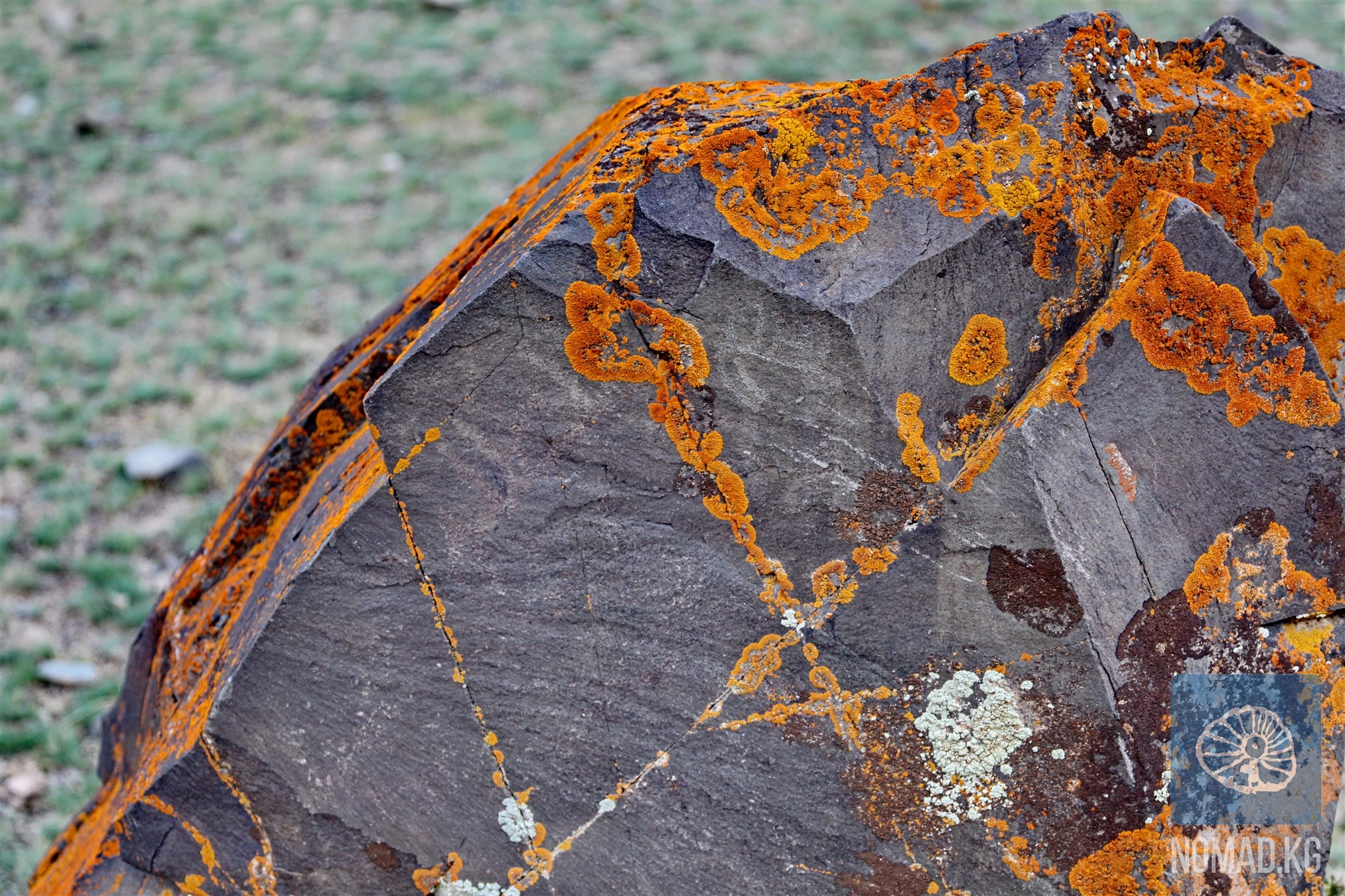
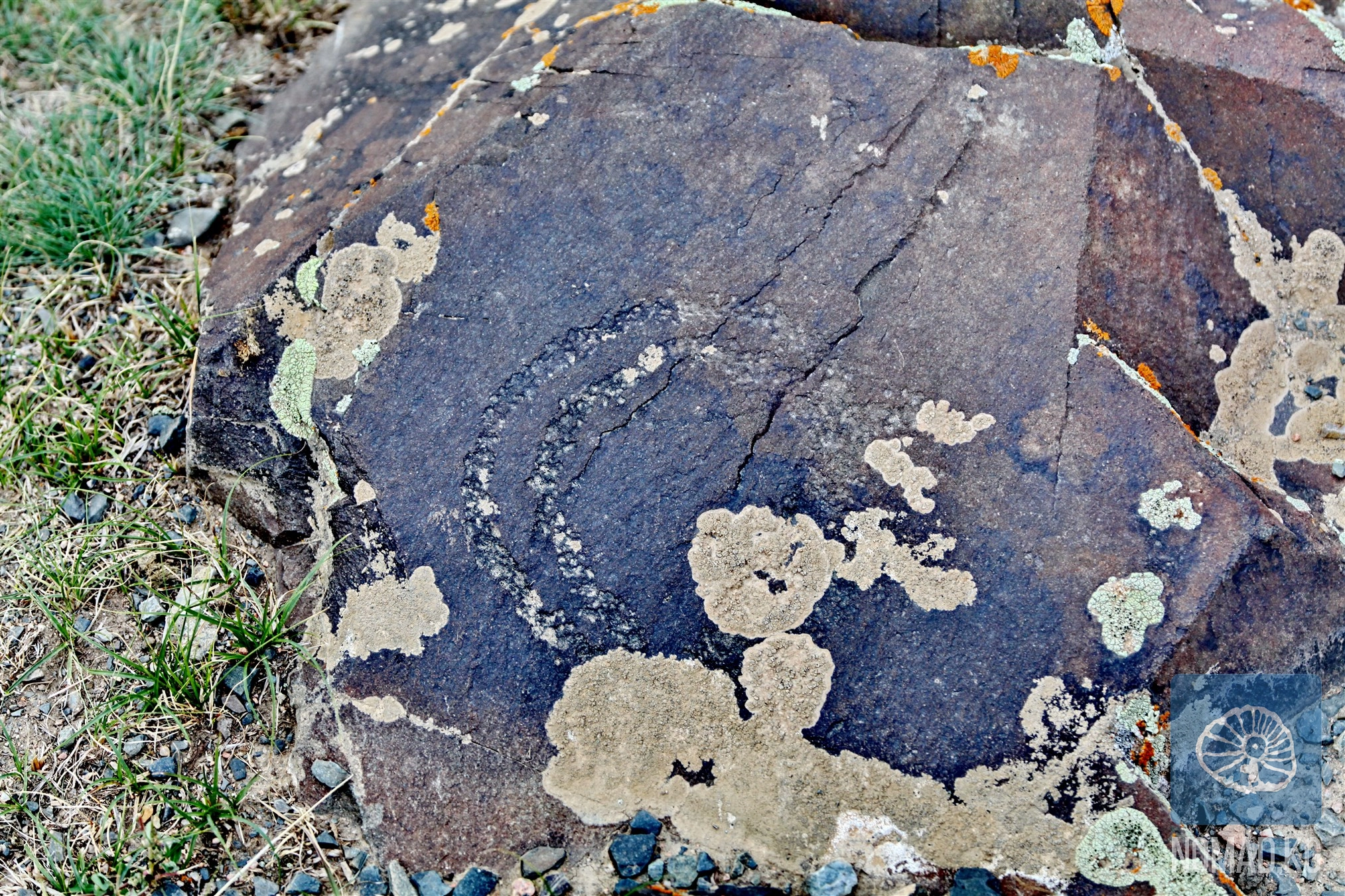
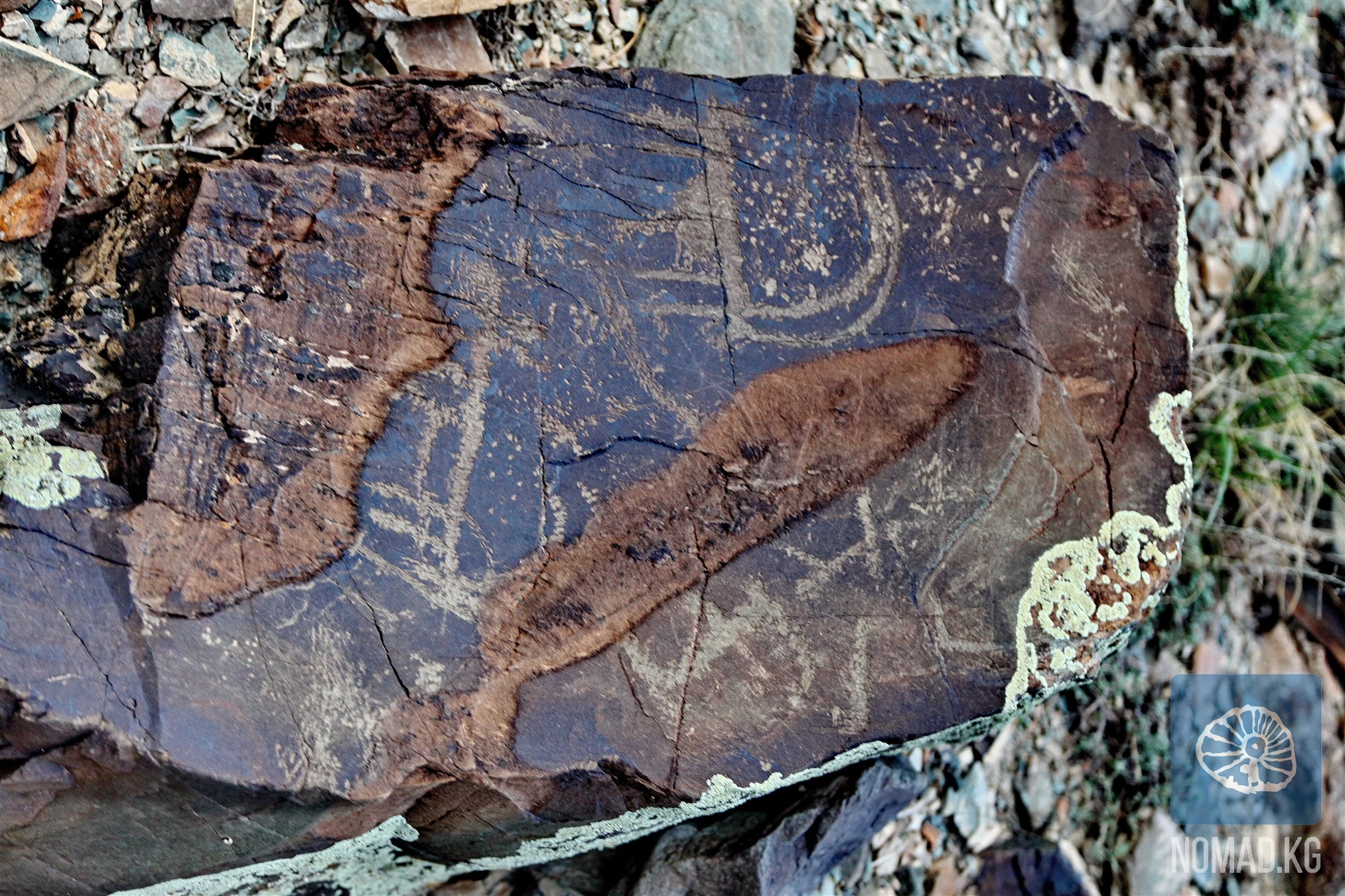
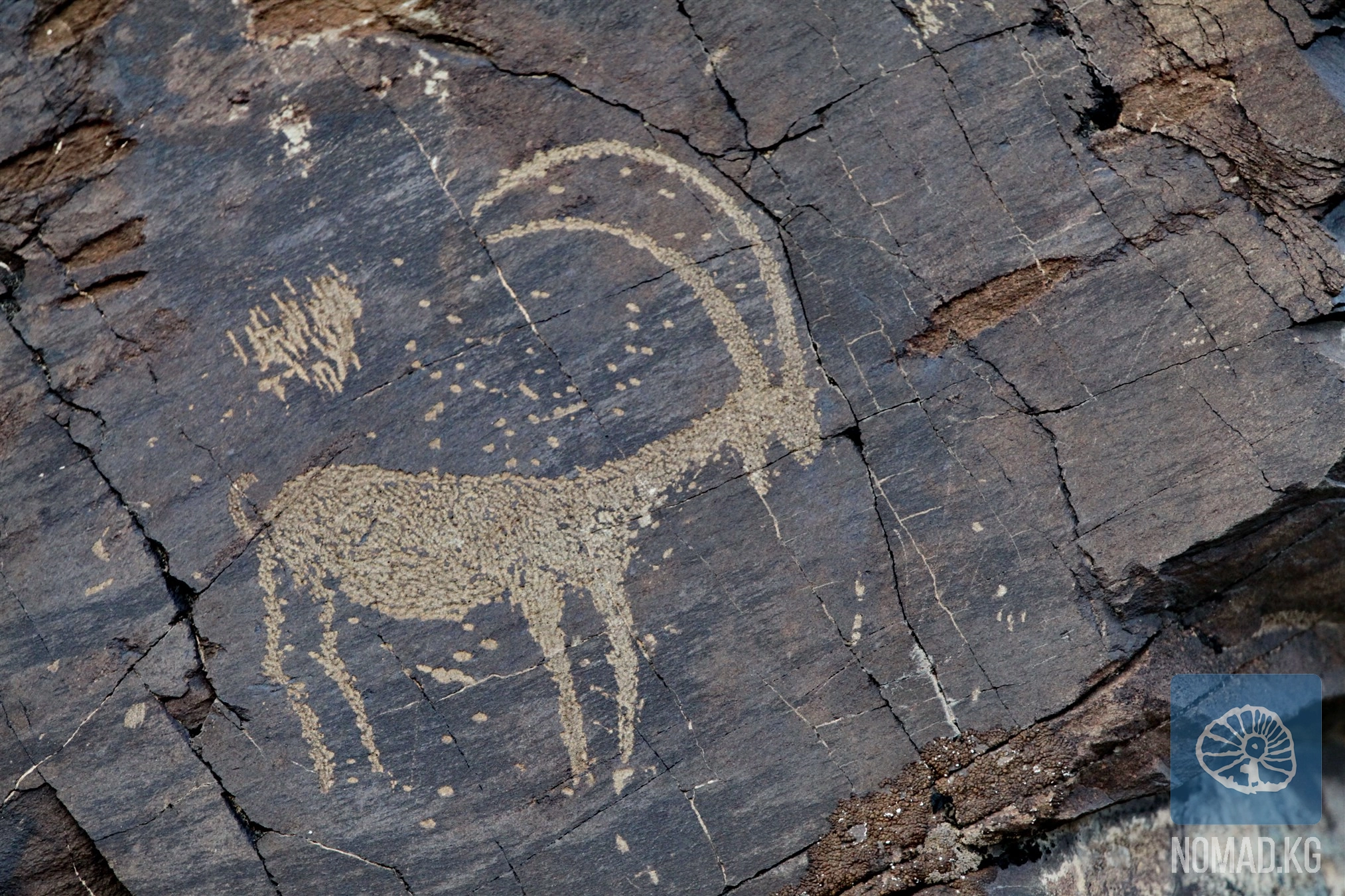
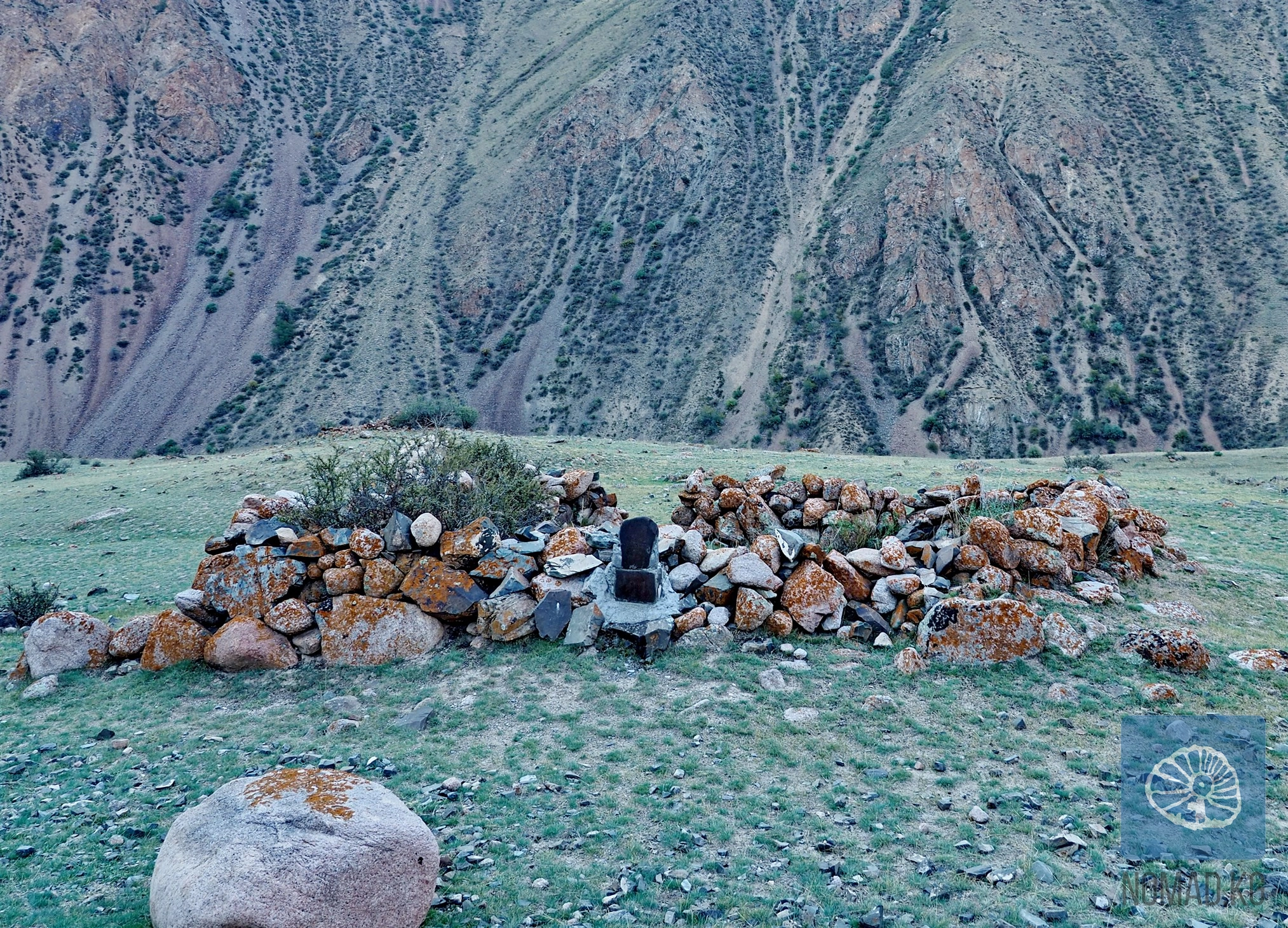
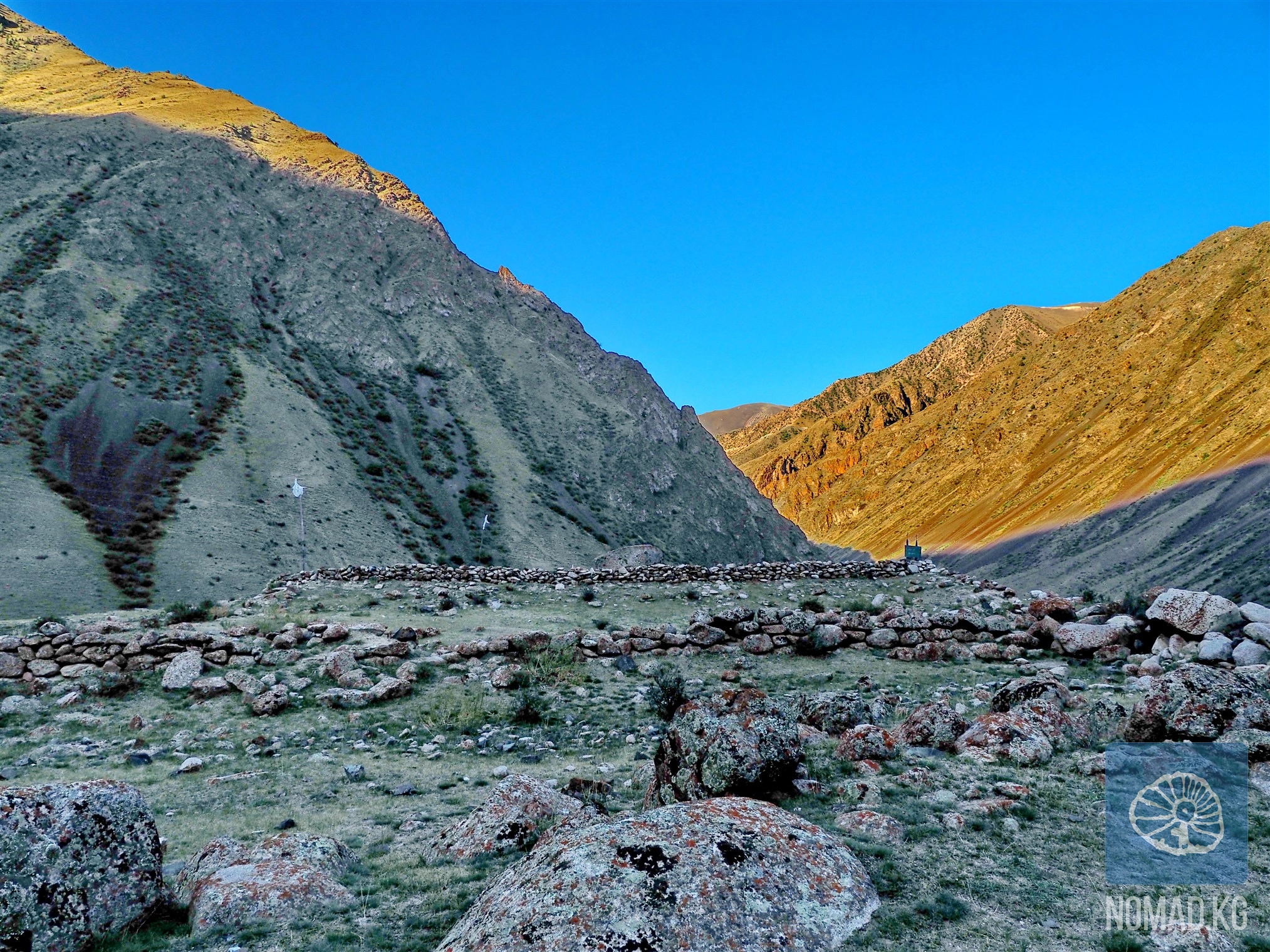
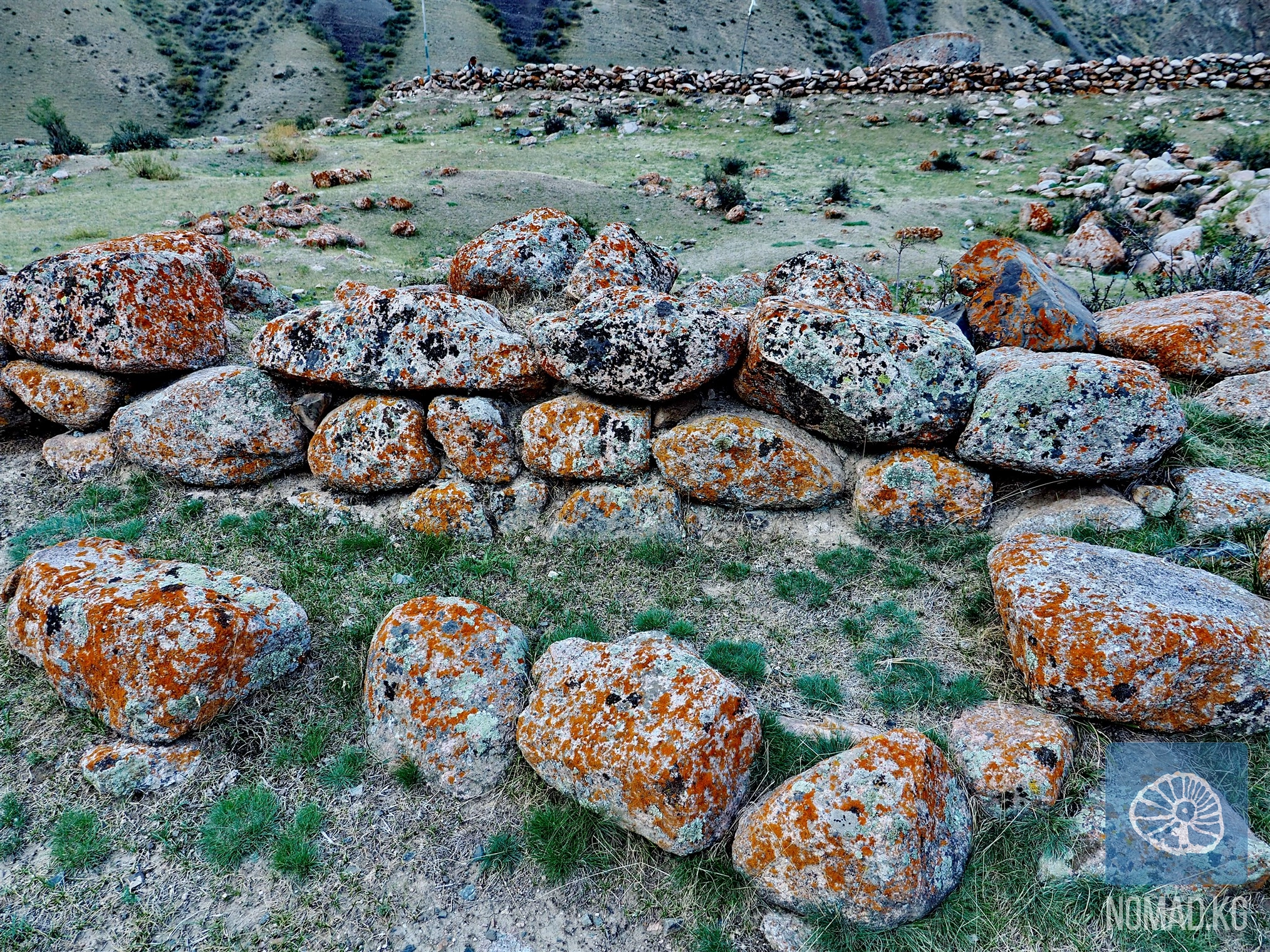
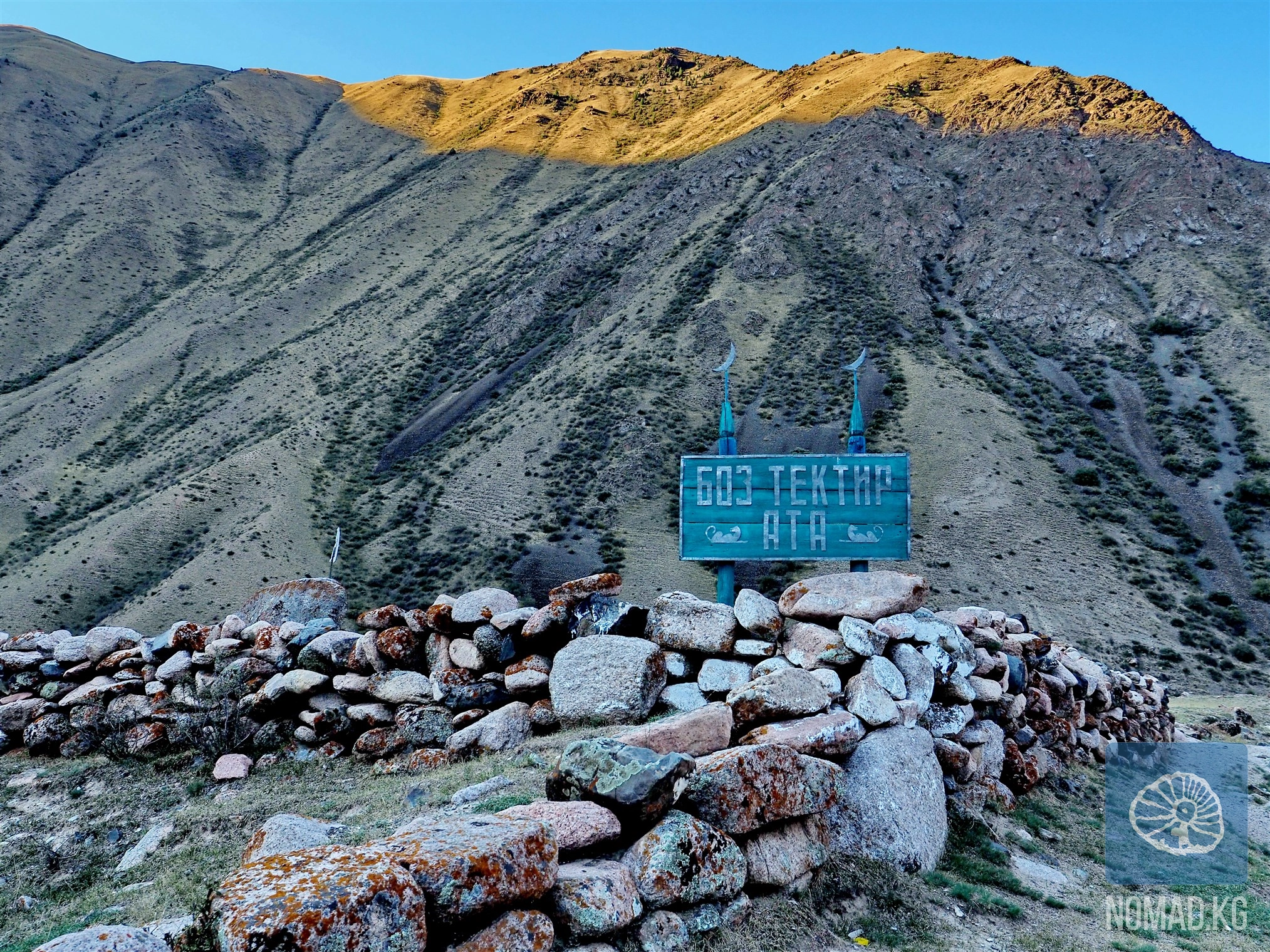
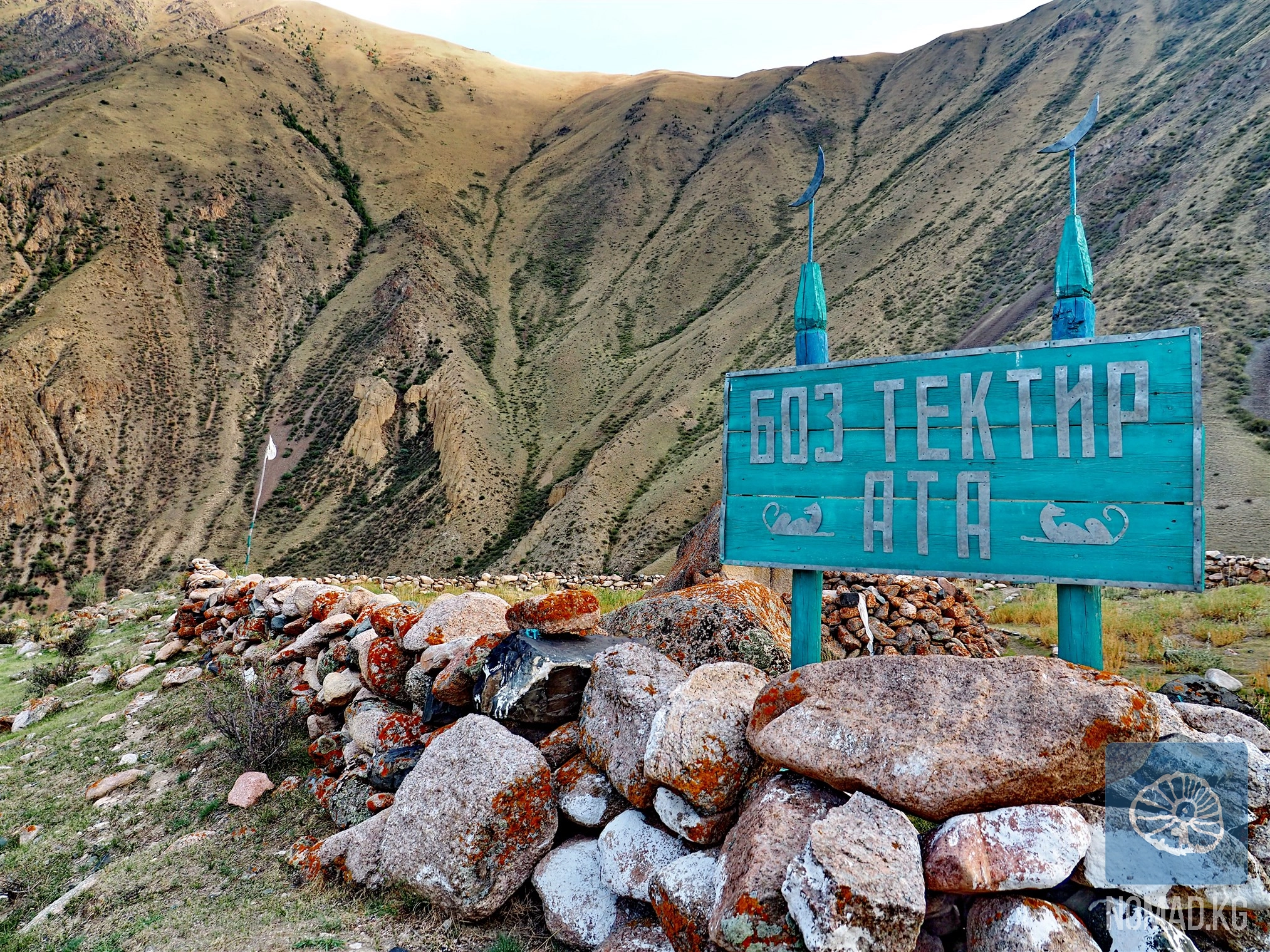
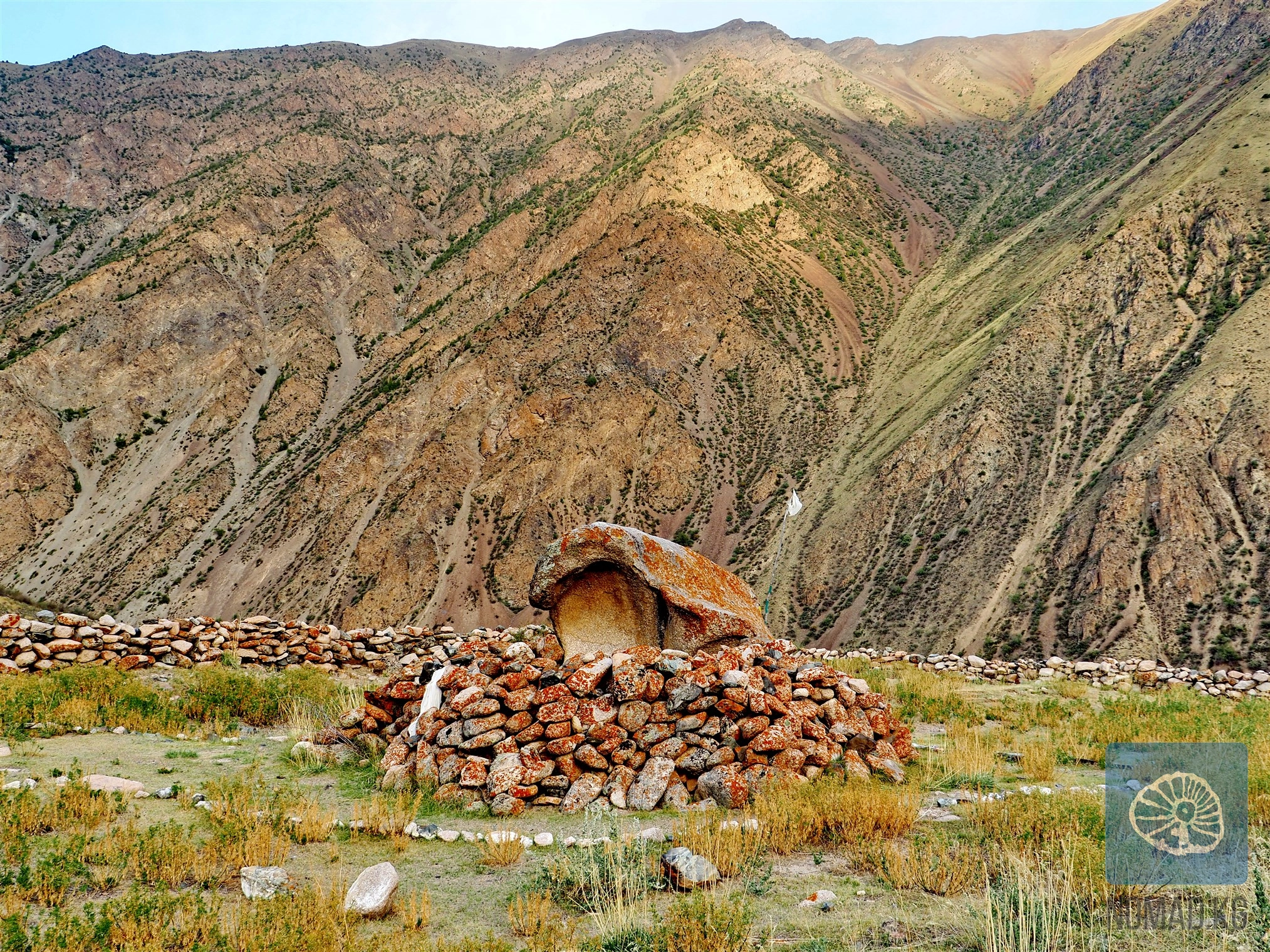
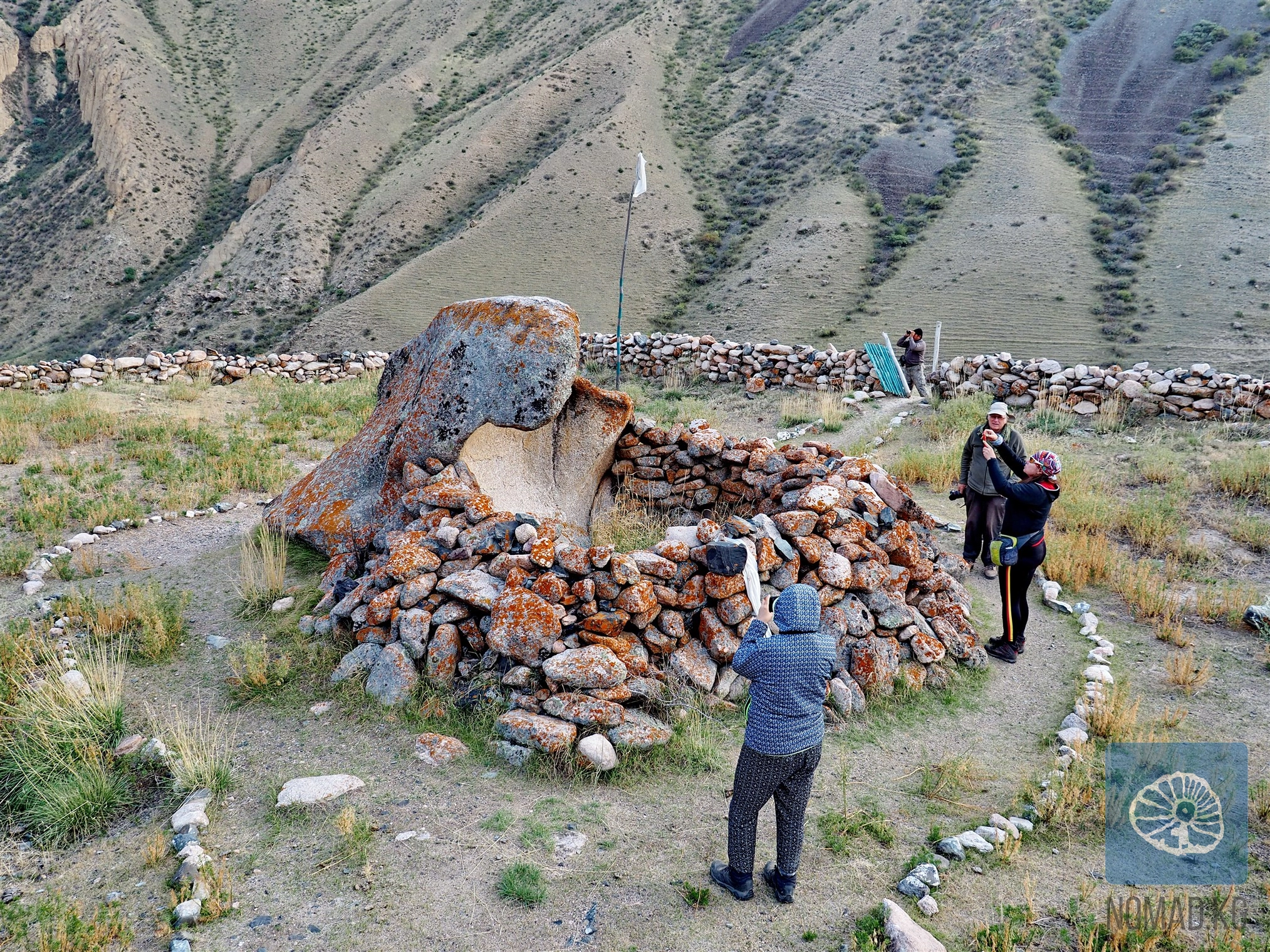
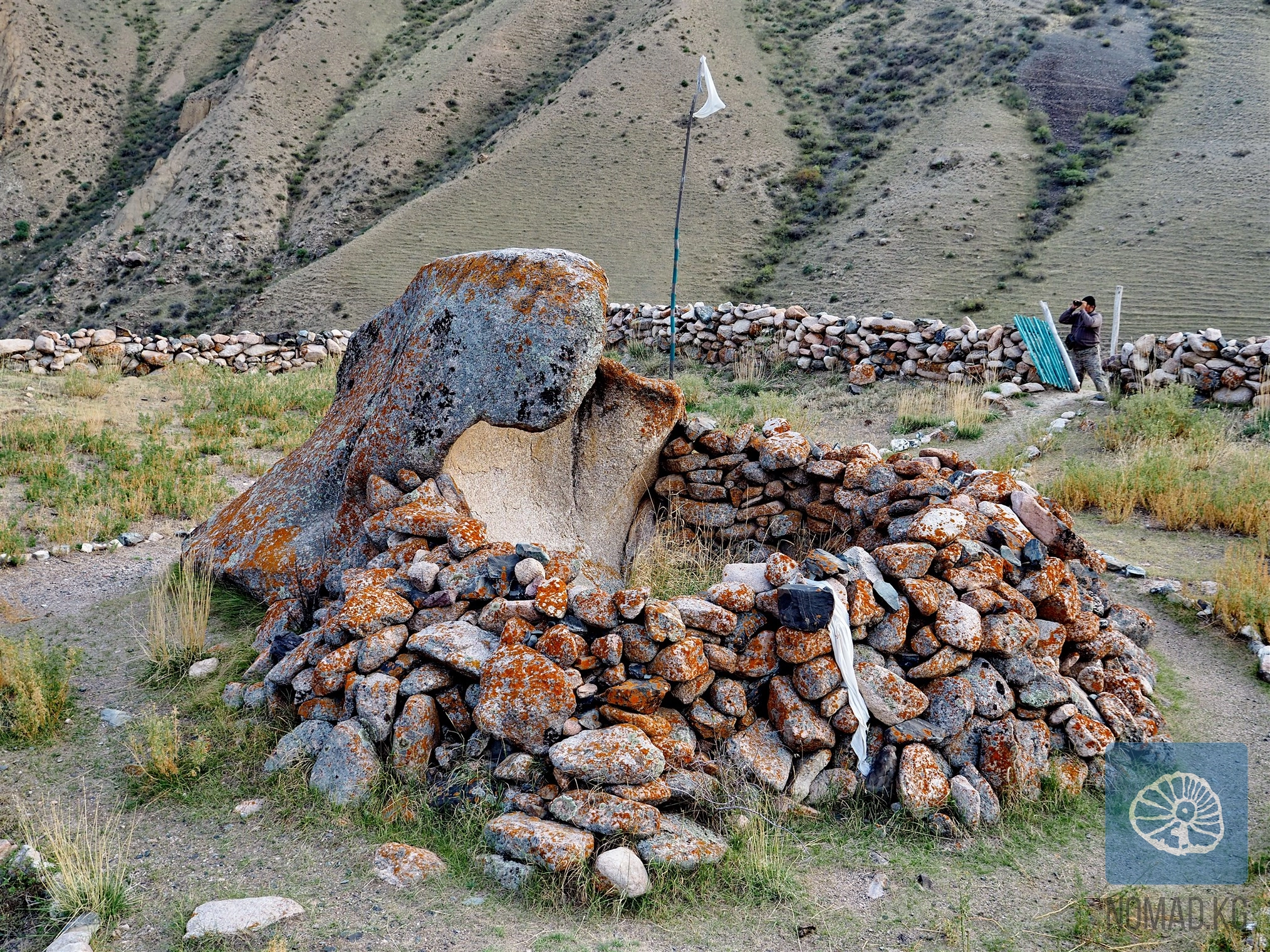
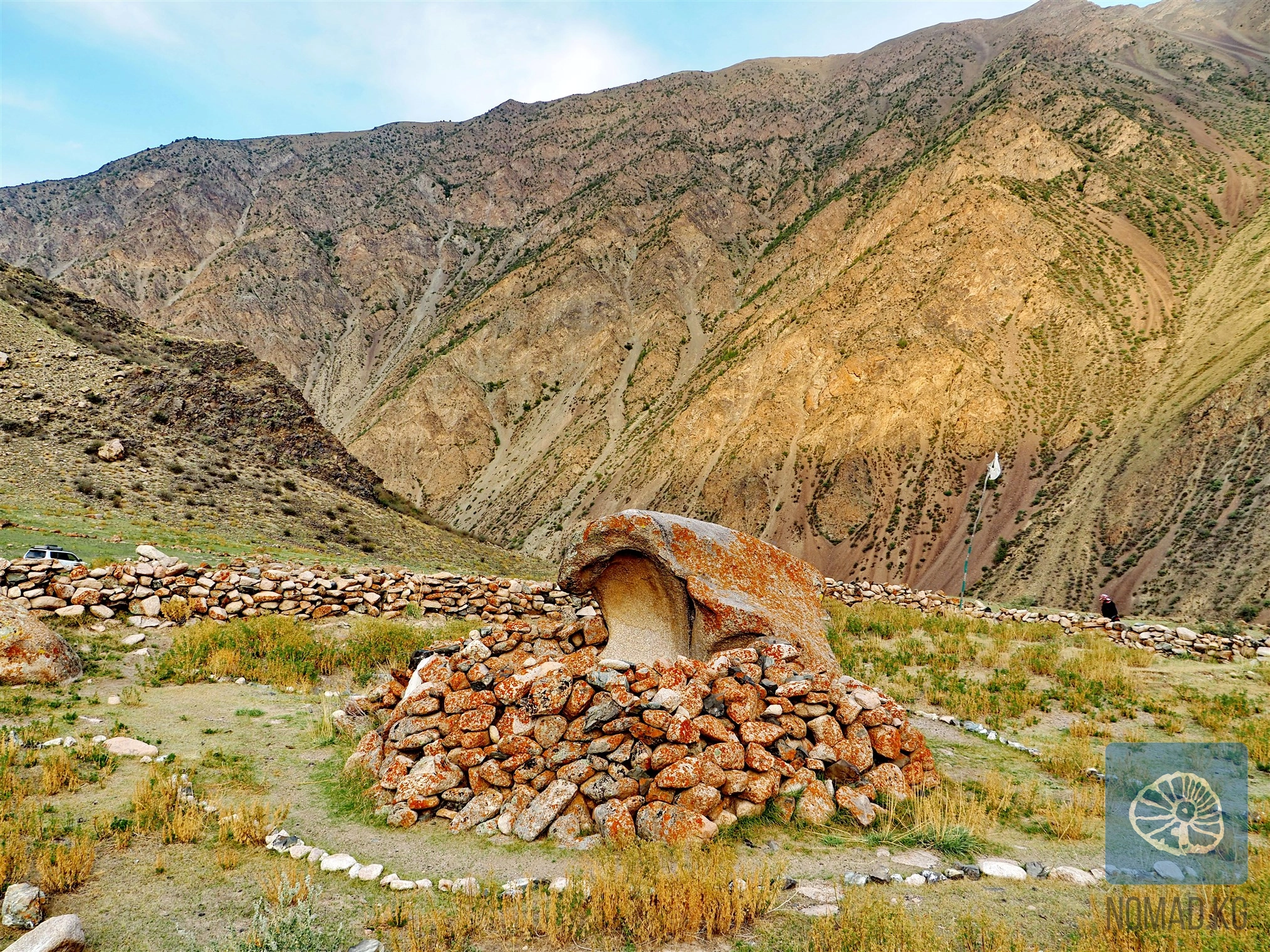
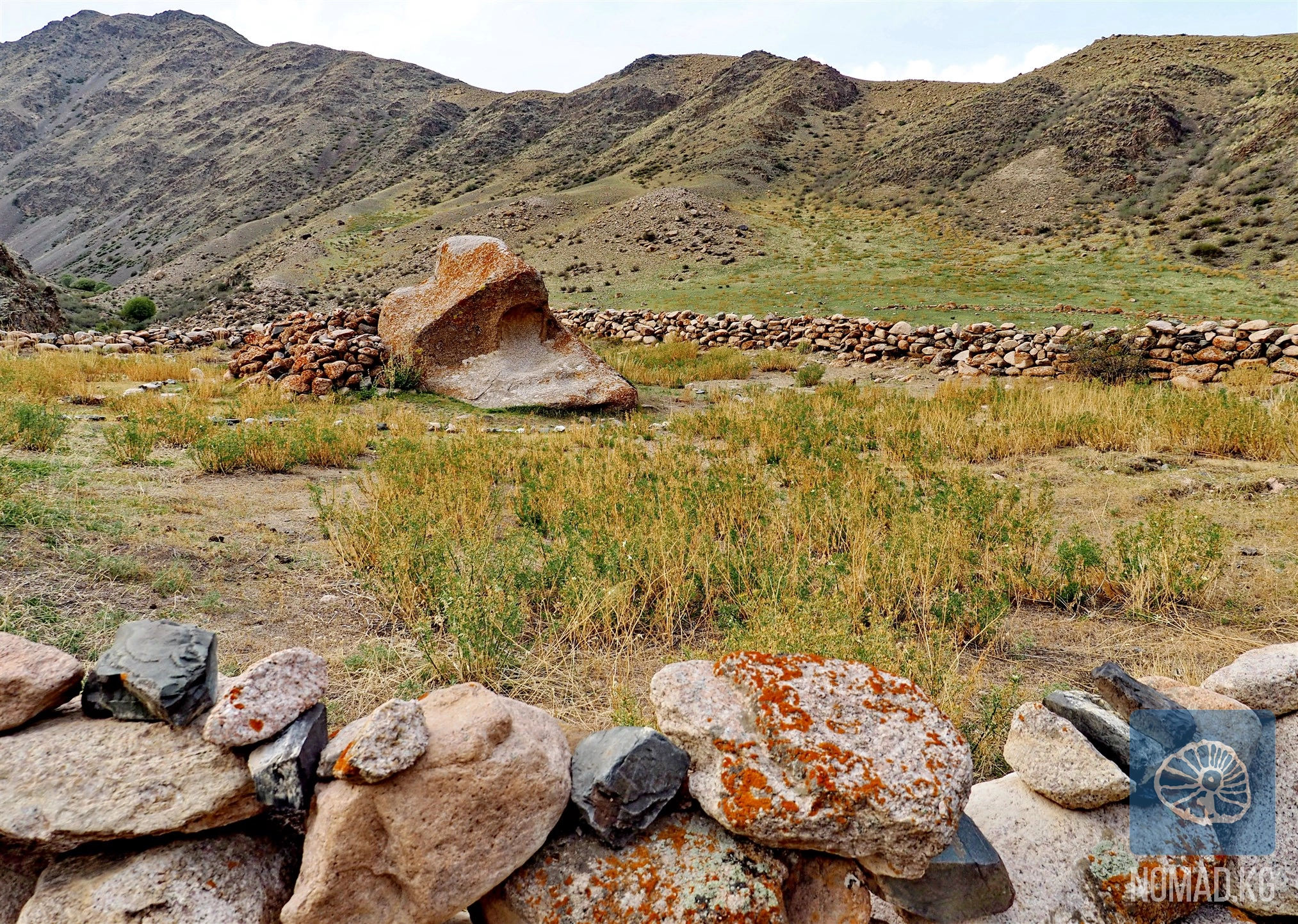
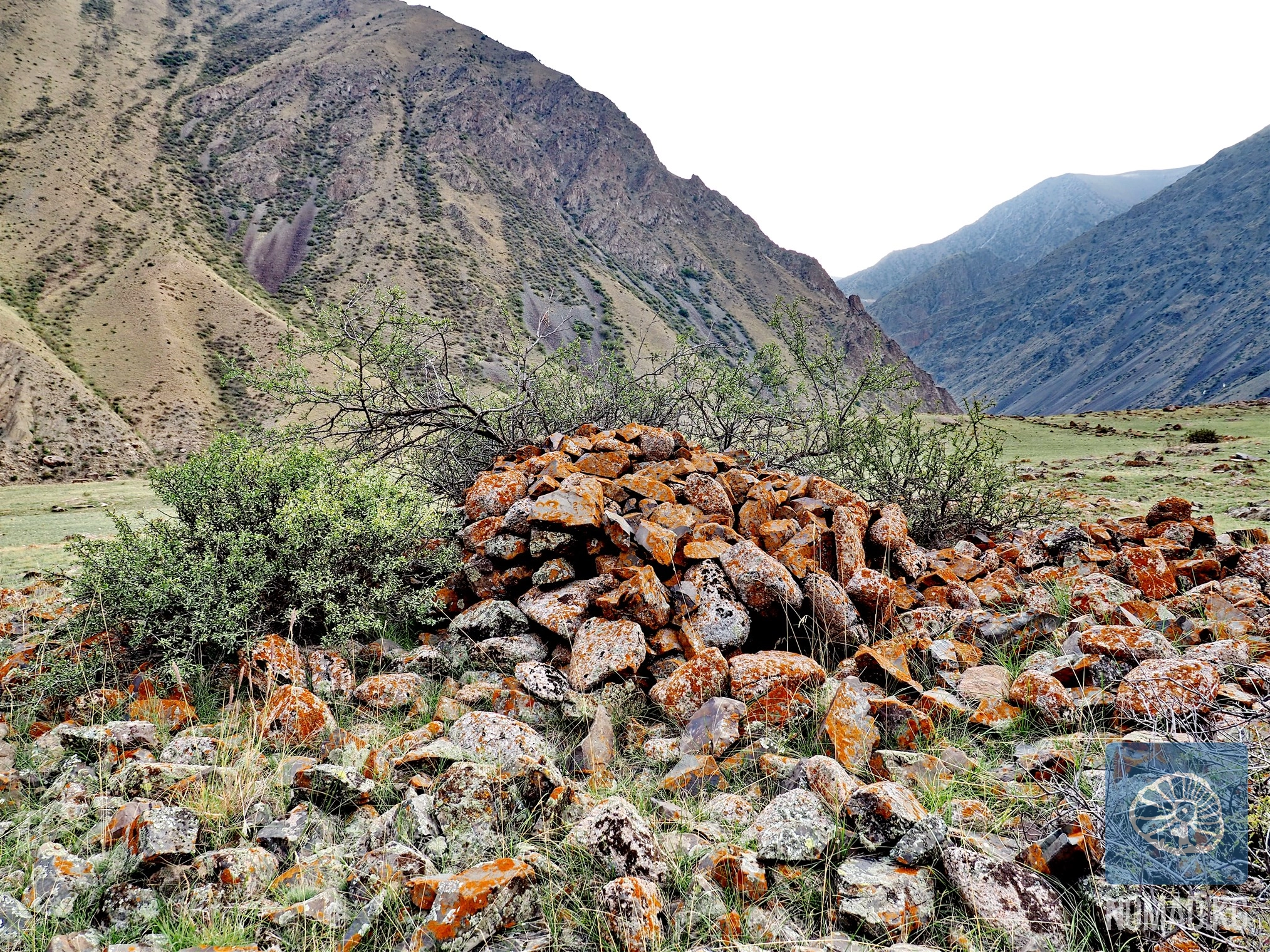
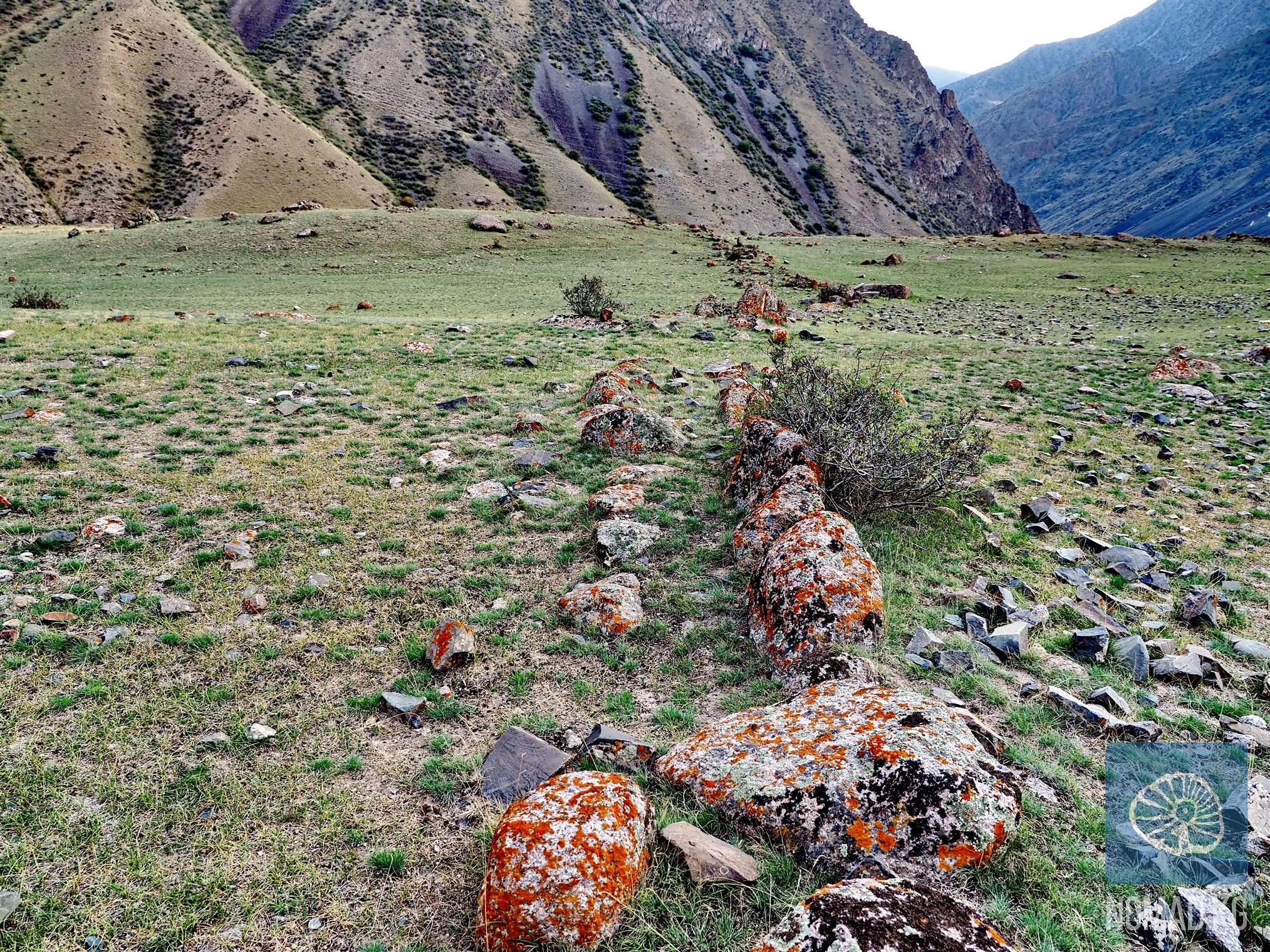
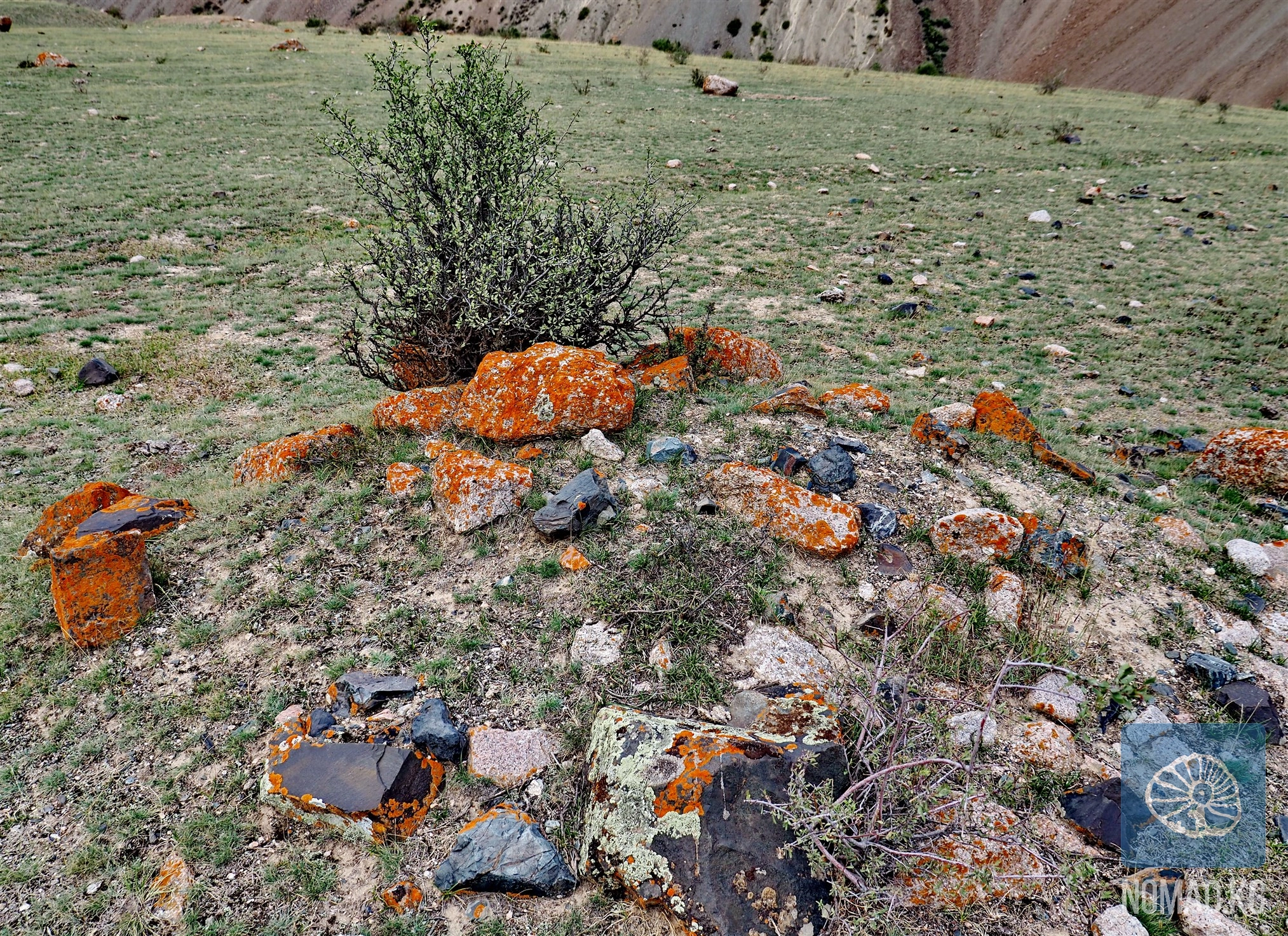
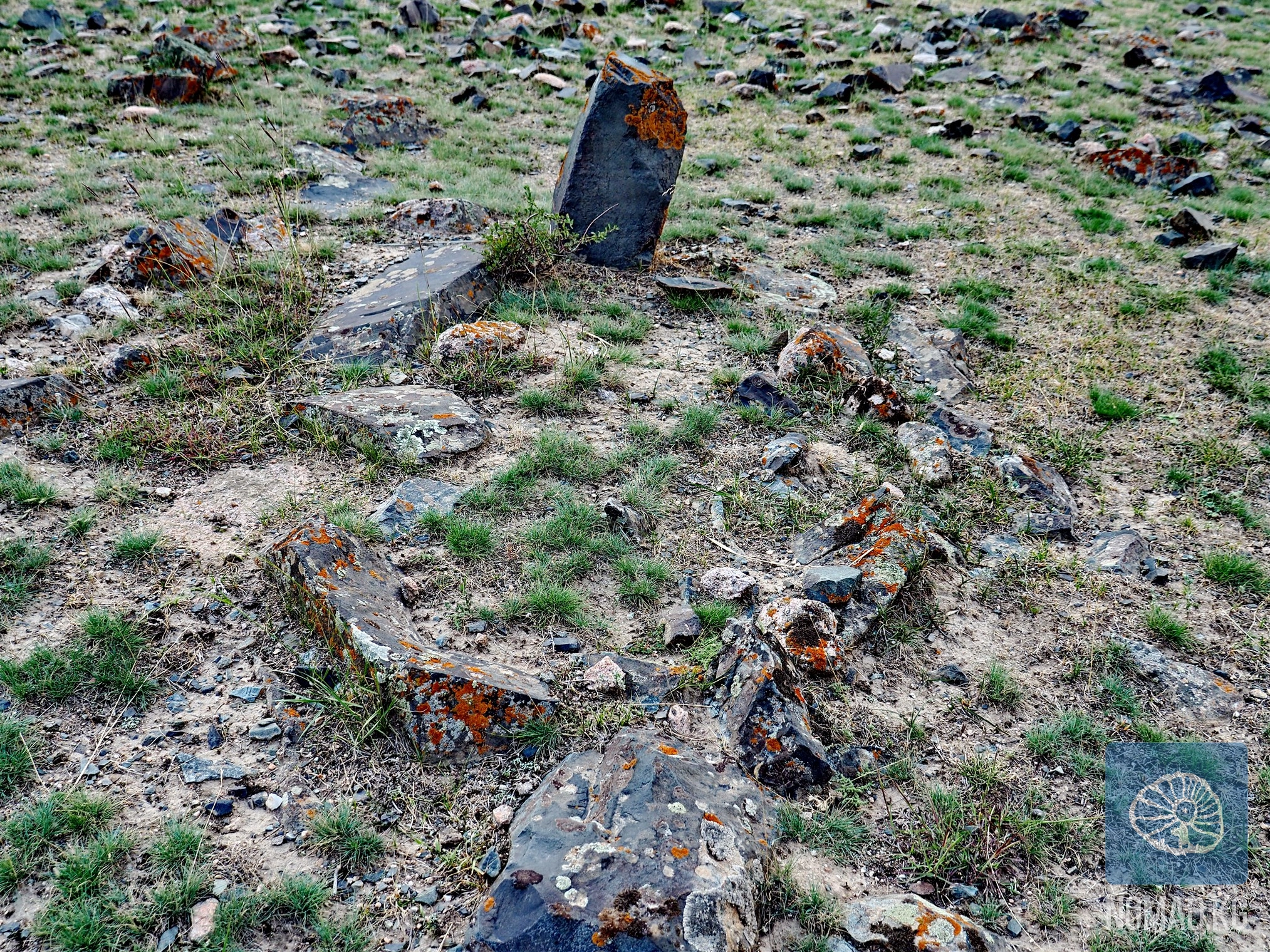
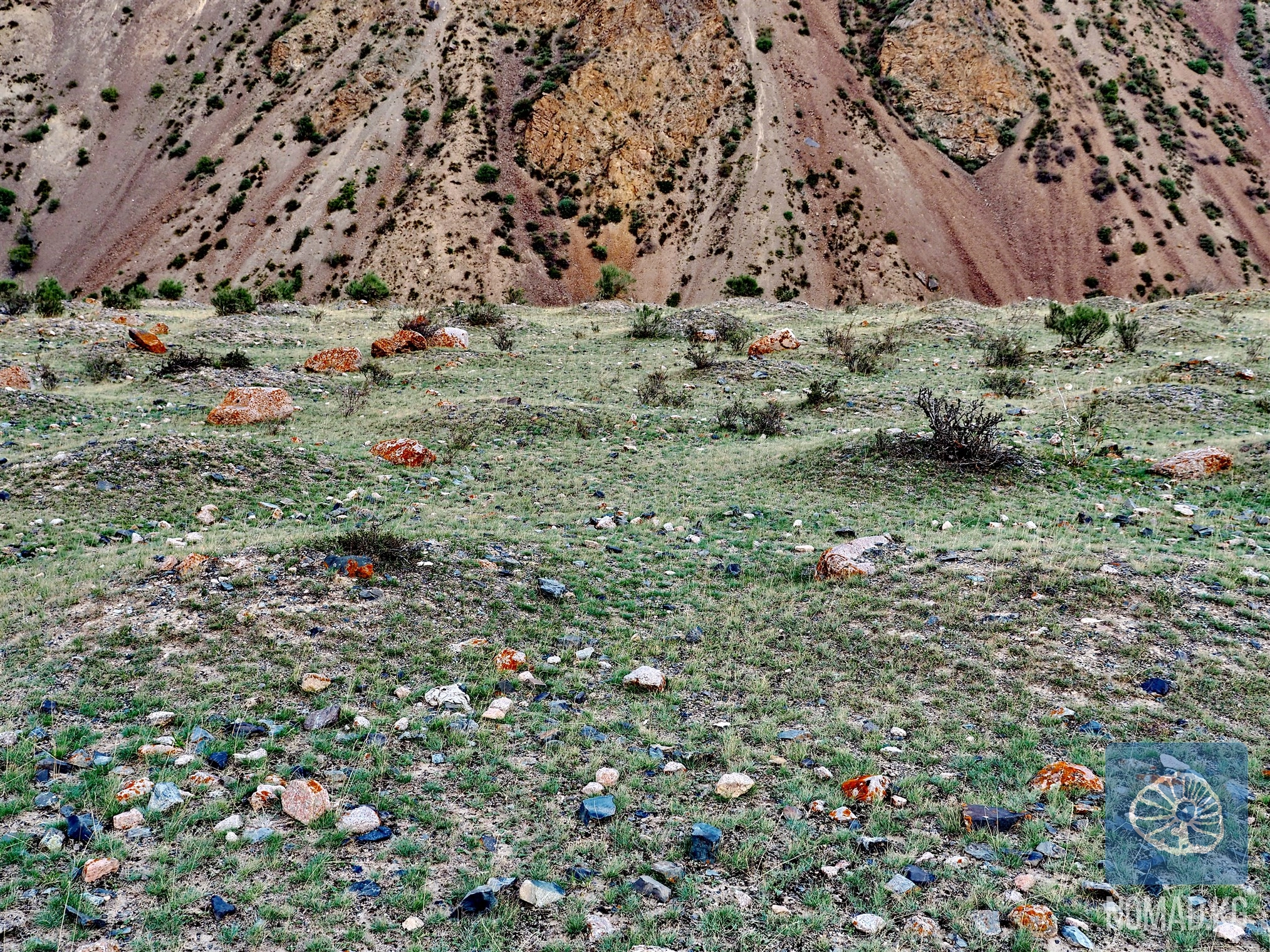
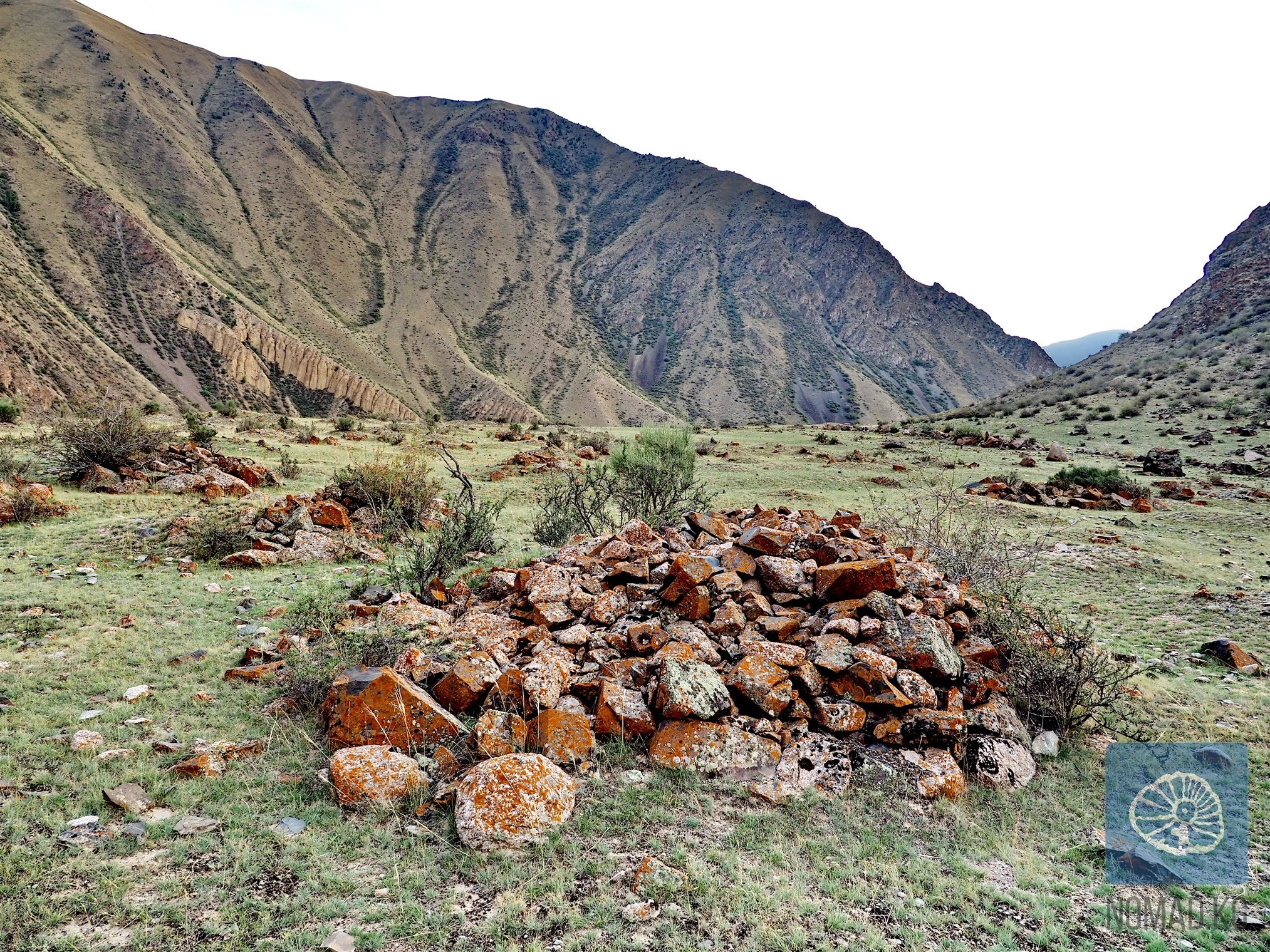
The Kumushtak Gorge in the Bakai-Ata district of the Talas region does not reveal itself immediately. The mountains here do not press down with height but seem to retreat, leaving space for breath. The stones lie as if they were intentionally arranged. The silence is dense, viscous. In it, one hears not a sound but historical memory. Here, fifteen kilometers from the village of Nomadbek, lies the mausoleum of Boz-Tektir Ata - a sacred place rarely mentioned in guidebooks, yet well-known to those who can listen to the land. This is not a tourist "attraction" in the conventional sense. It is a point of intersection of legends, tales, and ancient history.
Boz-Tektir Ata is not located at the top of a mountain or at the bottom in the floodplain of a turbulent river - it "holds the middle," on a practically flat area in a deep gorge. Boz-Tektir Ata is a place where history ceases to be dates, legend - a fairy tale, and the road - a direction on the map. Almost every story about Boz-Tektir Ata somehow refers to the Battle of Talas (Atlah) in 751 - one of the key battles of the early Middle Ages in Central Asia. At that time, the armies of Tang China clashed on the banks of the Talas River with the forces of the Abbasid Caliphate, to which Turkic tribes joined at a crucial moment. Historians write about a strategic turning point and a shift in the balance of power in the region. Popular memory weaves legends - about flight, ambushes, death, and choosing sides.
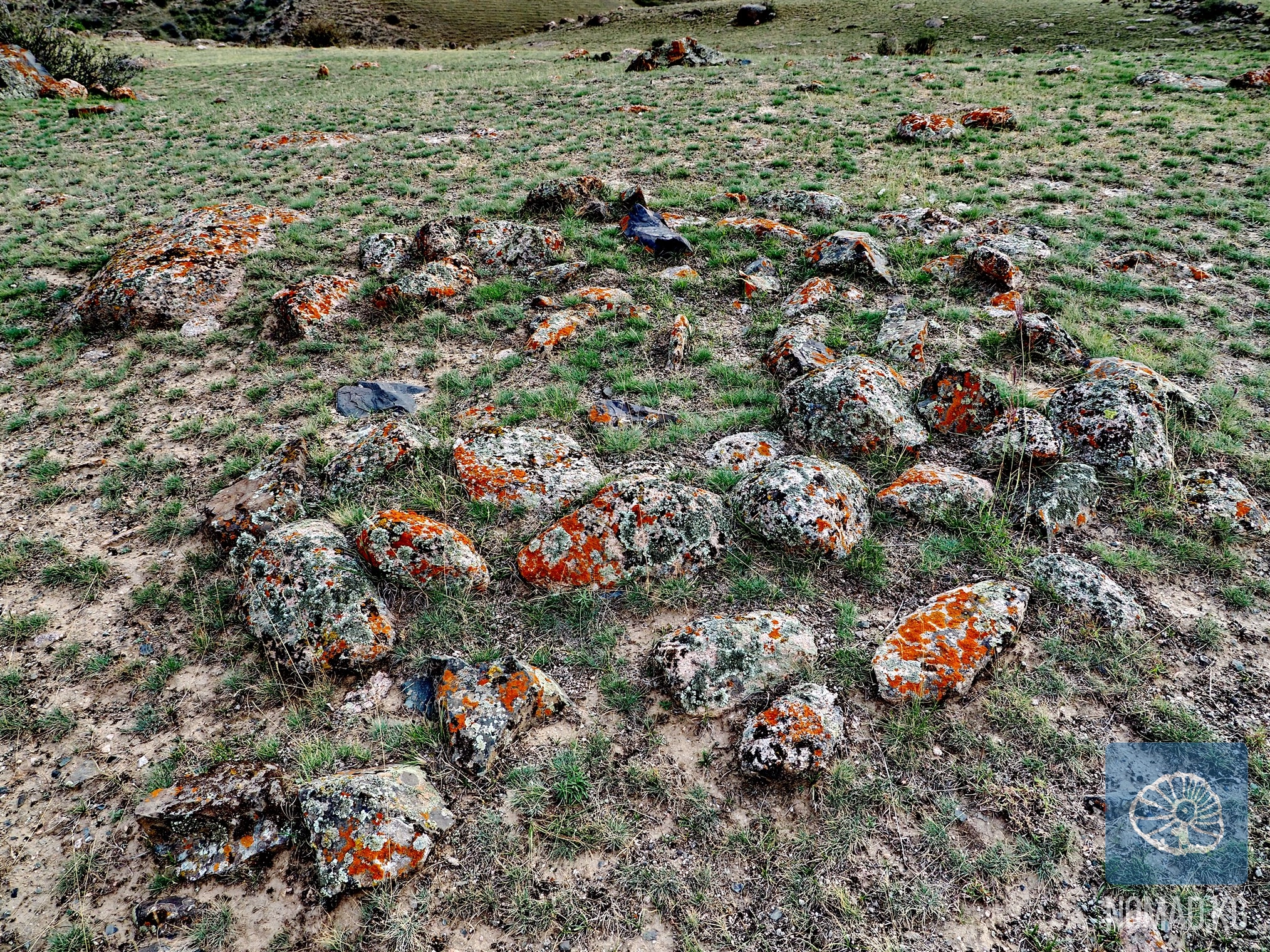
According to one of the most widespread legends, after the defeat, part of the Chinese army retreated into the gorges of the Talas Valley. An ambush was set up in Kumushtak. Here, in the narrow space between the stones, a fierce battle took place. There were so many dead that they could not be buried according to the ritual - the bodies of the warriors were covered with large stones so that the enemy could not desecrate them, and so that the pursuit could continue.
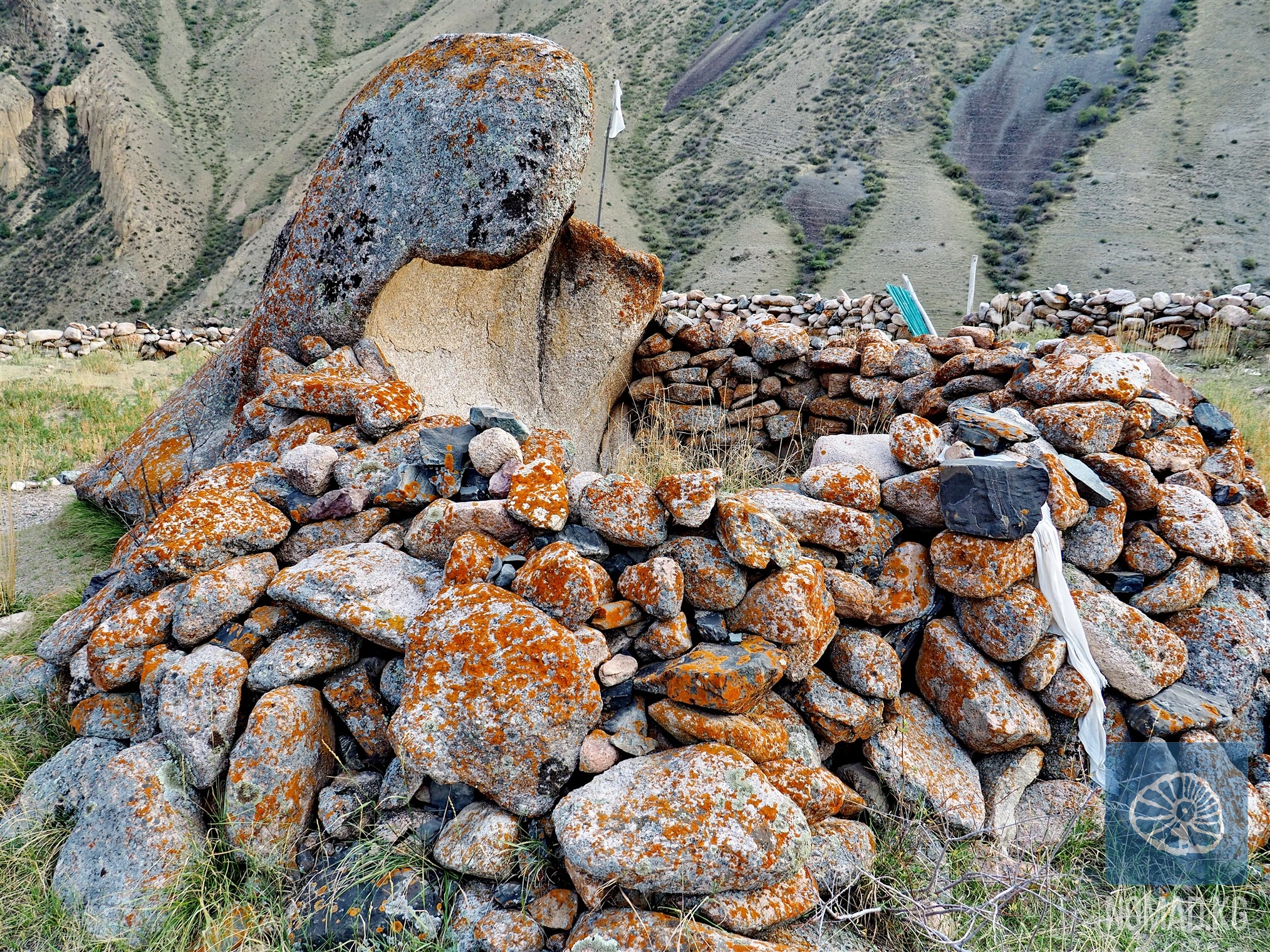
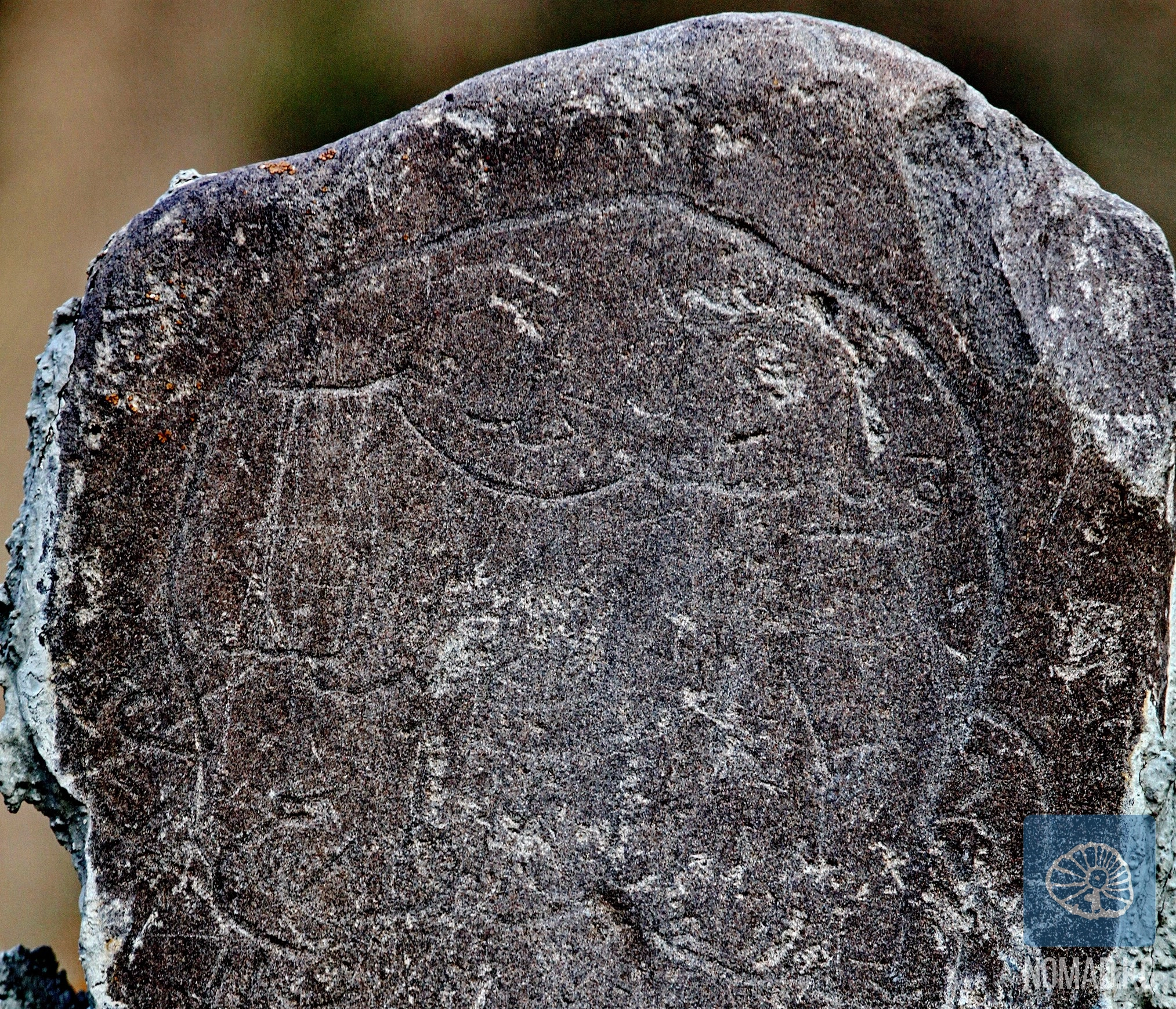
Another legend takes us even deeper - into mythological time. It tells of three brothers. One was named Bozum, the second - Arstan-Bap Ata, and the name of the third has been erased by time; according to legend, his grave is far away - beyond these lands, in Turkey. Arstan-Bap became a saint in the Fergana Valley, Bozum - here, in Kumushtak. Their fates intertwine again with the Battle of Talas: Bozum, leading a detachment, fell into an ambush and was mortally wounded. His patron was considered to be the golden eagle - a symbol of courage and heavenly protection. When the enemies surrounded him, Bozum hid behind a large rock. And at the moment when it seemed that the outcome was inevitable, the rock seemed to swallow him. The rock took the shape of a sitting eagle - and became what is now known as Boz-Tektir.
In one of the records attributed to the famous Umut moldo in the Talas Valley, it is said that the mausoleum of Boz-Tektir Ata holds the remains of twelve thousand shahids who died for their faith. The number may be symbolic. But the very idea - of mass burial, of the land, of the victims of ancient battles - explains why this place has been perceived as a place of power for centuries. People who come here often remain silent. Some read prayers, others simply sit leaning against a stone. Locals say: here, one does not ask - here, one listens.
People come here: those seeking inner balance, families with difficult fates, individuals trying to rid themselves of addictions, travelers who have lost their life path. It is said that the place "helps the lost" - especially those who have lost control over themselves. This is not a promise of healing, but a belief in the possibility of change.
How to get there: From Talas - towards the Bakai-Ata district. The nearest landmark is the village of Nomadbek. From there to the Kumushtak Gorge is about 15 km. It is better to go in an off-road vehicle or arrange with local drivers. The last section is unpaved and difficult to pass in the rain. A walking approach is possible but requires time and a supply of water.
When to go: The best time is May-June and September. In summer, it is hot and there is almost no shade. In winter, access may be difficult. There is no infrastructure in the gorge itself. Overnight camping (with local permission) or accommodation in guest houses of nearby villages is possible. Comfort is basic.
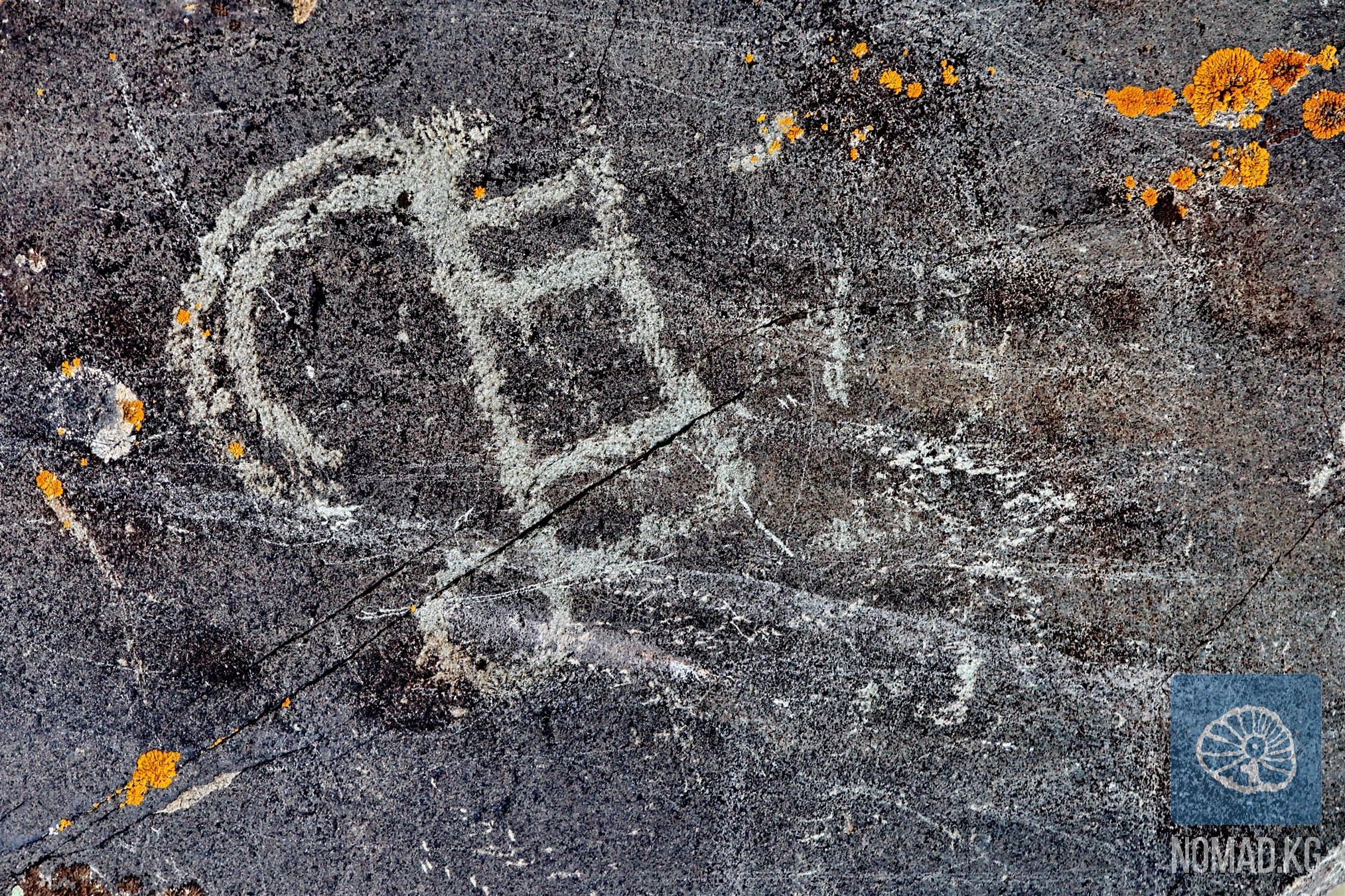
In 2024, the Nomad.kg team, together with archaeologists from the Hermitage (St. Petersburg), digital archaeologists from Bashkortostan, and scientists from the National Academy of Sciences of Kyrgyzstan, visited the mausoleum of Boz-Tektir Ata. Preliminary findings confirmed the high scientific potential of the site. It is recommended to conduct full-scale research, including archaeological excavations of one of the burials to determine dating, anthropological and cultural characteristics. In the future, in 2026, obtaining an "open sheet" and conducting a scientific expedition is planned. This is a rare case where oral tradition, sacred reverence, and academic science can meet without conflict. Unfortunately, in recent years, the stone with the Arabic inscription has been lost - a reminder of how vulnerable such places are.

Standing by the Talas River early in the morning, when the fog still lingers over the water, it is easy to imagine how caravans passed through here, how cavalry units moved along these very shores, how language, faith, and power changed - while the
If there is a place in the Talas region that amazes from the very first step, it is the Talas Birch Grove - the largest man-made birch forest in all of Central Asia and one of those places where humans and nature have created a true oasis of
Peak Manas is the highest point of the Talas Ala-Too ridge, with an elevation of about 4485-4488 meters above sea level, and this figure alone sets the tone: here, the familiar routes end, and the territory of true mountains begins. The
Kyrgyzstan is a country where the memory of ancestors, sacred space, and natural power merge into a single cultural landscape. For centuries, Kyrgyz people have placed special importance on burial monuments and holy sites—mazars. Even today,
Among the picturesque mountains of the Bakai-Ata district, not far from the village of Urmaral, lies one of the most mysterious and revered places in the Talas region - the Kara-Koyun cave. This is not just a dark niche in the rocky mass, but a
From the Talas Ala-Tuu ridge, the steppe suddenly ceases to be chaotic. In its body, even, almost stubborn strokes emerge. Stone by stone. Line by line. Bakayyr does not reveal itself immediately: it waits for you to step out of the scale of a human
The high mountain passes of Suusamyr do not tolerate haste. Its meadows, rivers, and slopes exist at their own pace. The grass grows slowly here, trees take years to settle in, and any human intervention leaves a lasting mark. When you stand at this
The Talas region is one of the corners of Kyrgyzstan where history is felt not in museum showcases or academic works, but in the wind, in the scent of dry wormwood, in the lines of mountains frozen around the valley like an ancient choir. Here, the
In the Talas Valley, there is a place where legends come alive at every step, and the silence of the mountains speaks louder than any storyteller. This is the Besh-Tash Gorge - one of the most picturesque and symbolic natural spaces in Kyrgyzstan.
The Talas Valley is one of those places where Central Asia speaks to the traveler through the language of wind and silent stones. Here, between hills and gorges, traces of ancient civilizations have been preserved, whose names have long dissolved in
In the very heart of the blessed Talas Valley, where the silvery Talas River leisurely carves its path between two majestic mountain ranges - the Talas and Kyrgyz ranges - lies a unique natural oasis. The Talas Forest is not just a green stripe on
In the Talas Valley, among the hills and green valleys, lies one of the most revered sacred places in the region - the mazar of Boo-Terek. Its name translates from Kyrgyz as "a bundle of poplars" or "many poplars," and this is no
If you have already seen Lake Besh-Tash and think that the national park has revealed all its secrets to you, then you simply haven't yet ascended the Itagar Pass. This is the route after which photos remain in your phone's memory that you
Where once small rural streets stretched along the river valley, where people lived a measured steppe life, today lies a vast expanse of water - the Kirov Reservoir, one of the most significant hydraulic structures in Kyrgyzstan and an impressive
The Ötmäk Pass (3326 m above sea level) is one of the most impressive places in the Talas region and an essential mountain artery connecting the closed Talas Basin with the expansive Suusamyr Valley and the strategic Bishkek-Osh highway. This is the
High in the Kaman-Suu gorge, at an altitude of about 2500 meters above sea level, lies one of the most expressive and multilayered monuments of rock art in Kyrgyzstan - Jaltyrak-Tash, which translates to "shining stone." This is not just a
In the very heart of the picturesque Talas region, amidst the rugged gorges of the Bakai-Ata district, lies one of the most unusual natural wonders of Kyrgyzstan - the "Kara-Kishi" geopark. This place seems to exist outside of time: the
The mountains of the Talas Ridge conceal many secrets, but one of the most astonishing is the complex of rock carvings at Bakayir-Kara-Kuush, located in an easily accessible gorge where human footsteps are lost among the stones, and ancient
In the narrow stone corridor of the Chon-Kapka gorge, where the road seems to glide between sheer cliffs, a traveler is suddenly confronted by a massive concrete wall of a dam. But what strikes one the most is not the engineering itself, but the art
The Besh-Tash Nature Park covers over 30,000 hectares, stretching nearly 30 kilometers upstream along the river of the same name - from the gentle foothills at an altitude of 1,100 meters to the harsh, cold glaciers rising to 3,500 meters. The park
The Talas Geopark "Echkilі-Tuu" is located in the mountain range of the same name, Echkilі-Tuu, which is part of the Kyrgyz Ala-Too ridge, in the Sary-Kuurai gorge, one of the most impressive natural attractions of Kyrgyzstan. This geopark
The Besh-Tash National Park, which translates to "Five Stones," stretches in a narrow chain along the Talas Ala-Too mountain range. On a good gravel serpentine road up the Besh-Tash river gorge, it feels like the car is about to hit the
Among the hills of the Talas Valley, near the clear river Ken-Kol, lies one of the most cherished places in the vicinity of the National Complex "Manas Ordo" - the sacred spring "Kanykey Apa." For the Kyrgyz, this is not just a
In the center of the village of Kyzyl-Adyr, which many travelers remember by its old name Kirovka, there is a local history museum named after Mikhail Fyodorovich Tura in the secondary school named after Orozbekov Meilibek. At first glance, it seems