

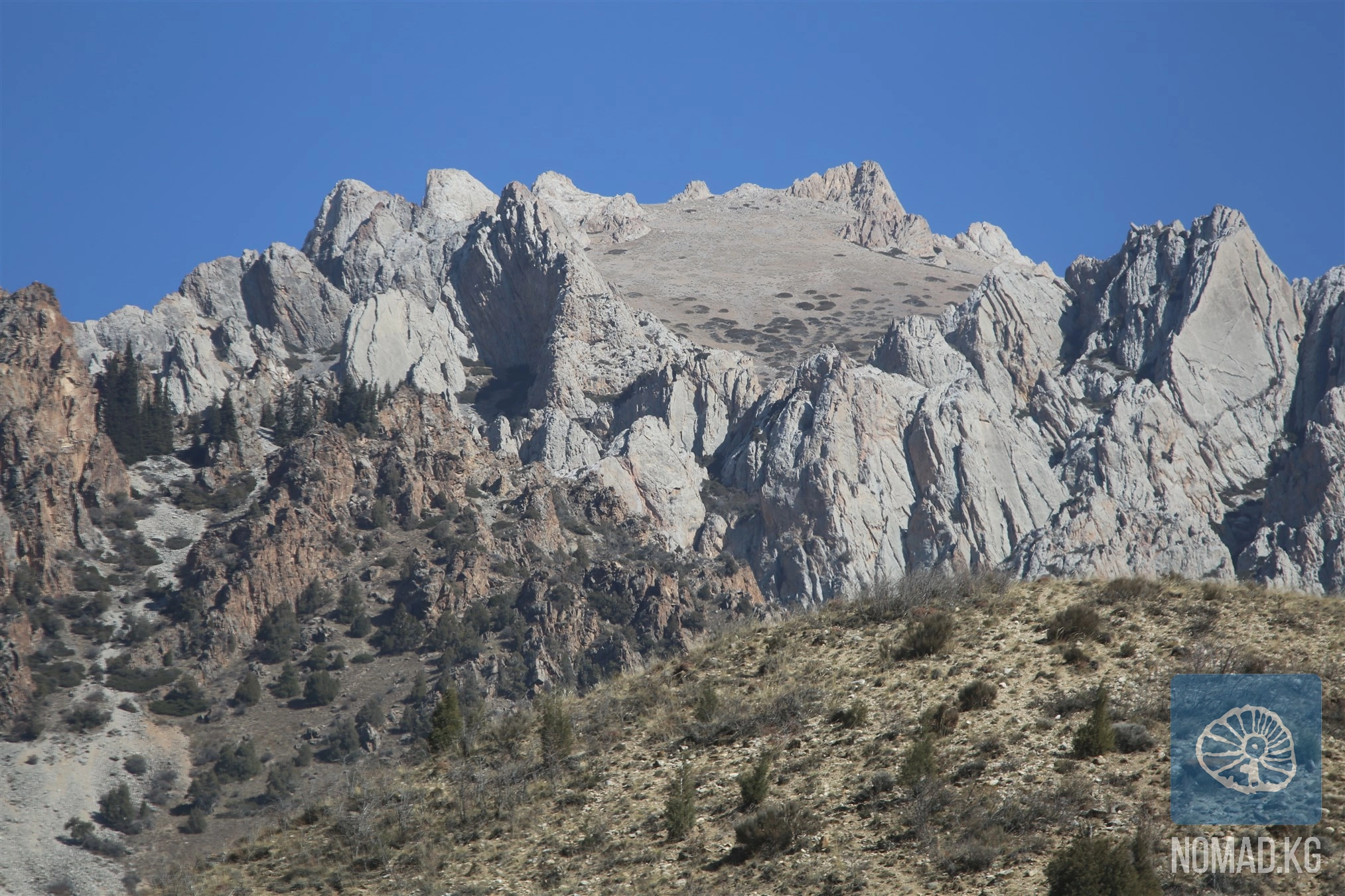
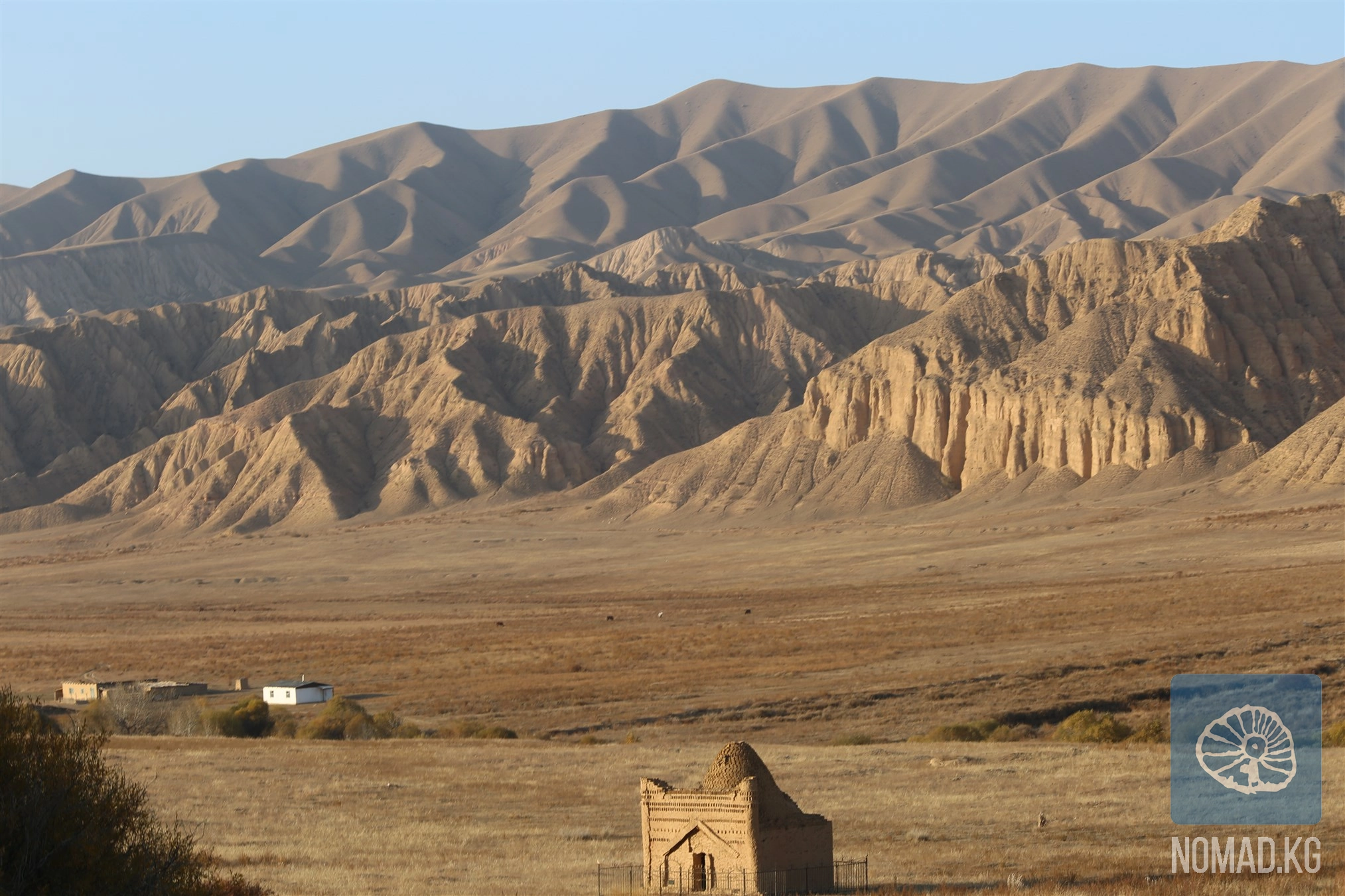
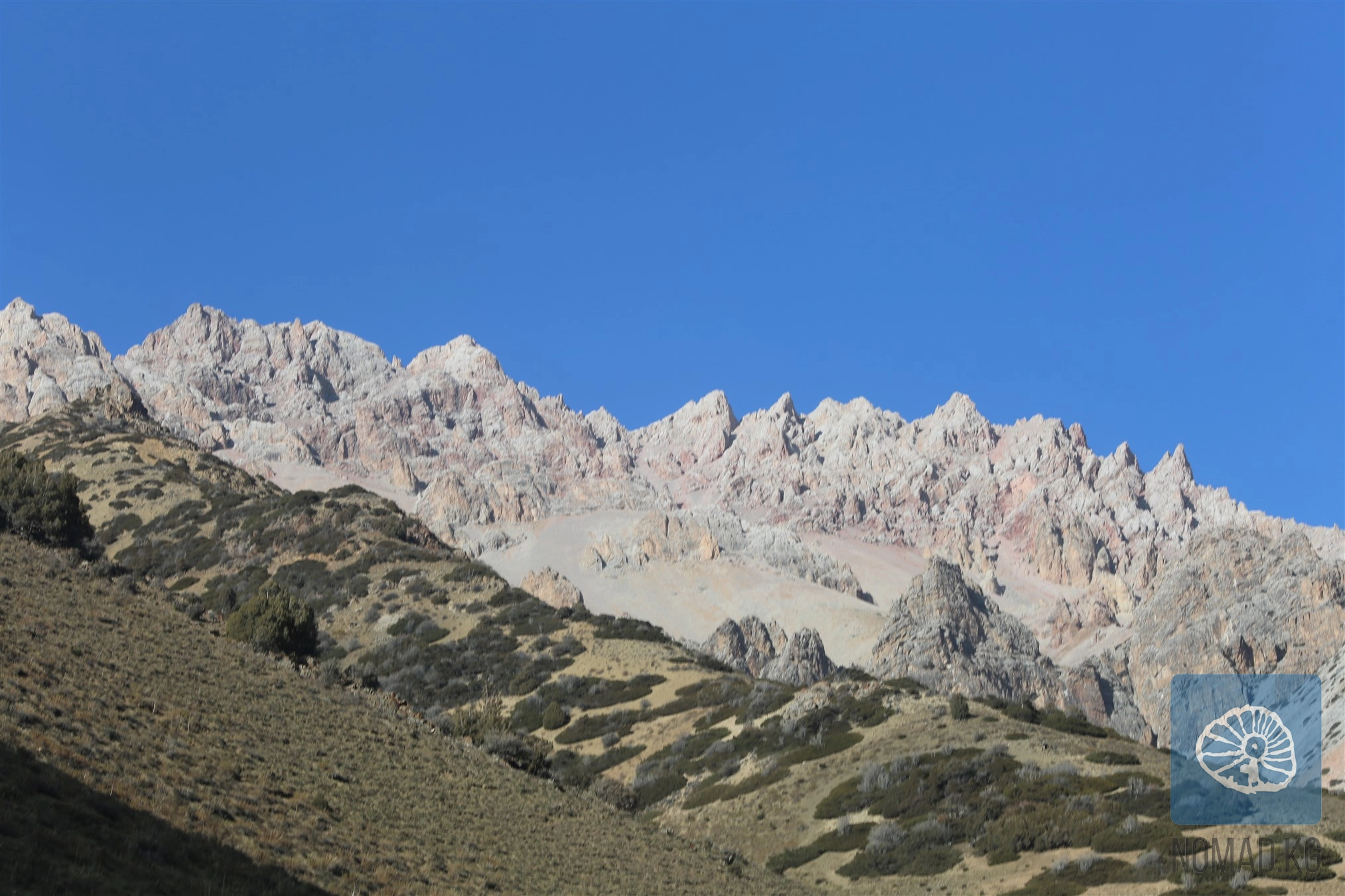
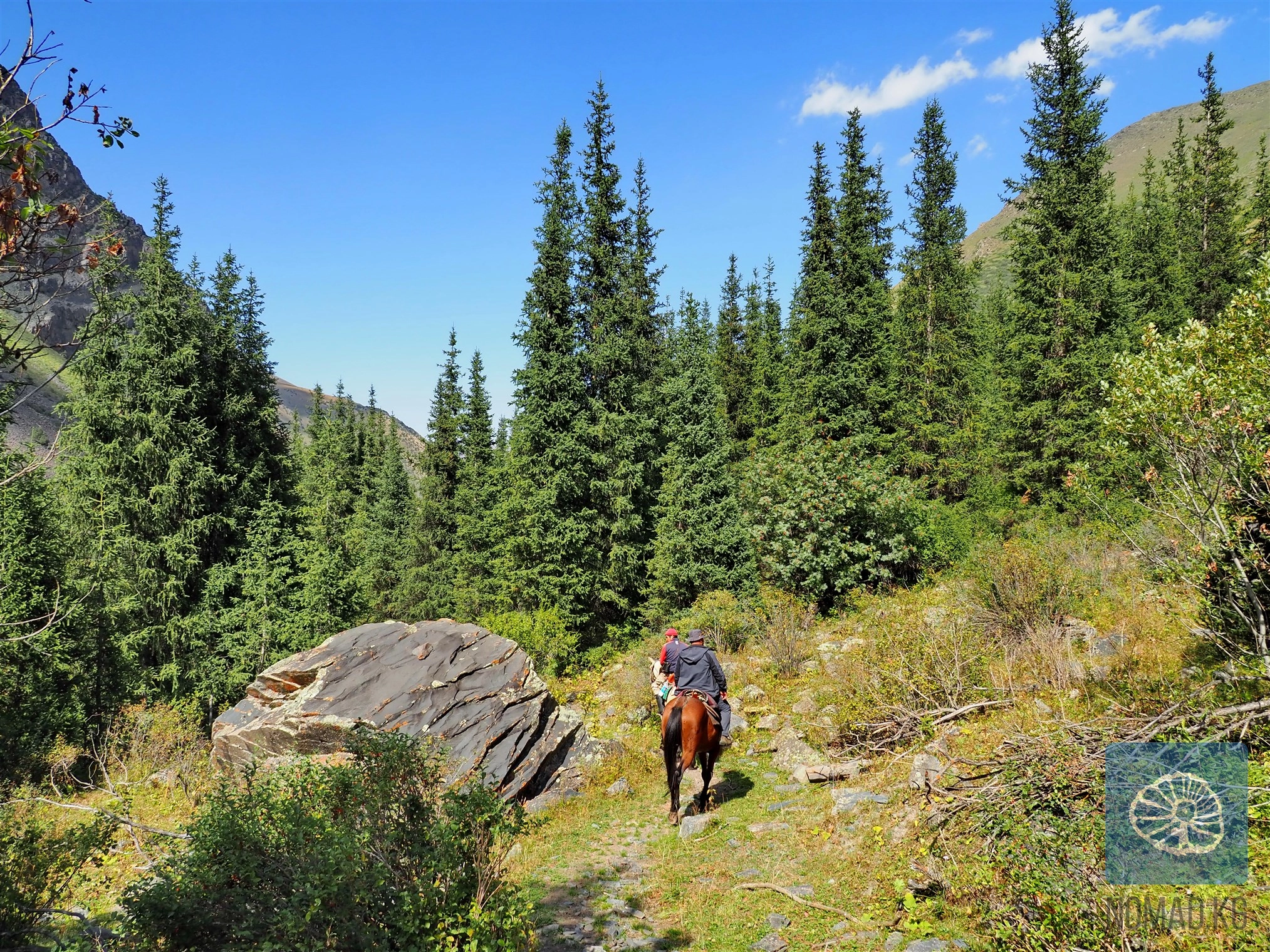
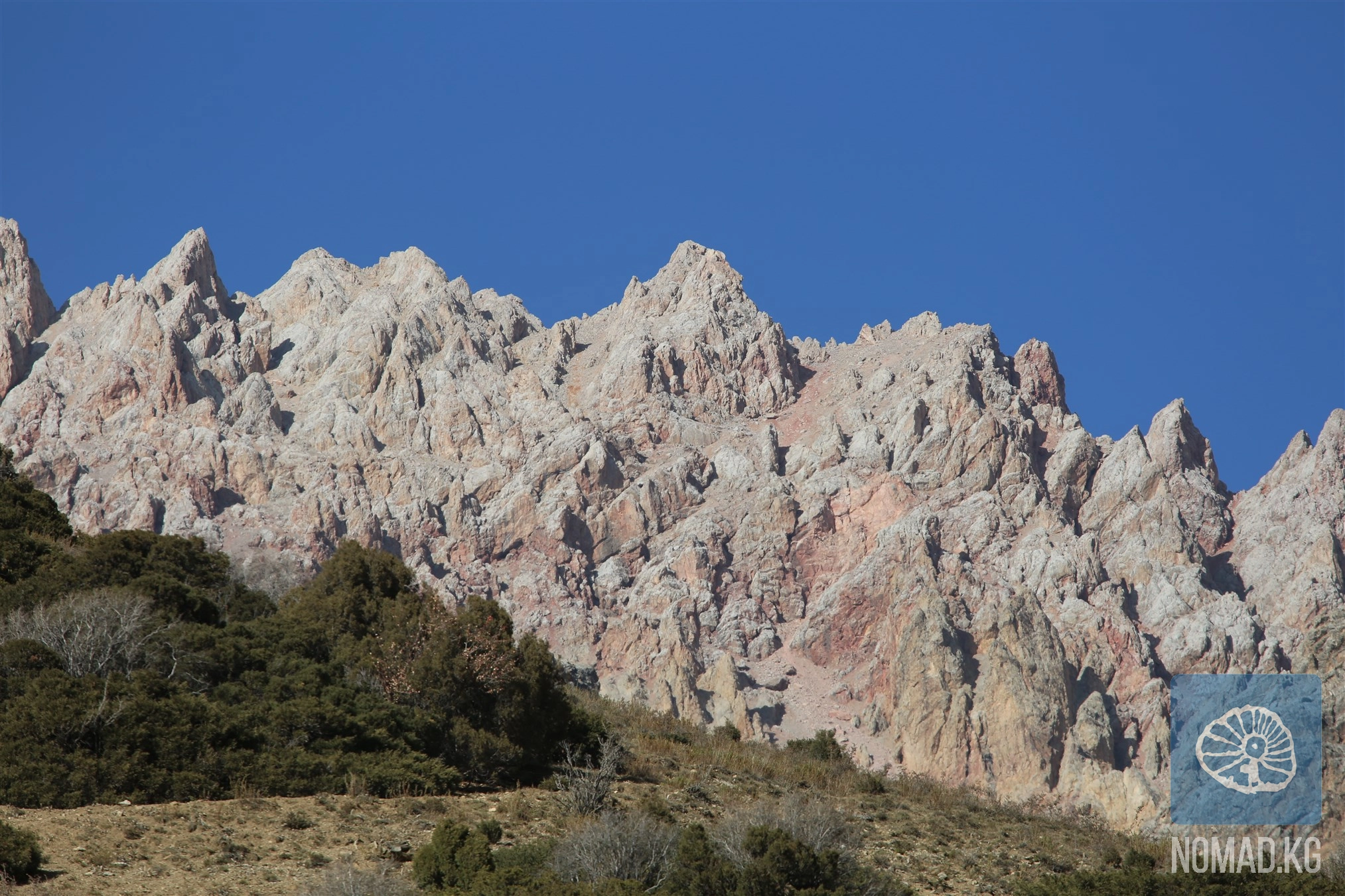
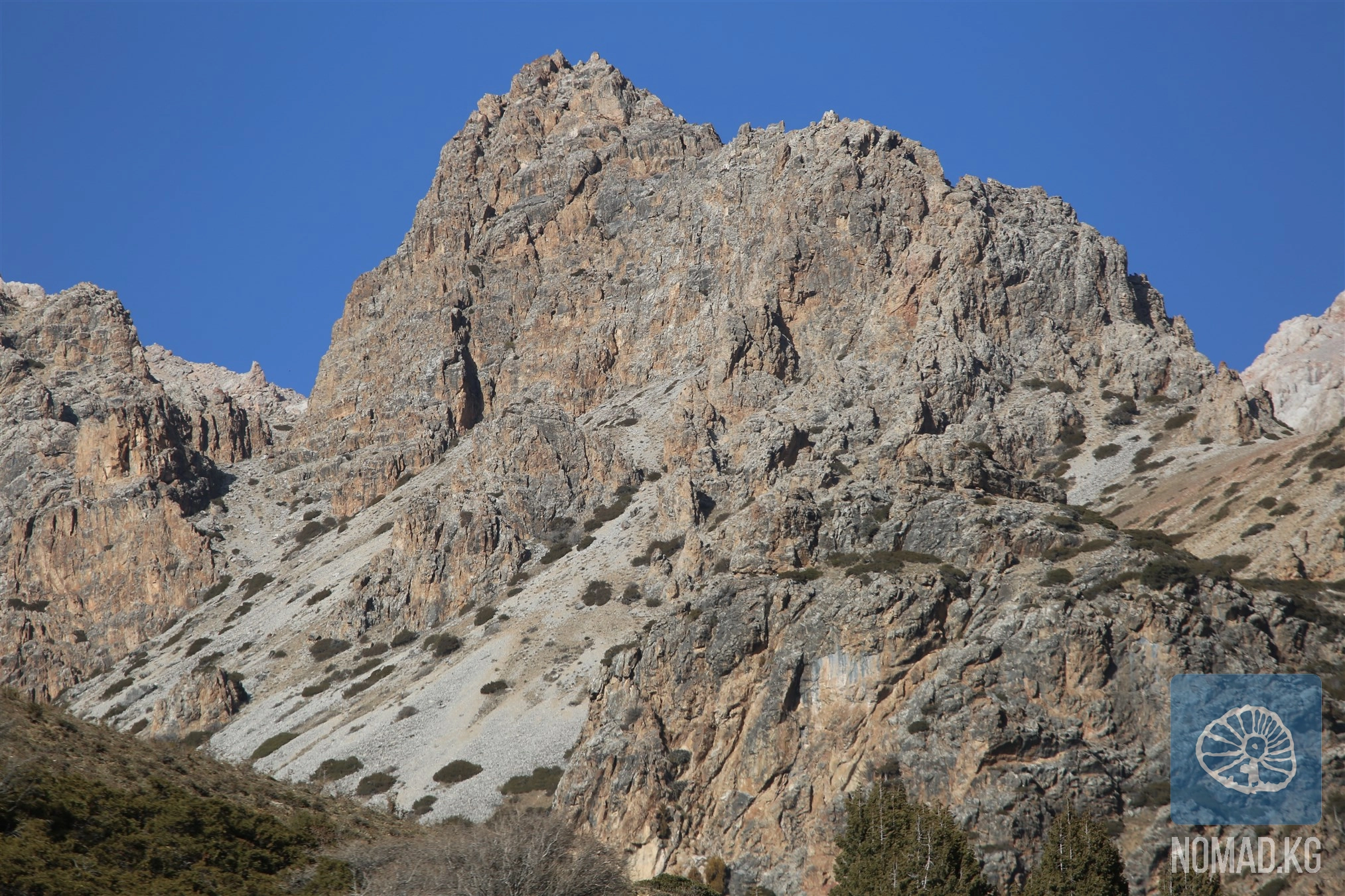
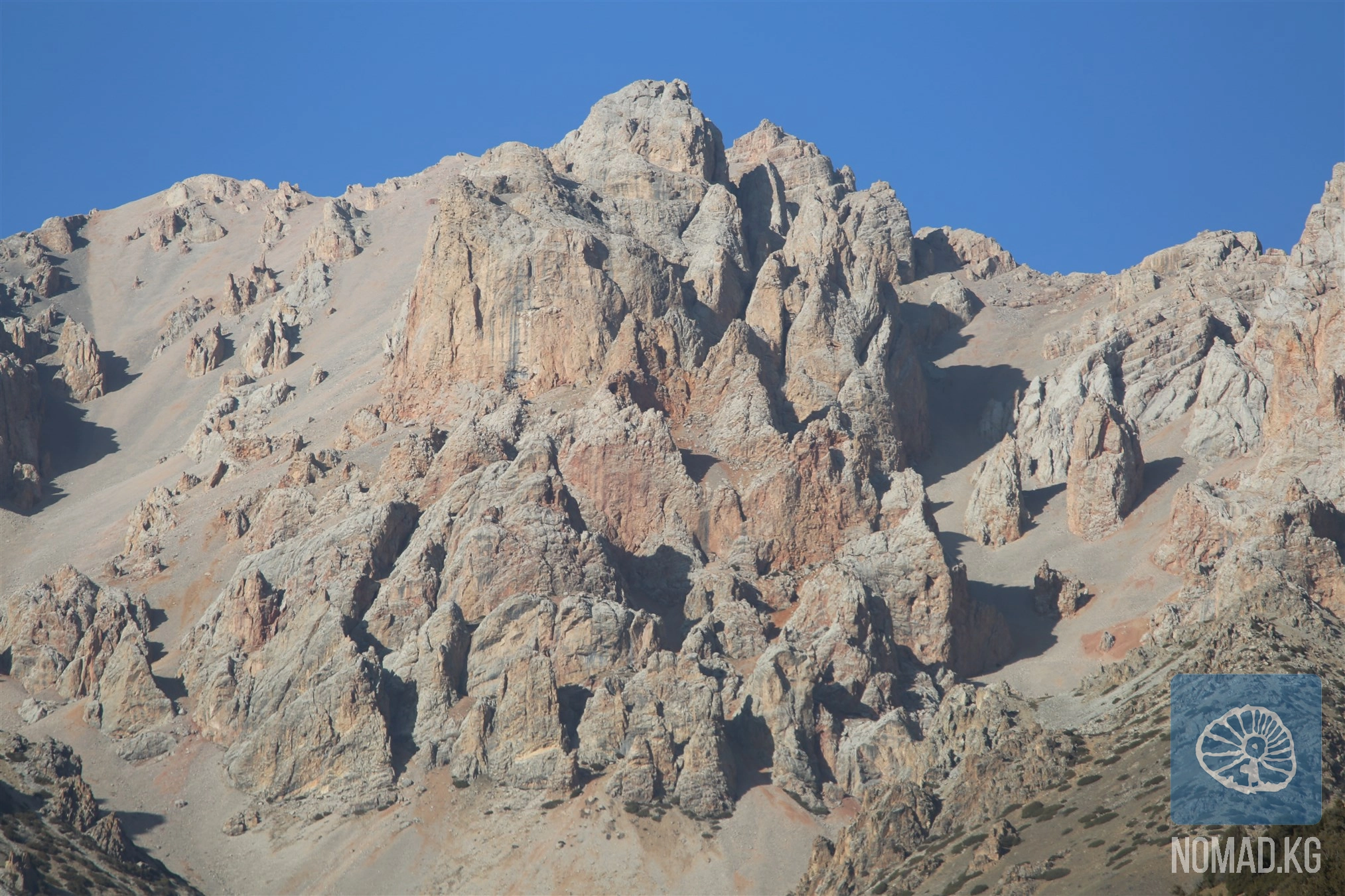
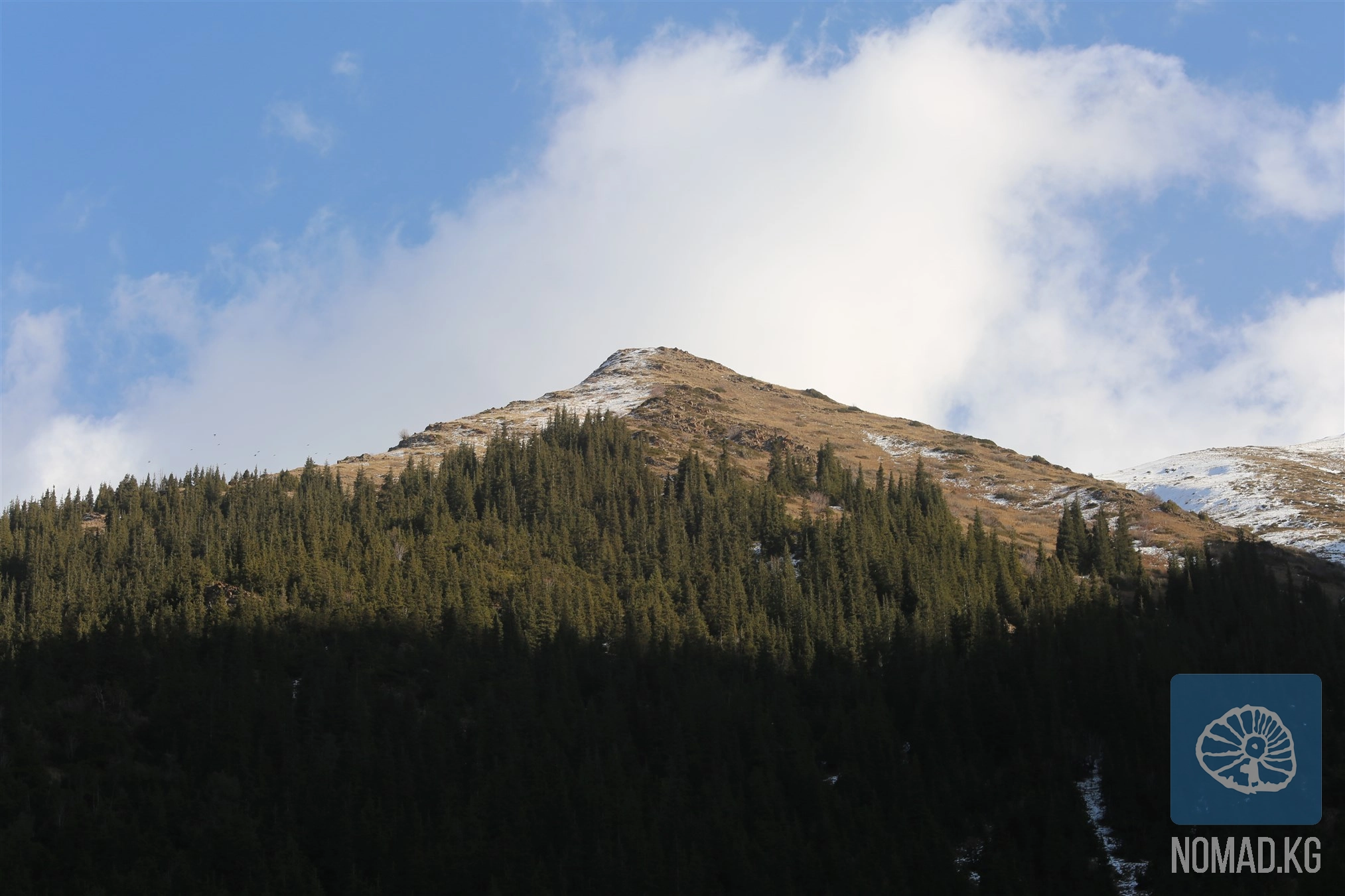
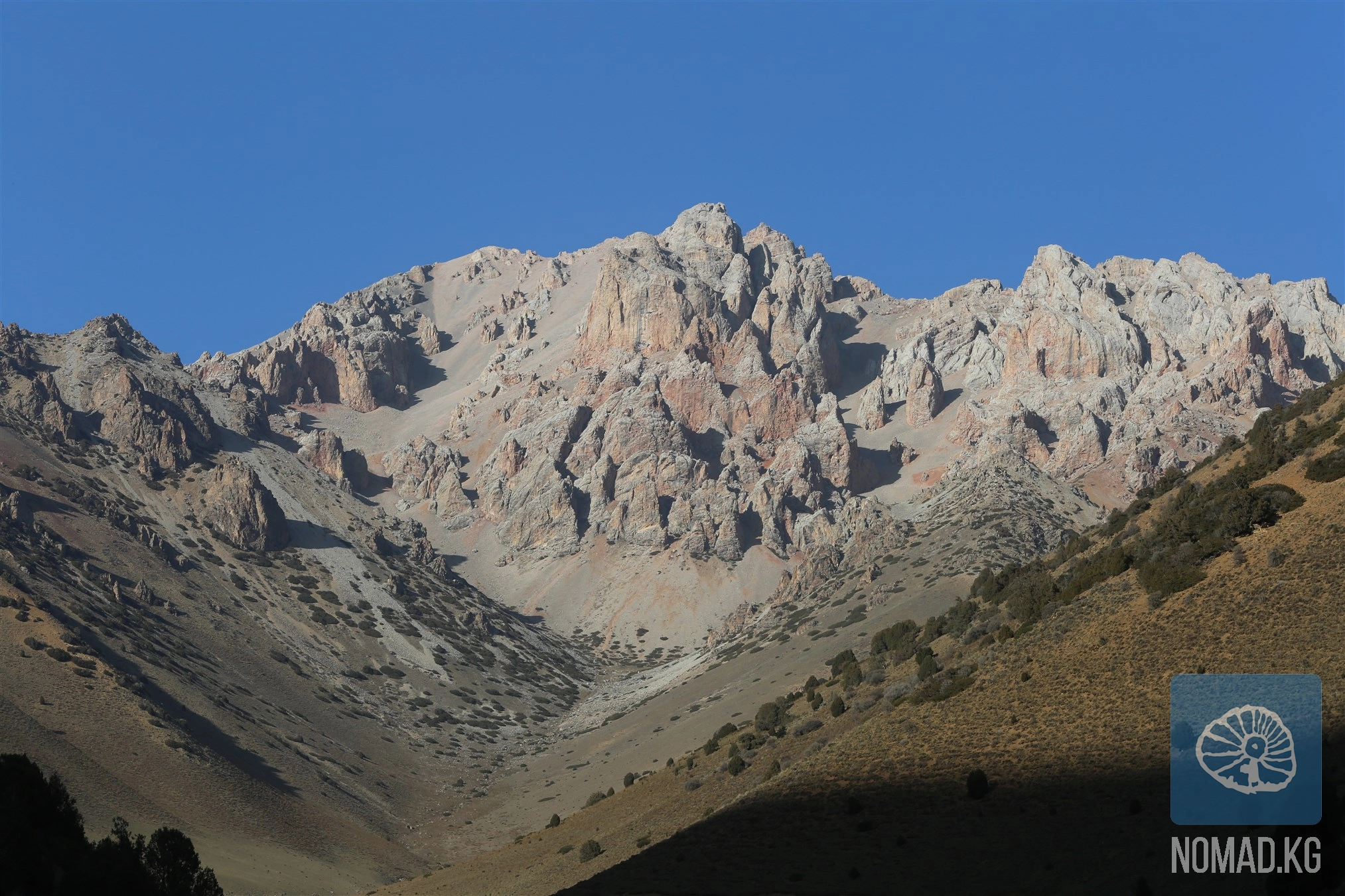
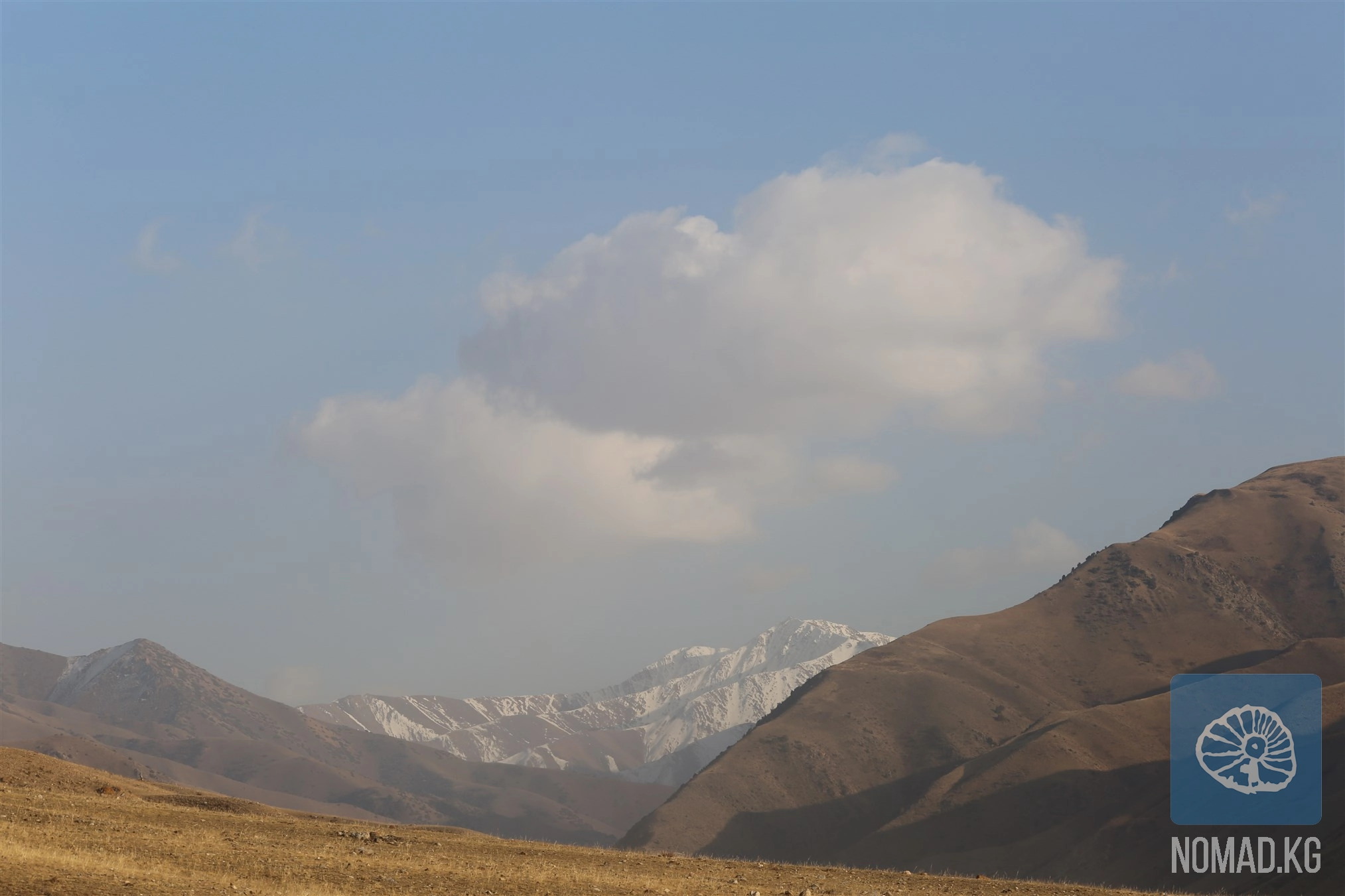
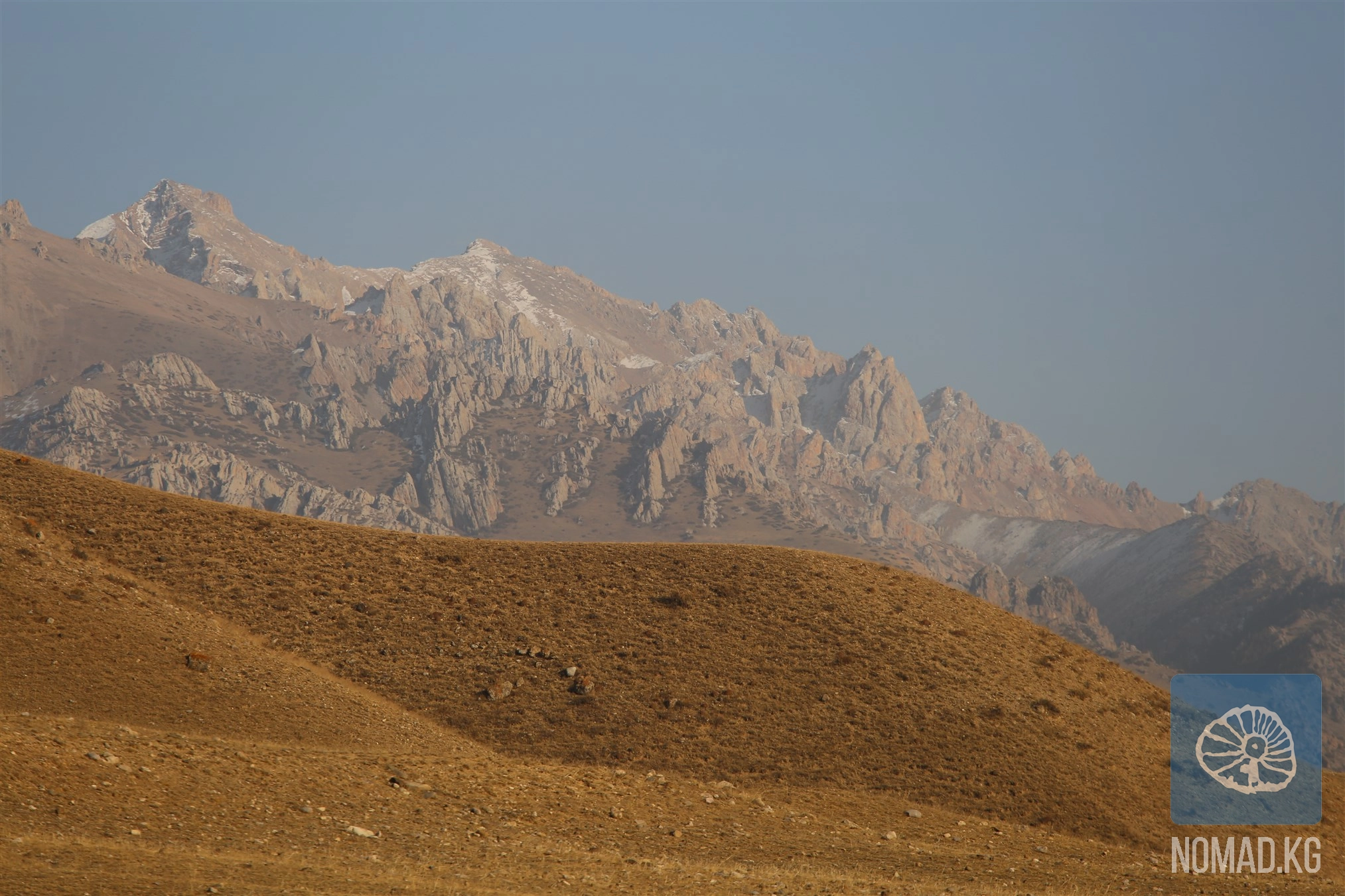
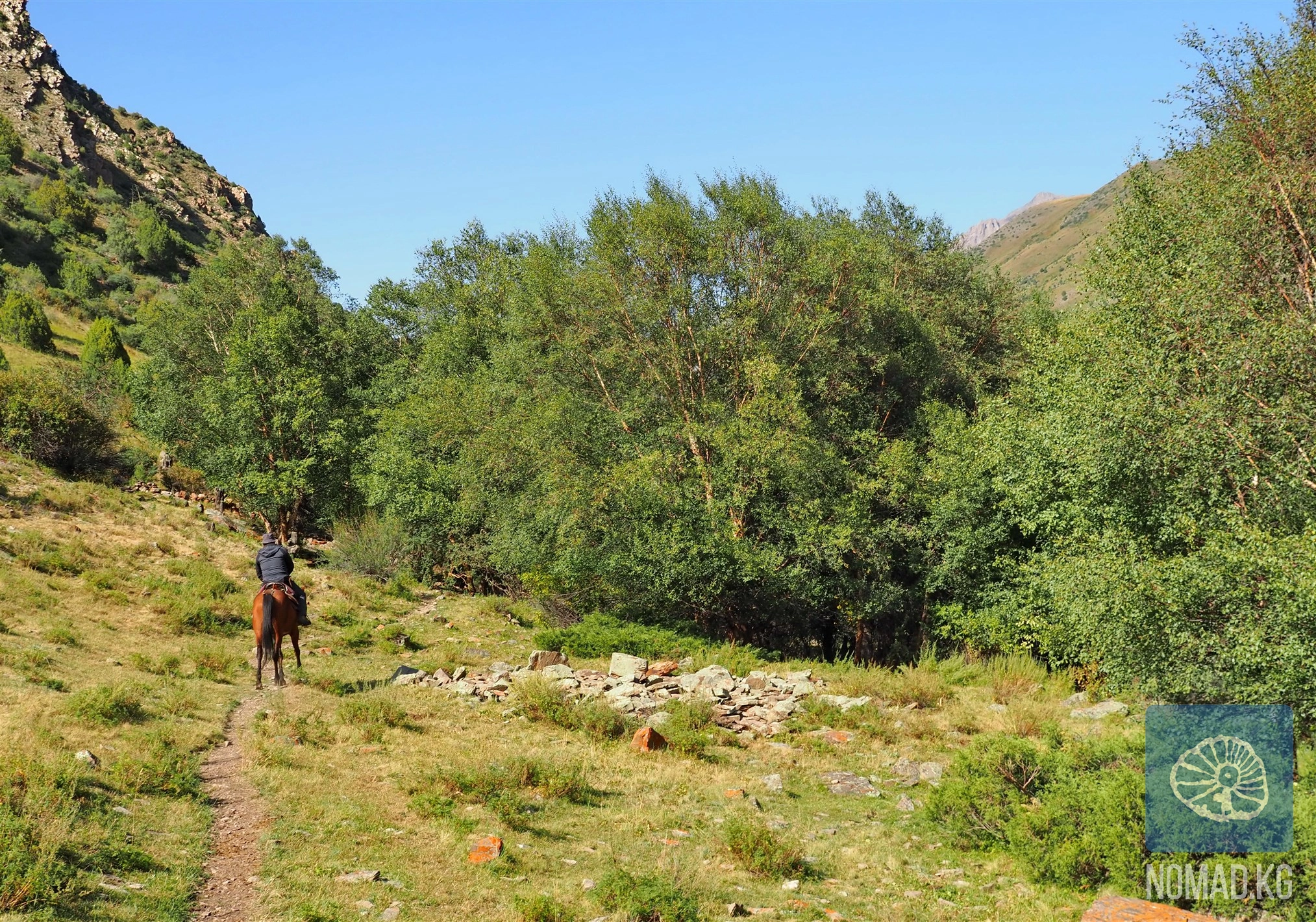
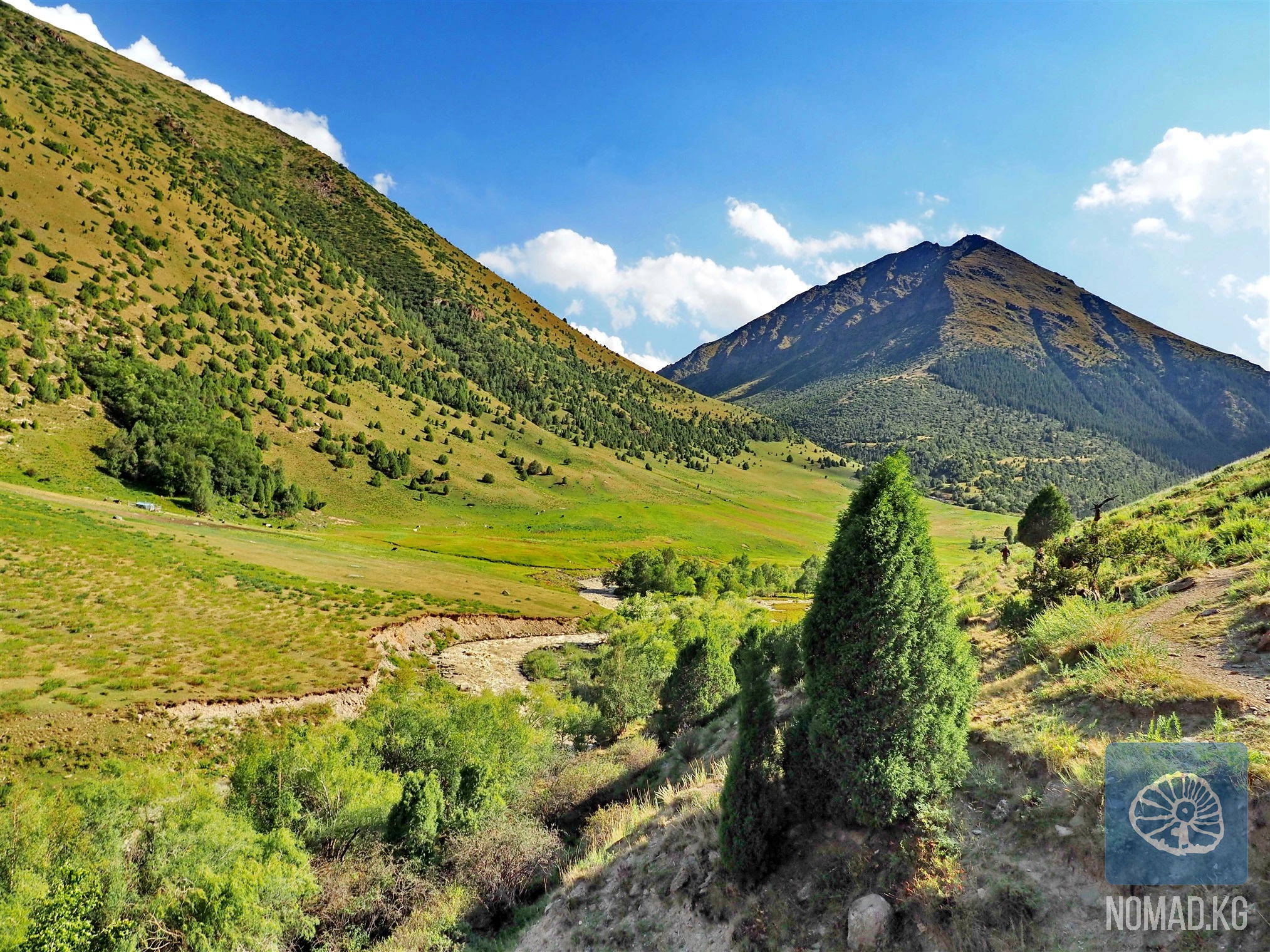
The Karakoyun area is located at an altitude of about 1600 meters, at the junction of the Talas and Bakai-Ata districts, in the very heart of the Talas Ala-Too mountain range of the Western Tien Shan. Dominating the valley is the Dym-Bol massif, with its highest point at 3839 meters - harsh, rocky, and almost always shrouded in clouds. Here, the waters of the Uyur-Maaral and Karakoyun rivers converge. The Karakoyun River itself, a right tributary of the Uyur-Maaral, seems to slice the landscape into several worlds. First, there are rocky gates, then a zone of caves, followed by a wide, unexpectedly gentle valley, and again - cliffs, forests, and high mountains.
Karakoyun has its own microclimate. Here, the harsh rocky areas astonishingly blend with an almost garden-like, fertile valley, where apples, plums, strawberries, and other berries have been grown for ages - without chemicals, without fertilizers, without violence against the land. The area is immersed in thickets of wild rose hips, barberries, and sea buckthorn. There are every reason to believe that one day this territory will receive the status of an organic valley - a place where nature and humans still live not in enmity, but in dialogue. But the main thing in Karakoyun is not just the landscape, but what is happening here right now: the return of wildlife.
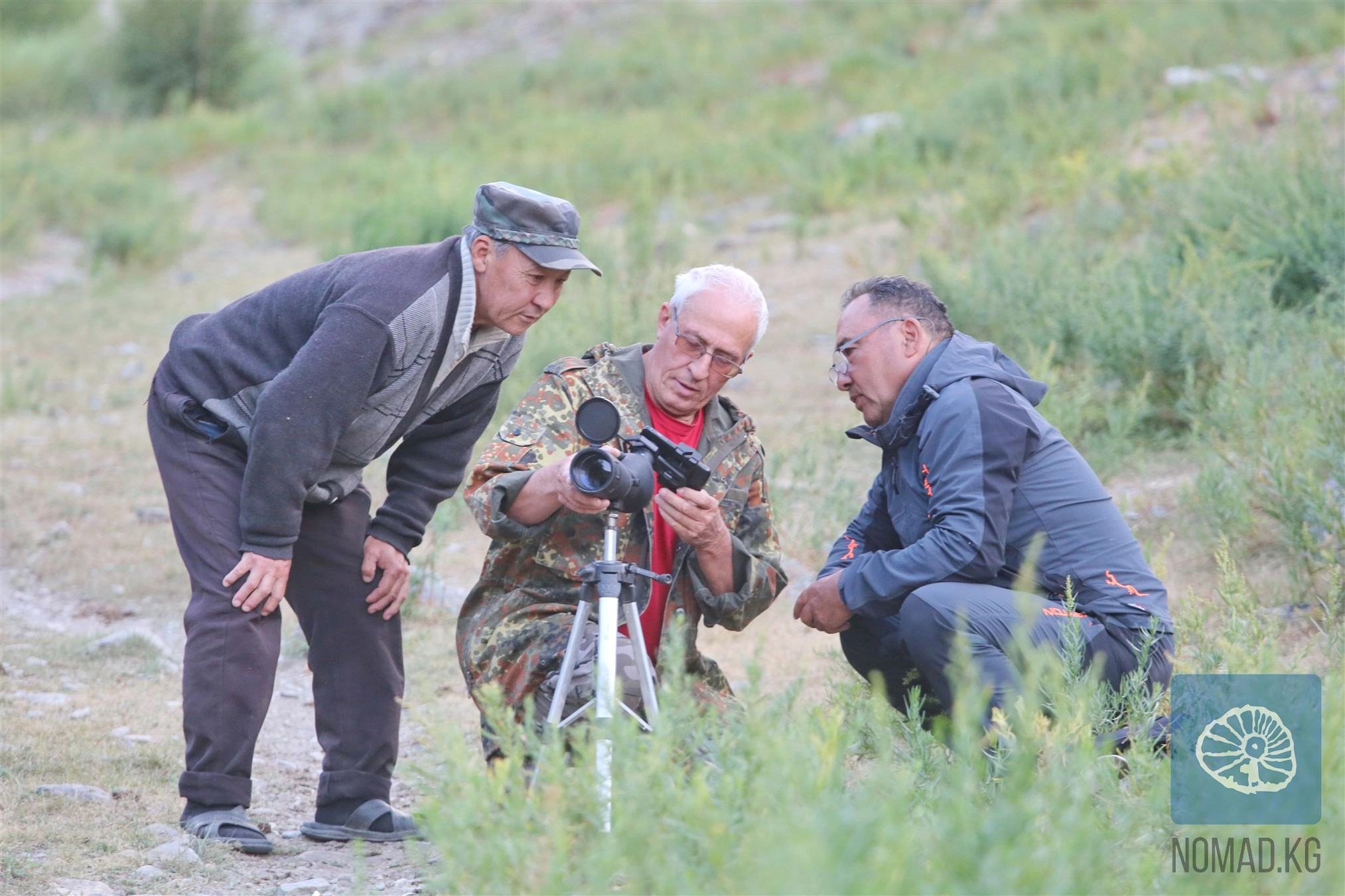
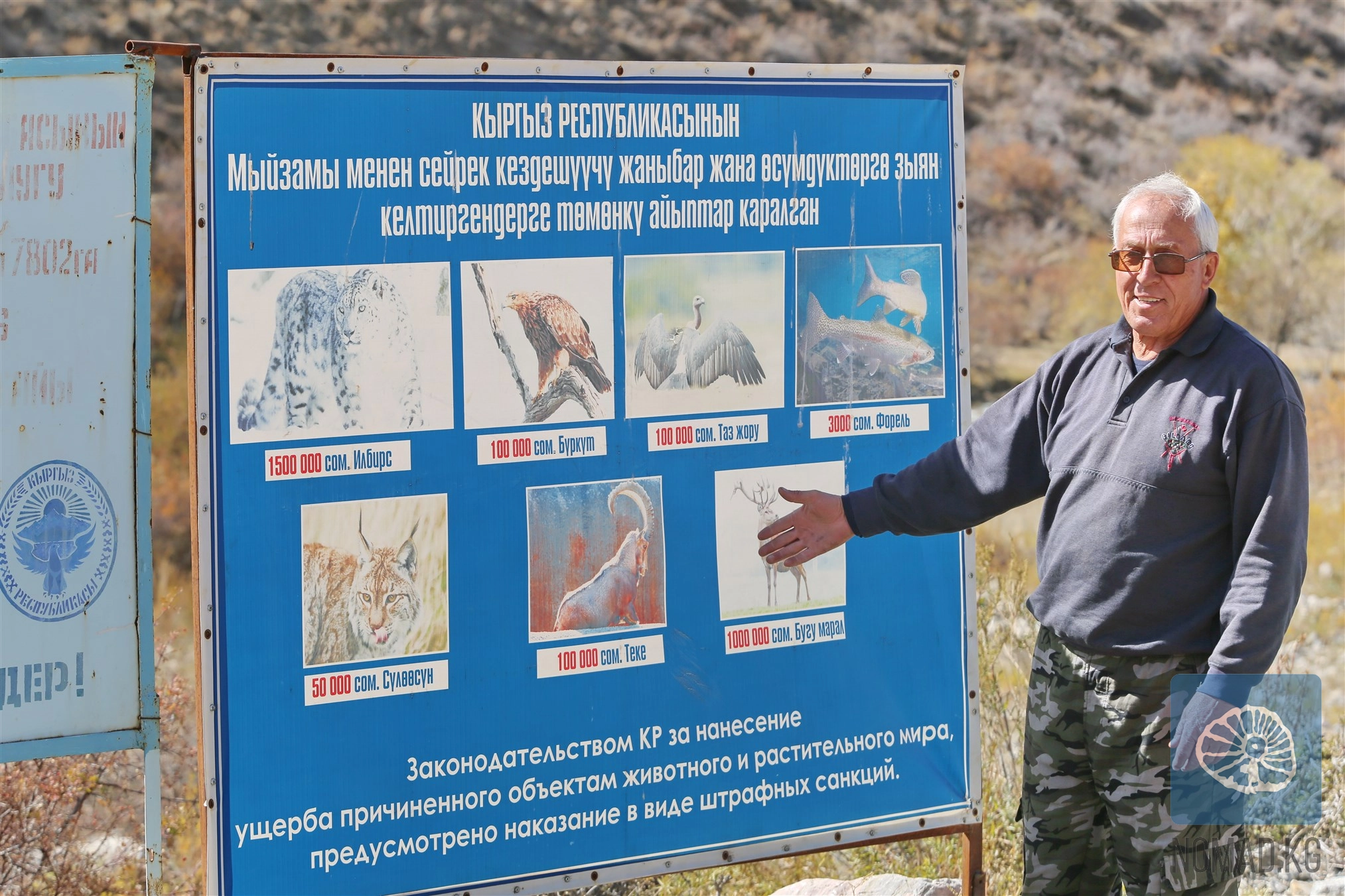
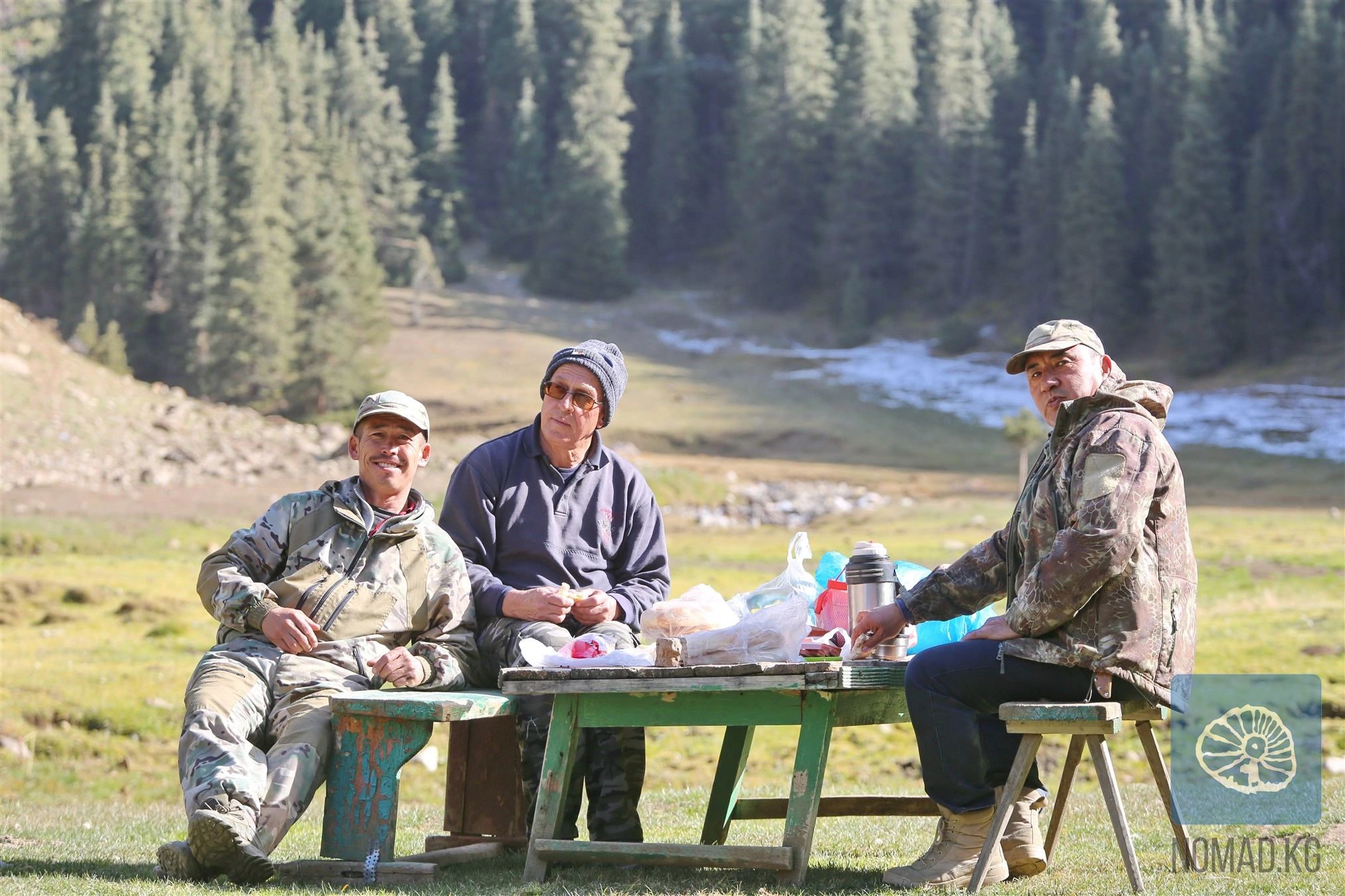
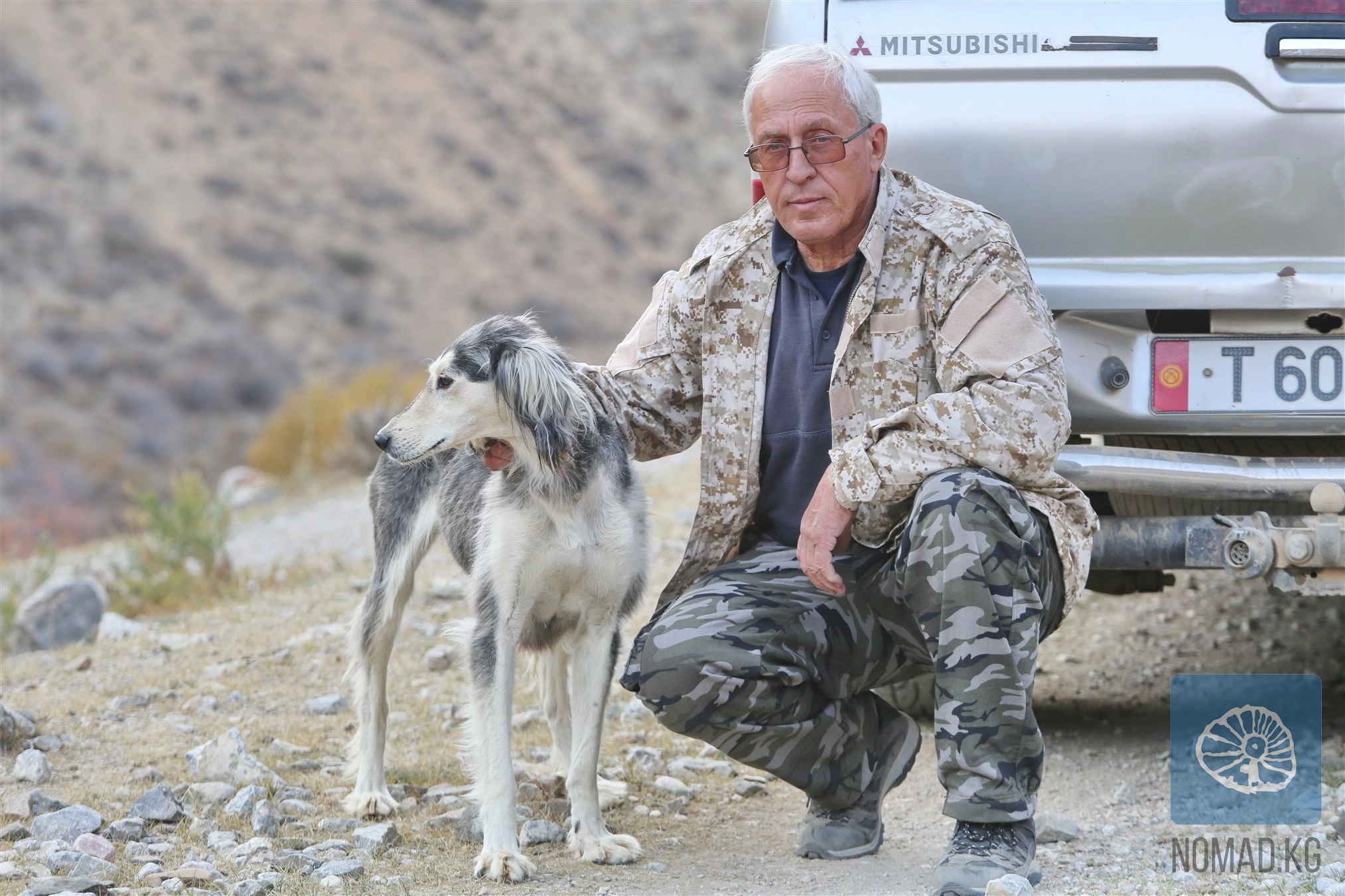
In recent years, the "Mountain Tour Talas" team, along with "Eco-Ayan" and the ecological platform "Ecostan," under the leadership of Vladimir Anatolyevich Mazer - a freelance inspector of the Environmental and Technical Supervision Service, a wildlife expert, and a nature protector - has achieved what seemed impossible: hunting has been completely halted in the valley, declaring it a breeding zone. The results are almost magical, if one does not know how much work lies behind this. Ibex have returned here. Lynxes have begun to appear regularly. Snow leopard tracks have been recorded multiple times. Camera traps have been set up in the mountains, animal monitoring is underway, and feeding of vultures, wolves, and lynxes is being conducted. Karakoyun is once again becoming what nature intended it to be: a true refuge for life.
The entrance to the area seems to be guarded by rocky outcrops. Behind them are the famous Karakoyun caves, where a micro-reserve has been established to preserve populations of bats and porcupines. These are not "tourist" caves with lighting and handrails - they are a living, fragile world that one enters only with respect and understanding.
After the rocks, a spacious, gentle valley suddenly opens up. Here are gardens, berry patches, clearings, and old pastures. In spring and summer, it looks almost idyllic: green, blooming, full of light. And yet - absolutely real, not "groomed" for tourists.
Not far away are fantastic forms of relief: "castles," towers, walls, and labyrinths of canyons sculpted by wind and time. Here, it is easy to feel as if you are in another world — or in another time.
At the end of the area, the valley is once again squeezed by cliffs. Two massive stone formations stand side by side, like gates to the next, higher, and harsher world. It is a powerful, photogenic, and slightly mystical place - one of those where you want to be silent.
In spring, the Karakoyun area transforms into a blooming ocean. In April, carpets of saffron crocus. In May and June, wild tulips. Tourists who find themselves here at this time often say the same thing: “As if someone has sown the mountains with flowers.” But it is not someone's hand - it is the earth itself that lives this way.
Higher up, juniper forests begin, followed by the harsh rocky massif of Dym-Bol. This is already the territory of long hikes, panoramas, true high-altitude landscapes - and the very zone where snow leopard tracks are increasingly recorded.
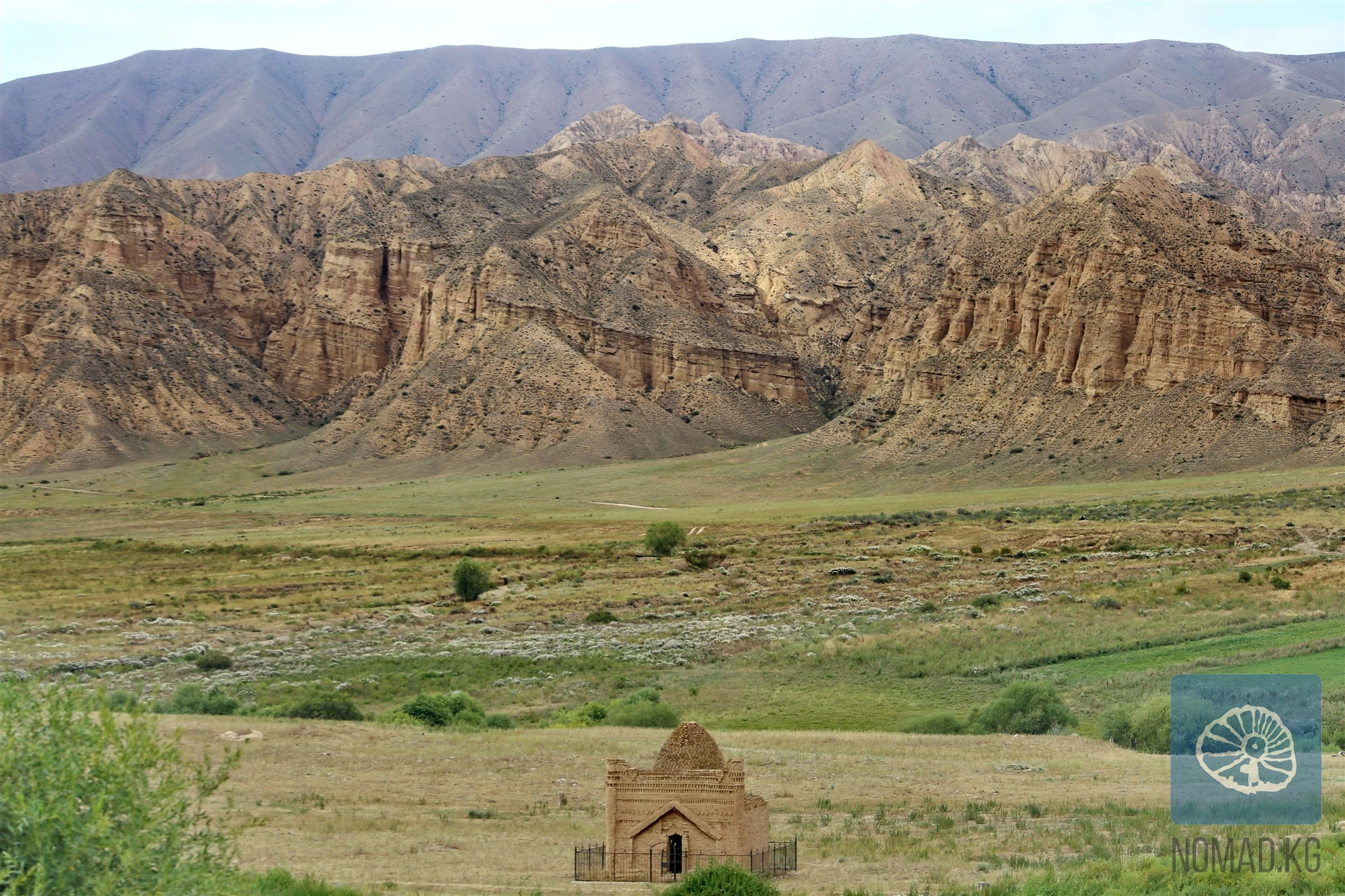
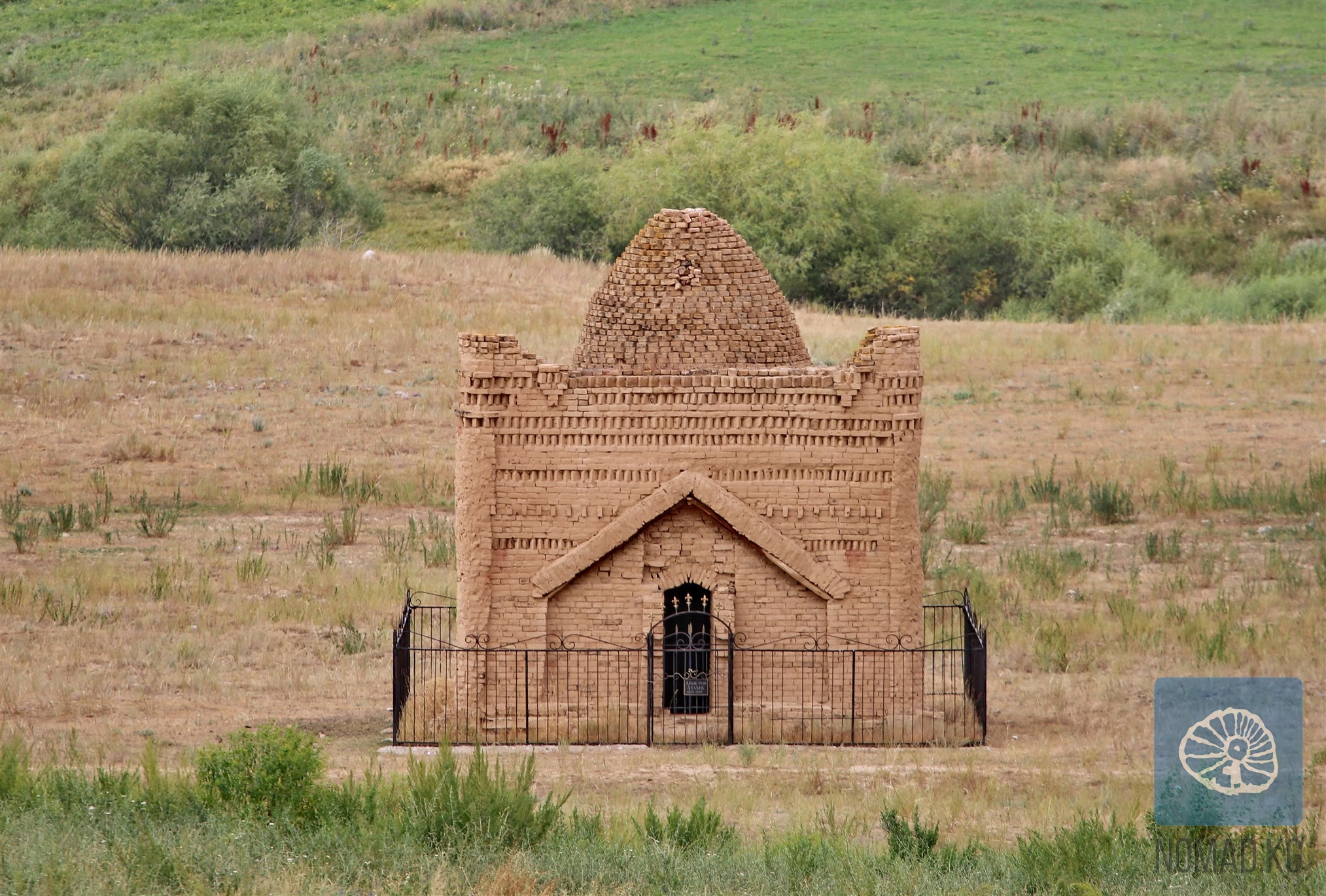
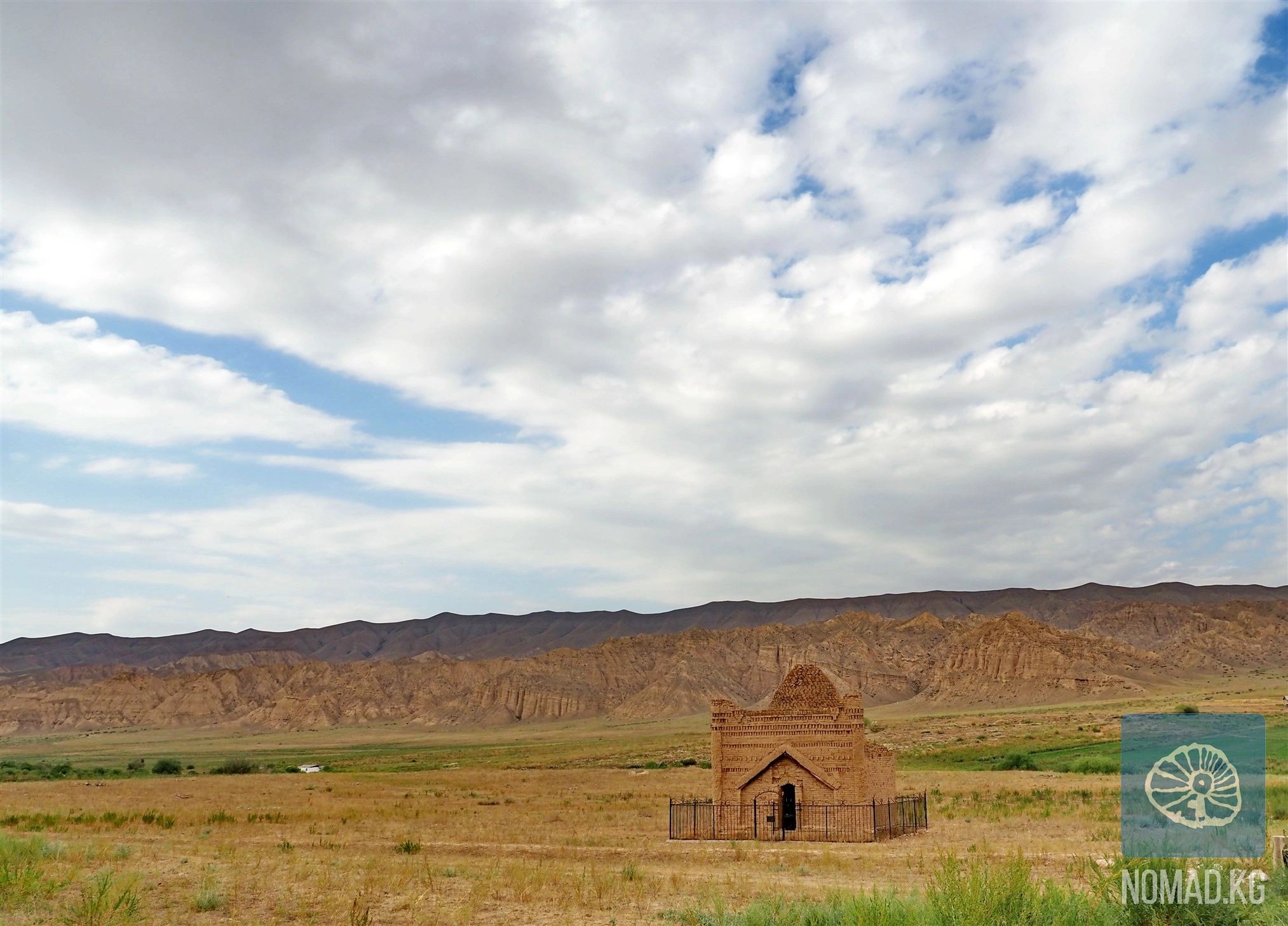
Karakoyun is not just about nature. Ancient burial mounds and mazars, according to archaeologists, contain at least the remains of two ancient settlements or fortresses that are still waiting for their researchers. This means that roads once passed here, settlements stood, and life thrived. Talas has always been a corridor between worlds. And Karakoyun is part of this vast, almost forgotten geography.
Some advice from those who know these places: The best time to visit is April-June (flowering) and July-September (mountain hikes). In spring, there are fairy-tale flowers, and in summer, access to high-altitude routes.
The weather changes quickly. Even if it is warm below, it can be cold and windy in the Dym-Bol area. Bring warm and windproof clothing.
Respect the status of the valley as a breeding zone. Do not make noise, do not disturb the animals, do not leave the trails unnecessarily, do not leave trash.
Enter the caves only with local guides or by agreement. This is not an attraction, but a living protected area.
If you want to see more, plan for at least 2-3 days. Karakoyun does not reveal itself in one visit. The best chances to see wildlife are at dawn and dusk. And, of course, with patience and silence.
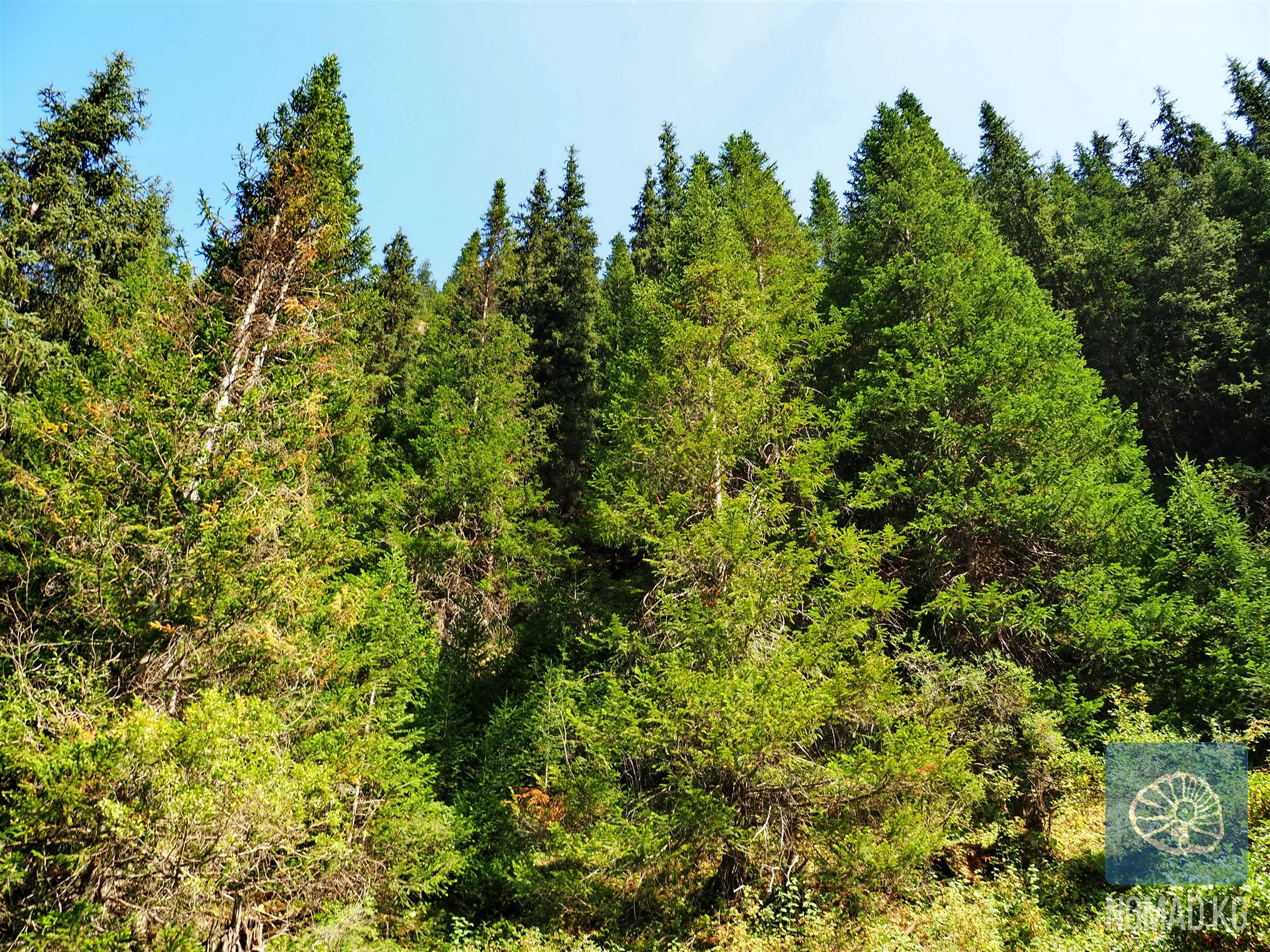
Karakoyun is a rare case where you see not only beauty but also hope. Hope that wildlife can return. That humans can be not masters, but neighbors. That mountains can once again live their full, complex, and beautiful lives. In the coming years, a tourist complex will appear in the area of the fir forests - neat, integrated into the landscape, not disrupting its logic. And this gives Karakoyun a chance to become an example of what true, responsible tourism can be in Kyrgyzstan.
If you are looking for not just a tourist trip, but a real journey - to where wild tulips bloom, where snow leopards return, and where the road once again becomes meaningful - you should go to Karakoyun. Karakoyun does not look like "one place." It feels like a whole country, with its own laws, rhythms, and mysteries. Here, it is easy to forget that cities, news, and haste exist somewhere. Here, the road once again becomes not a means, but a meaning. And perhaps that is why Karakoyun is so memorable: not as a point on the map, but as an experience lived.
At dawn in the upper reaches of Үйүр-Марал, the silence rings louder than the wind. It lies on the grass, on cold stones, on the slow breath of the mountains - and it seems that the world here has just been created and has not yet managed to invent
Among the picturesque mountains of the Bakai-Ata district, not far from the village of Urmaral, lies one of the most mysterious and revered places in the Talas region - the Kara-Koyun cave. This is not just a dark niche in the rocky mass, but a
Peak Manas is the highest point of the Talas Ala-Too ridge, with an elevation of about 4485-4488 meters above sea level, and this figure alone sets the tone: here, the familiar routes end, and the territory of true mountains begins. The
Standing by the Talas River early in the morning, when the fog still lingers over the water, it is easy to imagine how caravans passed through here, how cavalry units moved along these very shores, how language, faith, and power changed - while the
The glacial lakes of Agynay-Köl are located in the upper reaches of the Tabylgyty gorge, on the northern slopes of the Talas Ridge - one of the longest and most underrated mountain ranges in Kyrgyzstan. Over 200 kilometers of the ridge is a world of
From the Talas Ala-Tuu ridge, the steppe suddenly ceases to be chaotic. In its body, even, almost stubborn strokes emerge. Stone by stone. Line by line. Bakayyr does not reveal itself immediately: it waits for you to step out of the scale of a human
If you have already seen Lake Besh-Tash and think that the national park has revealed all its secrets to you, then you simply haven't yet ascended the Itagar Pass. This is the route after which photos remain in your phone's memory that you
In the very heart of the blessed Talas Valley, where the silvery Talas River leisurely carves its path between two majestic mountain ranges - the Talas and Kyrgyz ranges - lies a unique natural oasis. The Talas Forest is not just a green stripe on
If there is a place in the Talas region that amazes from the very first step, it is the Talas Birch Grove - the largest man-made birch forest in all of Central Asia and one of those places where humans and nature have created a true oasis of
The Besh-Tash National Park, which translates to "Five Stones," stretches in a narrow chain along the Talas Ala-Too mountain range. On a good gravel serpentine road up the Besh-Tash river gorge, it feels like the car is about to hit the
Kyrgyzstan is a country where the memory of ancestors, sacred space, and natural power merge into a single cultural landscape. For centuries, Kyrgyz people have placed special importance on burial monuments and holy sites—mazars. Even today,
The Ötmäk Pass (3326 m above sea level) is one of the most impressive places in the Talas region and an essential mountain artery connecting the closed Talas Basin with the expansive Suusamyr Valley and the strategic Bishkek-Osh highway. This is the
The mountains of the Talas Ridge conceal many secrets, but one of the most astonishing is the complex of rock carvings at Bakayir-Kara-Kuush, located in an easily accessible gorge where human footsteps are lost among the stones, and ancient
In the very heart of the picturesque Talas region, amidst the rugged gorges of the Bakai-Ata district, lies one of the most unusual natural wonders of Kyrgyzstan - the "Kara-Kishi" geopark. This place seems to exist outside of time: the
The Besh-Tash Nature Park covers over 30,000 hectares, stretching nearly 30 kilometers upstream along the river of the same name - from the gentle foothills at an altitude of 1,100 meters to the harsh, cold glaciers rising to 3,500 meters. The park
The high mountain passes of Suusamyr do not tolerate haste. Its meadows, rivers, and slopes exist at their own pace. The grass grows slowly here, trees take years to settle in, and any human intervention leaves a lasting mark. When you stand at this
In the Talas Valley, among the hills and green valleys, lies one of the most revered sacred places in the region - the mazar of Boo-Terek. Its name translates from Kyrgyz as "a bundle of poplars" or "many poplars," and this is no
The Kumushtak Gorge in the Bakai-Ata district of the Talas region does not reveal itself immediately. The mountains here do not press down with height but seem to retreat, leaving space for breath. The stones lie as if they were intentionally
The Talas region is one of the corners of Kyrgyzstan where history is felt not in museum showcases or academic works, but in the wind, in the scent of dry wormwood, in the lines of mountains frozen around the valley like an ancient choir. Here, the
Today's Ak-Dobo was previously called Orlovka, and even earlier -the settlement Orlóv (Ger. Orloff) . The village was founded by German settlers from Poland, and this multilayeredness of names is still felt in its rhythm. Here, it is easy to
High in the Kaman-Suu gorge, at an altitude of about 2500 meters above sea level, lies one of the most expressive and multilayered monuments of rock art in Kyrgyzstan - Jaltyrak-Tash, which translates to "shining stone." This is not just a
Where once small rural streets stretched along the river valley, where people lived a measured steppe life, today lies a vast expanse of water - the Kirov Reservoir, one of the most significant hydraulic structures in Kyrgyzstan and an impressive
The Talas Valley is one of those places where Central Asia speaks to the traveler through the language of wind and silent stones. Here, between hills and gorges, traces of ancient civilizations have been preserved, whose names have long dissolved in
The Talas Geopark "Echkilі-Tuu" is located in the mountain range of the same name, Echkilі-Tuu, which is part of the Kyrgyz Ala-Too ridge, in the Sary-Kuurai gorge, one of the most impressive natural attractions of Kyrgyzstan. This geopark